What is the difference between a garter belt and a suspender belt?
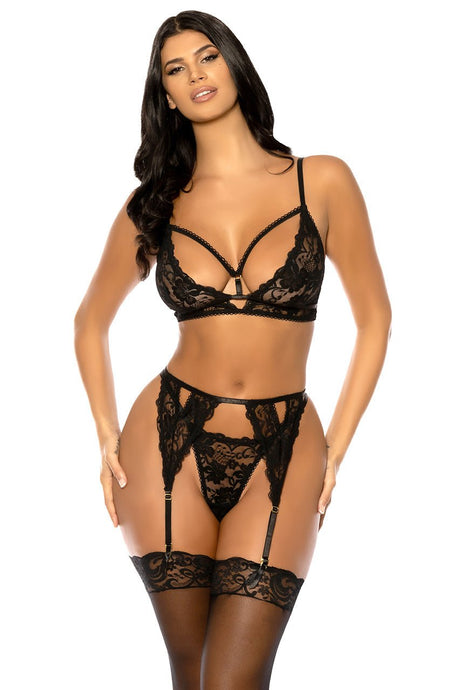
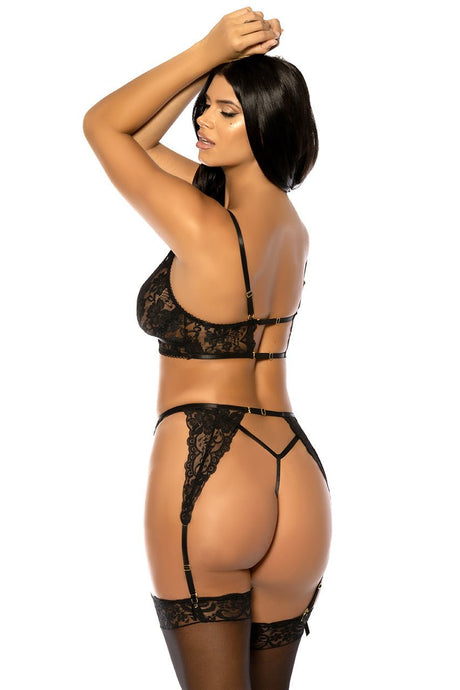
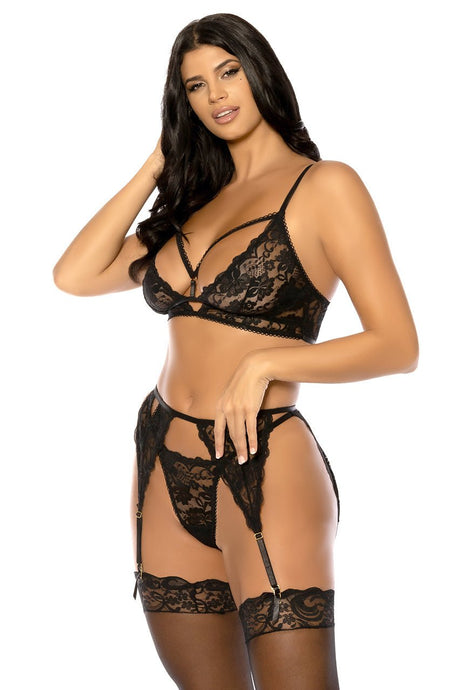
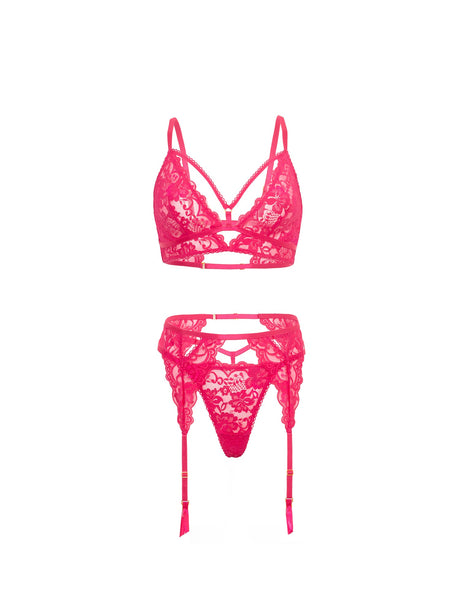
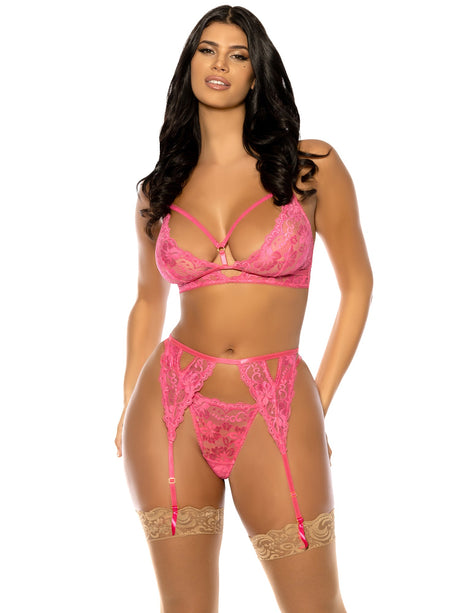
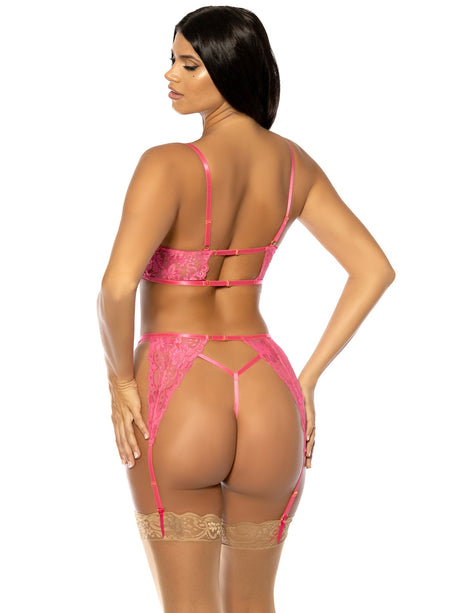
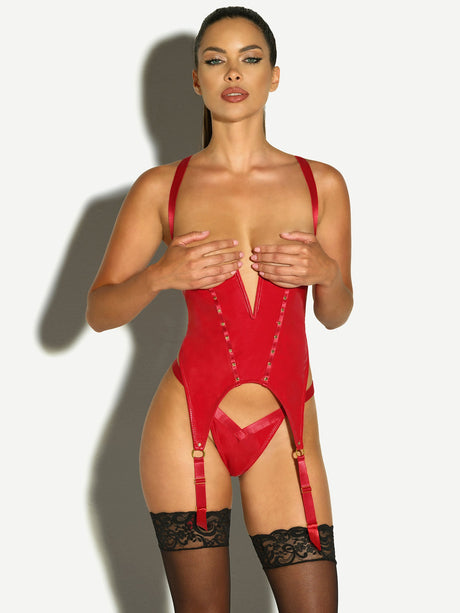
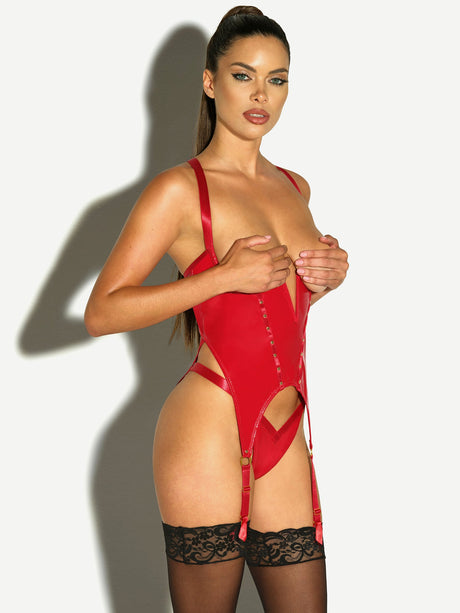
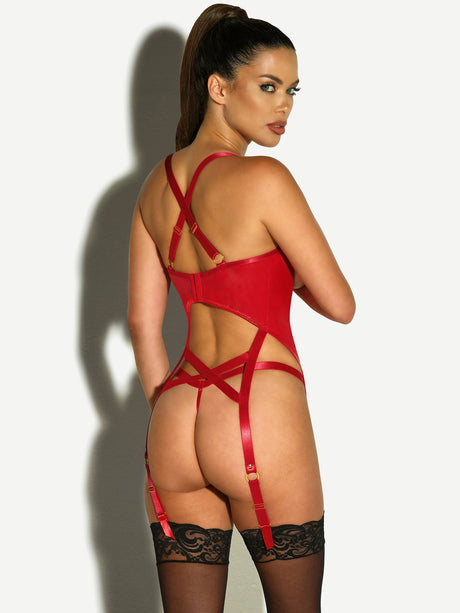
There is none. They are the same garment under two names: garter belt is American English, suspender belt is British English. Both describe a band worn at the waist or hips with adjustable straps ending in clips that fasten to the tops of stockings. A garter is a different thing again: a narrow band worn around the thigh itself, which grips the leg rather than pulling from above. Once the terminology is out of the way, the whole category comes down to one mechanical problem. The belt is resisting the continuous downward pull of two stockings, so everything depends on how well it anchors. Worn at the natural waist it has the flare of the hips below to sit against; worn on the hip it slides. A wide band spreads the load, a narrow one concentrates it. Six straps hold the stocking edge level, four leave the sides drooping. And metal clips grip where thin plastic ones let go, which is the most common reason a stocking ends up round an ankle.
Two thirds of the confusion about this garment is vocabulary, and it clears up in one sentence.
The remaining third is mechanical, and almost nobody explains it, which is why so many belts end up unworn after one evening of hitching them back up.
- Garter belt and suspender belt are the same thing. US and UK English.
- A garter is different: a band round the thigh, not a belt at the waist.
- Wear it at the natural waist, not the hip. That is what stops it sliding.
- Six straps beat four. Four leaves the sides of the stocking unsupported.
- Metal clips with a rubber nub. Thin plastic clips are the usual failure point.
- A wide band anchors better than a narrow one, and a high waist better still.
- Fold 2cm of welt into the clip, front clips first, then adjust length.
Garter, Garter Belt, Suspender Belt
Three words, two objects. A garter belt and a suspender belt are the same garment in different dialects. A garter is a separate thing: a narrow band worn round the thigh, which holds a stocking by gripping the leg rather than by pulling from the waist.
| Term | What it is | Where the term is used |
|---|---|---|
| Garter belt | Waist or hip band with straps and clips | American English |
| Suspender belt | The identical garment | British English |
| Suspenders | The straps themselves, in UK usage | UK. In the US, suspenders means braces for trousers |
| Garter | A narrow band worn around the thigh | Both. Also the item traditionally worn by a bride |
The transatlantic split causes real confusion when shopping, because a US search for suspenders returns braces for trousers and a UK search for garters returns thigh bands. If a listing seems to be showing you the wrong thing entirely, this is usually why.
Why It Slides Down, and What Stops It
A garter belt is holding up two stockings, and their weight pulls downward on it continuously, all day. Everything that separates a belt that works from one that does not comes back to how well it resists that pull.

Belts Built to Anchor
Wide and high-waisted belts with six straps and metal clips, plus stockings to match. Full size range, free returns on unworn pieces.
Shop Garter BeltsThigh Highs GuideTypes of Belt
| Style | Best for | Trade-off |
|---|---|---|
| Classic lace or satin | Under fitted skirts and dresses. Lightweight, sits flat. | Narrow band, often four straps. Less secure over a long day. |
| High-waisted | All-day wear. Most secure, and smooths the midsection. | More visible under very fitted clothing. |
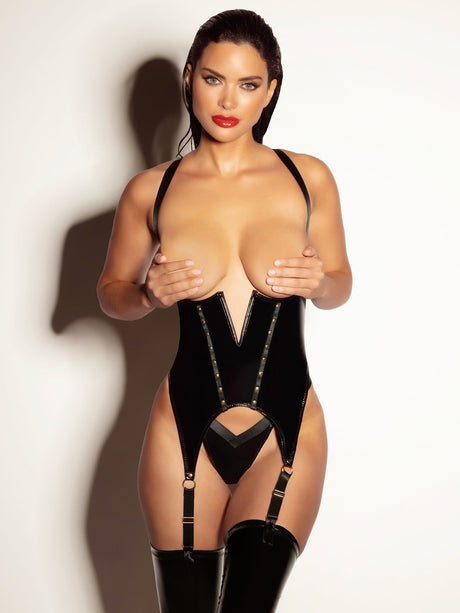
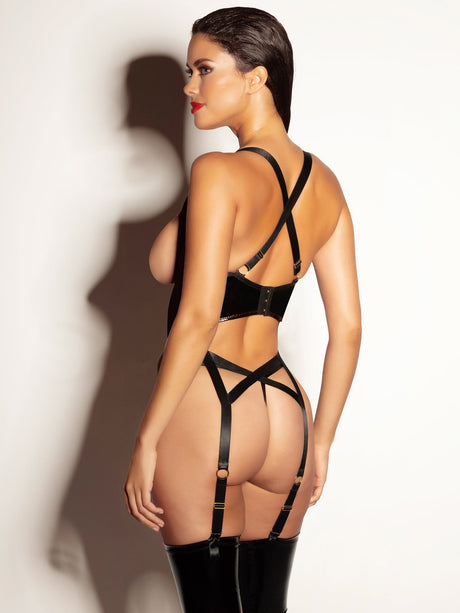
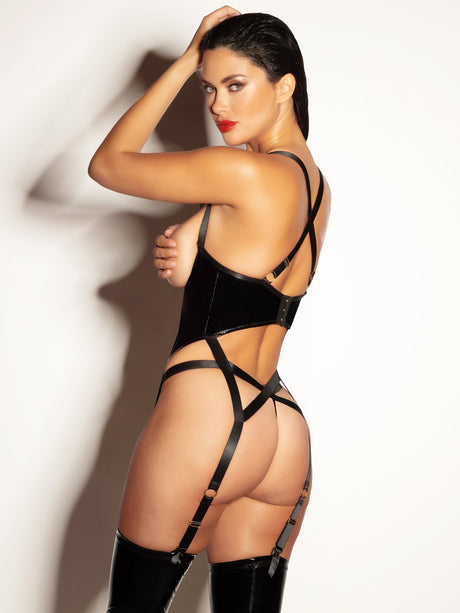
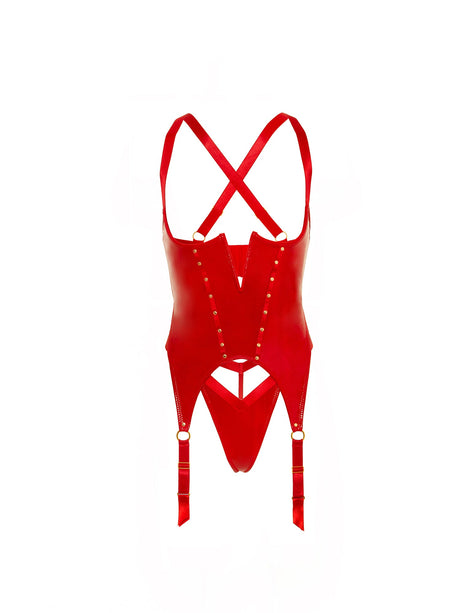
| Wide or corset-style | Maximum anchoring, often boned. Occasion wear. | Warmer, more structured, less discreet. |
| Six-strap | Keeping seams straight and the welt level. | Slightly more to fasten. Worth it. |
| Four-strap | Occasional or decorative wear, boudoir. | Sides of the stocking unsupported, so the welt droops. |
| Attached to a corselette or basque | One garment doing several jobs. | Cannot be worn separately; sizing is less forgiving. |
How to Wear a Garter Belt

Fasten the Belt at the Natural Waist
Closure at the back, band settled at the narrowest part of your torso. It should be snug enough to stay put without digging in or leaving marks. If you are unsure where your natural waist is, bend sideways: the crease that forms marks it, and it is usually higher than people expect.
Space the Straps Evenly
Before putting the stockings on, arrange the straps so they sit evenly around each leg. On a six-strap belt, that is roughly one at the front of the thigh, one at the side and one at the back. Uneven spacing is what pulls a stocking crooked, and it is much easier to fix now than after clipping.
Roll the Stockings On, Then Smooth Them
Gather each stocking down to the toe, ease it on and roll it up the leg rather than pulling. Smooth out twists before attaching anything. Take rings off and check your nails first, since almost every ruined stocking is ruined at this step rather than in wear.
Fold the Welt Into the Clip, Front Clips First
Open the clip by sliding the rubber nub up to the wide part of the slot. Fold roughly two centimetres of the stocking top between the two halves, then push the nub back through to close. Do the front clips on both legs first, because they set the position and everything else adjusts around them.
Fasten the Sides and Back, Then Adjust
Work round to the side and back clips. Then adjust each strap so the stocking is taut without dragging the welt down or pulling the belt out of position. Taut rather than stretched: if the belt is being pulled downward at any point, that strap is too short.
Check the Seams if There Are Any
With seamed stockings, stand with your back to a mirror and check each seam runs straight up the centre of the calf. Correct it by adjusting strap lengths rather than by twisting the stocking on your leg, which only moves the problem.
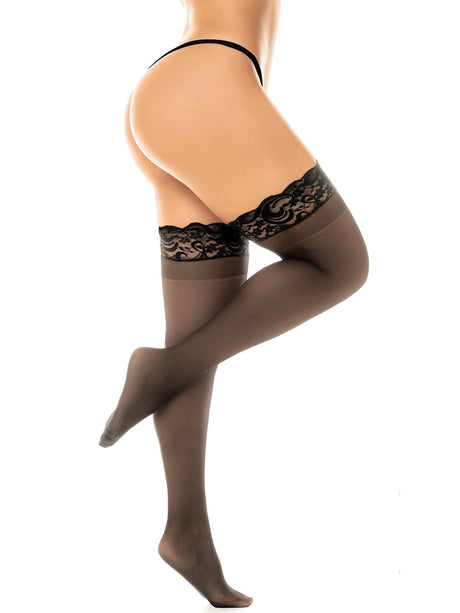
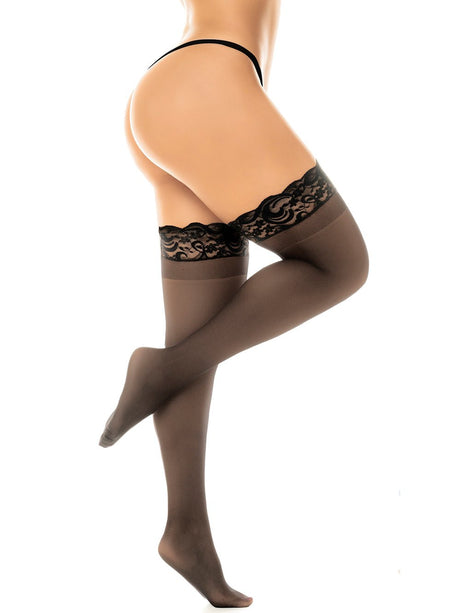
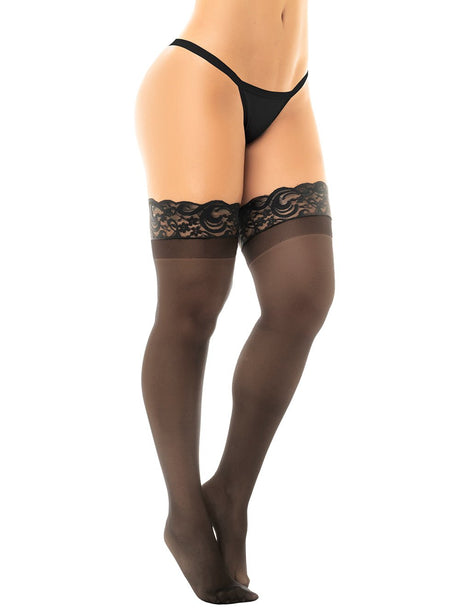
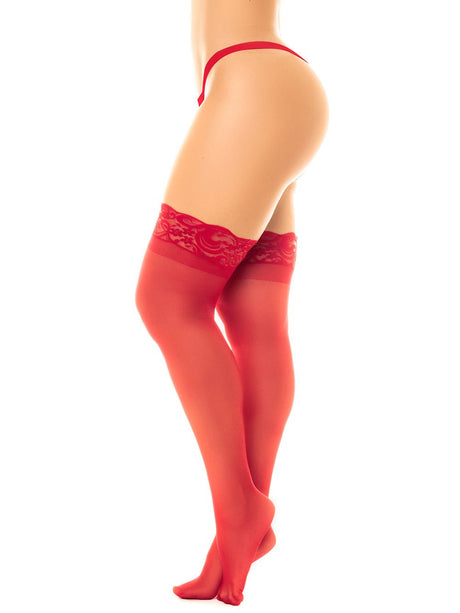
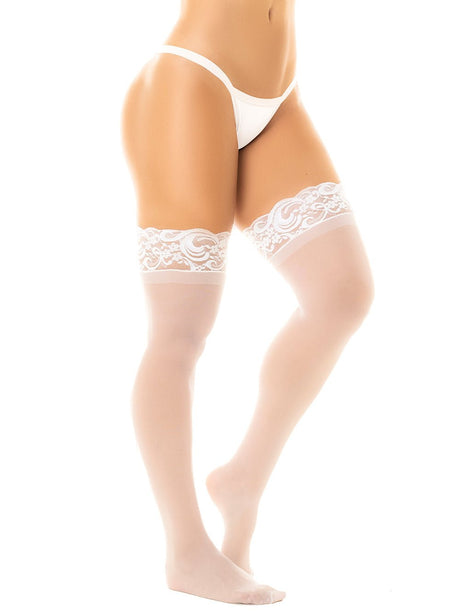
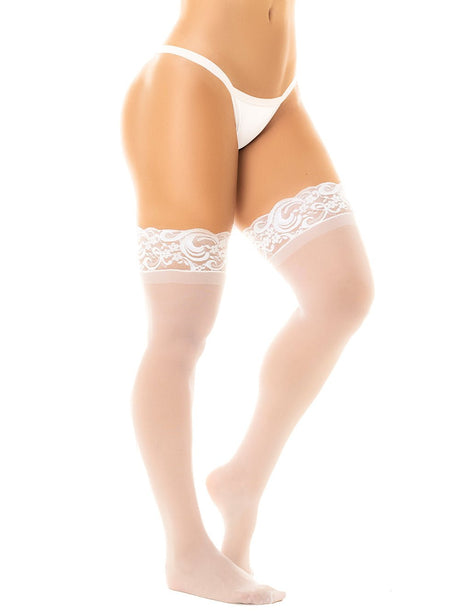
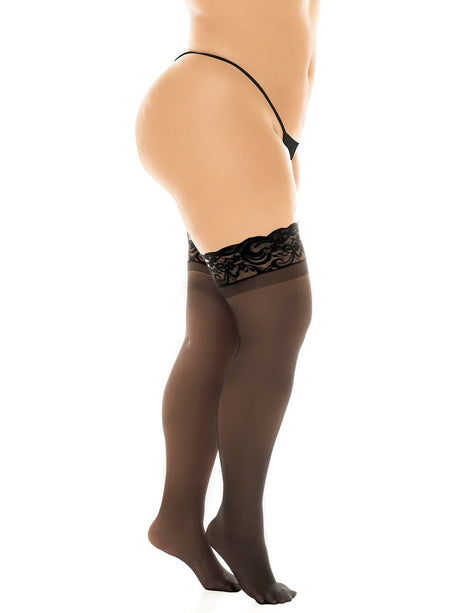
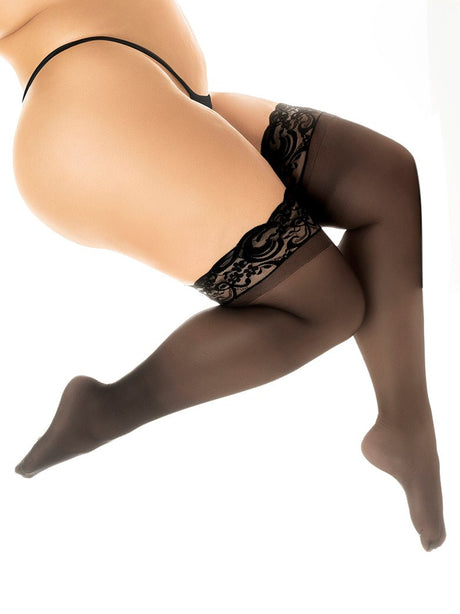
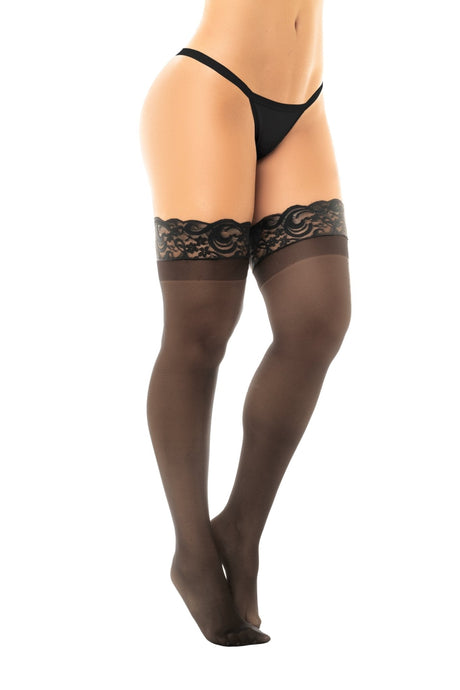
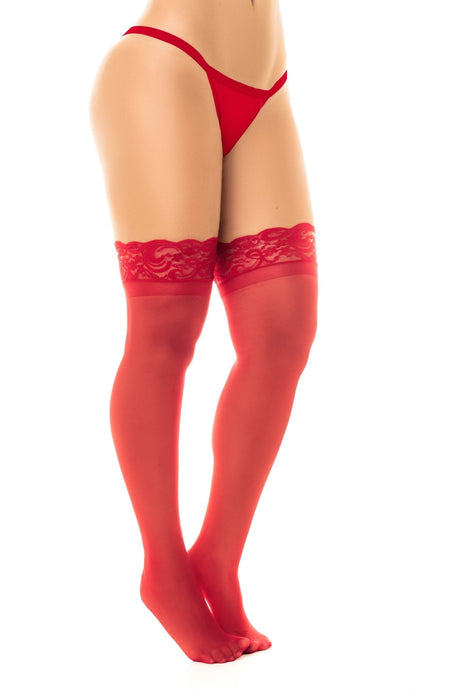
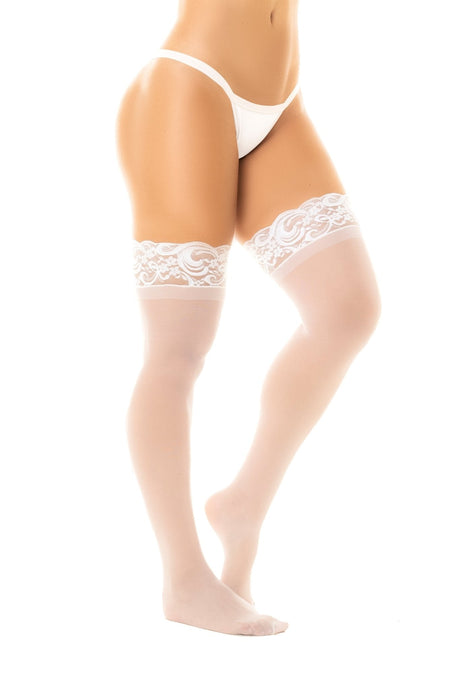
On stockings with a wide lace top, clip through the lace band itself rather than only the sheer leg below it. The lace welt is denser and takes the load without laddering, and it is what the band is there for. Clipping onto the sheer section just below the lace is a reliable way to put a run in a new pair.
Knickers Over or Under?
Both work and neither affects whether the stockings stay up, which is worth saying because it is asked constantly and the answer is genuinely a preference.
Over the belt is the practical option for daytime, because you can take your knickers off without unclipping four or six straps first. Anyone who has wrestled with this in a cubicle understands the appeal immediately, and it is why the arrangement was standard for most of the twentieth century.
Under the belt gives a slightly smoother line under fitted clothing, since there is one fewer waistband edge sitting on top of another.
Whichever you choose, a thong or a brief cut narrow at the sides avoids bulk where the belt sits. A high-waisted brief and a belt tend to fight each other for the same piece of torso, which is uncomfortable and shows.
Sizing, Wearing and Care
Measure Your Natural Waist, Not Your Hip
Take the narrowest part of your torso and use the brand’s chart. This is the measurement that matters, and it is not your hip measurement or your dress size. For larger sizes, look for a wide band and multiple hook rows, which give both adjustment and the anchoring surface the load needs.
They Are Genuinely Practical
Stockings and a belt are cooler and less restrictive than tights, which is why they were everyday wear for decades rather than an occasion garment. If that is what you want from them, prioritise a wide band, six straps, metal clips and a natural-waist fit, and treat the lace as a bonus rather than the specification.
Hand Wash, Clips Fastened
Hand wash in cool water with a mild detergent and dry flat away from direct heat. Fasten the closure and all the clips first, so metal edges do not catch the lace. Skip fabric softener, which coats elastic and reduces its recovery, and the elastic is what the whole garment depends on.
Almost everyone who says garter belts do not stay up was wearing one on the hip with four plastic clips. Move it to the waist, get six metal ones, and it simply works.
HauteFlair Fit Team
What This Means for You
Garter belt and suspender belt are the same garment, and a garter is a different one. That is the vocabulary sorted, and it is most of what people come looking for.
The mechanics are just as simple. The belt is resisting the constant downward pull of two stockings, so it needs to anchor: at the natural waist rather than the hip, in a wide band rather than a narrow one, with six straps rather than four, and with metal clips rather than plastic.
Then fold about two centimetres of welt into each clip, fasten the front ones first, and adjust so the stockings are taut without dragging the belt down. That is the whole thing, and once it is set correctly you should be able to forget about it.
Garter Belts at HauteFlair
Classic, high-waisted and corset-style belts with six straps and metal clips, plus stockings and coordinating sets. Full size range. Free returns on unworn pieces.
Shop Garter BeltsLingerie GlossaryFrequently Asked Questions
What is the difference between a garter belt and a suspender belt?
What is the difference between a garter and a garter belt?
How do you wear a garter belt with stockings?
Do you wear knickers over or under a garter belt?
Why does my garter belt keep sliding down?
How many straps should a garter belt have?
Are metal or plastic garter clips better?
How tight should a garter belt be?
What size garter belt should I buy?
Can you wear a garter belt every day?
Do garter belts work with any stockings?
How do you stop stockings from sagging?
What do you wear with a garter belt?
What is a high waisted garter belt?
How do you wash a garter belt?
This article is for informational purposes only. Fit and construction guidance is general and varies between manufacturers. Terminology described reflects common usage in American and British English; individual brands may use these terms differently.