Panache Sports
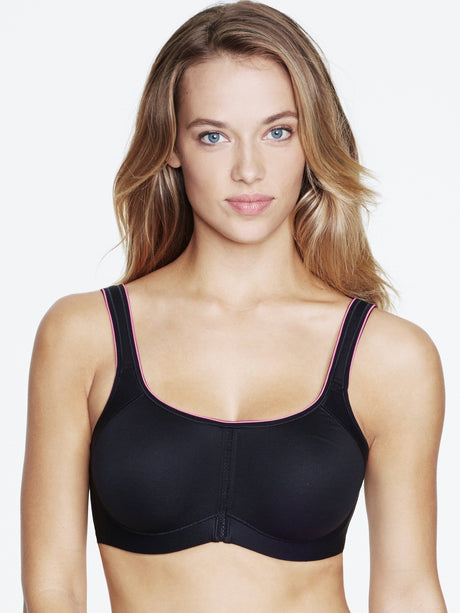
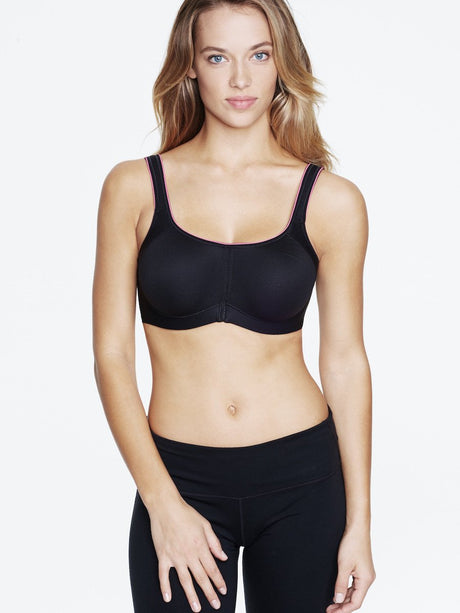
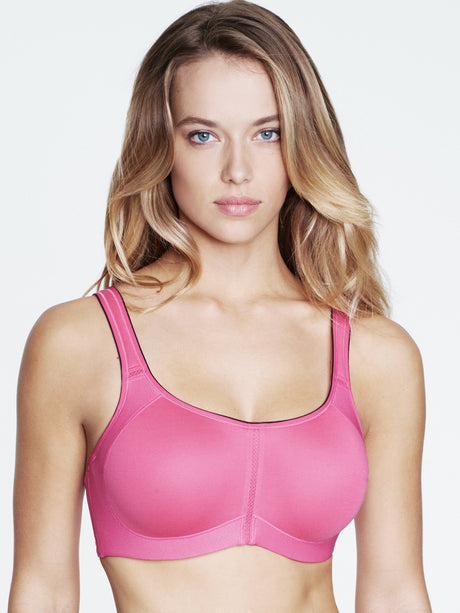
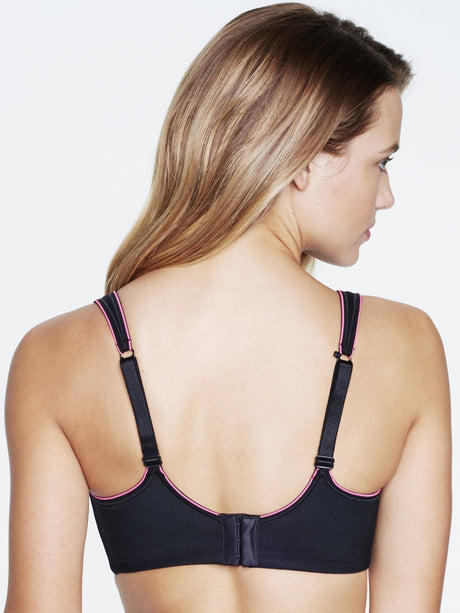
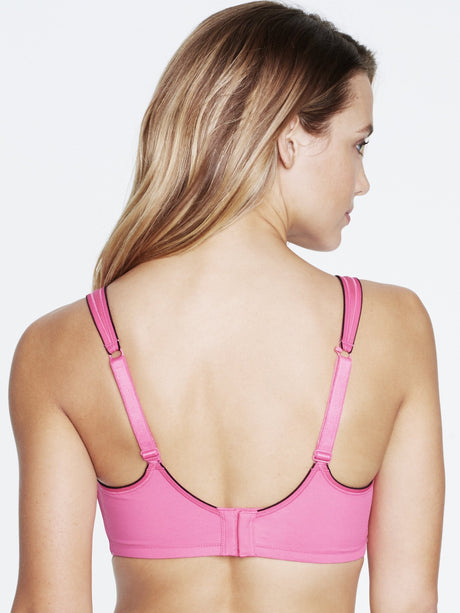
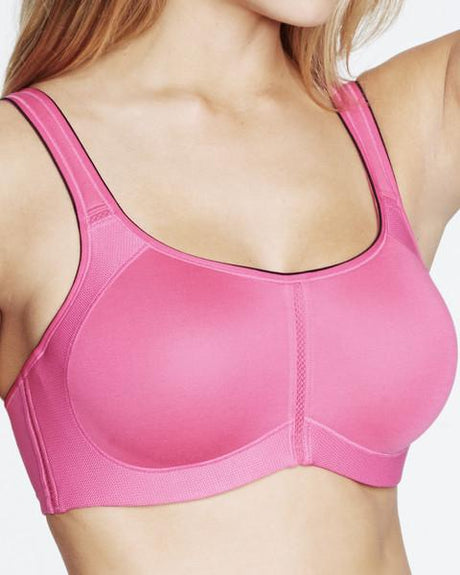
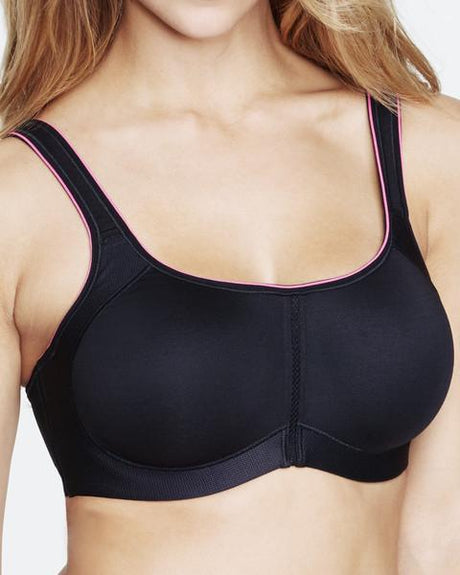
Panache Plus Size High Impact Underwire Sports Bra 5021
$84.00Unit price /Unavailable-
Panache Sports
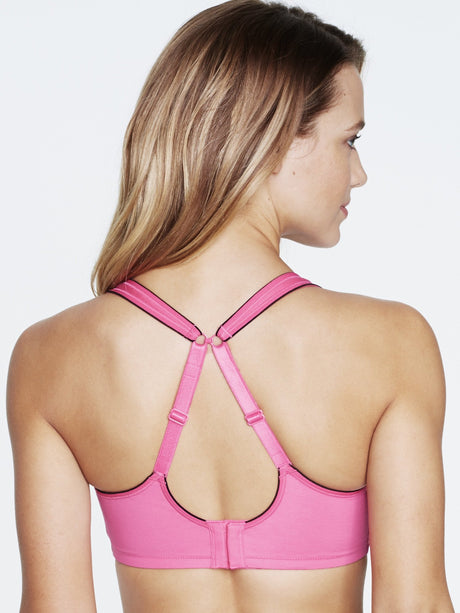
Panache Plus Size High Impact Underwire Racerback Sports Bra 5021
$84.00Unit price /Unavailable-
Panache Sports
Panache Plus Size Underwire Racerback Sports Bra 5021
$84.00Unit price /Unavailable-
-
-
Dominique
Plus Size Soft Support Wireless Full Coverage Sports Bra, White, Dominique 6000
$49.00Unit price /Unavailable-
Panache Sports
Panache Sculptresse Plus Size Unlined Racerback Sports Bra 9441
$90.00Unit price /Unavailable-
-
-
-
-
-
-
Natori
Natori Plus Size Power Comfort Full Fit Active Underwire Sports Bra
$68.00Unit price /Unavailable-
-
Parfait Lingerie
Active Full Bust Wire-Free Unlined Sports Bra, Black, Parfait P62121
$53.10$59.00Unit price /Unavailable-
Parfait Lingerie
Active Full Bust Wire-Free Unlined Sports Bra, Bare, Parfait P62121
$53.10$59.00Unit price /Unavailable-
Parfait Lingerie
Wave Full Bust Wire-Free Front-Close Sports Bra, Nautical Blue, Parfait P6052
$43.40$62.00Unit price /Unavailable-
-
Shock Absorber
Women's Plus Size Underwire Racerback Sports Bra
Almost gone (1 unit)$47.98$59.98Unit price /Unavailable-


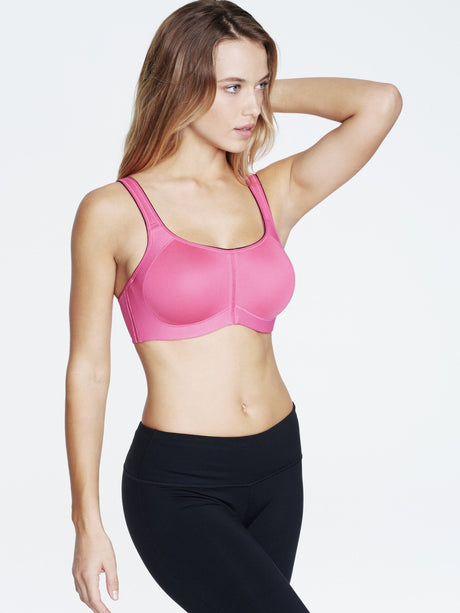


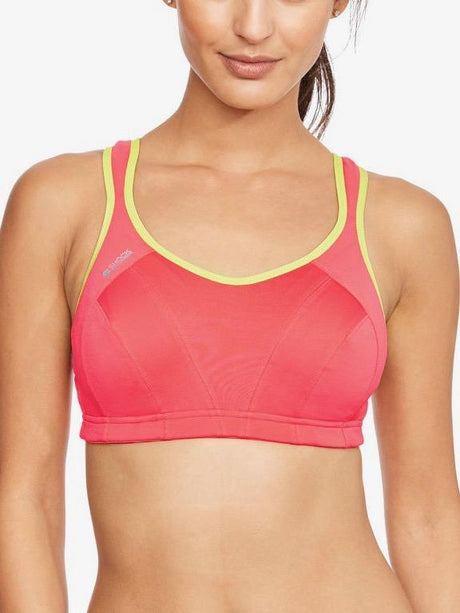


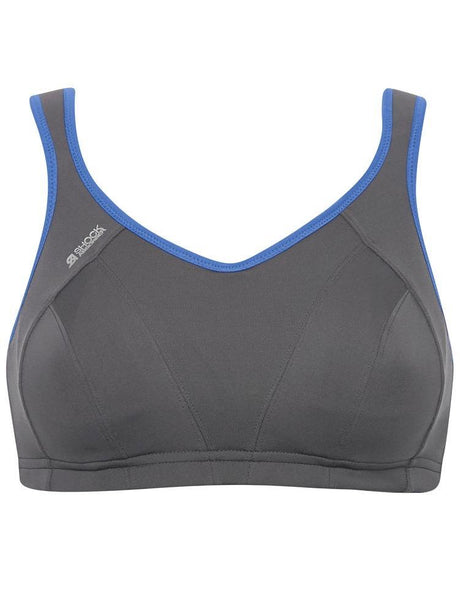
Sports bras — the right support for every body and every workout.
The right sports bra does one thing brilliantly: it controls movement so you don't have to think about it. That comes down to three choices — the support level your activity needs, a band that fits firm and level, and cups that hold your bust instead of flattening it.
This is the complete HauteFlair sports bra collection, organized by impact level, activity and feature, with a size calculator and fit guide. Start with how hard you move, then dial in the fit.
How do I choose a sports bra?
Choosing a sports bra comes down to three decisions in order: match the support to your activity (low impact for yoga, walking and strength work; medium for cycling, hiking and dance; high impact with encapsulation for running, HIIT and jumping), get the band right (it carries roughly 80% of the support, so a snug, level band matters more than the straps), and pick the construction for your bust (compression suits smaller-to-mid busts at lower impact, while encapsulation or combination construction holds a fuller bust far better). The single most common mistake is under-supporting — when in doubt at higher impact or a fuller bust, size the support level up, not down.
Sports bra size calculator
A sports bra only supports you if the size is right. Enter two measurements and we'll estimate your band and cup instantly, plus the support type that suits it and the sister sizes worth trying. Sports styles run firm — confirm the band feels secure but never painful.
Enter your measurements
Use a soft tape measure, level all the way around, in inches over a non-padded bra or bare skin.
This calculator uses the modern (no add-on) band method. For how to choose support, fit and impact levels in depth, read our complete sports bra guide.
Sports bras by what you need them to do
The right sports bra depends on the activity and the support it demands. Here's how the most common needs map to the style that solves them.
| If you need… | The job to be done | Start here |
|---|---|---|
| High-impact support | Running, HIIT and jumping — encapsulation or combination with a firm wide band | High-Impact |
| Low-impact comfort | Yoga, walking and lounging — soft, flexible support with full coverage | Low-Impact |
| Easy on and off | A front zip or front closure so you skip wrestling a tight band overhead | Front-Zip & Closure |
| Fuller-bust support | Encapsulation and underwire that hold each side and stop side-spill | DD Sports Bras |
| Plus-size support | Extended bands and cups with wide straps and full coverage | Plus Size Sports Bras |
| A longer-line fit | Longline styles for extra support, smoothing and crop-top wear | Longline |
| No-dig, all-day comfort | A racerback that spreads weight and keeps straps off the shoulders | Racerback |
Sports bra support, compared
Three ways a sports bra controls movement. The right one depends on your bust size and how hard you move — fuller busts and higher impact lean toward encapsulation or combination.
| Support Type | Best For | Impact | Bust Size | Wire |
|---|---|---|---|---|
| Compression | Lower-impact movement; presses the bust to the body | Low–medium | Smaller–mid | Usually wireless |
| Encapsulation | Holds each breast in its own cup; fuller busts | Medium–high | Mid–full | Often underwire |
| Combination | Maximum control for high-impact running | High | All, esp. full | Varies |
| Longline | Extra support, smoothing and crop-top wear | Low–high | All | Varies |
| Front-Zip | Easy on and off without fighting the band | Medium–high | All | Varies |
Find your sports bra in 10 seconds
Pick the card that matches what you actually want — the fastest way to land on a sports bra that supports without the all-day adjusting.
For running, HIIT and jumping, choose encapsulation or combination construction with a wide firm band and adjustable straps. This is where support matters most — and where the wrong bra is felt with every stride.
Shop High-Impact →For yoga, pilates, walking and lounging, a soft compression or light encapsulation bra with full coverage gives gentle support and all-day comfort — flexible, breathable, and easy to live in.
Shop Low-Impact →At a D cup and up, encapsulation beats compression — structured cups hold each side while a firm band controls bounce. Browse styles graded for fuller busts, including dedicated DD and plus-size sports ranges.
Shop DD Sports →Front-zip and front-closure sports bras let you fasten at the front instead of pulling a tight band over your head — easier on the shoulders and a favorite for fuller busts and sensitive shoulders.
Shop Front-Zip →Longline sports bras extend down the torso for extra support, smoothing and a crop-top look you can wear on its own. The most versatile style for studio-to-street wear.
Shop Longline →A racerback spreads weight across the upper back instead of two narrow straps, so shoulders don't carry marks and straps don't slip. Paired with a wide band, it's the most comfortable all-day option.
Shop Racerback →How to size and choose a sports bra
Two measurements get you to the right band and cup; the activity gets you to the right support. The band carries most of the support, so it should be firm, level and snug without cutting in.

- Measure your band. Wrap the tape snugly around your ribcage directly under the bust, level all the way around. Round to the nearest even inch.
- Measure your bust. Keep the tape loose and level across the fullest part of the bust. Subtract band from bust — each inch is about one cup.
- Match your support. Pick impact by activity (low for yoga, high for running) and construction by bust (compression for smaller-mid, encapsulation for fuller).
- Test it moving. The band should be firm and level, not riding up. Jump or jog in the fitting room: a good sports bra controls bounce with no spillage and no pain.
Between two sizes? A sister size (down a band, up a cup) keeps the cup volume the same with a firmer band, which many prefer for sport. Full detail in our sports bra guide and bra size chart.
The complete sports bra guide
Five short, in-depth guides for choosing a sports bra with confidence. Tap any section to expand.
01Impact levels, explainedLow · Medium · High — matching support to activity
Impact level is the most important choice — how much support the bra gives relative to how much your activity moves the bust.
Low impact
Yoga, pilates, walking, strength training and lounging. Soft, flexible support with full coverage. Comfort-led, but a fuller bust should still look for real structure.
Medium impact
Cycling, hiking, dance and machine workouts. More structured cups and a firmer band to limit movement without full lock-down.
High impact
Running, HIIT, jumping and team sports. The most controlled support — encapsulation or combination, a wide firm band, adjustable straps, often underwire. Bouncing during high impact strains the ligaments that support the bust, so don't under-support here.
02Compression vs encapsulationHow sports bras actually control movement
Sports bras control movement in two ways, and the right one depends on your bust.
Compression
Presses the bust toward the body as one unit. Simple, often wireless, fine for lower impact at smaller-to-mid busts. At a full bust it flattens without truly controlling bounce.
Encapsulation
Supports each breast in its own structured cup, like a supportive everyday bra built for sport. Holds a fuller bust naturally and reduces side-to-side movement.
Combination
Encapsulation cups inside a compressive shell — the most control for high-impact movement and the best choice for running at a fuller bust.
03Styles & featuresRacerback · Front-zip · Longline · Padded · Underwire
Features change how a sports bra wears and who it suits.
Racerback
Straps converge between the shoulder blades to spread weight and stop slipping — supportive and great under tanks.
Front-zip & front-closure
Fasten at the front instead of pulling overhead — easier on, popular for fuller busts and sensitive shoulders.
Longline
Extends down the torso for extra support, smoothing and crop-top wear on its own.
Padded & removable cups
Removable pads add shape and modesty; take them out for a lighter feel or easier washing.
Underwire & wireless
Sports underwire anchors each cup for the most controlled lift at a full bust; wireless trades some structure for soft, flexible comfort.
04Fit signals that separate good from greatThe band · The cups · The straps · Movement test
A well-fitting sports bra is one you forget you're wearing. Four checkpoints tell you whether it fits.
The band does most of the work
Around 80% of support comes from the band. It should sit firm, wide and level, not riding up. Sports bands run snug — secure, but you should still breathe comfortably.
The cups should contain, not compress (at a fuller bust)
The bust should sit fully inside the cup with no spillover or gaping. Any underwire should encircle the breast and lie flat on the ribcage.
Straps support, don't strain
Adjustable straps should be snug without cutting in. Wide or racerback straps spread the load best.
Pass the movement test
Jump, jog or bounce in the fitting room. A good sports bra controls movement in all directions with no pain and no spillage.
05Care & longevityWash · Dry · Rotate · Replace
Sweat and stretch wear sports bras out faster than everyday bras, so good care protects the support you paid for.
Best practices
- Wash after sweaty wear. Salt and oils break down elastic. Cool water, mild detergent, hooks fastened, lingerie bag on delicate.
- Never tumble dry. Heat destroys the elastic and compression that does the work. Air dry flat or hang.
- Skip fabric softener. It coats technical fabrics and kills stretch recovery.
- Rotate several bras. Let elastic recover fully between wears.
- Replace when support fades. When the band no longer feels firm or bounce returns, it's done — usually sooner than an everyday bra.
Sports bras: frequently asked questions
The most useful questions about choosing and fitting a sports bra, answered with a fitter's depth. Tap any question to expand.
01How do I choose a sports bra?
Match the support to your activity (low impact for yoga and walking, medium for cycling and hiking, high impact for running and HIIT), get the band firm and level since it carries most of the support, and pick the construction for your bust — compression for smaller-to-mid busts at lower impact, encapsulation or combination for fuller busts and higher impact.
02What are the three impact levels?
Low impact (yoga, walking, strength work), medium impact (cycling, hiking, dance) and high impact (running, HIIT, jumping). The higher the impact, the more support you need — high-impact bras use encapsulation or combination construction, a wider band and often underwire to control bounce.
03What's the best sports bra for running?
A high-impact sports bra, ideally encapsulation or combination construction with a wide firm band and adjustable straps. Running creates the most vertical and multi-directional movement, so it demands the most support — especially at a fuller bust, where combination styles control bounce best.
04Compression or encapsulation — which do I need?
Compression presses the bust against the body and suits lower-impact activity at smaller-to-mid busts. Encapsulation supports each breast in its own cup and holds a fuller bust far better. For high impact, a combination bra (encapsulation cups in a compressive shell) gives the most control. When in doubt at a fuller bust, choose encapsulation.
05How should a sports bra fit?
The band should be firm, wide and level without riding up; the cups should fully contain the bust with no spillover or gaping; the straps should be snug without cutting in; and when you jump or jog the movement should be controlled with no pain. The band should feel more snug than an everyday bra, but you should still breathe easily.
06How tight should a sports bra be?
Snug and secure, but never painful. A sports bra band runs tighter than an everyday bra to control movement, but you should be able to take a full breath, slide two fingers under the band, and wear it without pinching, chafing or red welts that linger. If it hurts or restricts breathing, size up the band.
07What's the best sports bra for a larger bust?
Encapsulation or combination construction with a wide firm band, full-coverage cups, wide adjustable straps and, for high impact, underwire. The band carries most of the support, so getting it snug and level matters most. See our DD sports bras and plus size sports bras for styles graded for fuller busts.
08Do sports bras come with underwire?
Yes. Sports underwire anchors each cup and stops side-spill for the most controlled lift, which is a real advantage at a full bust during higher impact. A properly fitted sports underwire shouldn't poke or dig; if it does, the cup size is usually off. Prefer no wire? A structured wireless encapsulation bra is the alternative.
09What is a front-closure or front-zip sports bra?
One that fastens at the front with a zip or clasp instead of pulling over your head. It's far easier to get on and off, especially at a fuller bust or with sensitive shoulders or limited mobility, and a front zip lets you open it to cool down after a workout.
10Are racerback sports bras better?
For many people, yes — a racerback converges the straps between the shoulder blades, which spreads weight, stops straps slipping and adds support, all while staying hidden under tanks. They're especially comfortable for all-day wear and fuller busts. The tradeoff is they're less adjustable than a standard-strap design.
11What is a longline sports bra?
A sports bra with a band that extends further down the torso — sometimes to the waist. The longer line adds support and smoothing, distributes pressure over a wider area, and is fashionable enough to wear as a crop top on its own. A versatile pick for studio-to-street wear.
12Can I wear a sports bra every day?
Yes, a comfortable low-impact sports bra is fine for everyday wear, and many people prefer the wireless, pull-on feel. Just make sure the band still provides real support and isn't so tight it restricts breathing, and rotate bras so the elastic can recover between wears.
13How often should I replace a sports bra?
Typically every six to twelve months with regular use, sooner for high-impact running bras. The clearest sign is lost support: when the band no longer feels firm even when new-tight, the fabric has gone slack, or you feel more bounce than you used to, it's time to replace it.
14What size sports bra do I need?
Measure your underbust (snug) for the band and your bust (loose, fullest point) for the cup, then use the calculator above to estimate your size. Many sports bras are sized by band and cup; some compression styles use S–XL. Sports styles run firm, so confirm the band feels secure but not painful and move in it before deciding.
The right sports bra starts with the right support
Confirm your size with the calculator, then shop by impact level, activity and feature — from low-impact everyday styles to high-impact encapsulation built to control every stride.