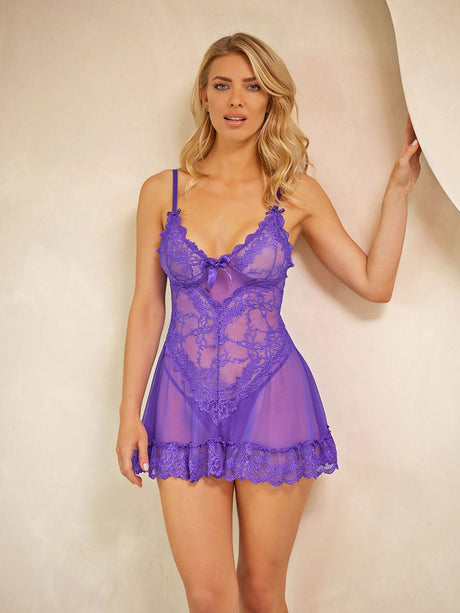
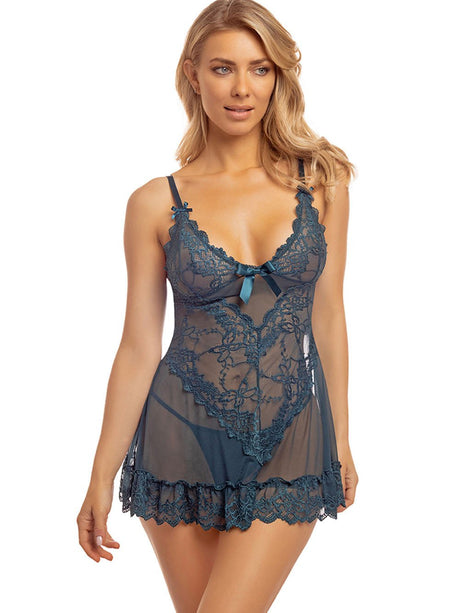
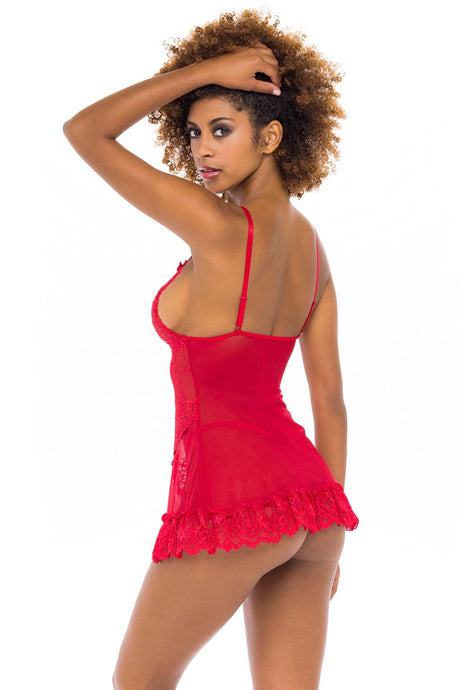
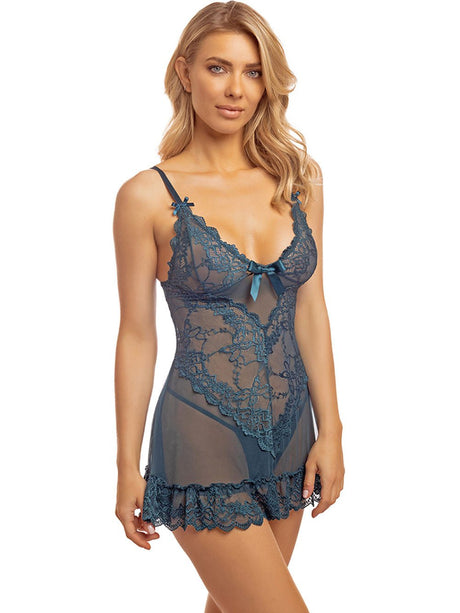
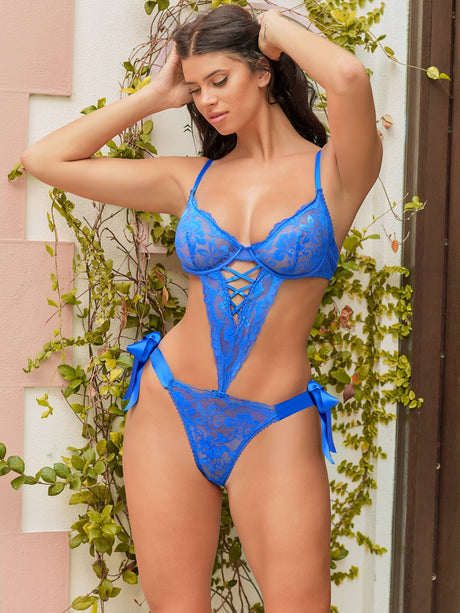
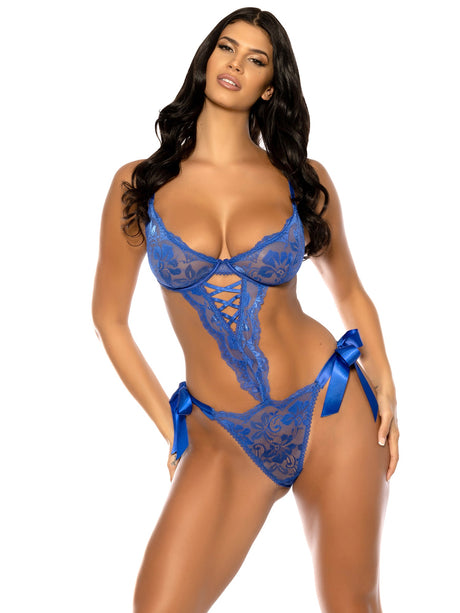
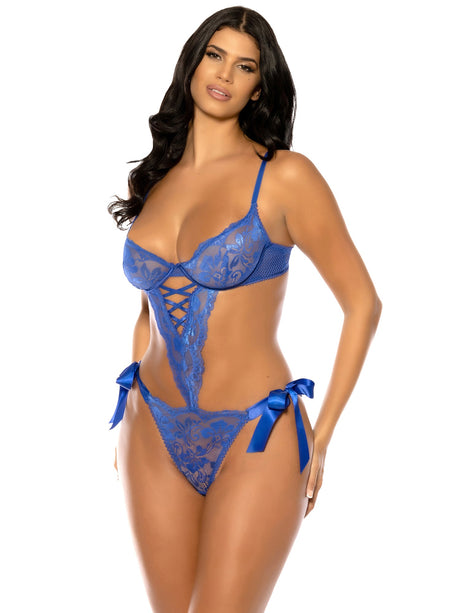
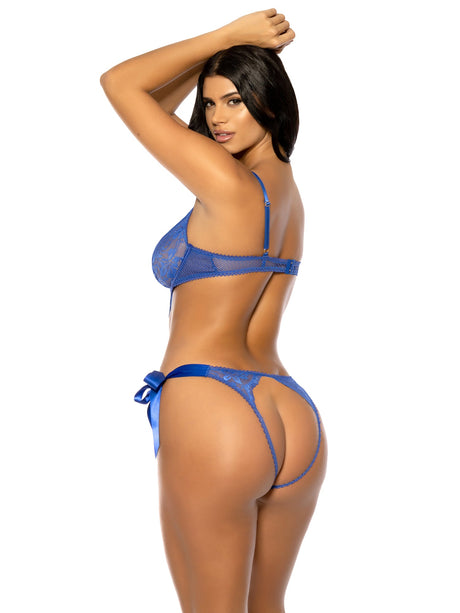
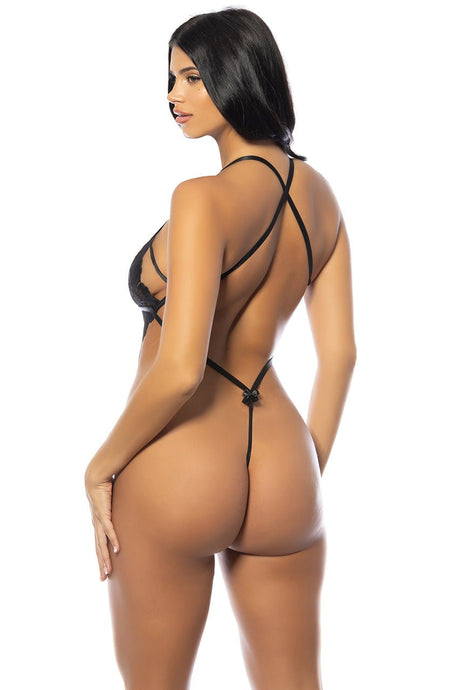
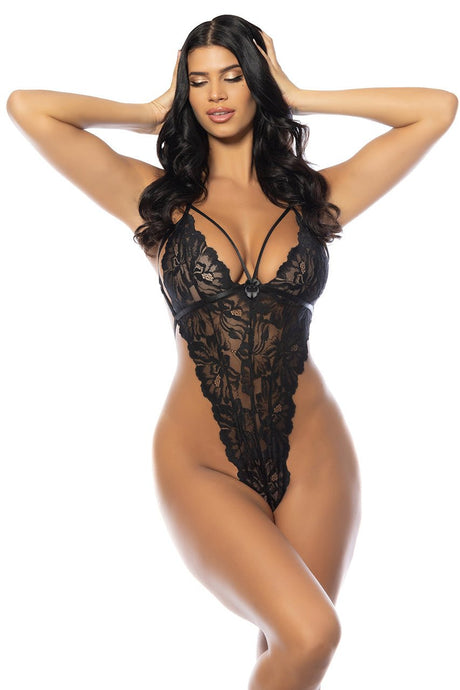
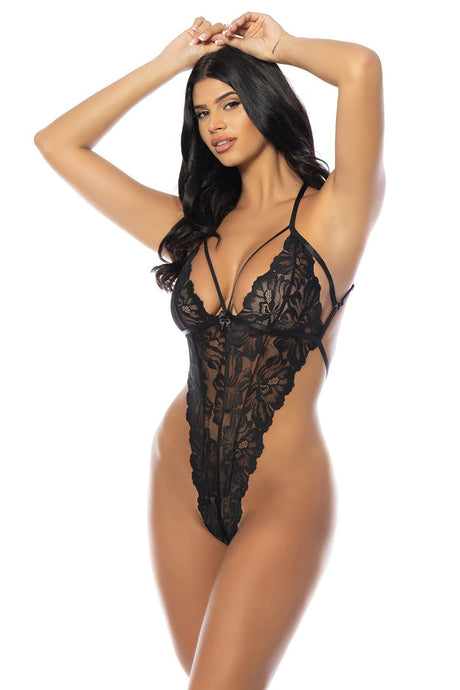
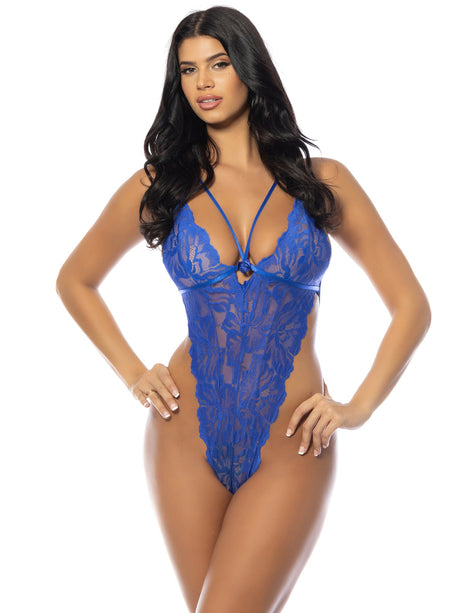
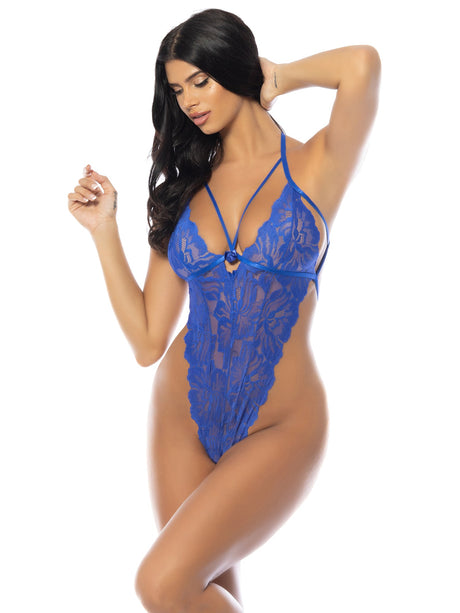
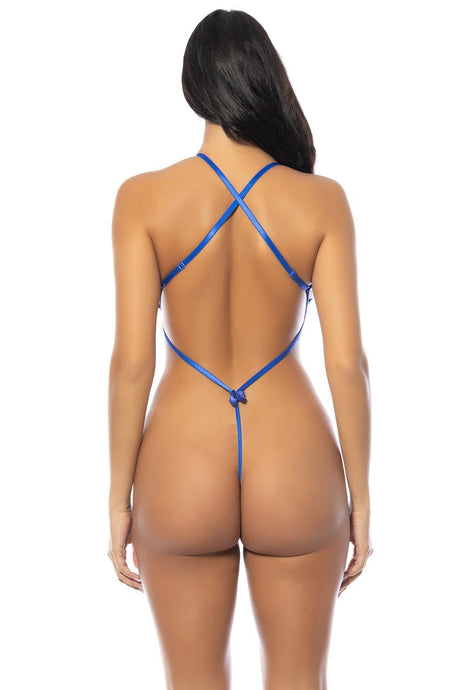
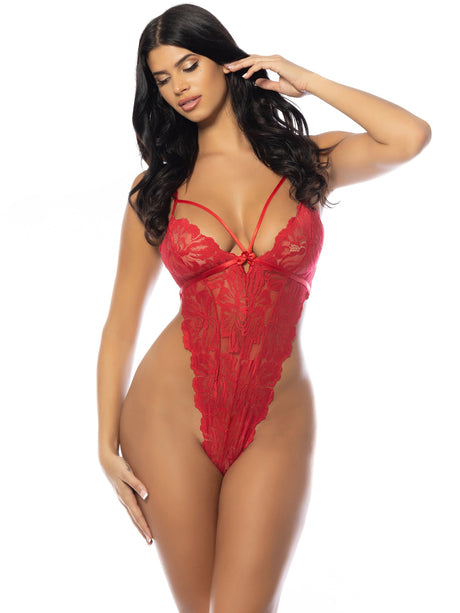
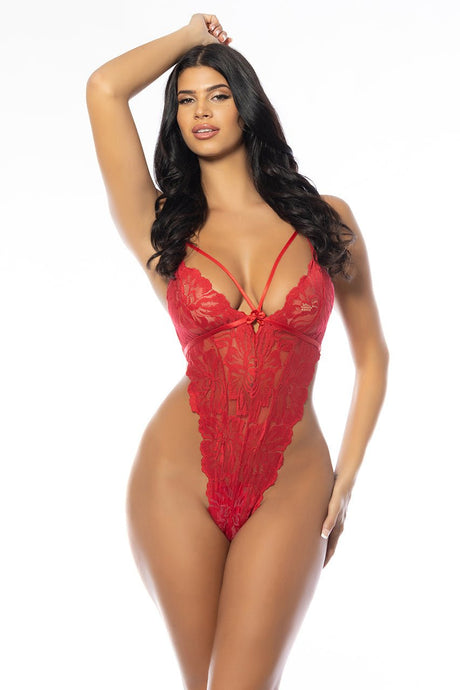
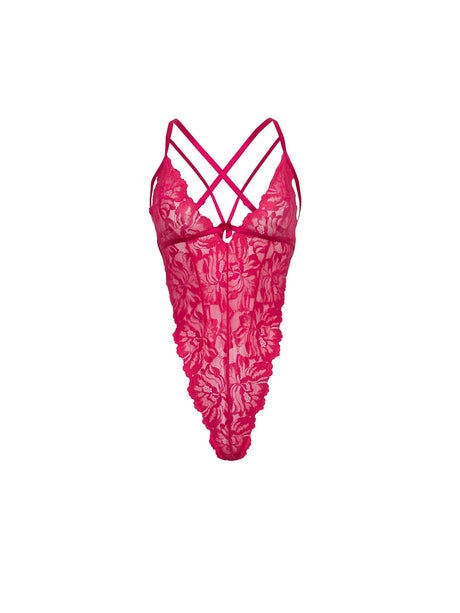
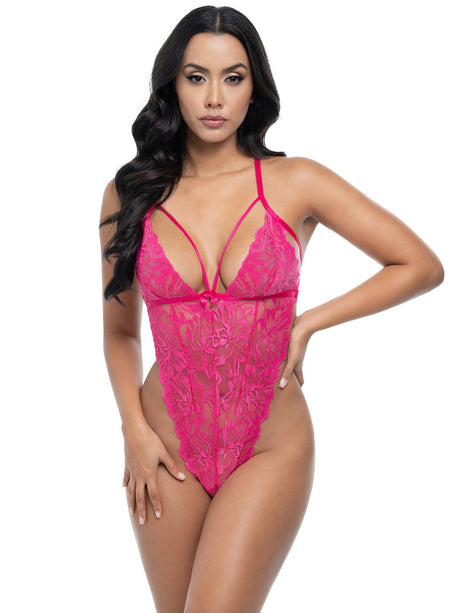
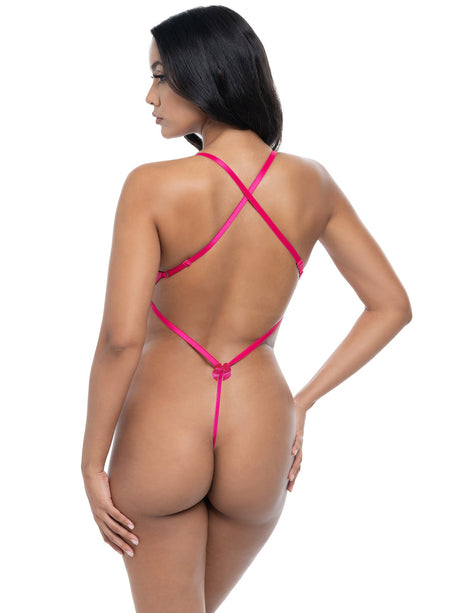
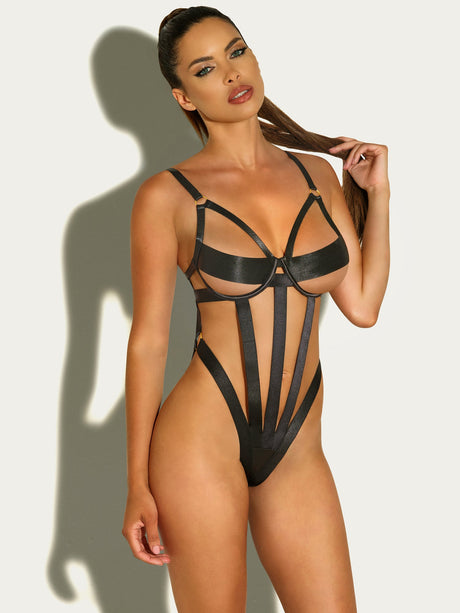
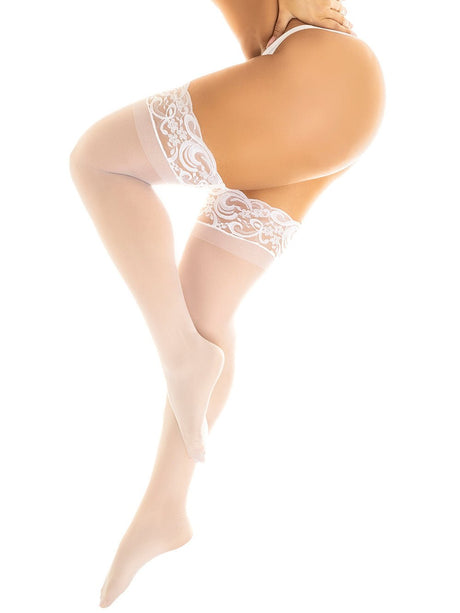
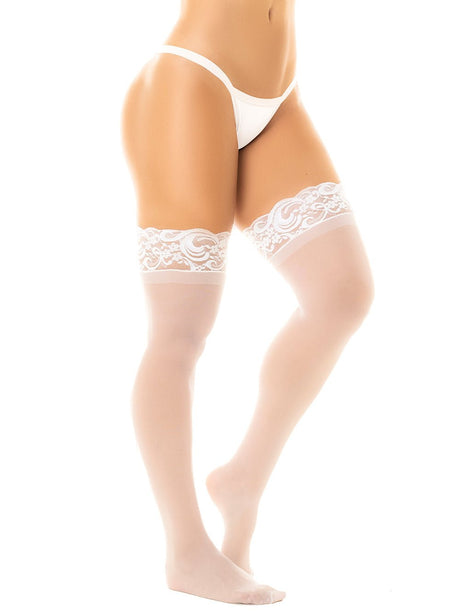
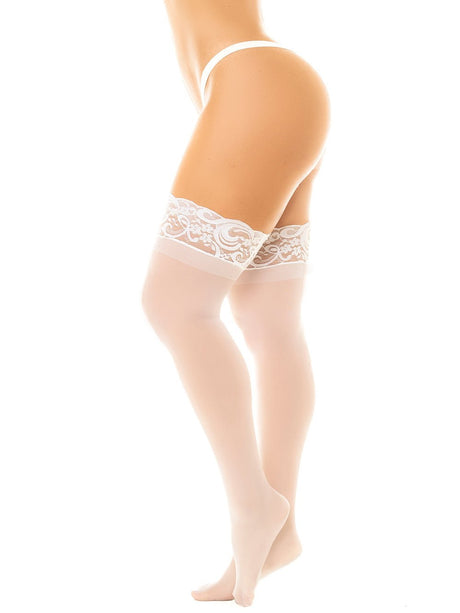
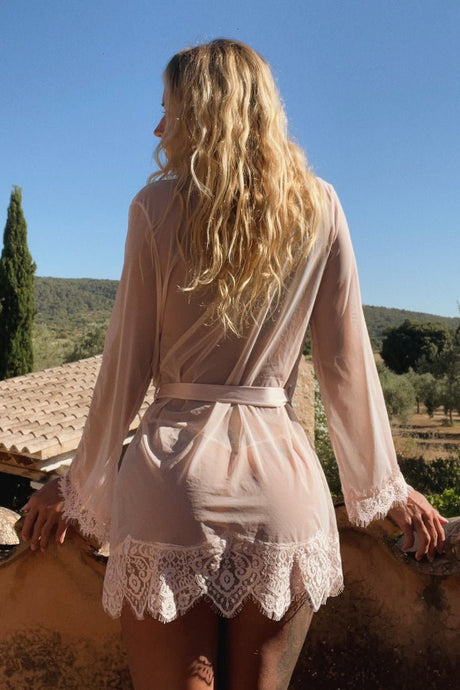
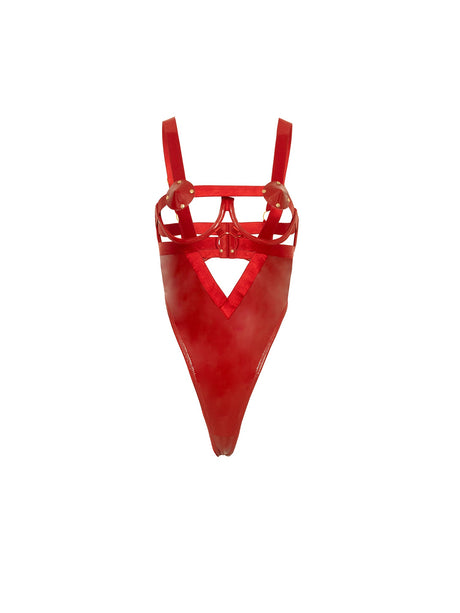
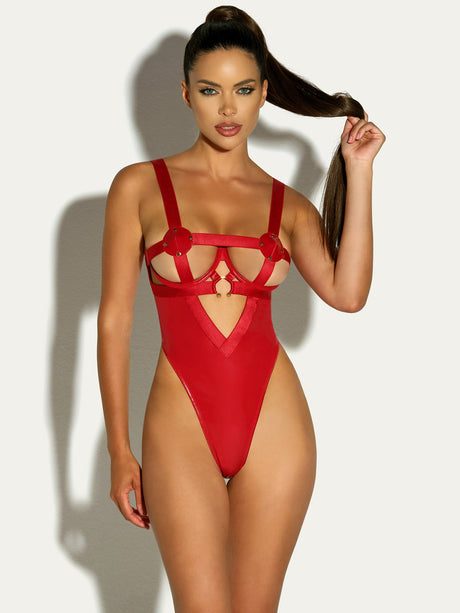
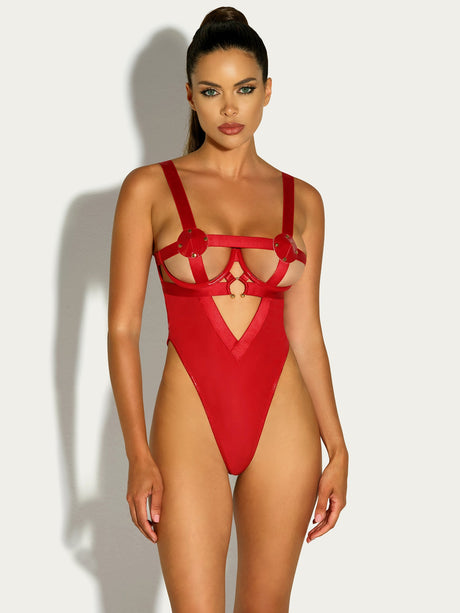
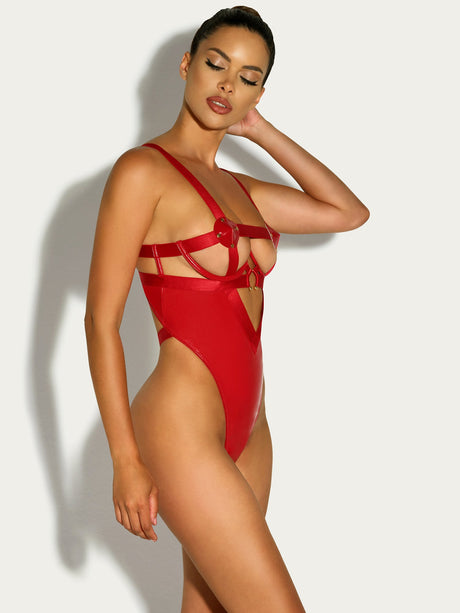
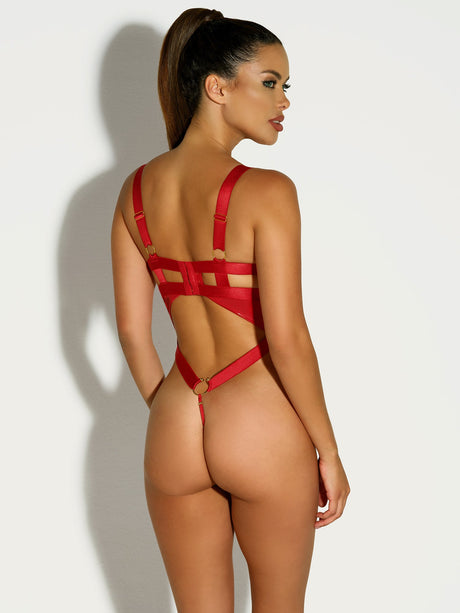
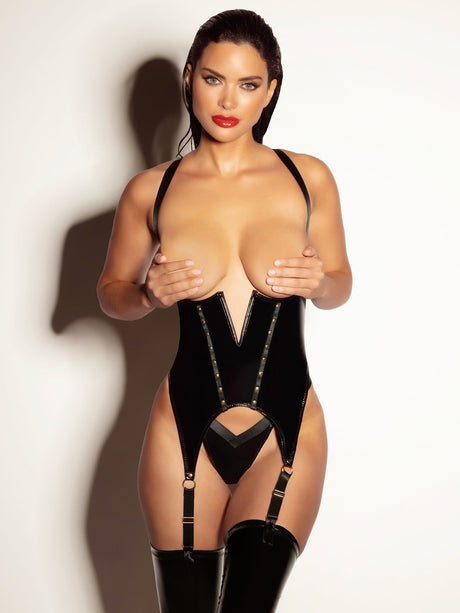
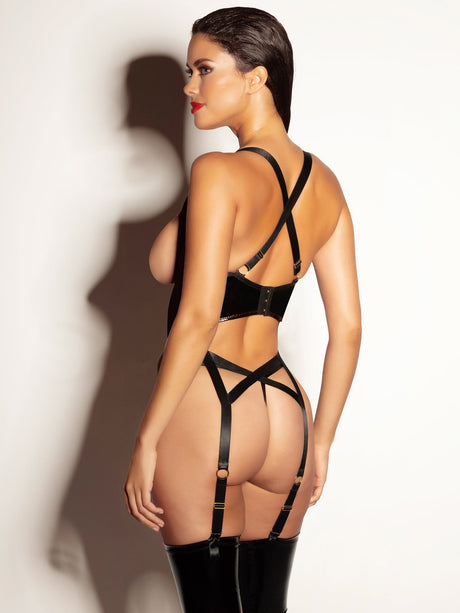
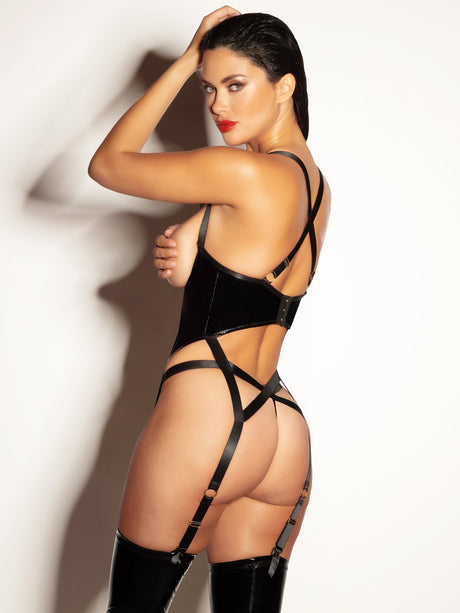
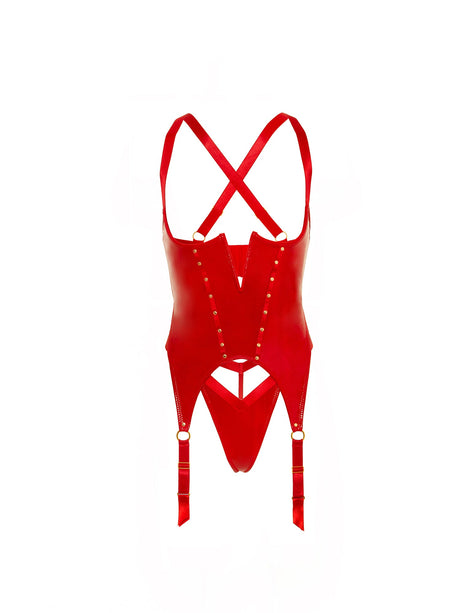
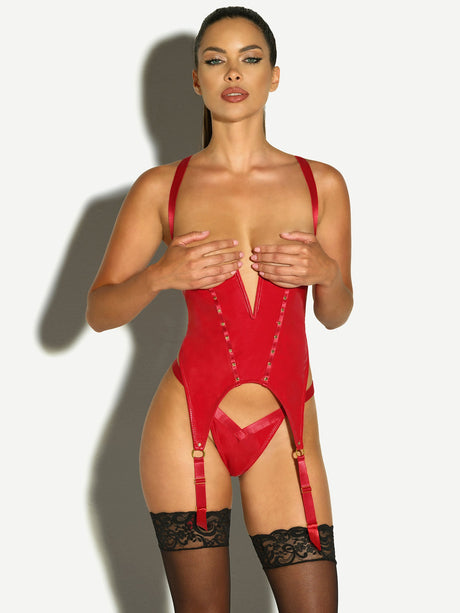
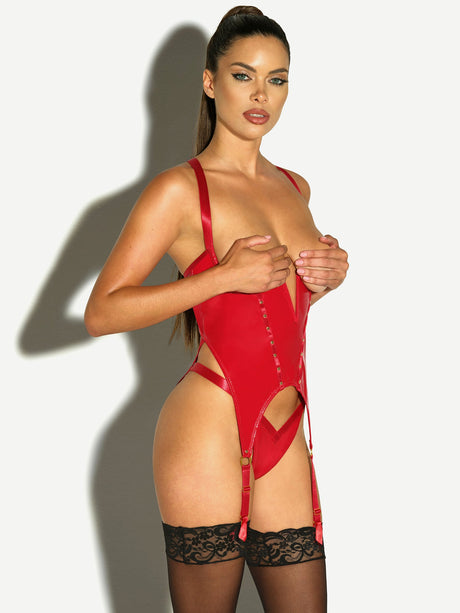
What is strappy lingerie?
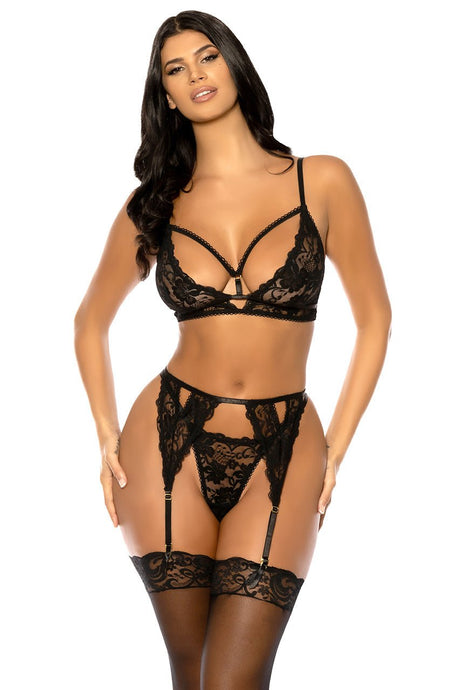
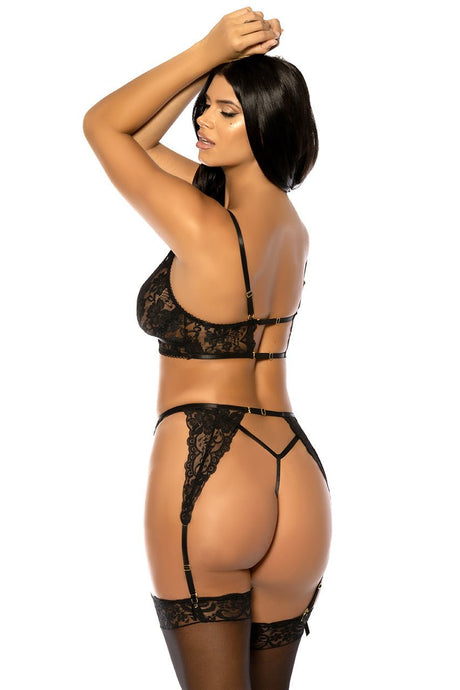
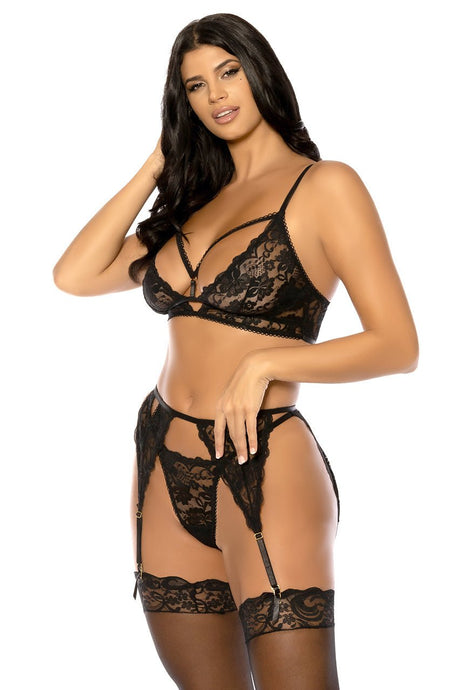
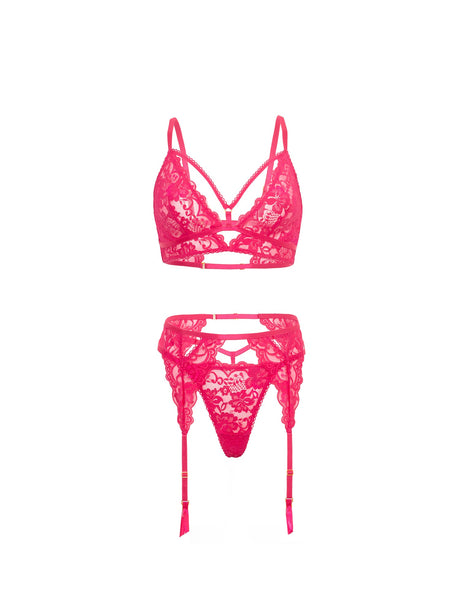
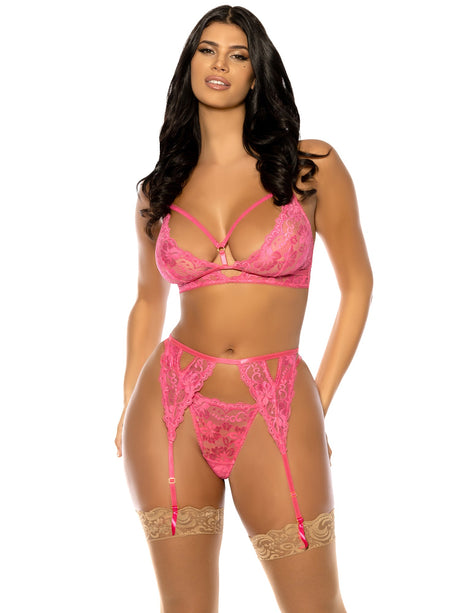
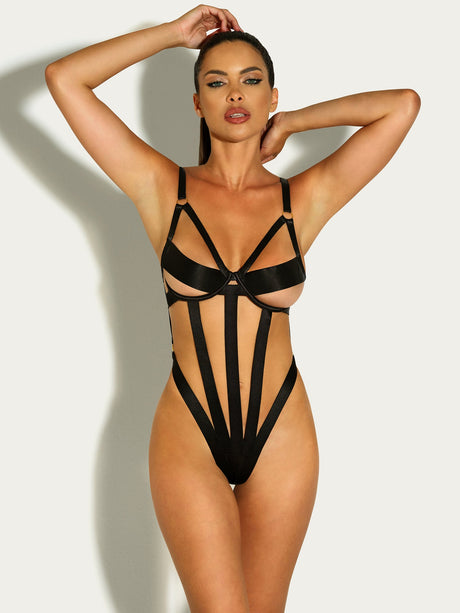
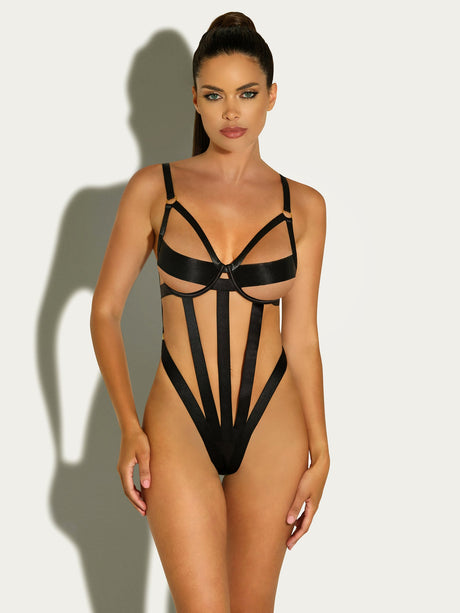
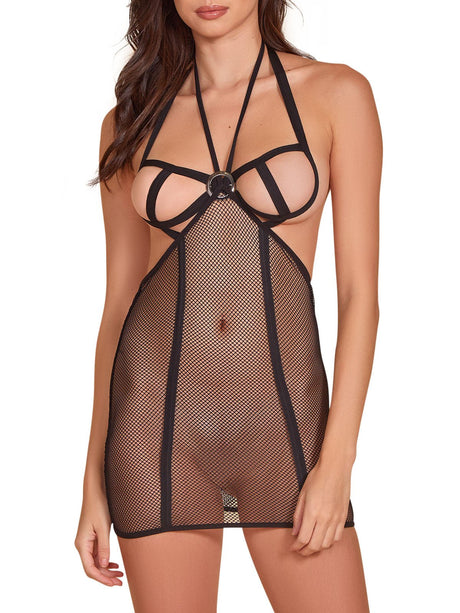
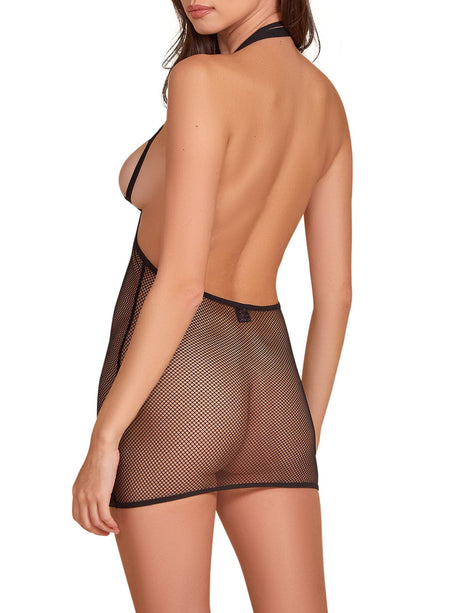
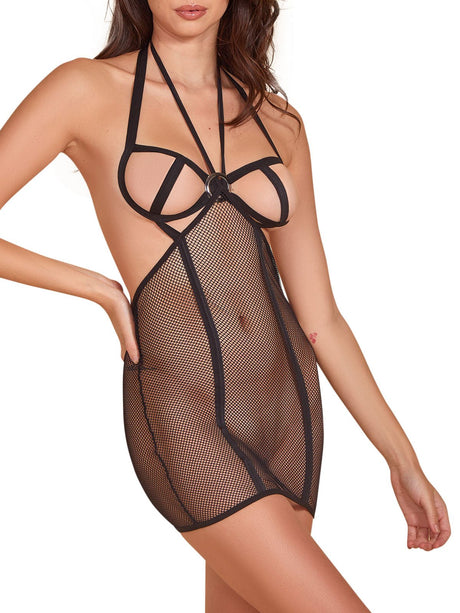
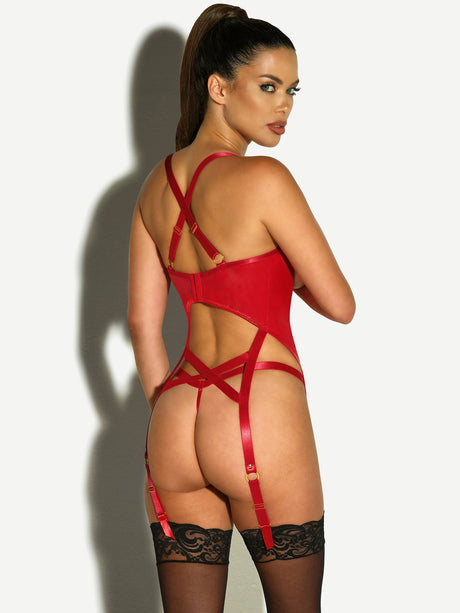
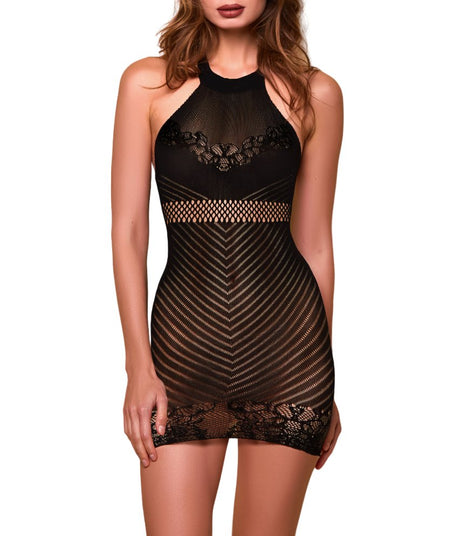
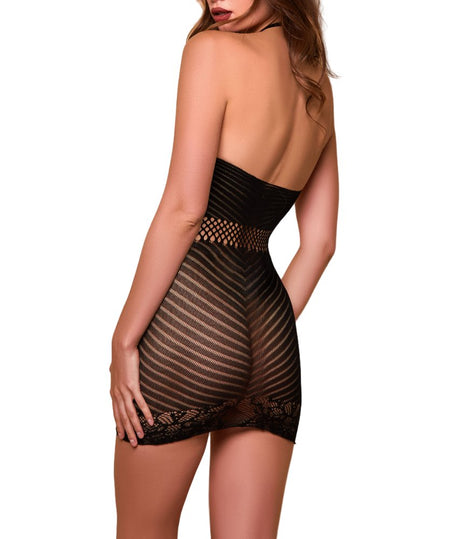
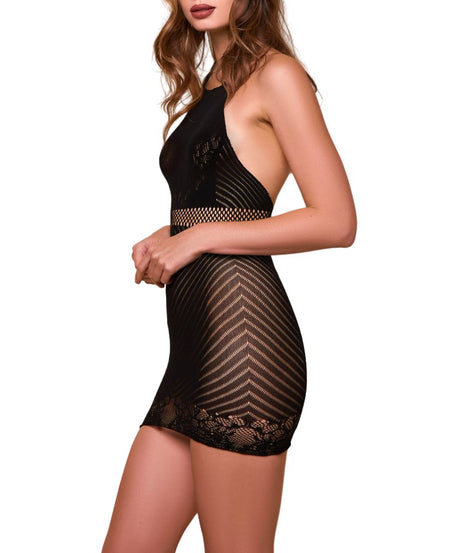
Strappy lingerie is intimate apparel defined by visible decorative strap geometry — strapwork that's part of the silhouette design, not just functional support. Four strap geometries define the category: neckline strap detail, underbust banding, cage or architectural construction, and harness-influenced design. Strappy lingerie sits in a distinct middle space between minimalist lingerie and harness lingerie — bold, structured, and styled without becoming costume-driven. It's one of the few intimate categories that crosses into outerwear styling.
This guide does the actual work. We'll define strappy lingerie precisely — as a construction category defined by visible strap geometry — then map the four geometries you'll find on the market, the five silhouettes that anchor most purchases, the disambiguation questions (strappy vs harness vs cage) most articles muddle, and the layering and outerwear-styling angle no competitor handles well.
Shop Strappy Lingerie
Already know what you want? Browse the full strappy collection — bras, teddies, bodysuits, sets, and statement pieces, all in one place.
Shop Strappy Lingerie → Browse Sexy Lingerie →- Strappy lingerie is defined by visible strap geometry — strapwork that's part of the silhouette design, not just functional support.
- Four strap geometries: neckline strap detail, underbust banding, cage or architectural construction, and harness-influenced design.
- Five primary silhouettes: strappy bras and bralettes, strappy teddies, strappy bodysuits, strappy lingerie sets, and strappy babydoll or mini-slip pieces.
- Strappy vs harness: strappy is decorative styled strap design; harness is hardware-led with O-rings and buckles. They overlap at the edges.
- Strappy vs cage: cage is a specific subcategory of strappy with intersecting straps in geometric patterns. All cage is strappy; not all strappy is cage.
- Designed to be seen — strappy is one of the few intimate categories engineered for visible-strap outerwear styling.
- Geometry choice affects everything — comfort, fit, longevity, and where the piece can be worn all flow from the geometry decision.
- Quality construction matters more than price — cheap strappy pieces look the part but lose architectural shape within months.
What "Strappy Lingerie" Actually Means
The most useful definition of strappy lingerie is this: it's defined by visible strap geometry — strapwork that's part of the silhouette design, not just functional support. The strap detail isn't holding the piece together; the strap detail is the piece's design language.
This is what separates strappy lingerie from regular lingerie that simply has straps (every bra has straps; not every bra is strappy). It's also what separates strappy from harness — both use strap construction, but strappy keeps the strap geometry decorative and styled while harness pushes it into hardware-led, often-graphic territory. Once you understand strappy as a category about intentional strap design, shopping the market becomes much clearer.
The HauteFlair strappy lingerie collection sits specifically in the styled, structured, architectural part of the spectrum — bold strap design that reads as polished lingerie rather than as costume. For the harness end of the spectrum, browse harness lingerie separately; for the kinky and bondage-coded end, see our BDSM lingerie guide.
The Four Strap Geometries
Four geometries define how strap design appears across the strappy category. Each has different visual weight, comfort implications, and outerwear-styling potential. Most wearers gravitate to one or two geometries once they've tried each.
The Most Subtle Entry Point
Single or paired straps that frame the neckline, decolletage, or shoulder line. Visually, the strap detail reads as polished accent rather than dominant construction — the piece can pass for regular lingerie at a glance and reveal its strappy character on closer look. Comfort-wise, this is typically the most comfortable geometry because the strap quantity is limited. For outerwear styling, neckline detail is the safest layering choice: a single strap peeking above a top's neckline reads styled, not exposed. The most common starting point for shoppers new to strappy construction.
The Architectural Polish
Multiple parallel straps running across the underbust or just below the cups. Visually creates a "ladder" effect that adds structure and a polished, considered read. Often combined with sheer or lace base fabric for visual contrast. Comfort depends on band quality — quality elastic feels supportive; cheap elastic creates a constrictive feel. For outerwear styling, underbust banding works particularly well under sheer or mesh outerwear where the band pattern becomes part of the layered styling.
The Statement Geometry
Intersecting straps that create geometric or architectural patterns — cross-hatch, diamond, starburst, or other intentional designs. Visually the boldest geometry and the most photogenic for boudoir contexts. Comfort requires precise fit because the rigid strap framework needs to match body proportions; mis-sized cage construction can feel restrictive. For outerwear styling, cage construction is rarely subtle — choose it for occasions where the geometry is the styling point. Often combined with open-cup or peekaboo construction for maximum statement read.
The Edgy Crossover
Straps integrated with hardware — O-rings, sliders, buckles, hooks. Visually reads as the boldest geometry and the closest to actual harness lingerie territory. Comfort depends heavily on hardware placement and quality; well-placed hardware sits flat, poorly-placed hardware presses uncomfortably. For outerwear styling, harness-influenced strappy pieces are typically dedicated occasion wear rather than daily layering. For the full harness category, browse harness lingerie separately.
For first-time strappy buyers, neckline detail or underbust banding are the easiest entry points — they're versatile, comfortable, and readable as polished lingerie rather than statement pieces. Cage construction is the second wardrobe addition once you know strappy works for you; it's where the category gets its boudoir-photogenic identity. Harness-influenced design is the most committed direction; reach for it when the edgier read is specifically what you want. Most wardrobes draw from two of these geometries rather than collecting all four.
The Five Silhouettes
The same four geometries appear across five primary silhouettes. Each silhouette has its own fit considerations, layering potential, and use contexts.
Strappy Bras & Bralettes
Bras and bralettes with visible strap geometry in the bust, neckline, or back areas. The most common strappy silhouette and where the category gets most of its identity. Works under outerwear, layered under sheer tops, or as a top on its own. Available across all four geometries.
Shop Strappy Bras →Strappy Teddies
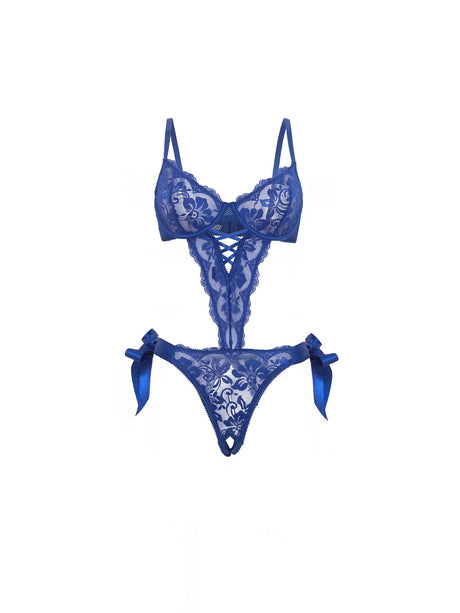
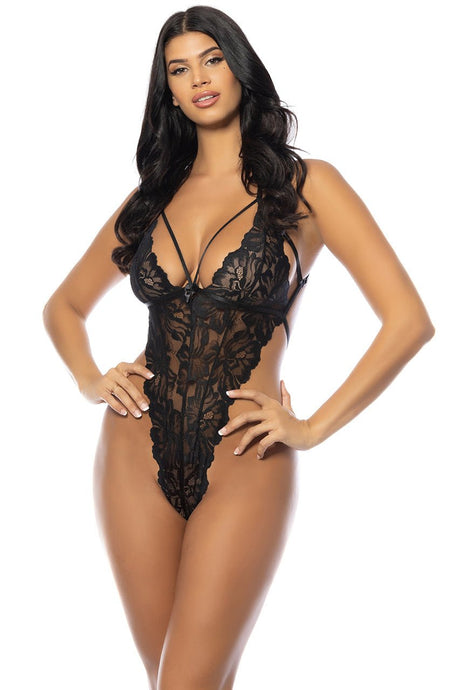
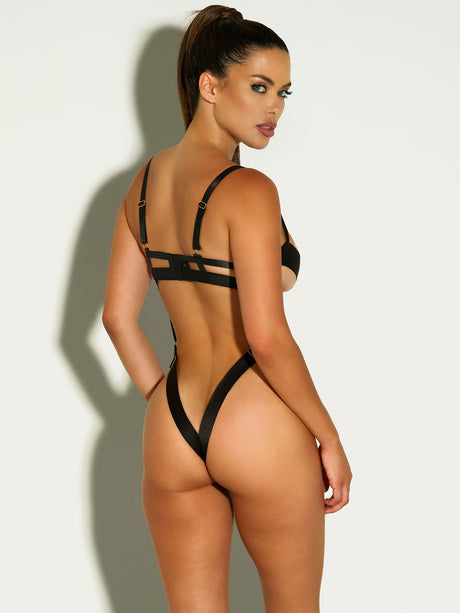
One-piece torso-to-crotch lingerie with visible strap construction integrated into the body. Strap detail typically appears at the back, sides, or shoulder line; some pieces extend strap detail throughout the silhouette. Photographs beautifully because the strap geometry creates strong silhouette structure.
Shop Strappy Teddies →Strappy Bodysuits
Similar to teddies but typically with more shapewear-coded construction — heavier fabric, more sculpting through the torso, built-in bra support. Strap detail often appears as architectural banding or cage construction across the bust and back. Pairs well with high-waisted bottoms when worn as outerwear.
Shop Strappy Bodysuits →Strappy Lingerie Sets
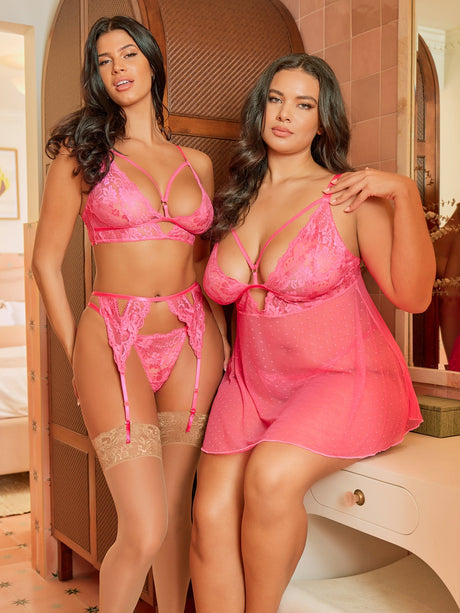
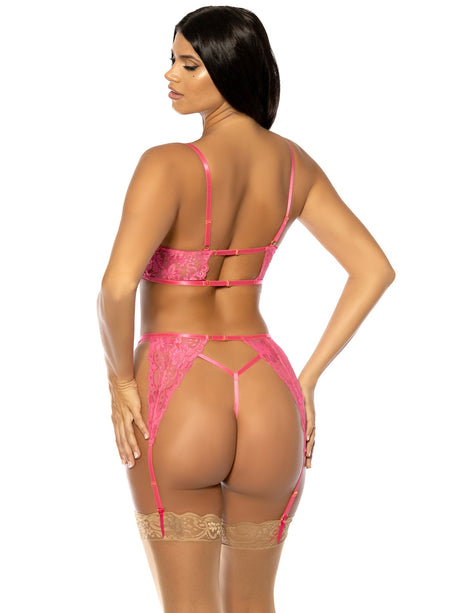
Matched bra-and-panty sets where both pieces feature coordinated strap geometry. The strap design carries across both pieces for visual cohesion. The most modular silhouette — the bra and panty work together but can also mix with other pieces in your rotation.
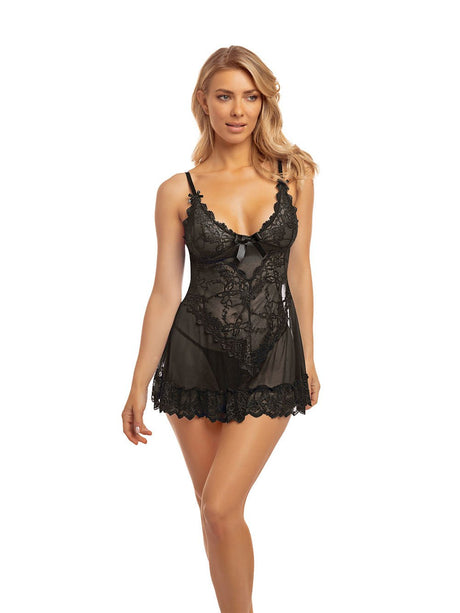
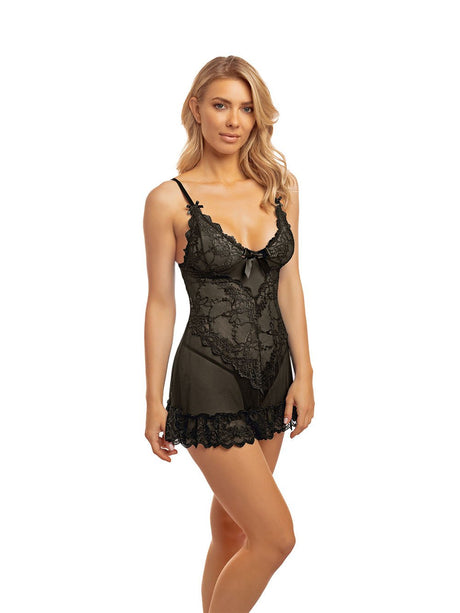
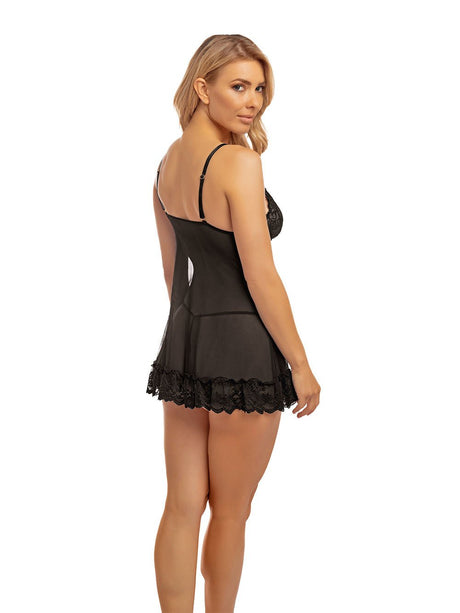
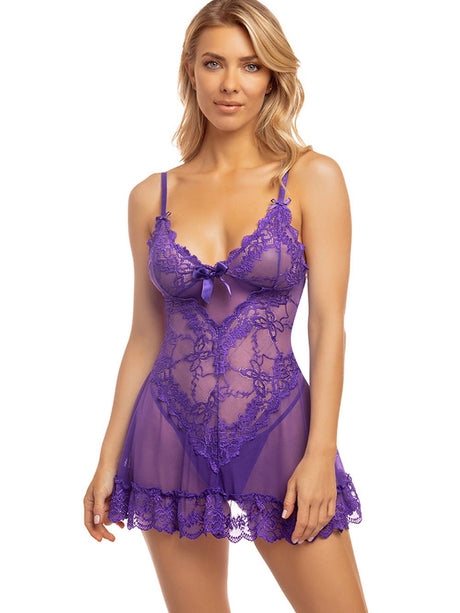
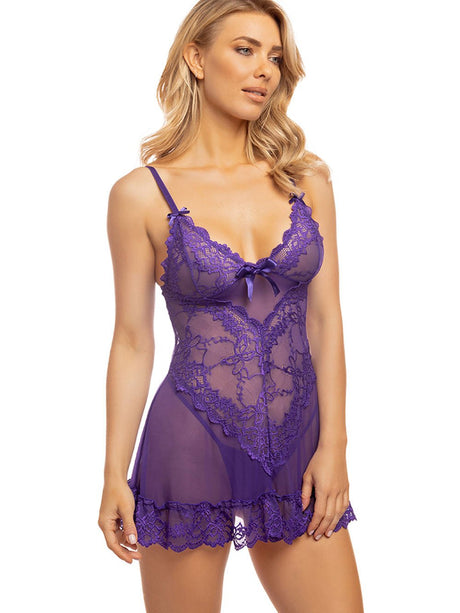
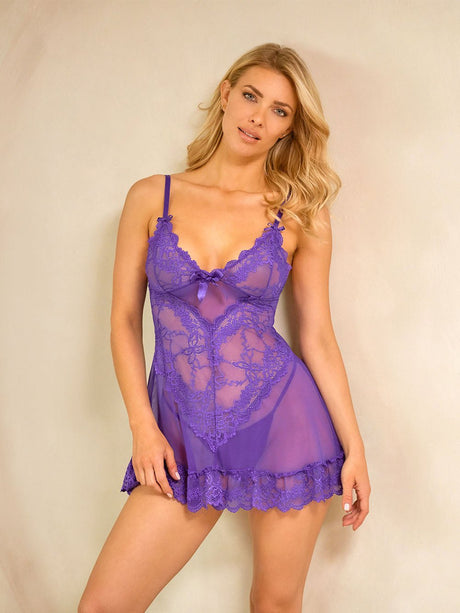
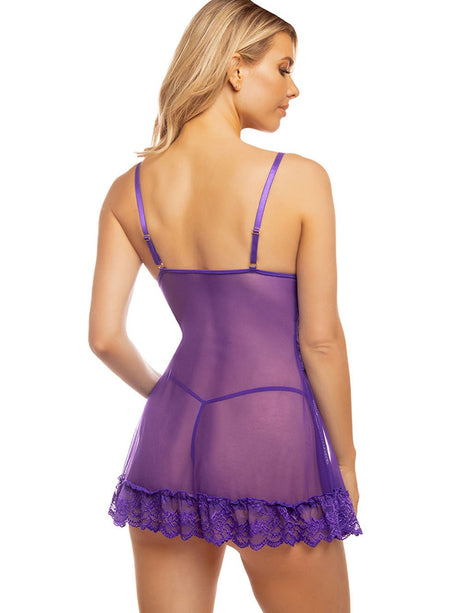
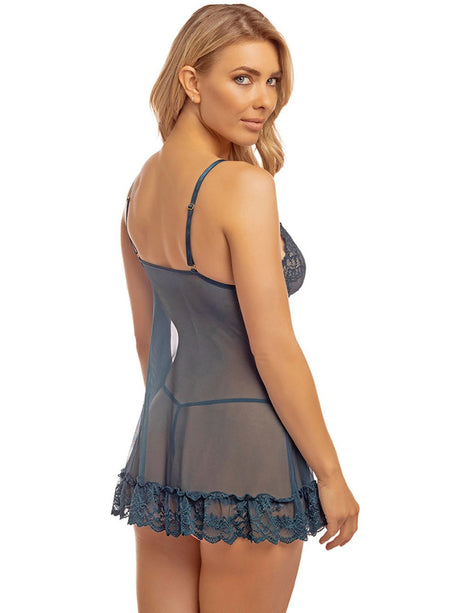
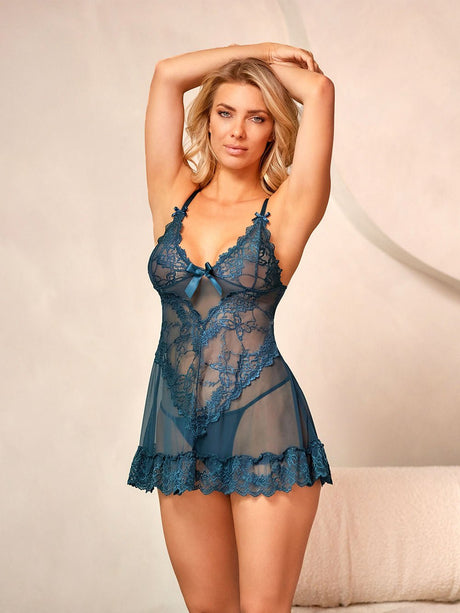
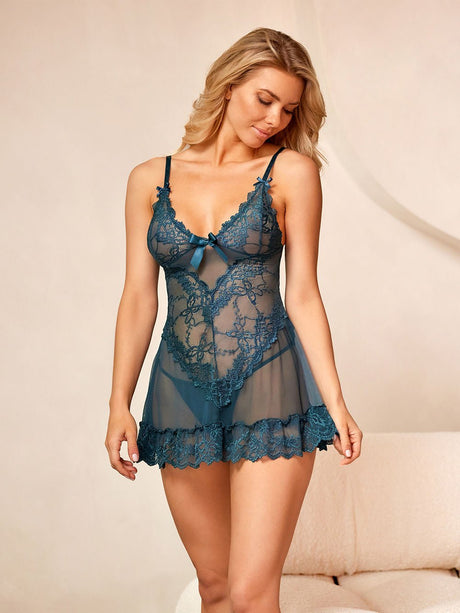
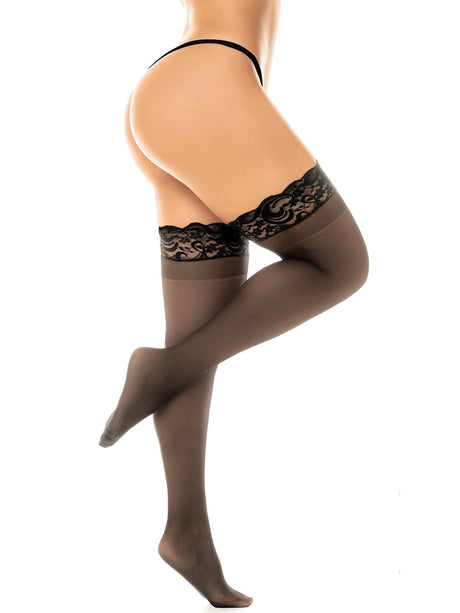
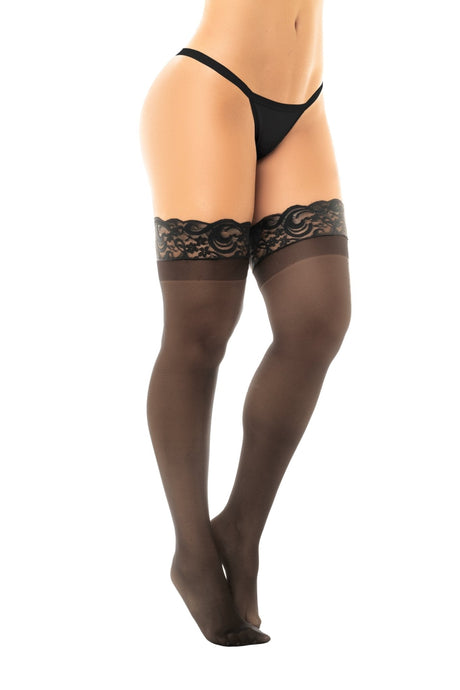
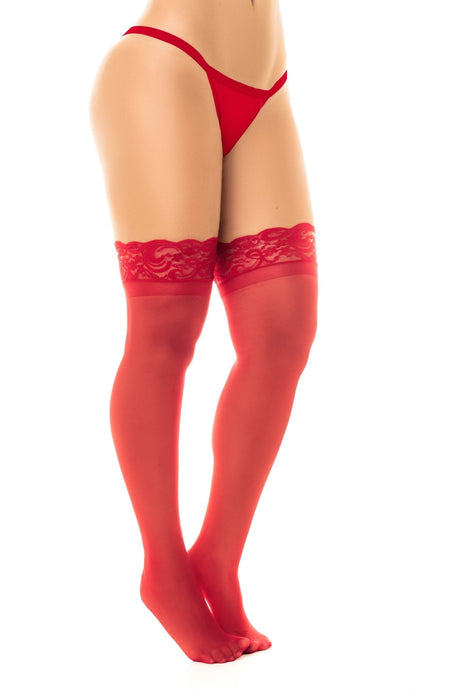
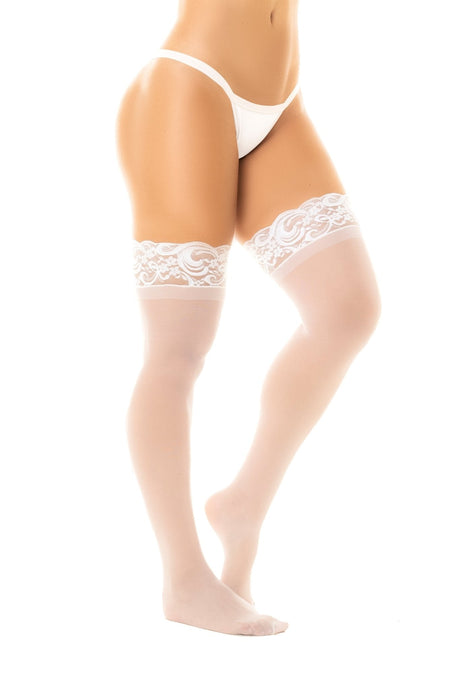
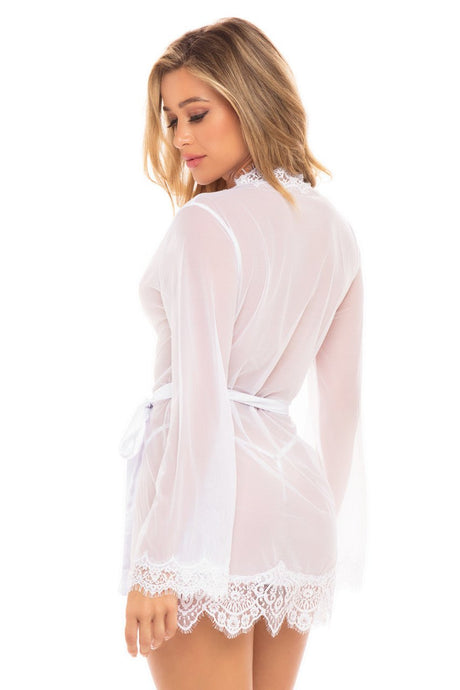
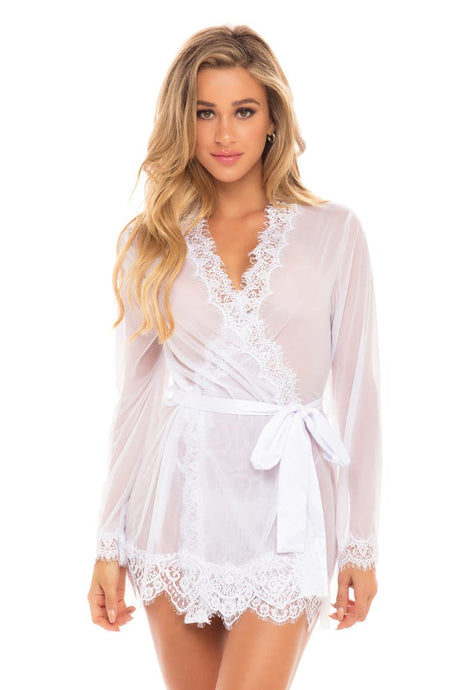
Shop Matched Sets →The fifth silhouette is strappy babydoll and mini-slip pieces — flowy lingerie dresses where strap construction handles the top portion (often around the bust and shoulders) and flowy fabric falls below. These read as the most romantic-coded strappy direction and work particularly well for layering with thigh-highs or as a styled outerwear piece. Browse babydoll lingerie for strappy babydoll options.
Why People Wear Strappy Lingerie
Four primary reasons drive most strappy lingerie purchases. Unlike most intimate categories, strappy regularly wins purchases for non-bedroom contexts — which makes it one of the most versatile categories in the cluster.
The strap geometry creates a sculptural silhouette that frames the body and adds structure without requiring shapewear. For wearers who want polished, intentional lingerie that reads as designed rather than basic, strappy construction provides that without the boudoir-coded weight of bondage-adjacent pieces.
Strappy lingerie is one of the few intimate categories specifically engineered for visible-strap outerwear styling. Strap detail peeking above necklines, layered under sheer outerwear, or worn as a styled top — the category is designed to be seen, which expands wardrobe utility well beyond bedroom contexts.
Strap geometry creates strong compositional lines that photograph dramatically under boudoir lighting. Cage and architectural construction in particular reads as intentional design in photographs. Two or three statement strappy pieces typically outperform a wider range of less-committed pieces for boudoir sessions.
Strappy occupies a specific space between minimalist lingerie (no strap design) and harness or fetish-coded pieces (strap-dominant, hardware-led). For wearers who want bold, structured intimate apparel without the heavy bondage or costume associations, strappy is the answer — bold but styled.
Strappy vs Harness vs Cage — Disambiguation
Three terms get used almost interchangeably across retail sites for strap-led lingerie. They aren't the same thing — each has a distinct identity, even where the categories overlap at the edges.
| Term | Defined By | Hardware Level | Where It Lives |
|---|---|---|---|
| Strappy | Visible decorative strap geometry as silhouette design | Low to medium | Bedroom + outerwear styling + boudoir |
| Cage | Intersecting straps in geometric patterns (subcategory of strappy) | Medium | Statement boudoir + dedicated styling occasions |
| Harness | Hardware-integrated body straps with rings, sliders, buckles | High | Boudoir + bondage-coded + kinky styling |
The three sit on a spectrum from soft (strappy with accent or banding geometry) → architectural (cage construction) → hardware-led (harness with rings and buckles). Pieces can blur the boundaries — a strappy bralette with O-ring detail sits at the strappy/harness border; a cage-style harness sits at the cage/harness border. Once you understand the terms as positions on a spectrum rather than mutually exclusive categories, retail descriptions become much easier to parse.
For dedicated harness pieces, browse harness lingerie. For the broader kinky and hardware-led territory, see our BDSM lingerie guide and kinky lingerie guide.
Layering — The Outerwear Question
Most lingerie categories assume the pieces will be worn under outerwear or in private contexts. Strappy lingerie breaks that assumption — the category is specifically engineered to be visible. This deserves its own treatment because the layering choices significantly affect which strappy pieces you should be buying.
The Subtle Approach
A single neckline strap or pair of accent straps peeks above the neckline of a top. The strappy piece is otherwise covered; only the strap detail is intentionally visible. Works with off-shoulder tops, slightly-too-large crewnecks, and v-necks. The strap detail reads as styled accessorizing rather than exposed lingerie. Use neckline-detail or accent-strap geometries for this; cage or harness-influenced geometries are too bold for this subtle layering.
The Layered Reveal
A full strappy piece (bra, bralette, or bodysuit) is worn under a sheer or mesh top. The full strap geometry is visible through the layer, creating a styled, layered composition. Works with sheer button-downs, mesh tops, lace blouses, and chiffon. Use underbust banding, cage construction, or coordinated bra-set geometries for this; the strap geometry is the focal point of the styling. Pair the strap color with the outerwear color for cohesion or contrast for statement.
The Direct Wear
A strappy bralette or strappy bodysuit is worn as the top piece itself, paired with high-waisted bottoms (jeans, skirts, pants). No layering — the strappy piece is the outerwear. Works particularly well with strappy bodysuits because the bodysuit construction handles the silhouette structure. Wears best at parties, concerts, dedicated styled-night-out occasions. Match the strap material (fabric, leather, satin) to the rest of the outfit.
The Reverse Layer
A harness-influenced strappy piece worn over a fitted top or dress as a strap accessory rather than under it. The strappy piece becomes a structural overlay on top of the outerwear. Works with fitted t-shirts, turtlenecks, slip dresses. Reaches the most committed end of strappy-as-outerwear styling — choose harness-influenced or cage geometries for this. Closer to harness territory than pure strappy.
For all four layering styles, strap color matters as much as geometry. Black straps are the most versatile and read as styled across most outerwear contexts. White or nude straps are subtler and disappear visually against similar-toned outerwear (good for the peeking approach). Statement colors (red, jewel tones, metallic) anchor compositions and read most boldly — choose them for dedicated styling occasions rather than everyday layering.
Find Your Strappy Style
Three quick questions — we'll point you to the right silhouette, geometry, and starting piece for your wearing context and body.
Fit and Sizing
Strap geometry significantly affects fit. Six principles apply across the category — getting any one of them wrong creates a piece that looks the part but doesn't wear well.
Strappy construction concentrates wear at the strap junctions (where straps meet other straps, fabric, or hardware). Quality elastic and stitching at these junctions determines how long the piece maintains its architectural shape. Cheap strap construction stretches and sags within months; quality construction holds for 24 to 36 months of regular wear.
For strappy bras with underwire, the underwire engineering and the strap geometry need to work together. Quality construction integrates them — the wire supports the cup while the straps add design. Cheap construction treats them as separate elements and the piece doesn't deliver bust support. At C cup and up, this is especially important — read product details for support engineering before buying. See the bra sizing guide for fit fundamentals.
Cage and architectural construction uses rigid strap framework that needs precise sizing. Unlike adjustable strap construction, cage construction can't be tightened or loosened to compensate for fit issues. Order based on careful measurement against the brand's specific size chart. Read recent customer photos at similar body types — cage construction is the geometry where size mistakes are least forgiving.
At DDD+ cup or 2X+ clothing size, generalist strappy brands often don't engineer the strap proportioning that fuller bust and curvier silhouettes need. Strap placement that flatters at smaller sizes can read awkward when scaled up. Look for brands explicitly grading strappy construction for plus sizes. Browse plus-size lingerie from specialty brands rather than scaling generalist patterns.
For harness-influenced strappy pieces with hardware (O-rings, sliders, buckles), hardware placement directly determines wearing comfort. Well-placed hardware sits between bone landmarks; poorly-placed hardware presses directly on the body during wear. Read product details for hardware specs and customer photos before buying complex hardware-integrated pieces.
For strappy teddies and bodysuits, torso length matters as much as bust and hip measurements. A piece that's too short rides up uncomfortably; too long gaps and the strap geometry doesn't sit cleanly. Most brands publish torso measurements on their size charts — check those numbers, not just the dress size. The strap geometry assumes correct torso placement to look right.
Materials and Care
Strappy construction uses both strap materials and base fabrics — care varies across the combination. Check both before buying.
- Stretch elastic straps with lace or mesh base (workhorse). The most common strappy material combination — comfortable, photogenic, forgiving of fit variation. Hand-wash in cool water with lingerie detergent, lay flat to dry. Mesh laundry bags allow gentle machine-wash on delicate cycle. Replace pieces when elastic loses tension (typically 18 to 24 months for workhorse pieces, longer for quality construction).
- Satin straps with quality hardware (luxury). Beautiful drape and visual weight — sit in the luxury price tier. Hand-wash only with delicate detergent. Pay extra attention to hardware care: avoid leaving in damp conditions; wipe hardware dry after washing to prevent rust or finish degradation. Browse luxury lingerie for premium strappy pieces.
- Leather or faux-leather straps (statement). Wipe clean with a damp cloth — never submerge in water. Apply leather conditioner (real leather) two to three times a year. Store flat to prevent creasing or strap deformation. Browse leather lingerie for leather-strap statement pieces.
- Latex straps and bands (statement). Wash with latex-specific cleaning products. Apply silicone-based shine product after cleaning. Store flat away from metal (which permanently stains latex) and away from direct sunlight.
- Hardware care across all materials. Hardware in strappy construction (O-rings, sliders, buckles) needs separate attention. Quality nickel-free metal lasts years with care; cheap plated metal corrodes and stains within months. Wipe hardware dry after washing. If hardware develops rust spots, replace the piece — corrosion will spread and stain adjacent fabric.
How to Wear and When
Strappy lingerie works across more contexts than most intimate categories. Three primary contexts cover the majority of strappy wardrobes.
Where Strappy Outperforms Other Categories
Strappy lingerie's biggest non-bedroom use case — visible-strap styling under and around outerwear. Workhorse strappy bras and bralettes live here most. Choose pieces that coordinate with your existing wardrobe color palette; black is most versatile, white and nude for subtler layering, statement colors for dedicated occasions. Avoid trying to hide strappy detail under fitted tops — the category is engineered to be seen, and hiding it defeats the design.
The Foundational Use Case
The classic intimate-apparel context. All five silhouettes work here. For comfort during extended wear, neckline-detail and underbust-banding geometries tend to outperform cage and harness-influenced construction. Statement-material strappy pieces (leather, latex) read as more occasion-specific even in bedroom contexts; choose them for dedicated nights rather than everyday wear.
Where Strap Geometry Photographs Dramatically
Strap geometry creates strong compositional lines that photograph beautifully under boudoir lighting. Cage and architectural construction in particular reads as intentional design rather than apparel. Two or three statement strappy pieces typically outperform a wider range of less-committed pieces for boudoir sessions. Discuss specific styling with your photographer in advance — strappy pieces benefit from specific lighting setups that exploit the strap geometry.
Strappy in Romantic Palettes
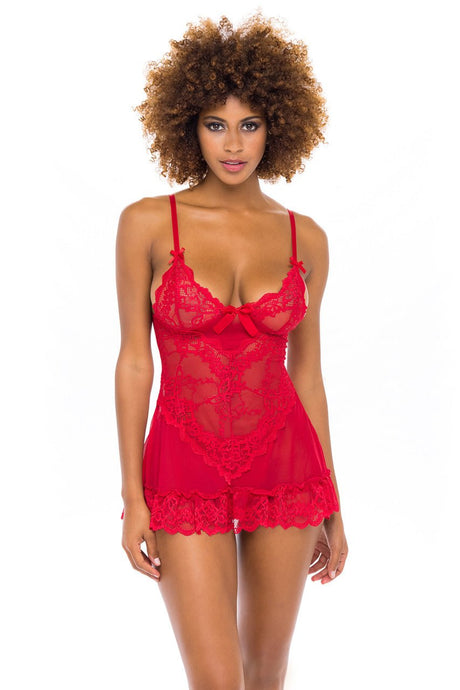
For anniversary, Valentine's Day, and romantic-coded occasions, strappy pieces in romantic palettes — red lace with satin straps, ivory or champagne with metallic hardware, jewel-tone strappy sets — bridge structured construction with romance. Browse Valentine's lingerie and red lingerie for romantic-coded strappy pieces. For bridal occasions, browse bridal lingerie.
Common Problems and How to Fix Them
SAG
FAST
SITS
WRONG
PRESSES
HARD
UNSUPPORTED
SHOW
EVERYWHERE
Frequently Asked Questions About Strappy Lingerie
What is strappy lingerie?
What's the difference between strappy lingerie and harness lingerie?
What's the difference between strappy and cage lingerie?
What silhouettes come in strappy construction?
Can you wear strappy lingerie under clothes?
How do strap geometries affect comfort?
What materials are strappy lingerie made from?
Are there strappy options for plus-size?
How do I care for strappy lingerie?
Does strap detail show through clothing?
Is strappy lingerie good for boudoir photography?
How do I style strappy bra straps as part of an outfit?
Will the straps loosen over time?
What's the difference between adjustable and fixed straps?
This guide is editorial. Strappy lingerie sizing, fit, construction quality, and material care vary across bodies, brands, and personal preferences — what matters most is comfort, fit, and confidence. Refer to each brand's size chart and care instructions for the best results. Last reviewed: May 14, 2026.