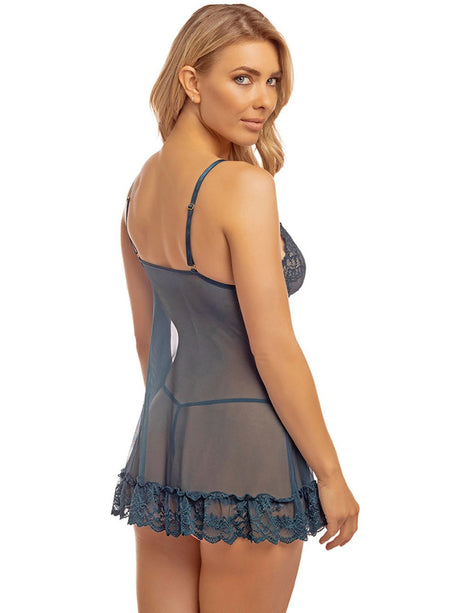
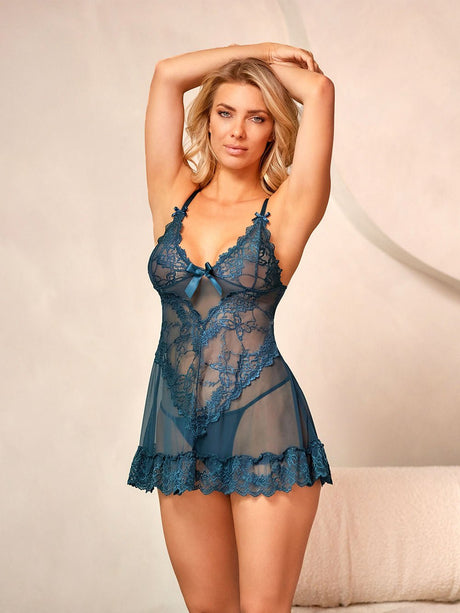
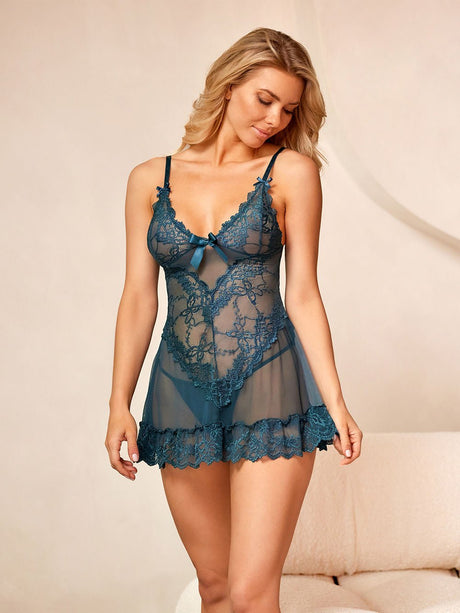
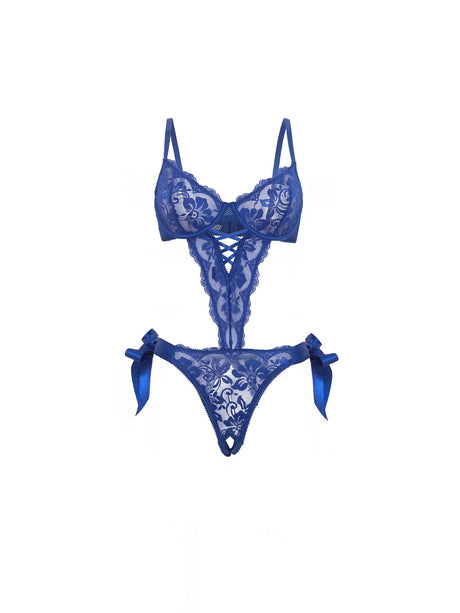
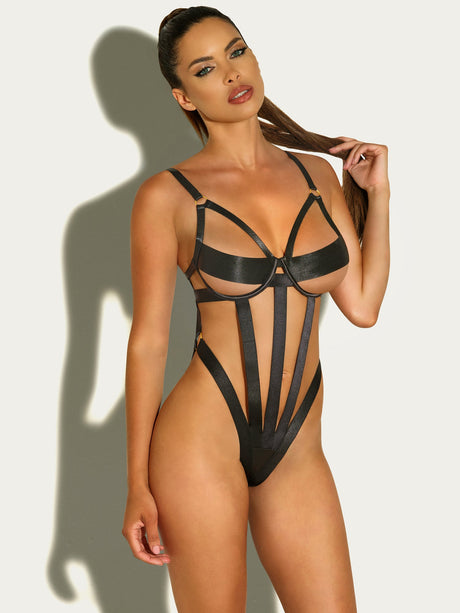
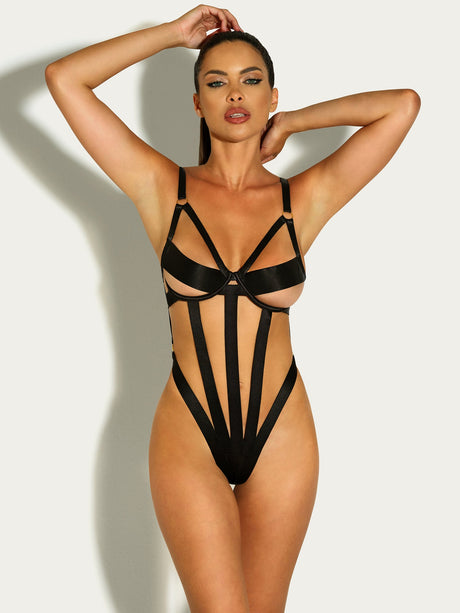
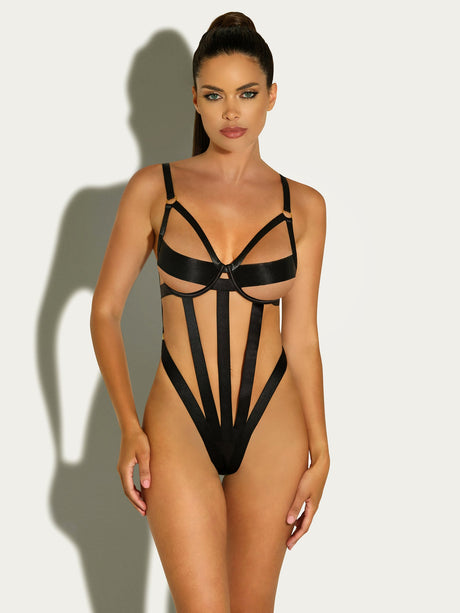
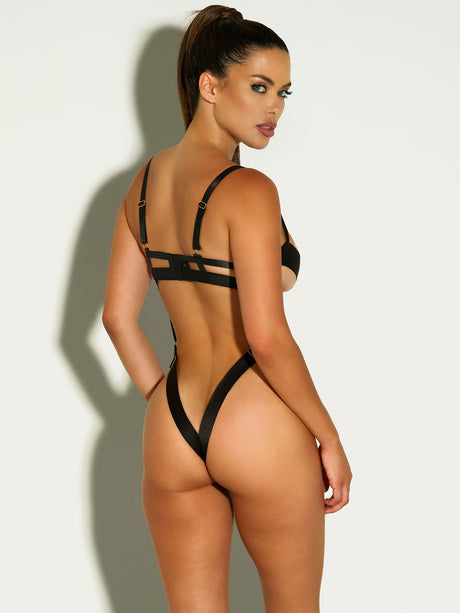
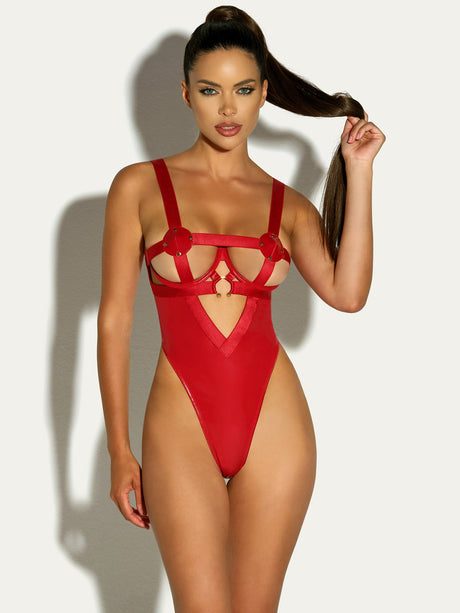
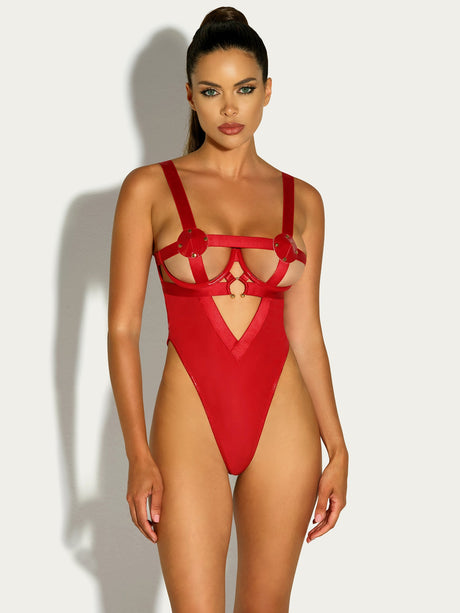
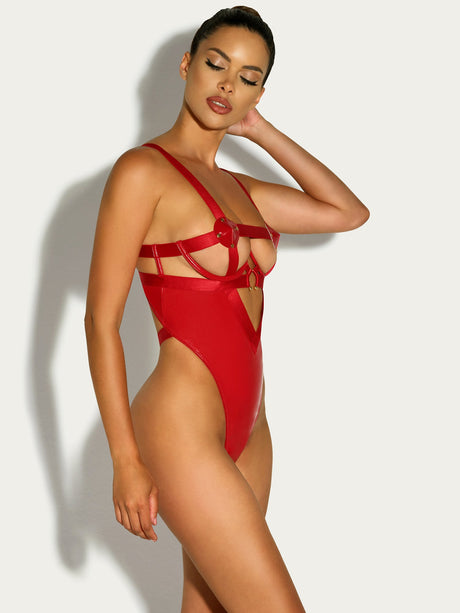
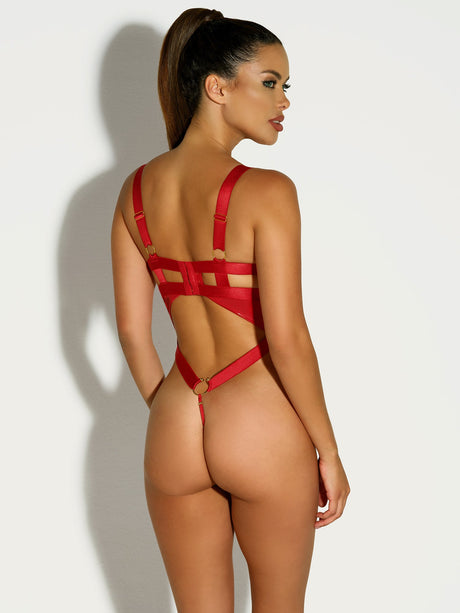
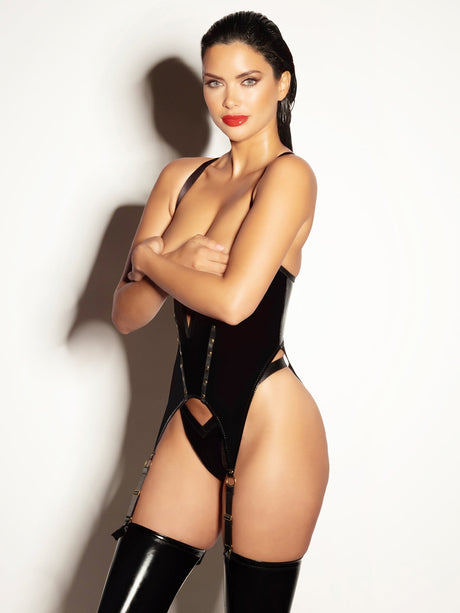
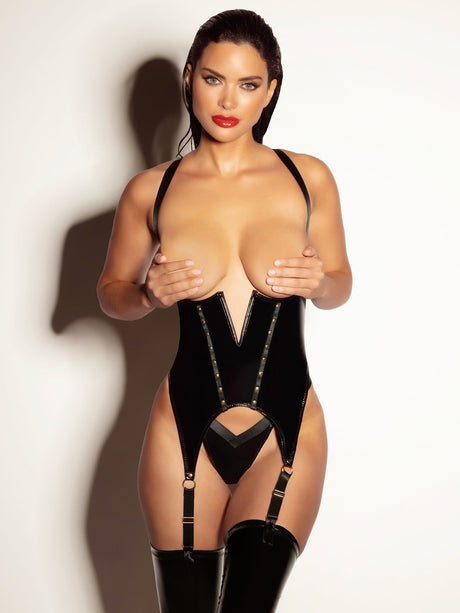
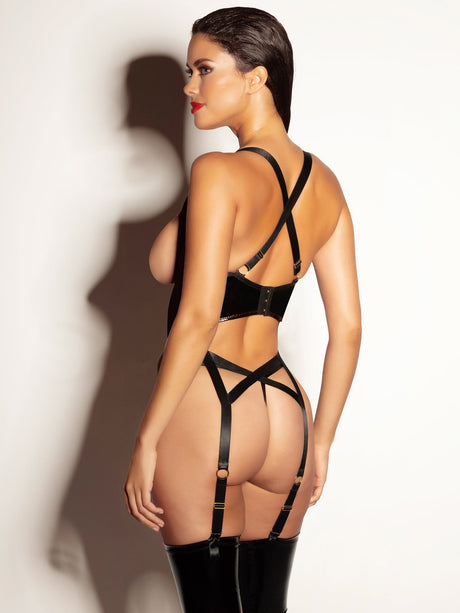
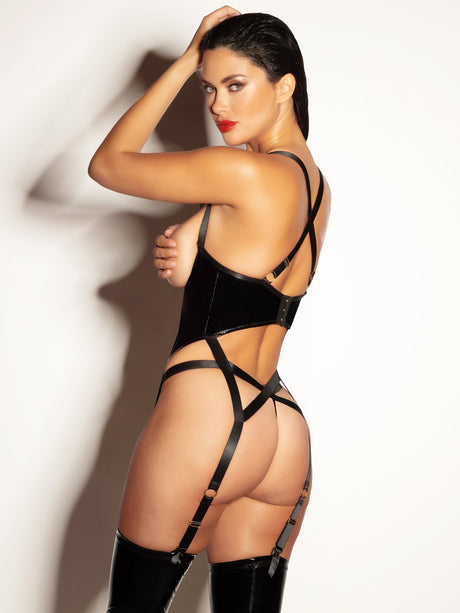
What is leather lingerie?
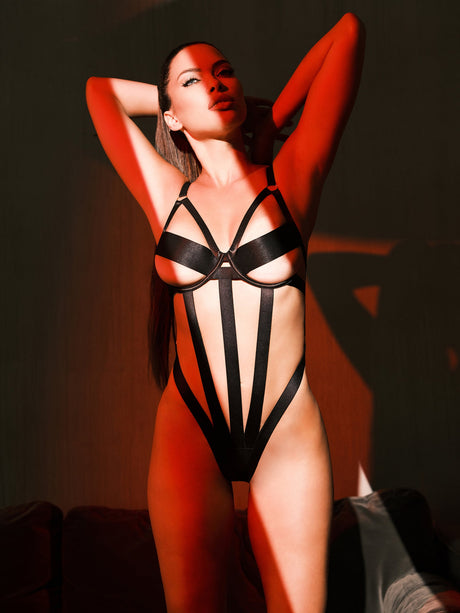
Leather lingerie is intimate apparel made from leather or leather-look materials as the primary structural fabric. The material's structural weight and visual presence make it a category defined by the material itself rather than by silhouette or construction. Five leather grades define the market: real leather (premium statement), faux leather (PU/vegan) (accessible workhorse), patent leather (high-gloss finish), mixed-material leather (panels with lace or mesh), and suede leather (matte romantic-coded). Each grade has unique care, sizing, and styling considerations.
This guide does the actual work. We'll define leather lingerie as a material-led category, map the five leather grades you'll find on the market, the five silhouettes where leather lingerie lives, the real-vs-faux decision that anchors most purchases, and the care and conditioning routine that determines whether a piece lasts a year or a decade.
Shop Leather Lingerie
Already know what you want? Browse the full leather collection — bras, teddies, bodysuits, sets, and harness accessories, all in one place.
Shop Leather Lingerie → Browse Sexy Lingerie →- Leather lingerie is a material-led category — defined by the material itself rather than by silhouette or construction.
- Five leather grades: real leather, faux leather (PU/vegan), patent leather, mixed-material leather, and suede leather.
- Five primary silhouettes: leather bras and bralettes, teddies, bodysuits, bra-and-panty sets, and harness accessories.
- Real vs faux is the central decision — real lasts decades with care, faux is accessible and comfortable from day one.
- Leather sizes differently than fabric — less stretch, different break-in behavior, brand-specific fit charts matter.
- Care commitment varies by grade — real leather needs conditioning, faux wipes clean, patent needs no liquid, suede needs specialty products.
- Most leather lingerie is occasion-specific — bedroom, boudoir, dedicated styling occasions, or BDSM-coded scenes.
- Black is the workhorse color — red, oxblood, and metallic finishes are statement variants worth adding once you've established the category fits.
What "Leather Lingerie" Actually Means
The most useful definition of leather lingerie is this: it's a material-led category. The leather itself does most of the styling work — the material's structural weight, visual presence, and tactile character anchor the silhouette regardless of construction technique. A leather bralette and a leather teddy share more category identity than a leather bralette and a lace bralette, even though the bralettes are the same silhouette.
This material-first framing matters because leather lingerie has shopping considerations — real-vs-faux decisions, finish choices, care commitments, fit-by-material-grade differences — that don't apply to fabric lingerie at all. Understanding leather as a material category rather than a single product type makes the shopping process much clearer.
Leather lingerie sits adjacent to but distinct from BDSM lingerie (which is hardware and bondage-led, often using leather but not exclusively) and from harness lingerie (which is hardware-integrated strap construction, again often in leather). All three categories overlap at the leather-hardware-bondage intersection. The HauteFlair leather lingerie collection covers the material-led pieces; for hardware-led pieces see harness lingerie, and for bondage-coded pieces see our BDSM lingerie guide.
The Five Leather Grades
Five grades define how leather appears across the lingerie market. Each has different visual weight, comfort, lifespan, price, and care requirements.
The Premium Statement
Genuine animal hide — the foundational material for the leather category. Visually has natural variation, texture, and grain that synthetic alternatives can't replicate. Comfort-wise, real leather is initially stiff and breaks in to your body shape over time, eventually conforming to your specific silhouette. Lifespan exceeds 10 years with proper care. Care requirement is significant — conditioning two to three times a year, spot-cleaning only, careful storage. Price tier is the highest in the category. Best for: serious statement pieces, long-term wardrobe investments, photographers and stylists who want material that photographs with real depth.
The Workhorse Accessible Tier
Polyurethane-based synthetic that mimics real leather aesthetic. Often labeled "vegan leather" in retail. Visually approximates real leather but lacks the depth and variation of genuine hide; texture is uniform. Comfortable from day one with no break-in period, but has minimal stretch and stays close to initial fit. Lifespan typically one to three years; cheaper PU breaks down faster (cracking, peeling at flex points). Care is simple — wipe clean with a damp cloth, no conditioning. Price tier is the most accessible. Best for: first-leather-purchase shoppers, occasion-specific pieces, anyone preferring animal-free materials.
The High-Gloss Statement
Real or faux leather with a high-gloss coating applied to the surface. Visually the most statement-coded grade — the glossy finish reads dramatic under lighting and photographs with strong reflective character. Comfort is similar to the underlying leather grade (real or faux) but the patent coating reduces flex. Lifespan depends on the base material, but patent specifically is vulnerable to cracking at flex points where the gloss coating doesn't bend well. Care requires extra attention — no liquid cleaning (just a soft dry cloth), storage flat (creases damage the gloss). Best for: boudoir photography, dedicated styled-night-out occasions, statement bedroom pieces.
The Softer Integration
Leather panels paired with lace, mesh, sheer fabric, or stretch material. The leather provides the structural weight and aesthetic; the secondary material provides comfort, breathability, and softer visual integration. Visually the most accessible grade — reads as styled lingerie with leather detail rather than as committed leather statement. Comfort is significantly higher than solid leather pieces because the fabric panels handle high-friction zones. Lifespan typically follows the fabric panels (which wear out before the leather). Care follows whichever material requires more attention. Best for: longer wear sessions, daily-wear flexibility, shoppers who want leather aesthetic without the full leather commitment.
The fifth grade is suede leather — leather with a soft matte finish created by buffing the underside of the hide. Visually reads more romantic-coded than the other leather grades because of the muted finish; suede in lingerie typically appears in burgundy, deep red, oxblood, and earth-tone palettes rather than black. Care requires specialty suede brushes and protective sprays; suede is stain-vulnerable and water can leave permanent marks. Less common in lingerie than other grades but worth knowing about for shoppers wanting a softer leather aesthetic.
The Five Silhouettes
The same five grades appear across five primary silhouettes. Each silhouette has its own fit considerations and use contexts.
Leather Bras & Bralettes
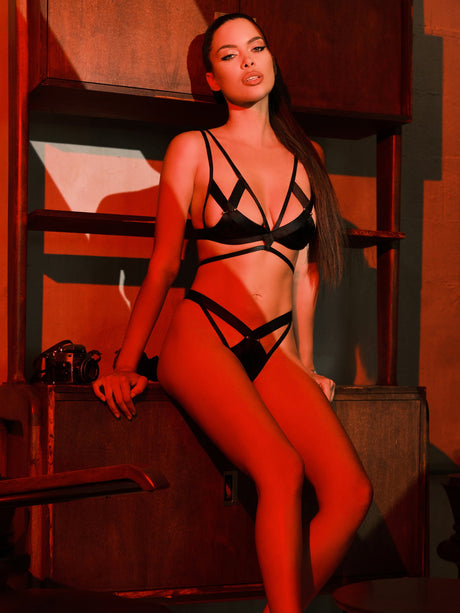
Bras and bralettes with leather as the primary material. The most common leather silhouette and the most outerwear-versatile. Available across all five grades — start with a faux leather bralette in black for your first leather piece. Works under sheer outerwear, layered visibly, or worn alone in bedroom contexts.
Shop Leather Bras →Leather Teddies
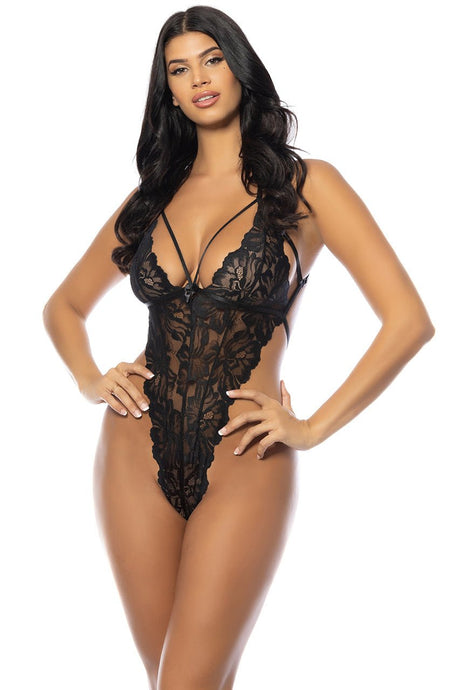
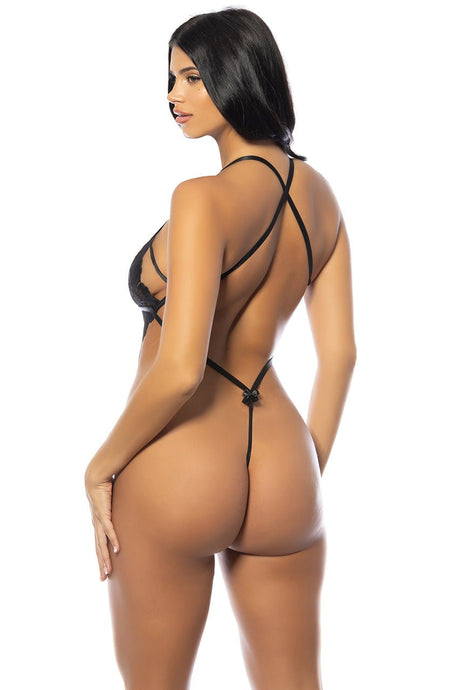
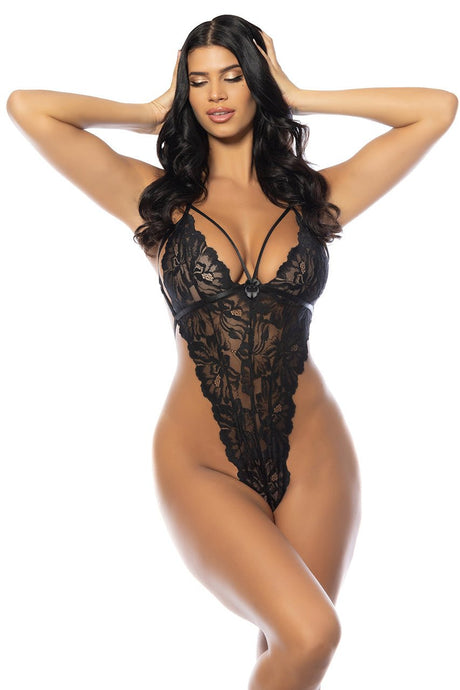
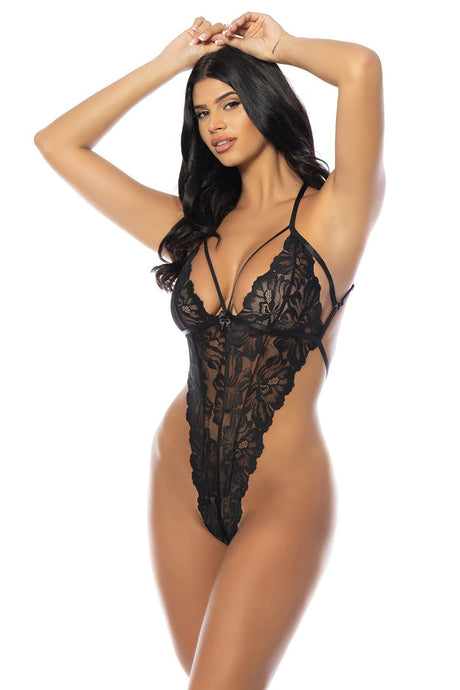
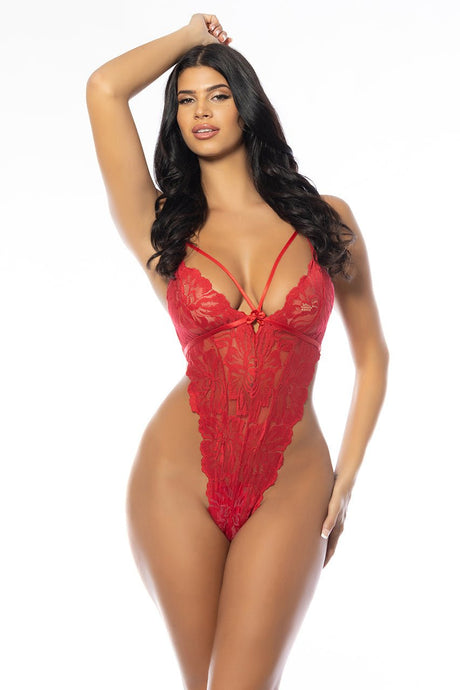
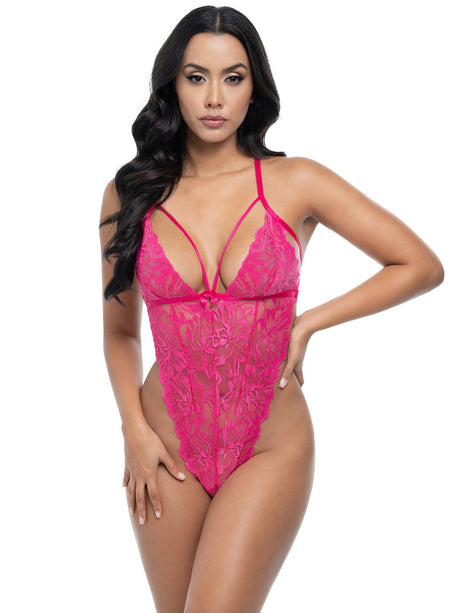
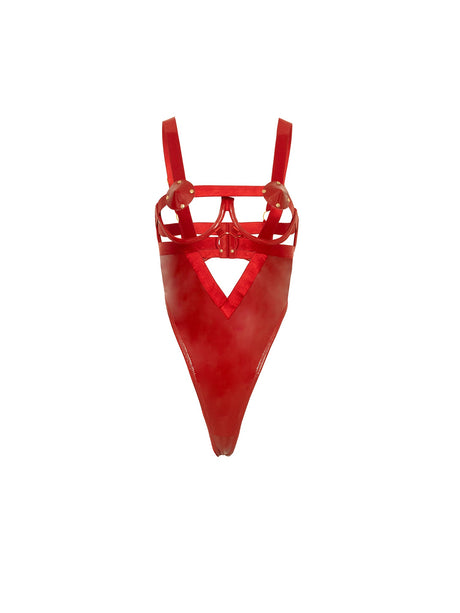
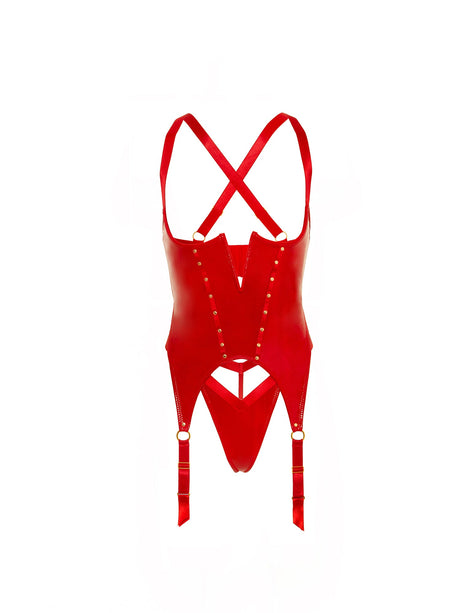
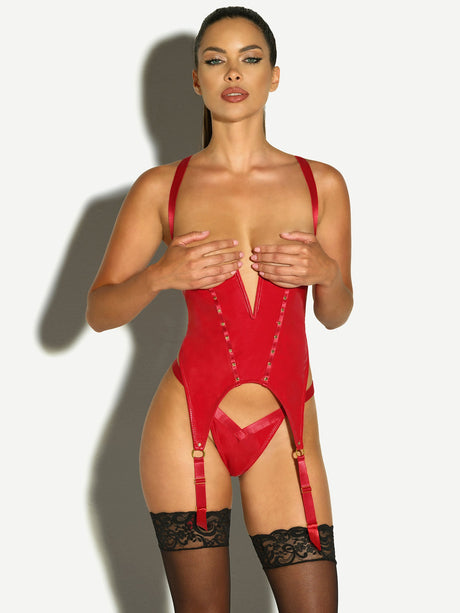
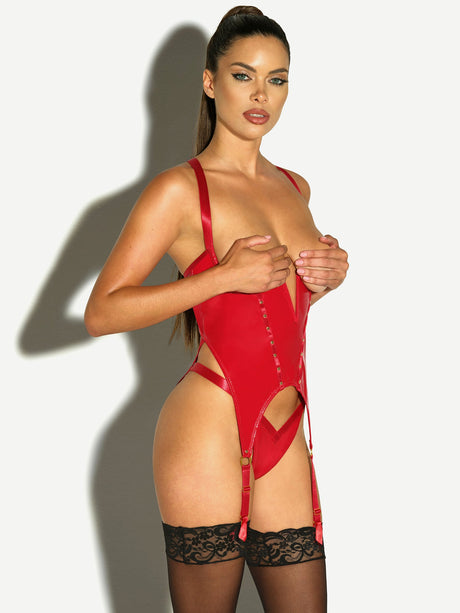
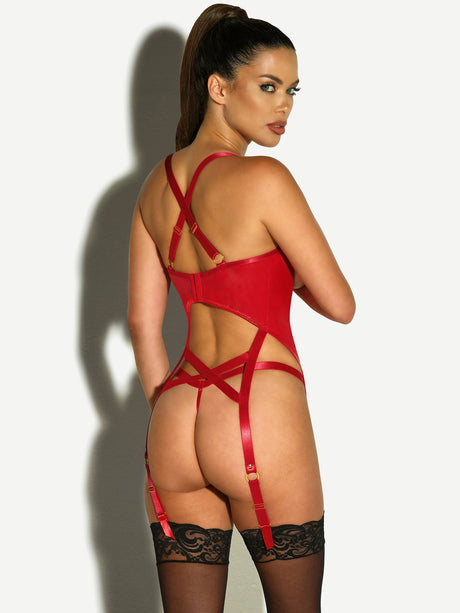
One-piece torso-to-crotch leather lingerie. The most photogenic leather silhouette — the construction creates dramatic full-body composition for boudoir and statement contexts. Available in real leather (premium), faux leather (accessible), and mixed-material (with lace or mesh panels for comfort).
Shop Leather Teddies →Leather Bodysuits
Similar to teddies but with heavier construction and stronger torso sculpting. Often crosses into outerwear styling — leather bodysuits worn with high-waisted bottoms as the top piece is a major non-bedroom use case. Mixed-material leather bodysuits with stretch panels are the most wearable for extended sessions.
Shop Leather Bodysuits →Leather Bra-and-Panty Sets
Matched two-piece sets where both pieces feature coordinated leather construction. The most modular silhouette — the bra and panty work together but mix with other pieces in your rotation. Look for sets where both pieces come from the same brand for grading consistency.
Shop Matched Leather Sets →The fifth silhouette is leather harnesses and accessories — chokers, cuffs, garter belts, body harnesses, and other accent pieces in leather. These work both as standalone statements and as accents layered with other lingerie (a leather choker with a fabric bra-and-panty set, for example, brings leather presence without the full commitment of a leather garment). For dedicated harness pieces specifically, browse harness lingerie; for the hardware-led category overall, see our BDSM lingerie guide.
Why People Wear Leather Lingerie
Four primary reasons drive most leather lingerie purchases. The category's material weight makes the reasons more concentrated than fabric lingerie — most leather purchases are intentional rather than impulse.
Leather's structural presence and visual weight handle the styling work the way fabric lingerie often needs construction details (strap geometry, lace patterns, sheer panels) to handle. A plain leather bralette in black reads as dramatic; a plain fabric bralette in black reads as basic. For wearers who want statement intimate apparel without elaborate construction, leather delivers it through the material alone.
Leather has visual depth and tactile character that photographs differently than fabric. Real leather in particular reads dimensional in photographs — the grain, the subtle variation, the way it absorbs and reflects light. Boudoir photographers regularly recommend leather pieces for clients wanting strong material weight in their imagery. Two or three intentional leather pieces typically outperform a wider range of less-committed pieces for boudoir sessions.
Leather is the foundational material for BDSM-adjacent aesthetics — the bondage, dominance, and submission visual language relies heavily on leather hardware, harnesses, and structural pieces. For wearers exploring kinky-coded styling or BDSM-influenced wardrobes, leather lingerie is often the entry point. See our BDSM lingerie guide for the broader category.
Leather lingerie crosses into outerwear styling more readily than most intimate categories. Leather bras, bralettes, and bodysuits can be worn as styled tops with high-waisted bottoms in club, concert, and dedicated-night-out contexts. The category gives you wardrobe utility that fabric lingerie rarely does — bedroom-and-beyond functionality from a single piece.
Real vs Faux — The Central Decision
The single most important decision in leather lingerie shopping is real vs faux. Most retail content waves at this question with vague tradeoffs; here's the actual decision framework.
| Factor | Real Leather | Faux Leather (PU/Vegan) |
|---|---|---|
| Price tier | Premium — typically 3–5× faux | Accessible — entry-level price |
| Lifespan | 10+ years with care | 1–3 years typical |
| Initial comfort | Stiff, breaks in over time | Comfortable day one |
| Long-term fit | Molds to your body | Stays close to initial fit |
| Breathability | Better | Lower — can feel plasticky |
| Patina | Develops character | Stays uniform |
| Care commitment | Conditioning 2–3× per year required | Wipe clean — no conditioning |
| Ethics | Animal-derived | Animal-free |
| Failure mode | Stretches and softens (positive over time) | Cracks and peels at flex points |
| Best for | Long-term investment, frequent wear, statement pieces | First leather purchase, occasion-specific pieces, animal-free preference |
If you'll wear the piece more than 6 times per year for more than 3 years, real leather pays back the price premium through lifespan and improving fit. If you'll wear it less than that, faux leather is the more economical choice and the lifespan difference doesn't matter. For one-off occasions, statement events, or experimental purchases, faux leather is almost always the right call.
Leather vs Latex vs Vinyl
Three materials with similar visual aesthetics get conflated across retail sites. They aren't the same — each has distinct material properties, wearing behavior, and care requirements.
| Material | What It Is | Stretch | Care |
|---|---|---|---|
| Leather (real) | Animal hide, has natural grain and texture | Minimal — breaks in over time | Spot-clean, condition, hang flat |
| Leather (faux/PU) | Polyurethane synthetic mimicking hide | Very limited stretch | Wipe clean only, no conditioning |
| Latex | Natural or synthetic rubber, wet-look gloss | High — second-skin feel | Silicone shine product, store flat |
| Vinyl (PVC) | Synthetic polymer, glossy and stiff | Low — similar to faux leather | Wipe clean, store flat |
Visually, patent leather and glossy latex look similar from a distance — but the materials behave entirely differently. Latex is body-conforming and stretchy; patent leather is structural and minimally flexible. If you've been shopping for "leather lingerie" but pieces feel too rigid, you may actually want latex; if you've been shopping for latex but pieces feel restrictive in different ways, you may want patent leather. Knowing which material you actually want saves significant return-shipping frustration.
Care and Conditioning
Leather lingerie care is significantly more involved than fabric lingerie care. This section is the part most retail content skips and the part that determines whether a leather piece lasts a year or a decade.
The Conditioning Routine
Real leather needs ongoing care to maintain suppleness and prevent cracking. The basic routine: spot-clean with a damp cloth after each wear; condition with leather-specific conditioner two to three times a year (more often in dry climates); store flat or hanging in a cool, dry place away from direct sunlight. Never submerge in water — it warps real leather and creates permanent water stains. Never use fabric detergent — it strips the natural oils. Never store in plastic bags — condensation creates spots. With proper care, real leather lingerie lasts 10+ years and develops patina (character) over time.
Wipe-Clean Simplicity
Faux leather is significantly simpler to care for than real leather. The routine: wipe with a damp cloth after wear; for stubborn marks, use a mild soap solution on a damp cloth and follow with a clean damp wipe. Never use conditioner on PU — leather conditioner damages the synthetic coating. Store flat or hanging in a cool, dry place. Repeated creasing at the same flex point eventually causes the PU coating to crack — minimize folding at the same locations during storage.
Dry-Cleaning Only
Patent leather (real or faux) requires the most careful care because of the high-gloss coating. The routine: dry soft cloth only — no liquid, no damp wipes, no soap solutions (water under the gloss coating creates cloudiness that doesn't reverse). Store flat to prevent creasing; patent cracks at flex points where the gloss can't bend with the underlying material. Avoid direct sunlight (yellows the gloss) and avoid contact with light-colored clothing (patent can transfer color).
Specialty Tools Required
Suede leather is the most care-intensive grade. The routine: brush with a specialty suede brush to maintain nap (the fuzzy texture); apply protective suede spray before first wear and after major cleaning; spot-clean with a suede eraser for marks. Water is suede's biggest enemy — water spots leave permanent marks. Avoid wearing in rain or damp conditions. Storage flat in a fabric (not plastic) bag for breathability. Less common in lingerie than other grades but worth understanding if you encounter suede pieces.
Five common mistakes shorten leather lingerie lifespan dramatically: (1) Submerging in water — warps real leather, ruins PU coating. (2) Machine-washing — destroys all leather grades. (3) Using fabric detergent — strips real leather's natural oils, damages PU surface. (4) Storing in plastic bags — creates condensation and mildew. (5) Hanging on thin hangers — creates permanent shoulder dents in stiffer pieces. Use wide hangers, fabric garment bags, and cool dry storage.
Find Your Leather Style
Three quick questions — we'll point you to the right silhouette, grade, and starting piece for your goals, context, and body.
Fit and Sizing
Leather sizes differently than fabric. Six principles apply across the category — getting them wrong means a piece that doesn't wear well regardless of grade or silhouette.
Real leather is initially stiff and molds to your body over time. Size for current comfort knowing the piece will become more flexible and conform to your specific silhouette over the first few wears. Don't size up expecting break-in — that produces a piece that fits loose forever. Don't size down expecting break-in either; real leather stretches modestly but doesn't shrink to fit.
PU/faux leather has very limited stretch and almost no break-in. Size for the fit you want from day one. If a faux leather piece is too tight on arrival, it'll stay too tight. If it's too loose, you can't shrink it. This makes brand-specific size charts especially important for faux leather purchases.
Leather pieces with lace, mesh, or stretch panels fit much more forgivingly than solid leather. The fabric panels handle fit accommodation; the leather panels stay structural. For shoppers between sizes, mixed-material leather is often the more flexible choice — the stretch panels create more room for fit variation than solid leather construction allows.
Leather lingerie at DDD+ cup or 2X+ clothing size requires brands that explicitly grade for plus sizes. Generalist brands scaling up straight-size patterns often produce leather pieces that don't accommodate fuller bust or curvier proportions properly. Browse plus-size lingerie from specialty brands that handle leather grading at scale.
Quality leather bras integrate underwire and structural cup engineering — the leather itself doesn't provide bust support. At C cup and up, look for leather bras with proper underwire and cup architecture rather than fashion-only construction that uses leather as styling without structural function. See the bra sizing guide for sizing fundamentals.
Leather lingerie stock photos are often particularly polished and can be misleading. Customer photos at similar body types are the single best fit-verification tool. Scroll past the stock photos and read customer reviews for fit-on-body verification. Look specifically for comments about break-in time (real leather) or rigidity (faux leather).
How to Wear and When
Leather lingerie suits dedicated occasions rather than daily wear. Four primary contexts cover the majority of leather wardrobes.
The Primary Use Case
Most leather wardrobes spend most of their time in bedroom and partnered-intimacy contexts. Mixed-material leather pieces (with lace or mesh panels) are the most comfortable for extended sessions. Solid leather pieces (real or faux) read most committed and statement-coded. Browse the full leather lingerie collection for bedroom-context pieces.
Where Leather Photographs Dramatically
Leather is one of the most photogenic lingerie materials — visual depth and tactile character translate beautifully to imagery. Real leather and patent leather in particular create strong material weight in photographs. Black is the most photographable color; red, oxblood, and metallic finishes add statement variants. Two or three intentional leather pieces typically outperform a wider range of less-committed pieces for boudoir sessions.
The Foundational Material
Leather is the foundational material for BDSM-adjacent aesthetics. Leather harnesses, body harnesses, cuffs, and structural pieces define the visual language. For wearers exploring BDSM-coded styling, leather is typically the entry-point material. Browse kinky lingerie and fetish lingerie for the broader hardware-and-leather category, or see our BDSM lingerie guide for the full category treatment.
Where Leather Crosses Categories
Leather bodysuits, bralettes, and bra-and-panty sets cross into outerwear styling more readily than most intimate categories. Bodysuits worn as styled tops with high-waisted bottoms, bralettes layered under sheer outerwear, and statement leather pieces for anniversary, Valentine's, or dedicated styled-night-out occasions. Browse Valentine's lingerie and red lingerie for romantic-coded leather options.
Common Problems and How to Fix Them
LEATHER
STIFF
LEATHER
CRACKS
CLOUDED
TRANSFER
OFF
Frequently Asked Questions About Leather Lingerie
What is leather lingerie?
What's the difference between real and faux leather lingerie?
Is faux leather lingerie comfortable?
What silhouettes come in leather construction?
How do you care for leather lingerie?
Is leather lingerie warm or hot to wear?
Can you wear leather lingerie under clothes?
What's the difference between leather and latex lingerie?
Are there leather options for plus-size?
How does leather lingerie size compared to fabric?
Will leather lingerie crease or stretch over time?
Can you wash leather lingerie?
What occasions is leather lingerie best for?
What's a good first leather lingerie piece for someone new to the category?
This guide is editorial. Leather lingerie sizing, fit, material quality, and care needs vary across bodies, brands, and personal preferences — what matters most is comfort, fit, and confidence. Refer to each brand's size chart and care instructions for the best results. Last reviewed: May 14, 2026.