Natori
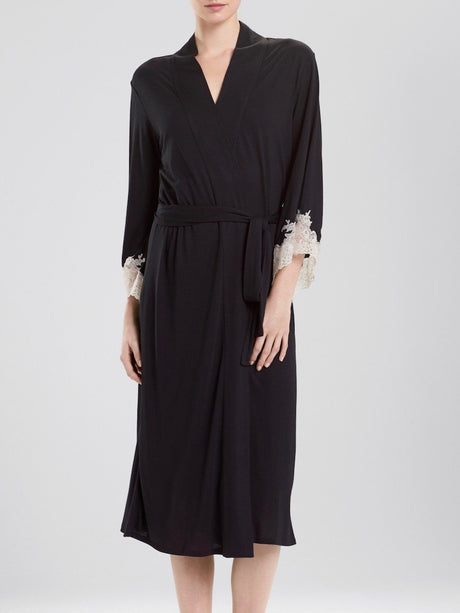
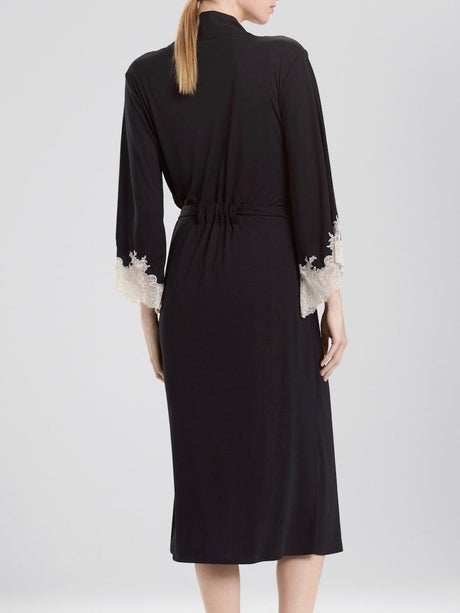
Natori Luxe Shangri-la Silk Long Kimono Robe
Almost gone (1 unit)$160.00Unit price /Unavailable-
Dear Bowie
Women's Silk Robe in Blanc – Brigitte
Backordered — shipping soon$235.00$280.00Unit price /Unavailable-
 Sold out
- Sold out
-
- Sold out
-


Silk Lingerie: Satin Is a Weave, Silk Is a Fiber
Most lingerie described as silky is polyester. The word on the label is doing a job, and that job is not telling you what the garment is made of.
Satin is a way of weaving cloth so that the surface is smooth and lustrous. Silk is a fiber, spun by a silkworm, and it is a protein. You can weave silk in a satin weave, which is what charmeuse is, and you can weave polyester in a satin weave, which is what most of the market is. They look similar in a photograph and behave nothing alike against skin. Below: how to tell them apart, what momme means, and why silk panties barely exist.
What is silk lingerie, and is it different from satin?
Silk lingerie is lingerie made from the natural protein fiber spun by the silkworm. Satin is not a fiber at all, it is a weave, which is why "satin" and "silky" on a label usually mean polyester woven to look like silk. The difference you feel comes from what silk is: a protein fiber with a triangular cross-section that breathes, regulates temperature (cool in heat, warm in cold) and absorbs around 30 percent of its weight in moisture without feeling damp. Polyester satin does none of that, which is why it feels cool for a minute and clammy after an hour. Silk weight is measured in momme rather than thread count: 12 to 16 momme is light and sheer, 19 momme is the standard for a good robe, and 22 momme and up is heavy and fully opaque. The one thing silk cannot do is stretch, which is why silk lingerie is overwhelmingly robes, chemises, slips and camisoles rather than fitted panties. This edit is pure silk only, in XS to XL, from $98 to $425. Shop silk lingerie at HauteFlair.
Silk, satin, charmeuse, "silky"
Four words that appear on lingerie labels and mean four different things.
| Term | What it describes | What you get |
|---|---|---|
| Silk | A fiber. Natural protein filament spun by the silkworm | Breathes, regulates temperature, absorbs moisture, no static |
| Satin | A weave, where warp threads float over several wefts to make a smooth face | A lustrous surface, in whatever fiber was woven that way |
| Silk charmeuse | Silk woven in a satin weave. Shiny face, matte back | The classic silk robe and chemise fabric. Both things at once |
| Silky, satin-feel | Nothing specific. A description of appearance, not content | Almost always polyester. Non-breathable and prone to static |
| Sandwashed silk | Silk finished to soften it and dull the shine | A matte, suede-soft hand. Less formal than charmeuse |
How to check in two seconds: read the fiber content, not the fabric name. If it says 100 percent silk, it is silk. If it says satin with no fiber named, or the content line says polyester, it is polyester woven in a satin weave. Price is also a reliable tell, because silk cannot be cheap.
Momme, and what weight to buy
Silk is sold by weight. The number tells you how opaque, how durable and how it hangs.
| Weight | How it behaves | Used for |
|---|---|---|
| 8 to 12 momme | Very light, translucent, floats rather than hangs | Sheer overlays, chiffon and georgette panels, scarves |
| 12 to 16 momme | Light. A chemise in this weight will be slightly sheer | Chemises, camisoles, lighter robes, summer pieces |
| 19 momme | The reference weight. Opaque, fluid, holds a drape | Robes, pillowcases, anything you want to last |
| 22 momme and up | Heavy, fully opaque, hangs with real weight. Most durable | Premium robes and maxi robes, cold-weather pieces |
Not thread count. Thread count works for cotton because cotton yarns are fairly standard in thickness. Silk filaments are not, so a high thread count in a flimsy silk tells you nothing. Momme measures the actual weight of the fabric, which is why the silk trade uses it. If a listing quotes thread count for silk, it is borrowing cotton language for marketing.
Find your silk
Six cards, including an honest one for the thing we do not have.
A short silk kimono robe
Printed and solid silk kimono robes, S to XL. The piece most people mean by silk lingerie, and the one that gets worn every day.
Shop kimono robes →A full-length silk maxi robe
Floor-length silk, XS to L. More occasion than everyday, and the pieces here run to the top of the price range for that reason.
Shop robes →Something sheer
A sheer silk floral maxi robe, in the lighter momme weights where silk floats rather than hangs. Layer rather than cover.
Shop luxury lingerie →A silk chemise or slip
Silk lace chemises, cut to drape from the shoulder, which is the construction silk is actually suited to.
Shop chemises →Buying it as a gift
A silk robe is the safest luxury gift in lingerie, because it is sized S to L rather than by band and cup, and nothing has to fit.
Shop gift robes →Looking for silk panties?
Honestly: they barely exist, here or anywhere, because silk does not stretch. The nearest real thing is a silk-trimmed or lace style.
Shop luxury lingerie →Silk is the only fabric in a lingerie drawer that is alive in the sense that it behaves differently depending on the weather. That is the whole argument for it, and no polyester has ever managed it.
The HauteFlair StandardThe complete silk lingerie guide
What silk is, why it feels the way it does, why silk panties are rare, care, and what is here.
01 Why silk feels different, in physical terms
The sensation is not mystique. It comes from three measurable properties, and knowing them tells you when silk is worth it and when it is not.
The fiber is a protein, and it is smooth. Silk is fibroin, a protein filament, and the filament is continuous rather than spun from short staples the way cotton is. Fewer fiber ends at the surface is what you register as smoothness, and a triangular cross-section is what refracts light into that particular soft sheen rather than a plastic shine.
It moves moisture. Silk absorbs roughly 30 percent of its own weight in water before it feels wet to the touch, and it releases it again to the air. This is why a silk robe in summer feels cool rather than sticky, and it is the single clearest difference from polyester, which cannot absorb anything and so leaves moisture on your skin.
It regulates temperature in both directions. The filaments trap a layer of air, which insulates in cold, while the moisture handling cools in heat. One garment that works in both is unusual, and it is why silk sleepwear has outlasted a hundred years of synthetic alternatives.
Two more practical ones. Silk does not build static, so it does not cling or crackle the way polyester does in dry air. And it has very low friction against skin and hair, which is the reason silk pillowcases exist as a category of their own.
02 Why silk panties and silk underwear barely exist
Thousands of people search for silk panties and silk underwear every month and find almost nothing. There is a material reason, and it is worth knowing before you keep looking.
Silk does not stretch. Woven silk has very little give and almost no elastic recovery: pull it and it stays pulled. A panty has to stretch over the hip and return to shape every time it is worn, and a woven fabric with no recovery cannot do that. Knit silk jersey exists but is rare, expensive and still recovers poorly.
So there are only two ways to make one. Cut it loose and let it hang, which is what French knickers and tap pants are, and they fit nothing like a modern panty. Or blend silk with elastane, at which point the stretch comes from the synthetic and the garment is no longer really a silk one.
And silk is the wrong fiber for that position anyway. Silk is a protein and it is damaged by alkalinity, by enzyme detergents and by perspiration over time. A garment worn against the body all day and washed constantly is the hardest possible service for it. This is the practical reason the trade settled on cotton and microfiber for panties and left silk for the layers above.
What silk is actually good at is any garment that hangs from the shoulder and drapes rather than fits: robes, chemises, slips, camisoles, pajamas. That is not a limitation of this collection; it is what the fiber is for. If what you want is a luxury panty, luxury lingerie is the right place to look, in fine lace rather than silk.
03 Caring for silk, where one mistake is permanent
Silk care is simple once you know the one principle: silk is a protein, so anything that breaks down protein breaks down silk.
Never use a biological or enzyme detergent. This is the mistake that ruins silk, and most mainstream laundry detergents are enzymatic. Protease enzymes exist to digest protein stains, and silk is protein, so the detergent attacks the fabric itself. The damage is cumulative and irreversible: the fabric thins, loses its sheen and eventually tears. Use a pH-neutral detergent or one made for silk and wool.
No chlorine bleach, ever. It destroys the fiber outright rather than just stripping color. Avoid alkaline products generally; silk prefers neutral to slightly acidic.
Cool water, no wringing. Hand wash in cool water, move it gently rather than rubbing, rinse thoroughly, then press the water out by rolling it in a towel. Wringing breaks filaments and leaves permanent creases.
Dry flat, out of the sun. Ultraviolet light degrades silk and yellows whites and pale colors. Dry away from direct sun and from radiators, and never tumble dry. Iron on the lowest setting from the reverse side, through a cloth, while slightly damp.
Two things that stain silk permanently: antiperspirant, because the aluminum salts in it react with the fiber, and alcohol-based perfume sprayed onto the fabric. Let both dry on your skin before you put silk on. Water itself can also spot some silks, so blot rather than dab if you spill.
04 Sizing a silk robe, which is easier than it sounds
This is the one area where silk is forgiving, and it is a large part of why a silk robe is such a reliable gift.
Nothing has to fit. A robe is sized S to XL rather than by band and cup, it wraps and ties, and a size either way still works. If you are buying for someone else, you do not need to know their bra size, their waist or anything else measurable.
Size up if you are between, because silk does not give. With a stretch fabric you can take the smaller size and let it adapt. Silk will not, so the smaller size will pull across the back and shoulders when you move. Going up costs you nothing in a garment designed to drape.
Length is the decision that actually matters. A short kimono robe ends mid-thigh and is the one that gets worn daily. A maxi robe is floor length, considerably more dramatic, and tends to be an occasion piece. Check the stated length rather than judging from a photograph, where a model's height changes everything.
Sleeve shape changes the garment. A true kimono sleeve is wide and open and will drag through anything on a counter. A fitted or three-quarter sleeve is the practical option if you intend to wear it while doing things.
05 What this collection carries, and how thin it is
Being straight, because this is a small curated group rather than a deep category.
Eight pieces: seven robes and one chemise. Everything here is pure silk, and that is the point of the collection rather than its size. The rule behind this page was tightened recently so it only admits garments actually made of silk, which removed several polyester pieces that had been sitting here because the word "silky" appeared in the title.
Natori covers the kimono robes: a printed Chrysanthemum silk kimono, the Luxe Shangri-la long kimono, and a plain black silk kimono, in S to XL and from $120. Dear Bowie covers the longer and more unusual pieces: the Brigitte silk robe in blush and in blanc, the Naomi sheer silk floral maxi, and the Sheba silk maxi in snow, in XS to L and up to $425. The single chemise is a silk lace chemise at $98, which is also the most affordable way into real silk here.
Several pieces are down to one or two units and a few are temporarily out. Prices run $98 to $425, which is what silk costs. If the exact piece you want is unavailable, robes is far deeper in satin and modal, and luxury lingerie is where the comparable quality sits in other fabrics.
What is not here: silk panties, silk bras and silk pajamas, for the reasons in the second section. Silk bras in particular barely exist, because a bra needs elastic recovery in the band in exactly the way silk cannot provide.
Silk lingerie FAQ
The questions shoppers ask most.
What is the difference between silk and satin?
Silk is a fiber and satin is a weave, so they are not alternatives to each other. Satin describes a way of weaving cloth to make a smooth, lustrous face, and it can be done in any fiber. Silk charmeuse is silk woven in a satin weave. Most lingerie sold as satin is polyester woven that way, which looks similar and does not breathe.
Does "silky" mean it is made of silk?
No. Silky is a description of appearance and hand, not of content, and in practice it almost always means polyester. The only reliable check is the fiber content line: if it says 100 percent silk it is silk, and if it names polyester or names no fiber at all, it is not. Price is a secondary tell, because silk cannot be inexpensive.
What does momme mean for silk?
Momme is the weight unit used for silk, the way thread count is used for cotton. Roughly: 12 to 16 momme is light and slightly sheer, 19 momme is the reference weight for robes and the one most good pieces use, and 22 momme and up is heavy, fully opaque and the most durable. Thread count is meaningless for silk because silk filaments vary in thickness.
Why are silk panties so hard to find?
Because woven silk has almost no stretch and almost no elastic recovery, and a panty has to stretch over the hip and return to shape every wear. The only options are to cut it loose, which gives you French knickers rather than a fitted panty, or to blend it with elastane, at which point the stretch is synthetic. Silk is also damaged over time by perspiration and enzyme detergents, which makes it a poor fiber for a garment worn and washed daily.
Is silk good to sleep in?
It is one of the best fibers for it. Silk absorbs around 30 percent of its weight in moisture without feeling damp, traps a layer of insulating air and so works in both warm and cool rooms, and builds no static so it does not cling. It also has very low friction against skin and hair, which is the same reason silk pillowcases are a category in their own right.
How do you wash silk lingerie?
Hand wash in cool water with a pH-neutral or silk-specific detergent, move the garment gently rather than rubbing, rinse well, then roll it in a towel to press the water out. Never wring it, never tumble dry it, and dry it flat away from direct sun and radiators. Iron on the lowest setting from the reverse side while slightly damp.
Can I use normal laundry detergent on silk?
No, and this is the mistake that ruins silk. Most mainstream detergents are biological, meaning they contain protease enzymes designed to digest protein stains. Silk is a protein fiber, so the detergent attacks the fabric itself. The damage builds up and cannot be reversed: the silk thins, dulls and eventually tears. Use a pH-neutral or silk and wool detergent, and never chlorine bleach.
What size silk robe should I buy?
Robes here are sized S to XL and they wrap and tie, so a size either way works, which is what makes a silk robe such a dependable gift. If you are between sizes, go up: silk does not stretch, so the smaller size will pull across the shoulders when you move. The decision that matters more is length, short kimono against floor-length maxi.
Is silk lingerie worth the price?
It depends on what you want from it. For a garment you sleep in or wear for hours, silk gives you breathability, temperature regulation and moisture handling that no synthetic matches, and a 19 momme or heavier piece lasts for years with correct care. For something worn briefly or washed constantly, a good modal or satin piece will serve you nearly as well for a fraction of the cost.
Does silk make you sweat?
Less than synthetics do. Silk absorbs moisture into the fiber and releases it to the air, so perspiration is not left sitting on your skin, and the fabric breathes. Polyester satin cannot absorb anything, which is why it feels cool for a few minutes and clammy after an hour. Silk is the better choice in warm weather for exactly that reason.
What stains silk permanently?
Antiperspirant and alcohol-based perfume are the two to watch, because aluminum salts and alcohol both react with the fiber rather than just sitting on it. Let both dry on your skin before putting silk on. Chlorine bleach destroys silk outright, and plain water can spot some finishes, so blot a spill rather than rubbing at it.
Is silk a sustainable fabric?
It is a natural, renewable and biodegradable fiber, and it sheds no microplastics in the wash, which polyester satin does. Against that, conventional silk production is water and energy intensive and is not vegan, since the cocoon is processed with the pupa inside. Peace silk and ahimsa silk are alternatives for that specific concern. Buying a heavier momme weight that lasts years is the most useful thing you can do either way.
What silk pieces are in this collection?
Eight pure silk pieces: seven robes and one silk lace chemise, from Natori and Dear Bowie, in XS to XL and from $98 to $425. Natori covers the kimono robes including a printed Chrysanthemum and the Luxe Shangri-la long kimono; Dear Bowie covers the longer pieces including a sheer silk floral maxi. It is a small curated group rather than a deep category, and several pieces are down to one or two units.
Fiber content, momme weight and dimensions vary by style, so check the individual product page for the specification that matters to you. Care guidance here is general; follow the care label on the garment where it differs. Silk is a natural fiber and slight variation in color and surface between pieces and between production runs is normal rather than a fault. Style, size and color availability reflect current stock. Last reviewed October 2026.
Shop silk lingerie
Pure silk kimono robes, maxi robes and a silk lace chemise, from Natori and Dear Bowie, in XS to XL.