HauteFlair EditorsUpdated August 202614 min readGlossary & Reference
Quick AnswerWhich lingerie terms actually matter?
Most of the vocabulary is descriptive and only a handful of terms change what you buy. Six do the real work. The band is the horizontal section around the ribcage and carries roughly eighty percent of the weight. The gore is the panel between the cups, and whether it lies flat is the fastest fit diagnostic there is. The cradle is the frame the cups are built on. The wing is the side of the band, and its height decides whether the band rolls. The apex is where the straps meet the cup, which decides whether straps pull correctly. And the root is the footprint where breast tissue meets the chest wall, which sets the underwire width you need independently of your cup size. Learn those six and the rest of this glossary becomes reference rather than reading.
Skip straight to shoppingBrowse the full lingerie collection, bands 28 to 46 and cups A to K.
Shop Lingerie
Lingerie has an unusually large vocabulary for a category most people buy without reading anything. Some of it is genuinely useful, some is French for something ordinary, and some exists mainly to make a product description longer.
This glossary marks which is which. The terms that change a buying decision are flagged; the rest are here because you may reasonably want to look them up.
Quick Answer: The Six Terms That Matter
-
Band: the horizontal section around the ribcage. Carries about 80 percent of the weight.
-
Gore: the panel between the cups. If it does not lie flat, the cup is too small.
-
Cradle: the frame surrounding the cups. Where a bra’s structure actually lives.
-
Wing: the side of the band. Taller wings resist rolling and contain tissue at the side.
-
Apex: where the straps meet the cup. Wrong apex means straps drag the cup out of place.
-
Root: the footprint where tissue meets the chest wall. Sets required wire width, not cup size.
-
Everything else is style vocabulary, useful for searching and not for fitting.
6terms change what you should buy. The rest describe what something looks like.
80%of bust weight is carried by the band, which is why band vocabulary matters most.
1 testtells you most: does the gore lie flat against the sternum?
Bra Anatomy
A bra has roughly a dozen named parts, and the names are worth knowing because product descriptions and fitting advice both assume them. These are ordered by how much each one affects fit rather than alphabetically.

The gore is the narrow panel between the cups, with the wire channels running up either side of it. Whether this small piece of fabric lies flat against your sternum is the single fastest fit test available.
The Parts of a Bra, Most Important First
Decisive · carries the loadBandThe horizontal section running around the ribcage from the base of the cups to the closure. It carries roughly eighty percent of bust weight and is the primary source of support in any bra, wired or not. Almost every fit complaint traces back to it. A correctly fitted band sits level all the way round and fastens on the loosest hook when new.
Decisive · the fastest fit testGore (also Centre Gore or Bridge)The panel of fabric between the two cups at the centre front. On a wired bra it should sit flat against the sternum, touching skin. A gore standing away from the chest is the clearest single sign the cup is too small, because breast tissue is occupying the space the gore needs. This one observation resolves more fit problems than any other.
Structural · where support is builtCradleThe frame of fabric surrounding and supporting the cups, sitting between the cups and the band and holding the underwire channels. It is the structural foundation of the garment and largely invisible from outside, which is why two bras of the same nominal size and similar appearance can support very differently.
Structural · resists rollingWingThe side section of the band running from the outer edge of each cup to the closure at the back. Wing height matters increasingly with cup size: a tall wing resists rolling and contains tissue at the side, while a narrow one folds over and digs. Full-bust bras have noticeably taller wings than the same brand’s smaller sizes.
Positional · strap geometryApexThe point on the cup where the straps attach at the front, corresponding to the fullest point of the breast. If the apex sits higher or lower than your own fullest point, the strap drags the cup out of position and no amount of strap adjustment corrects it. This is why some bras never sit right even in the correct size.
Anatomical · sets wire widthRootNot a part of the bra but of the body: the footprint where breast tissue meets the chest wall. Root width varies between people independently of cup volume, which is why two people in the same size can need different underwire widths. A wire narrower than the root sits on tissue instead of beside it, which reads as digging under the arm.
Component · the wire itselfUnderwire and Wire ChannelThe underwire is the curved length of metal or rigid polymer following the root, and the channel is the fabric casing enclosing it. A wire should sit flat on the ribcage and encircle all the breast tissue. Wires poking through are almost always a symptom of a band too loose or a cup too small rather than a manufacturing fault.
Component · adjustment and closureStraps, Sliders and Hook-and-EyeStraps carry the remaining share of the load and should be adjustable via sliders. The hook-and-eye closure allows band tension to be set: each row adds roughly three-quarters of an inch to an inch of adjustment, so a four-row closure gives around three inches of range against one and a half on a two-row.
The gore test, in five secondsPut a wired bra on, scoop each breast fully into the cup, and look in a mirror. If the centre gore is touching your sternum, the cup is probably correct. If there is a visible gap, go up a cup size and try again. This one check catches the most common fit fault in the category, and it needs no tape measure.
Ready to shop?Every Term Here, In Stock
Full-cup, balconette, plunge, longline, bralette and soft-cup constructions across the full range, bands 28 to 46 and cups A to K.
Shop BrasFind Your Size
Bra Types
| Term |
Definition |
| Full cup |
Cups covering most of the breast, with a higher upper edge. The most supportive everyday construction and the usual recommendation above a D. |
| Balconette |
Horizontal upper cup edge with wide-set straps, giving a lifted rounded shape and more exposure at the top. Suits wide necklines. |
| Plunge |
Deep V between the cups with a low gore, for low-cut necklines. Less supportive than a full cup because the gore does less anchoring. |
| T-shirt bra |
Moulded seamless cups giving a smooth line under fitted knits. A description of the finish rather than the shape. |
| Demi cup |
Cups covering roughly half to three-quarters of the breast. Between a balconette and a full cup in coverage. |
| Longline |
Band extended downward from the cups, typically two to five inches, spreading load over more of the torso. |
| Minimiser |
Redistributes tissue to reduce projection at the front rather than reducing volume. Changes the profile, not the size. |
| Soft cup |
Wire-free, with support from seaming and band tension rather than from a wire. |
| Bralette |
A soft wire-free silhouette rather than a fixed construction, spanning decorative to genuinely supportive. See what is a bralette. |
| Push-up |
Padding at the lower and outer cup to lift and centre. Adds shape rather than support. |
| Multiway / convertible |
Straps that detach and reattach in several configurations: halter, crossed, one-shoulder or strapless. |
| Nursing bra |
Cups that open independently, usually via a clip at the strap, for feeding access while the band stays in place. |
Garment Types

Corded lace, mesh tulle, silk satin and modal jersey. Four fabrics that behave completely differently under load, under heat and in the wash, and which account for much of why two similar-looking garments perform differently.
| Term |
Definition |
| Chemise |
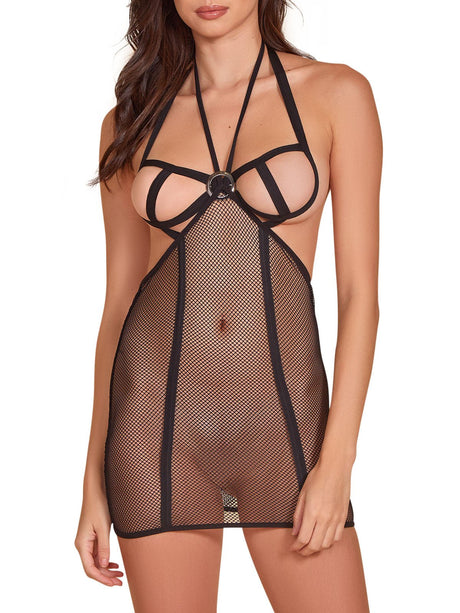
Loose straight-cut garment falling from the shoulders to mid-thigh or knee, with no waist definition. |
| Babydoll |
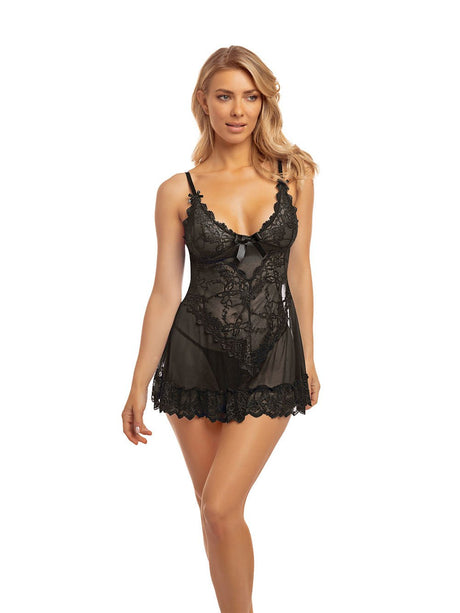
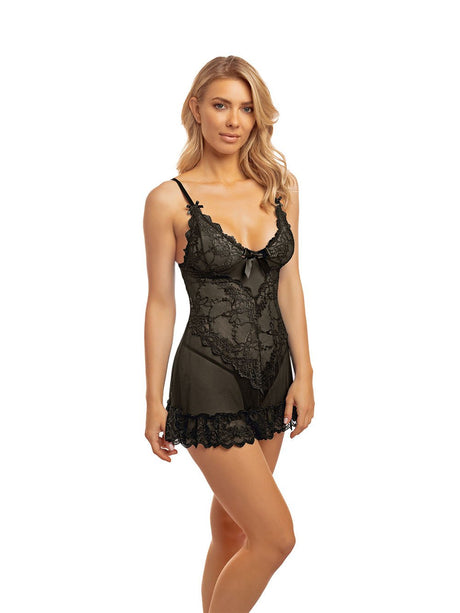
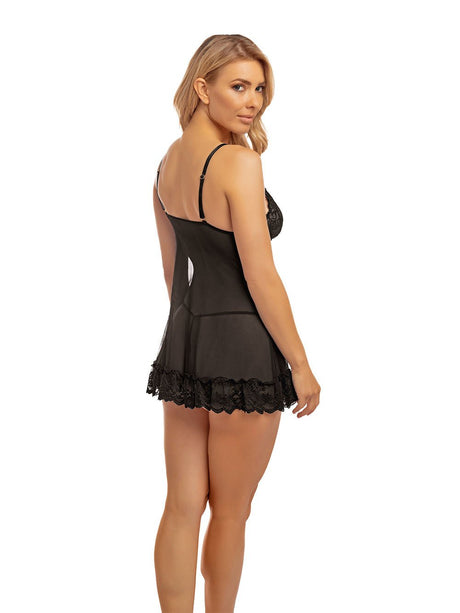
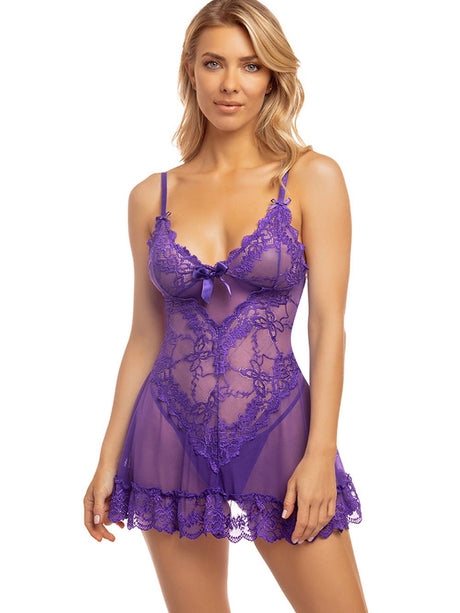
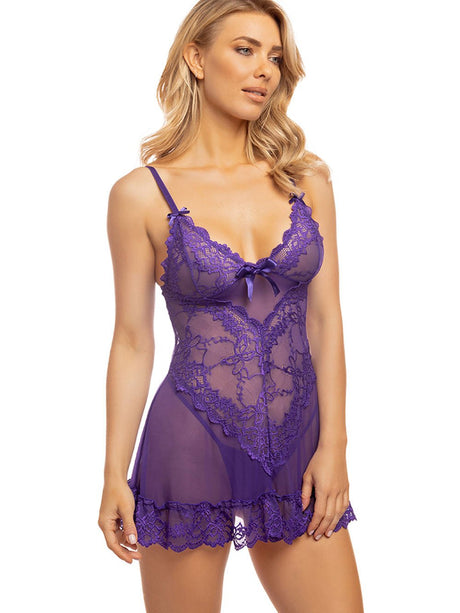
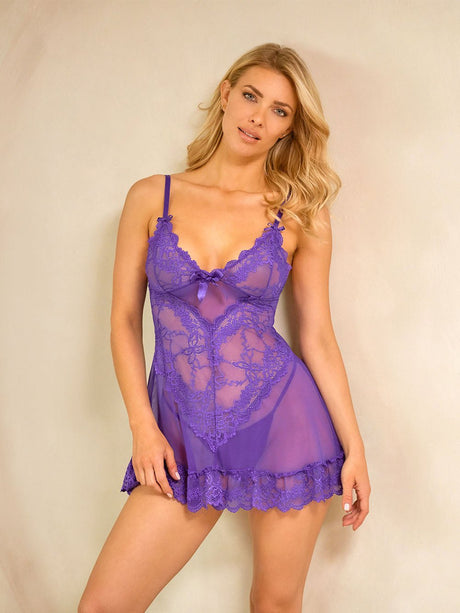
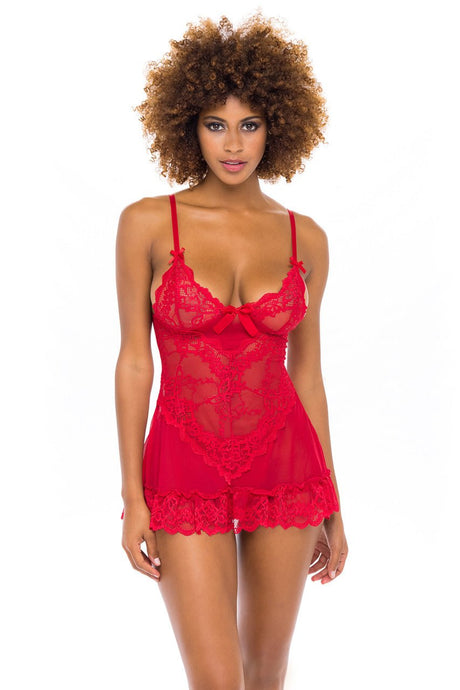
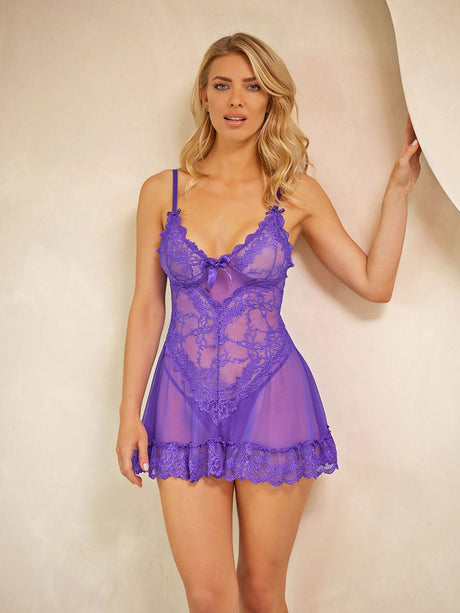
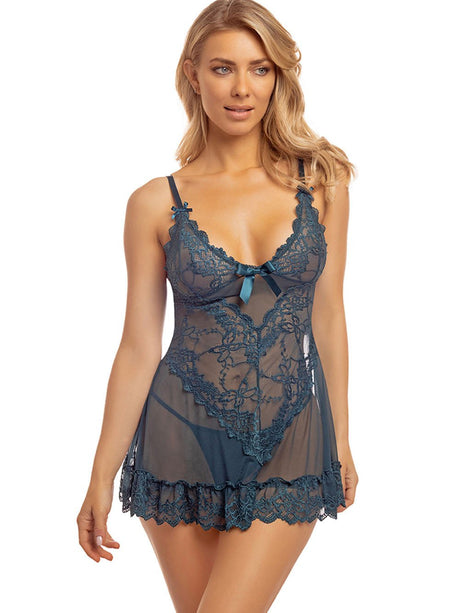
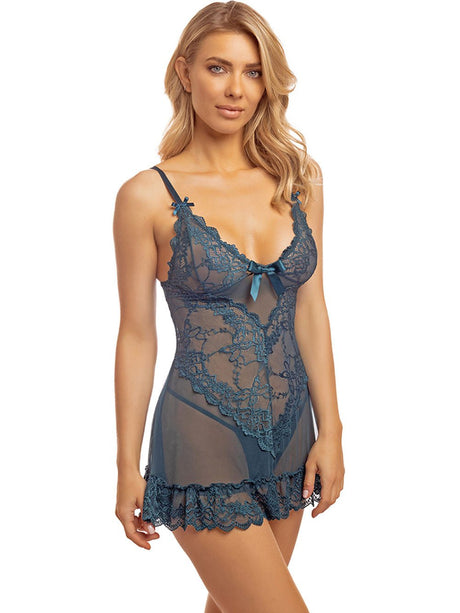
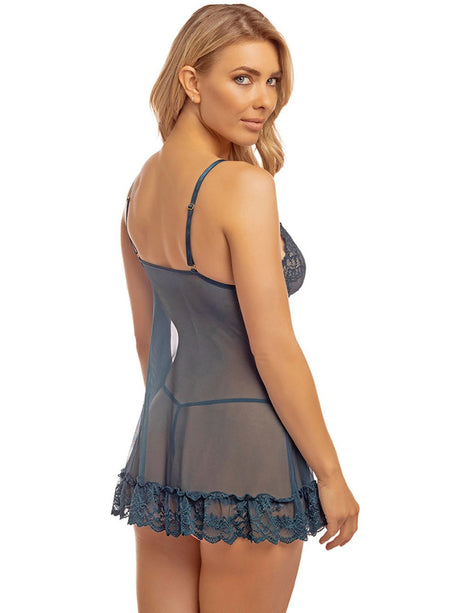
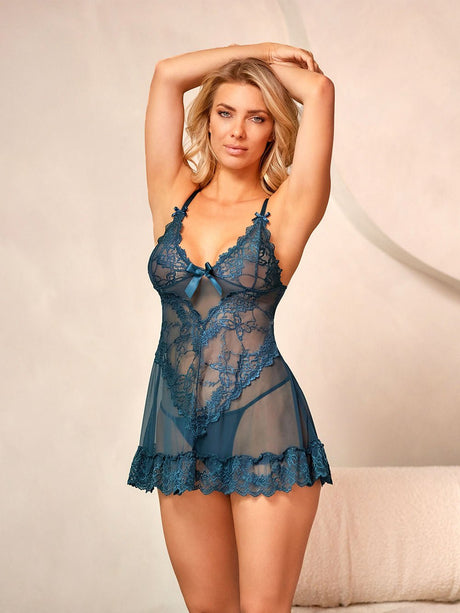
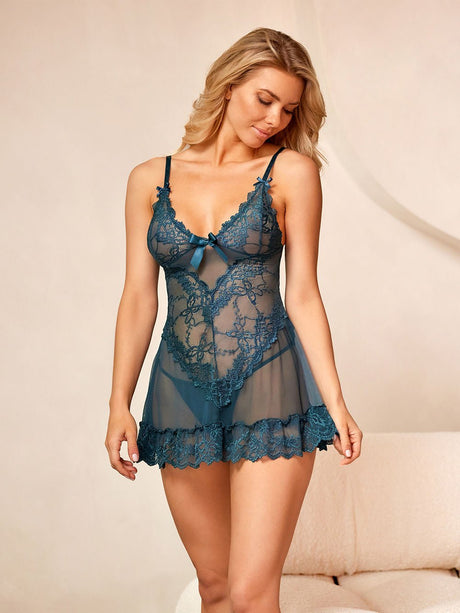
Flares outward from an empire seam beneath the bust. Shorter and fuller than a chemise. |
| Slip |
Cut close to be worn under clothing, giving a smooth surface for the outer garment to fall over. |
| Camisole |
Covers the torso to the waist or hip, worn as a layer or alone. |
| Teddy |
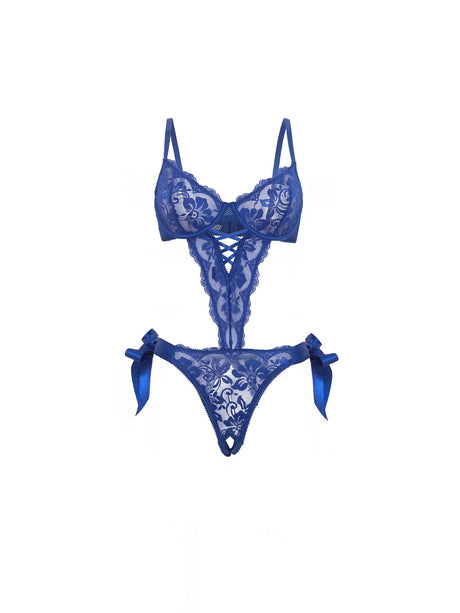
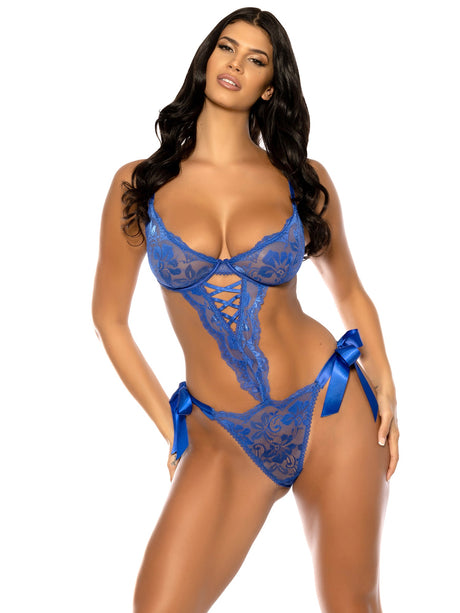
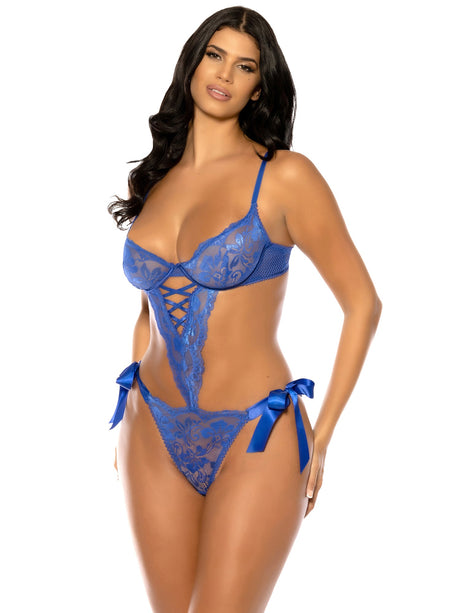
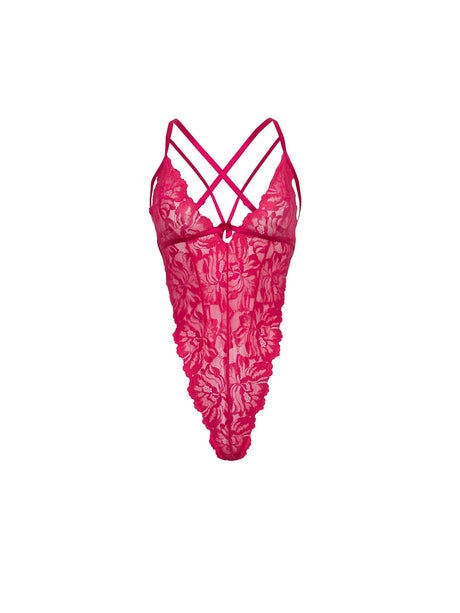
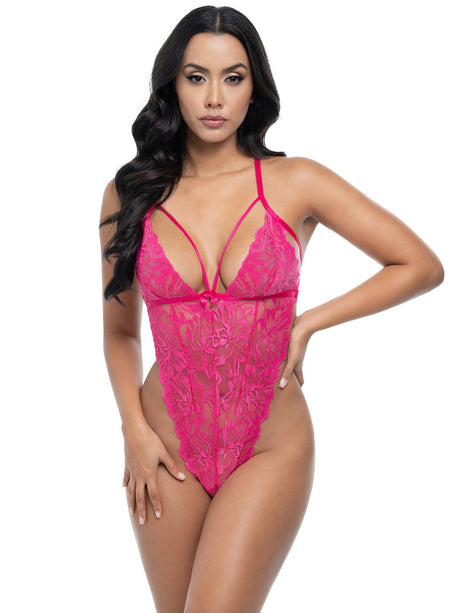
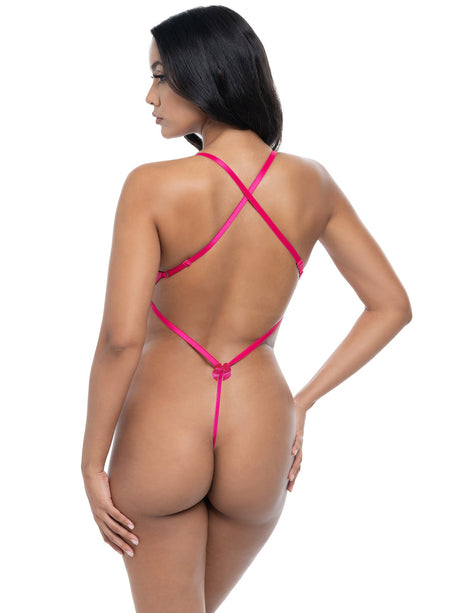
One-piece torso garment fastening at the crotch, loose and decorative. |
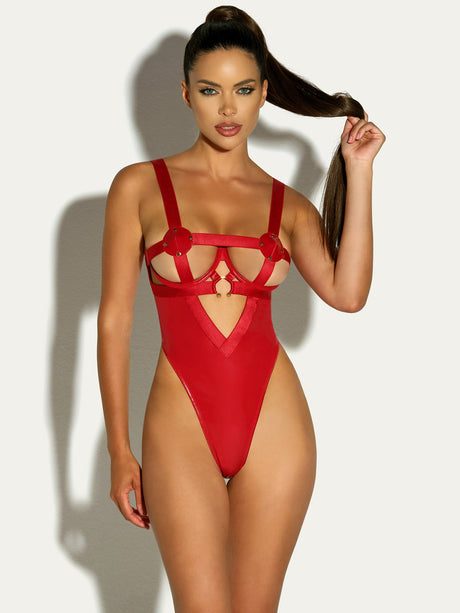
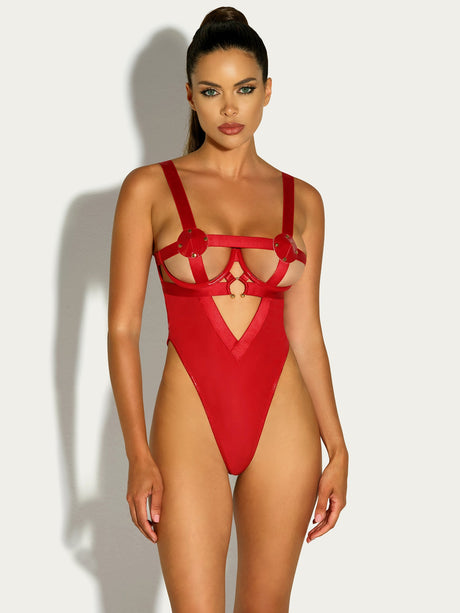
| Bodysuit |
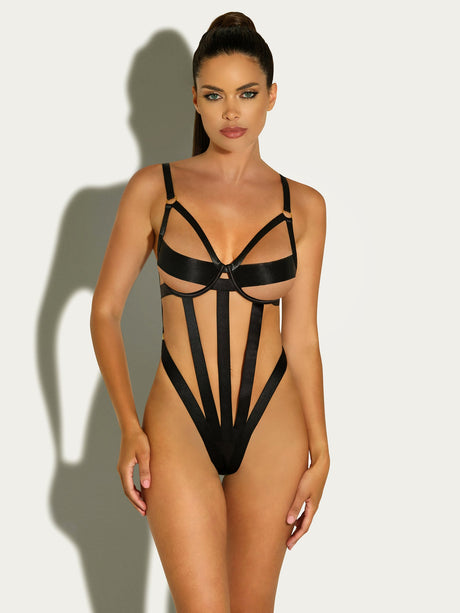
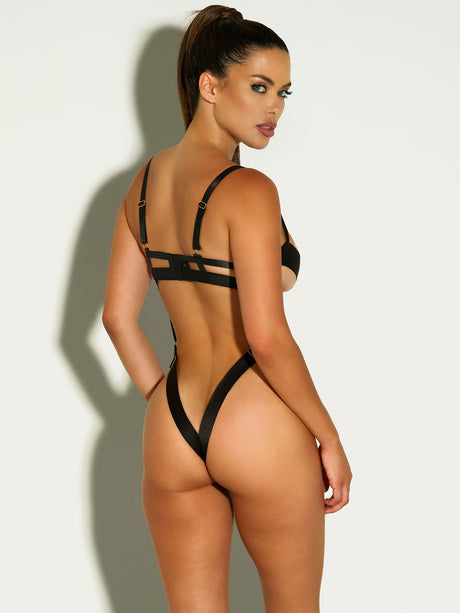
Fitted one-piece in stretch fabric, fastening at the crotch, usually worn as a top or under clothing. |
| Corset |
Structured with rigid boning and designed to reshape the torso, typically laced. |
| Bustier |
Shorter and softer than a corset, supporting the bust and smoothing the torso without reshaping intent. |
| Basque |
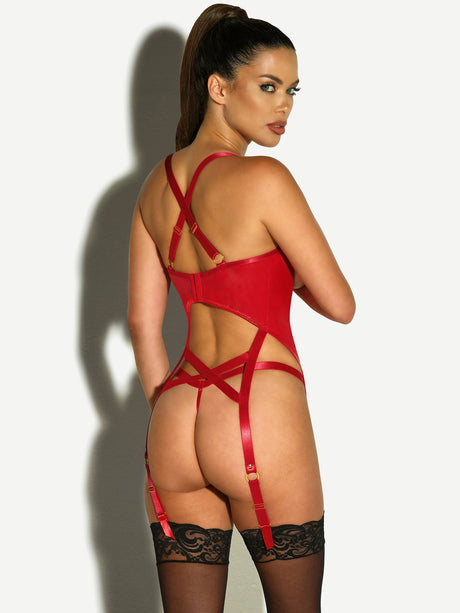
Longer than a bustier, extending over the hips, often with suspender attachments. |
| Suspender belt / garter belt |
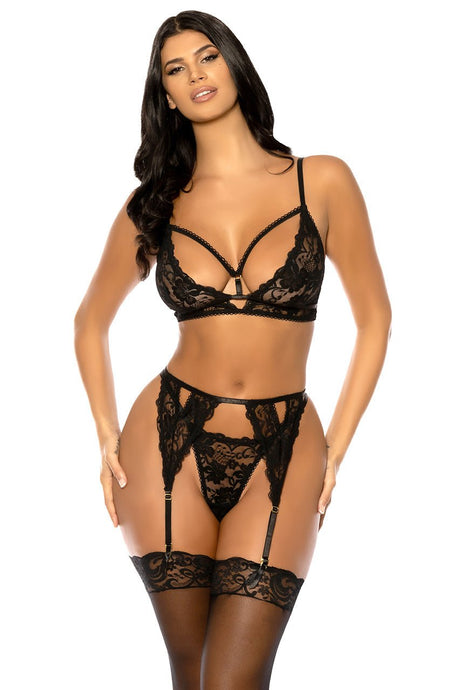
Waist or hip belt with straps and clips to hold stockings up. |
| Negligee |
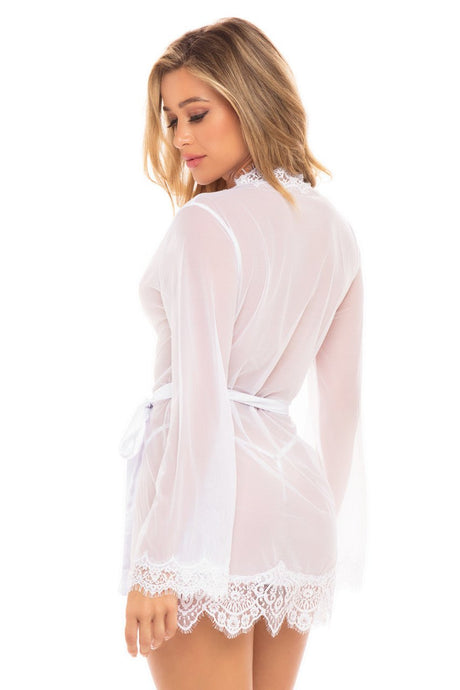
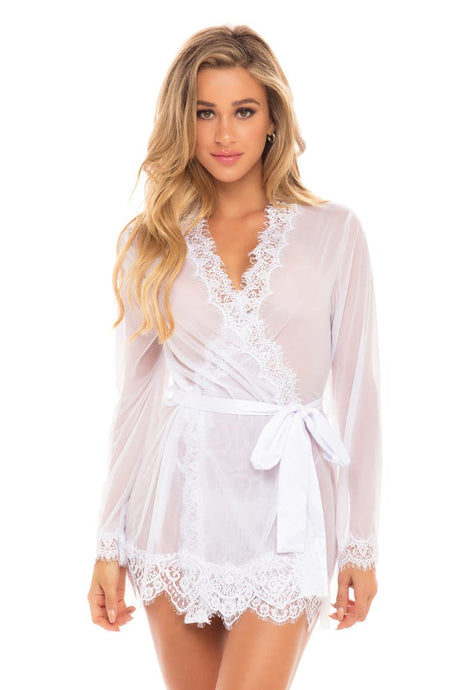
A light, often sheer robe or nightdress, historically implying something decorative rather than practical. |
| Peignoir |
A robe intended to be worn over a matching nightdress, usually sheer. |
| Kimono robe |
Robe cut as a straight T shape with no shoulder seam and a deep underarm. More forgiving across shoulder shapes. |
Underwear Cuts
| Term |
Definition |
| Brief |
Full rear coverage, waistband at or just below the natural waist, leg opening at the top of the thigh. |
| High-waist brief |
Rises above the natural waist. The most stable cut, since the band sits where the torso curves least sharply. |
| Hipster / midi |
Sits on the hip rather than the waist, with moderate rear coverage. |
| Boyshort |
Extends down the thigh with a straight leg opening. More coverage, but the leg edge sits at a wider point. |
| Cheeky / Brazilian |
Partial rear coverage with a narrower back panel. |
| Thong |
Narrow rear strap, eliminating the leg edge entirely. |
| G-string |
Narrower than a thong, with minimal side and rear fabric. |
| French cut / high leg |
Leg opening cut high on the hip, lengthening the leg line. |
| Gusset |
The crotch panel, conventionally cotton regardless of the outer fabric, for breathability. |
| Rise |
Vertical distance from waistband to crotch seam. Predicts fit better than the style name does. |
Fabrics and Finishes
| Term |
Definition |
| Lace |
Openwork fabric. Corded lace has a raised outline thread; Leavers and Chantilly are traditional fine types. Stretch lace elongates under load, which is why lining matters. |
| Tulle / mesh |
Fine net fabric, used for sheer panels and for lining lace to stabilise it. |
| Satin |
A weave rather than a fibre, producing a glossy face. Silk satin breathes; polyester satin does not. |
| Modal and TENCEL lyocell |
Semi-synthetic fibres from wood pulp. Soft, breathable, and notably resistant to pilling. |
| Microfibre |
Very fine synthetic yarn producing a smooth opaque fabric. Takes a bonded edge cleanly, which is why no-show underwear uses it. |
| Powernet |
Firm high-tension mesh used in shapewear and bra wings where control is needed. |
| Elastane / spandex / Lycra |
Three names for the same fibre family, providing stretch and recovery. Higher percentages stretch more and fatigue faster. |
| Picot |
Narrow decorative elastic with a looped scalloped edge. Trim rather than structure, and visible under fitted clothing. |
| Bonded / laser-cut edge |
An edge sealed or glued rather than sewn, adding no thickness. What makes a garment genuinely invisible under fitted fabric. |
| Denier |
Yarn thickness in hosiery. Under 15 is very sheer, 40 to 60 semi-opaque, 80 and above opaque. |
| GSM |
Grams per square metre, describing fabric weight. For loungewear knits, 220 to 280 is the durable everyday range. |
Fit Vocabulary
Terms You Will Meet in Fitting Advice
Sizing · the useful adjustmentSister SizeBra sizes holding the same cup volume on different bands. Down one band and up one cup, or the reverse, keeps volume constant while changing band tension. A 34D, 32DD and 36C hold roughly the same amount. This is the correct adjustment when the band is wrong, rather than changing the cup alone.
Manufacturing · why fit variesGradingScaling a master pattern up and down through a size range. Good grading adjusts every element proportionally, including cup depth, wire width, strap placement and band length. Poor grading scales some and holds others constant, which is why certain brands fit badly at the extremes of their range even when the labelled size is right.
Construction · two mechanismsEncapsulation and CompressionEncapsulation surrounds each breast in a separate cup, supporting them independently. Compression holds both inward against the chest as a single mass. The distinction matters most in sports bras, where compression addresses vertical movement well and lateral movement poorly. See the sports bra guide.
Anatomy · describes shapeProjection, Fullness and PlacementProjection is how far the breast extends forward from the chest wall. Fullness describes whether volume sits mainly at the top or the bottom of the breast. Placement describes whether breasts sit close together or wide apart. All three affect which cup shape suits you, independently of volume, which is why the same size fits differently between brands.
Faults · what the words meanQuadraboob, Gaping and Riding UpQuadraboob is the informal term for tissue spilling over the top edge of a cup, creating a second contour; it means the cup is too small. Gaping is space between cup and breast, meaning too large. Riding up is the band travelling upward at the back, meaning the band is too loose. Three faults, three distinct causes, and none of them fixed by adjusting the straps.
Words that mean less than they appear toSeamless has no fixed definition and is applied to garments with visible elastic edges. Nude is a colour name matched historically to one narrow range of skin. One size is a statement about a mid-range fit block rather than a claim about universality. Full coverage and maximum support are marketing descriptions with no measurable threshold behind them. None of these are lies exactly; they are simply not specifications, and treating them as such is how people end up disappointed.
You do not need most of this vocabulary to buy well. You need six words, and one of them is gore.
HauteFlair Fit Team
What This Means for You
Lingerie terminology is a mixture of genuine engineering vocabulary, garment history and marketing. The engineering half is worth learning because it describes things that determine fit. The rest is worth having somewhere you can look it up.
If you take six terms away: band, gore, cradle, wing, apex, root. Those describe where support comes from and where fit fails, and between them they explain most of what goes wrong with a bra.
And when a product description leans on seamless, full coverage or maximum support, read the construction instead. Those words are not measurements.
Ready to shop?Lingerie at HauteFlair
Bras, bralettes, bodysuits, slips, corsets and everything else defined above. Bands 28 to 46, cups A to K. Free returns on unworn pieces.
Shop LingerieFind Your Size
Frequently Asked Questions
What is the gore on a bra?
The gore is the panel of fabric between the two cups at the centre front. On an underwired bra it should sit flat against the sternum. A gore standing away from the chest is the clearest single indicator that the cup is too small, because breast tissue is occupying the space the gore needs to lie flat.
What is the cradle of a bra?
The cradle is the frame of fabric surrounding and supporting the cups, sitting between the cups and the band. It holds the underwire channels and gives the cups their structural foundation. A well-constructed cradle is why two bras of the same nominal size can support differently.
What are the wings on a bra?
The wings are the side sections of the band running from the outer edge of each cup back to the closure. Wing height matters at larger cup sizes because a taller wing resists rolling and contains tissue at the side, while a narrow wing tends to fold over and dig.
What is the apex of a bra?
The apex is the point on the cup where the straps attach at the front, corresponding to the fullest point of the breast. If the apex sits too high or too low for your shape, the strap drags the cup out of position no matter how the straps are adjusted.
What is the root of the breast?
The root is the footprint where breast tissue meets the chest wall. Its width varies between people independently of cup volume, which is why two people wearing the same size can need different underwire widths. A wire narrower than the root sits on tissue rather than beside it.
What is a gusset in underwear?
The gusset is the panel at the crotch of underwear, conventionally made from cotton or a cotton blend regardless of what the rest of the garment is made from. It is included for breathability and moisture management, and its presence is a reasonable marker of well-made everyday underwear.
What is picot elastic?
Picot is a narrow decorative elastic with a looped, scalloped edge, used to finish the edges of bras and underwear. It is trim rather than structure, so it is not a substitute for a proper underband, and being raised it shows under fitted clothing.
What is the difference between a teddy and a bodysuit?
Both are one-piece garments covering the torso and fastening at the crotch. A teddy is loose, decorative and intended as lingerie. A bodysuit is fitted, usually in a stretch fabric, and is generally intended to be worn as a top or under clothing rather than purely as lingerie.
What is a chemise?
A chemise is a loose, straight-cut slip-style garment falling from the shoulders to somewhere between mid-thigh and knee, with no waist definition. It differs from a babydoll, which flares from an empire seam beneath the bust, and from a slip, which is cut closer to be worn under clothing.
What is denier?
Denier measures the thickness of the yarn used in hosiery. Lower numbers are sheerer and higher numbers are more opaque: 10 to 15 denier is very sheer, 40 to 60 is semi-opaque, and 80 and above is fully opaque. It describes yarn weight rather than quality.
What is the difference between a corset and a bustier?
A corset is structured with rigid boning and designed to reshape the torso, typically laced. A bustier is a shorter, softer garment that supports the bust and smooths the torso without the compression or the reshaping intent, and it usually fastens with hooks rather than lacing.
What does moulded cup mean?
A moulded cup is pressed into a fixed three-dimensional shape using heat rather than assembled from stitched panels. It gives a smooth seamless outer surface, which is why it is common in t-shirt bras, and it holds its shape whether or not tissue is filling it.
What is a balconette bra?
A balconette has a horizontal upper cup edge and wide-set straps, giving a lifted, rounded shape with more exposure at the top of the cup than a full cup. It suits wide necklines and shapes with fullness at the bottom of the breast.
What is a leotard back?
A leotard back drops the back panel lower between the shoulder blades and anchors the straps closer to the centre, so they cannot migrate outward during wear. It is a useful construction for sloped or broad shoulders, where conventional strap placement tends to slide.
What does grading mean in lingerie?
Grading is the process of scaling a master pattern up and down through a size range. Good grading adjusts every element proportionally, including cup depth, wire width, strap placement and band length. Poor grading scales some elements and holds others constant, which is why some brands fit badly at the extremes of their range.
This article is for informational purposes only. Definitions reflect common industry usage; terminology varies between brands and regions, and some terms have no standardised meaning. Fit guidance is general and may vary based on individual body composition and brand-specific sizing.