What makes plus size shapewear different?
Not the compression. The grading. Shapewear works by placing firmer panels over specific zones and softer fabric elsewhere, which means the panels have to move and change shape as the size increases. Scaling the whole pattern uniformly does not do that: panels drafted for a smaller frame end up in the wrong places, compressing where nothing was meant to be compressed and leaving the intended zones uncontrolled. In ordinary clothing, bad grading gives you a garment that is too tight or too loose. In shapewear it gives you a garment that shapes the wrong parts of you. That is the real divide in this category, and it has almost nothing to do with how firm anything is. A brand whose range runs S to 3X has usually scaled. A brand starting at 1X, or running a separate plus collection with different panel layouts, has usually drafted.
The usual advice for plus size shapewear is to buy something firmer, as though the difficulty were a shortage of force.
The difficulty is almost always that the garment was designed for a different body and then enlarged. That is a manufacturing decision you can detect before buying, and once you can, the category gets considerably easier.
- A range that starts at plus, or a separate plus collection. S to 3X from one block is usually scaled up.
- Visible panel seams in the product photo. Uniform fabric flattens; engineered zones shape.
- Length graded as well as width. Torso length varies independently of circumference and is often ignored.
- A waistband of 2 inches or more, or a silicone gripper. More displaced tissue means more force trying to move the edge.
- Bonded or laser-cut edges, particularly at the leg, where grading failures show first.
- Moderate compression, longer garment. The same rule as at any size, and it matters more here.
- Never size down. It concentrates more displaced tissue at the same edges.
Why Scaling a Pattern Up Breaks Shapewear Specifically
Grading is the process of scaling a master pattern through a size range. In ordinary clothing, mediocre grading produces a garment that fits loosely or tightly. In shapewear it produces something worse: a garment whose engineered panels land in the wrong places, so it compresses areas it was not meant to and releases areas it was.
To see why, it helps to know what a well-made shaping garment actually is. It is not one piece of stretchy fabric. It is an assembly of zones: firm powernet across the abdomen and up the sides, softer stretch fabric over the hip and seat, sometimes a rigid or semi-rigid panel at the front. Each zone is positioned relative to a specific anatomical landmark on the fit model the pattern was drafted for.
Now scale that pattern up by twenty percent in every direction. Every panel gets twenty percent bigger, and every panel boundary moves twenty percent further from the centre. But bodies do not enlarge uniformly. Torso length does not scale at the same rate as waist circumference. The distance from waist to hip does not scale at the same rate as hip width. So the firm abdominal panel that sat correctly on the fit model now sits too high, or extends too far around the side, or stops short of where it was meant to reach.
The result is a garment that is genuinely compressive and compressing the wrong things. People describe this as the shapewear not working, or feeling like it pushes things around oddly, and both descriptions are accurate. It is not a compression problem and buying something firmer makes it worse in exactly the way buying something firmer usually does.

The distinction also explains an experience many people have had: a garment that fits perfectly at one size in a range and oddly at the next size up, from the same brand and the same style. Nothing about the design changed. What changed is that the scaling drifted far enough from the original block that the panels stopped landing where they were meant to.
Shapewear Drafted for the Frame
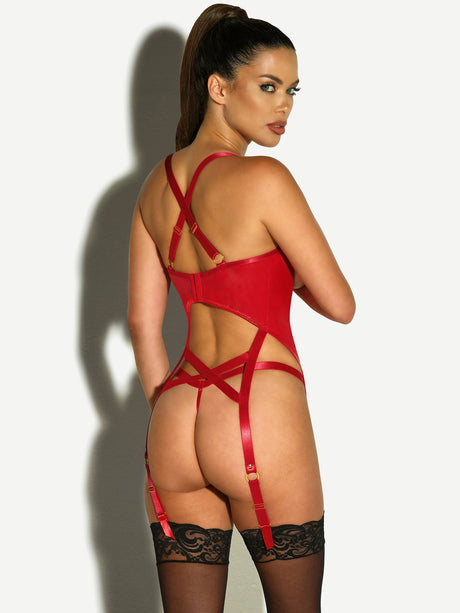
Panelled construction with bonded edges, graded for length as well as width. Sizes 1X through 6X, light to firm compression.
Shop ShapewearHow Compression WorksFive Checks Before You Buy

The Length Problem, Specifically
Of all the grading failures, torso length is the one that causes the most disappointment and gets discussed least, so it is worth taking separately.
Shapewear placement is defined relative to landmarks: under the bust, at the natural waist, at the fullest part of the hip. Those landmarks sit at different distances from each other on different people, and torso length varies by several inches across bodies that share the same waist measurement. A garment graded on circumference alone assumes everyone with a 44-inch waist has the same distance from underbust to hip, which is simply not true.
The practical consequence connects directly to how compression behaves. If a high-waist shaper is meant to finish under the bust, where a bra band conceals its edge, but finishes at your natural waist instead, then its edge is now sitting in open ground in the middle of your torso. That is exactly the situation that produces a visible ridge, and it happens with a correctly sized garment, bought in good faith, that simply was not long enough.
Take a garment you already own that sits where you want the shapewear to sit, lay it flat, and measure from the top edge to the bottom edge down the centre front. Then compare against the garment length in the brand’s size chart, if they publish one. If they do not publish one, the product photograph on a model is the next best evidence, but treat it cautiously, since a fit model is usually at the smallest end of the range. Where you are between options, longer is nearly always the safer choice.
What to Buy
| Situation | What works | Why |
|---|---|---|
| General everyday smoothing | High-waist shaping short, moderate compression, bonded edges | Both edges land where clothing conceals them, and moderate compression is wearable all day. |
| Under a fitted dress | Shaping bodysuit | Anchored at the shoulders so it cannot roll, and far fewer edges than separates. |
| Thigh chafing is the real issue | Light compression thigh-length short, bonded hem | Length and hem finish matter; compression is beside the point and only reduces comfort. |
| Smoothing above the waist | Shaping camisole, or a bodysuit | A camisole is simpler, but watch the lower edge at the hip where clothing may not conceal it. |
| Under a slip dress or anything unlined | Shaping slip | One edge only, at the hem, well below the shaped zone. The least likely to show anything. |
| A short evening event | Firm compression, longer garment | Firm is tolerable for a few hours. Keep the length so the displacement still goes somewhere hidden. |
If you are buying one piece, a high-waist shaping short in moderate compression with bonded edges and a silicone gripper covers more situations than anything else and is comfortable enough to keep on. That recommendation is the same at any size; what changes above 1X is that the gripper and the length matter considerably more.
Worth restating, because it is the thing most often got backwards: the compression physics does not change with size. Compression relocates tissue rather than removing it, and it relocates it to whatever edge the garment ends on. What changes at larger sizes is that there is more to relocate, which makes length, edge placement and band width more important. It does not make firmness more important. For the full explanation, see what compression actually does.
Comfort, Wear Time and Care
Correctly sized shapewear at a sensible compression level should be noticeable without being uncomfortable. You should be able to breathe fully, sit down, eat a meal and move normally. If you can do those things, wear it as long as you like.
Very tight garments worn for long periods are a different case. Sustained high compression can restrict breathing depth, and there are reports linking it to digestive discomfort and to irritation of superficial nerves where pressure concentrates at an edge. The evidence is thinner than confident claims in either direction suggest, but the practical advice does not depend on settling it: discomfort is a reliable signal and the right response is to change the garment.
Stop wearing it if you cannot take a full deep breath, if you feel numbness, tingling or pins and needles, if you have persistent stomach discomfort or reflux while wearing it, or if skin irritation does not settle soon after removal. Any of those happening repeatedly is worth raising with a doctor rather than adjusting around. None of them is a normal part of wearing shapewear that fits.
On care, the whole mechanism is elastane tension, and heat is what destroys elastane. Hand wash or use a delicates cycle in a lingerie bag with cool water, air dry flat, and never tumble dry. Skip fabric softener, which coats fibres and reduces recovery. Wash every two or three wears, since body oils break elastane down faster than washing does. Rotating two garments roughly doubles the life of both.
Expect six to twelve months of regular wear, often at the shorter end at larger sizes because the elastane is working harder. The test for whether a piece is finished is that it goes on noticeably more easily than it used to, which means the tension has gone even though the garment looks intact.
People assume plus size shapewear needs to be stronger. It usually needs to be longer, and it always needs to have been designed for the body rather than enlarged toward it.
HauteFlair Fit Team
What This Means for You
The problem with a lot of plus size shapewear is not that it lacks compression. It is that it was drafted for a smaller frame and scaled, so its engineered panels no longer land where they were meant to. That is a construction failure, it is detectable before purchase, and no amount of buying something firmer corrects it.
So check where the size range starts, look for visible panel seams, confirm that length is graded and not just width, insist on a wide band or a gripper, and check the leg finish. Then buy your measured size, choose moderate compression and a longer garment, and expect to be comfortable in it.
Shapewear is optional, and whether you wear it is nobody’s business. If you do want some, this is how to get a piece that is comfortable and does what you actually wanted.
Plus Size Shapewear at HauteFlair
High-waist shorts, bodysuits, slips and camisoles with panelled construction, bonded edges and graded length. Sizes 1X through 6X. Free returns on unworn pieces.
Shop ShapewearSlips and ShapewearFrequently Asked Questions
What is the best plus size shapewear?
Why does plus size shapewear roll down more?
Does shapewear work for plus sizes?
How do I know if shapewear is properly graded?
What size shapewear should I buy at plus sizes?
Why does my shapewear dig in at the thighs?
Is a bodysuit or separates better for plus sizes?
What compression level should I choose?
Why is plus size shapewear so hard to find?
Should plus size shapewear be tighter?
How long can I wear plus size shapewear?
What is powernet?
Does shapewear help with chafing?
How should I wash plus size shapewear?
How long does shapewear last?
This article is for informational purposes only and is not medical advice. Compression level descriptions are general working definitions rather than industry standards, and grading practices vary between manufacturers. Persistent numbness, pain, breathing difficulty, digestive discomfort or skin reaction while wearing compression garments should be assessed by a qualified clinician.