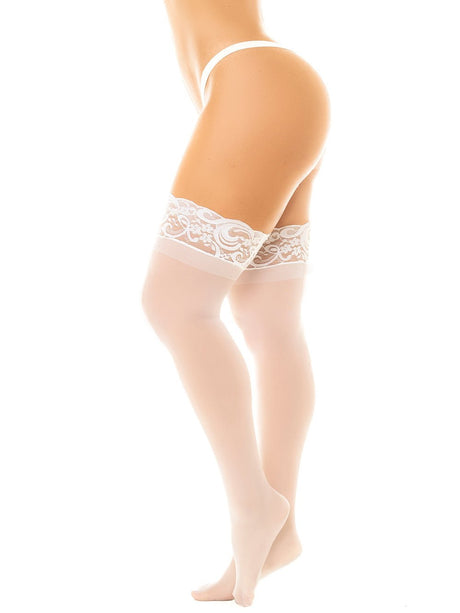
When should you buy bridal shapewear?
Before your first dress fitting, which is usually eight to twelve weeks before the wedding. The deadline is the fitting, not the day. This matters more than anything else about the purchase, and almost nobody leads with it. Your dress is altered around whatever you are wearing underneath it. The seamstress fits the bodice over your undergarments and sets the hem to your shoe height, which means the shapewear stops being an accessory and becomes part of the dress's structure. Buy it afterwards, or change your mind between fittings, and you have invalidated alterations you have already paid for. So: own the garment before the first fitting, take it to all three, and wear that exact piece on the day. Everything else follows from that. Choose for twelve hours rather than one, check whether your gown's own boning already does the job, and make sure you can use a bathroom in it.
Bridal shops all tell you to bring your shapewear to the fitting. None of them tell you how to choose it, or that owning it by then is the actual deadline.
That one piece of scheduling changes the whole purchase.
- Own it before the first fitting, 8 to 12 weeks out. That is the real deadline.
- Wear the same piece to every fitting, including the final one.
- Never change it after alterations. You will have undone the fit you paid for.
- Check the gown’s own boning first. Structured gowns often need nothing on the torso.
- Light to moderate compression. Twelve hours rules out firm.
- An openable gusset, or separates. Test it before the day.
- Bonded edges, since fine bridal fabric shows every line.
The Deadline Is the Fitting
A wedding dress is altered around your body and around what you are wearing under it. The bodice is pinned over your undergarments; the hem is set to your shoe height. Change either afterwards and the alterations no longer describe you.
Bridal shops and seamstresses are unanimous about bringing shapewear to fittings, and they are right. What they rarely say out loud is the implication: you have to have bought it by then. That moves the purchase forward by months from where most people put it.
| When | What happens | What you need |
|---|---|---|
| Before 8-12 weeks out | Buy shapewear and shoes | The actual pieces you will wear on the day |
| 8-12 weeks | First fitting. Bodice pinned, hem set. | Shapewear, shoes, and the bra if separate |
| 4-6 weeks | Second fitting after major alterations | The same pieces again |
| 1-2 weeks | Final detail fitting and bustle lesson | The same pieces, plus whoever will bustle |
| The day | Wear exactly what you fitted in | Nothing new. Nothing swapped. |
Compression garments differ in thickness and in how much they move tissue, so swapping one for another after alterations can leave a bodice loose in one place and tight in another. If something genuinely has to change, go back to the seamstress rather than hoping. And if your body changes during the process, tell them rather than using a firmer garment to compensate, because that produces a visible edge and a long uncomfortable day rather than a fix.
Bridal alteration schedules fill up months ahead, particularly from March to June and September to November. That is worth knowing when you plan the shapewear purchase backwards from the fitting, because if the fitting moves earlier to secure a slot, your buying deadline moves with it.
Check What the Gown Already Does

This is the check most likely to save you money, and it takes ten seconds. Turn the bodice of your gown inside out at the shop and look for vertical boning channels, an inner corselette, or built-in cups.
Many structured wedding dresses have all three. They are engineered to hold their own shape and to hold yours, which is precisely what a shaping bodysuit does. Putting one under the other means two structures competing for the same few inches of torso, and the usual result is a bodice that fits worse than it did in the shop, plus a ridge where the shapewear ends.
Where the gown is structured, the useful purchase is usually shaping shorts for the hip and thigh, which addresses an area the bodice does not reach, under a skirt where a smooth line matters. Where the gown is unstructured, a slip dress or a soft crepe column, a shaping bodysuit earns its place.
Foundations for the Fitting
Shaping bodysuits, shorts and slips in ivory and nude, with bonded edges and openable gussets. Sizes S through 6X.
Shop ShapewearSlip or Shapewear?Choose for Twelve Hours, Not for One
Most shapewear decisions are made standing in front of a mirror for two minutes. A wedding day is commonly twelve hours or more in the same garment, sitting through a meal, dancing, and being photographed at the end of it.
That changes the calculation entirely. Firm compression is tolerable for an evening and genuinely unpleasant across a full day, and the discomfort arrives at roughly the point the reception starts. Light to moderate compression is the right answer for almost every bride, and the garment you stop noticing is worth more than the one that shapes hardest.
Two related points. A longer garment at moderate compression outperforms a shorter one at firm, because the force is spread rather than concentrated at an edge. And a garment that is comfortable while standing may not be while seated, so sit down in it before you commit, ideally for longer than feels necessary.
The Bathroom Problem
Nobody writes about this and everybody encounters it. A shaping bodysuit with no opening at the gusset has to be taken off completely, which in a fitted gown means undoing the dress, and usually means asking someone to help.
The fix is simple if you decide it before buying rather than discovering it on the day. Choose a bodysuit with a hook-and-eye or snap gusset that opens without removing the garment, or wear separates, a shaping short with a separate bra or the gown’s own cups, which sidesteps the problem entirely.
Then practise once, wearing something long, before the wedding. It is a two-minute exercise that answers a question you do not want to be answering for the first time in a venue bathroom in a floor-length gown.
If the shapewear is doing structural work under the gown, a hook giving way or a seam going on the morning is otherwise unsolvable. A duplicate in the same size and style removes that risk. It has to be identical, since a different garment changes the fit the dress was altered around.
By Gown Type
| Gown | Usually wants | Note |
|---|---|---|
| Structured, boned bodice | Shaping shorts only | The gown is already doing the torso. Do not double up. |
| Strapless | Longline strapless bodysuit, or shorts | If the gown has an internal corselette, go with shorts. |
| Low back or backless | Low-back or deep-V bodysuit, or shorts | Resolve before the first fitting; the back is hardest to fix later. |
| Slip or column, unstructured | Full shaping bodysuit | Nothing else is providing shape, so this is where it earns its place. |
| Fitted mermaid or trumpet | Long-leg shaping shorts | Coverage must extend past where the skirt is closest to the leg. |
| Ballgown or A-line | Often nothing below the waist | The skirt is not close enough to show anything. |
| Sheer or fine fabric | Bonded edges, skin-tone | Check under strong daylight at a fitting, not in the shop mirror. |
On colour: match your skin tone rather than defaulting to white. Under most bridal fabrics white reads as a distinct lighter layer, while a shade near your own skin disappears. If the gown is very fine, take both to a fitting and look under strong light.
The brides who have trouble are almost never the ones who chose the wrong garment. They are the ones who bought it the week before, after the dress had already been fitted around something else.
HauteFlair Fit Team
What This Means for You
The shapewear deadline is your first fitting, eight to twelve weeks out, because the dress is altered around whatever is underneath it. Buy before then, bring the same piece to every fitting, and wear exactly that on the day.
Before buying, look inside the gown’s bodice. If it is boned with an inner corselette, you probably need shaping shorts rather than a bodysuit, and adding a second structure would make the fit worse.
Then choose for the length of the day rather than for the mirror: light to moderate compression, a gusset that opens, bonded edges, and a colour matched to your skin rather than to the dress. And practise the bathroom once, in something long, before it matters.
Bridal Foundations at HauteFlair
Shaping bodysuits, shorts and slips in ivory and nude, with bonded edges, openable gussets and light to moderate compression. Sizes S through 6X. Free returns on unworn pieces.
Shop ShapewearBackless & Low Back BrasFrequently Asked Questions
When should I buy bridal shapewear?
Do I need to bring shapewear to my dress fitting?
What happens if I change my shapewear after alterations?
Do I need shapewear if my dress has built-in boning?
What compression level should bridal shapewear be?
How do you go to the bathroom in a wedding dress with shapewear?
What shapewear works under a strapless wedding dress?
What shapewear works under a low-back or backless gown?
Should bridal shapewear be white or nude?
Can shapewear show through a wedding dress?
What if my body changes before the wedding?
Do I need bridal-specific shapewear?
What should I wear under the dress for the reception?
How many fittings will I have?
Should I buy a backup?
This article is for informational purposes only. Fitting timelines are typical rather than universal and vary by gown, seamstress and region; your bridal shop's guidance takes precedence. Sizing and construction vary between manufacturers.