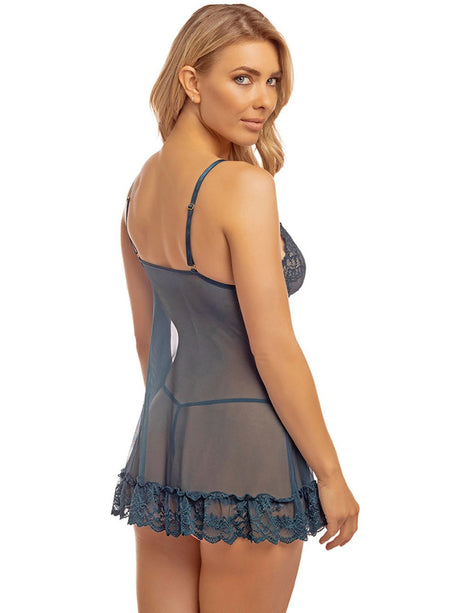
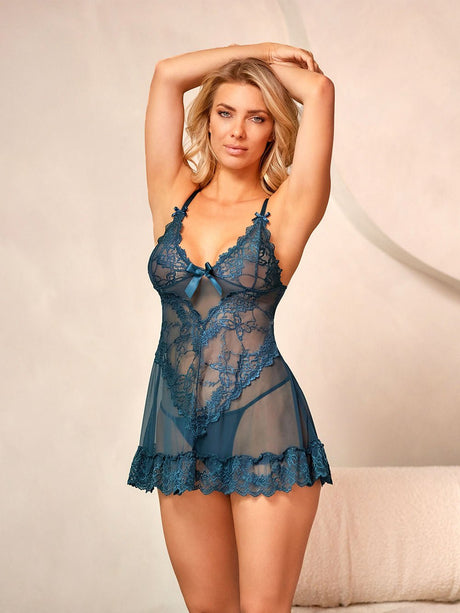
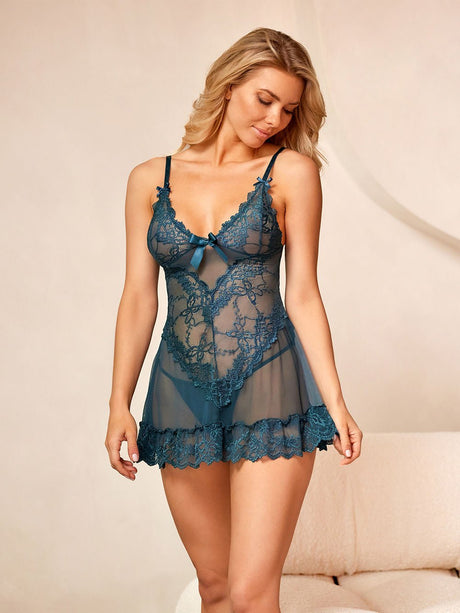
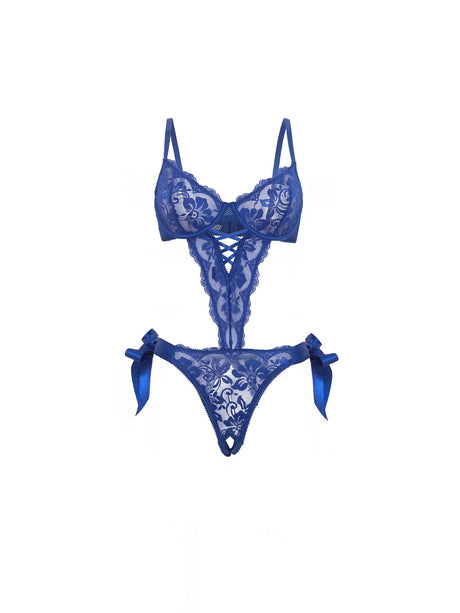
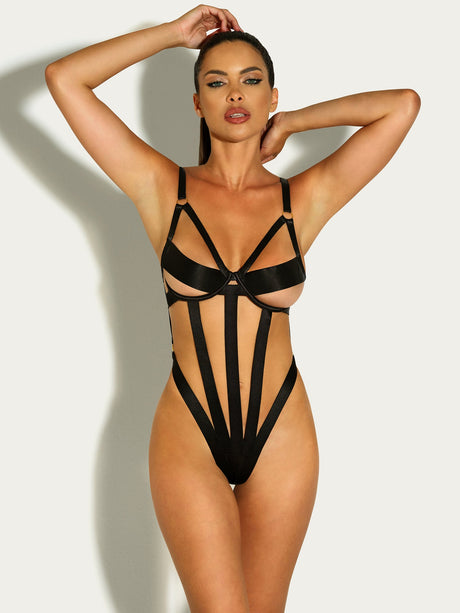
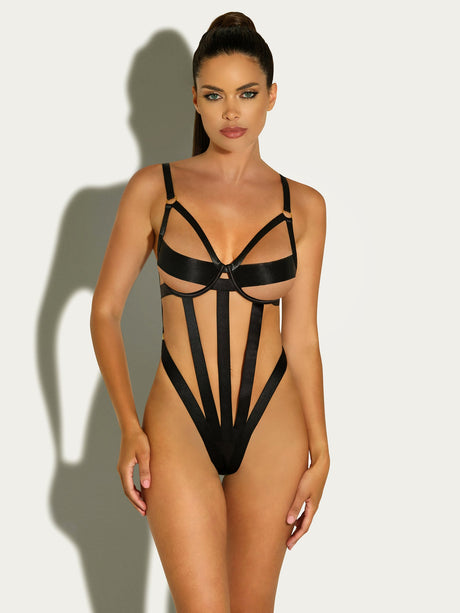
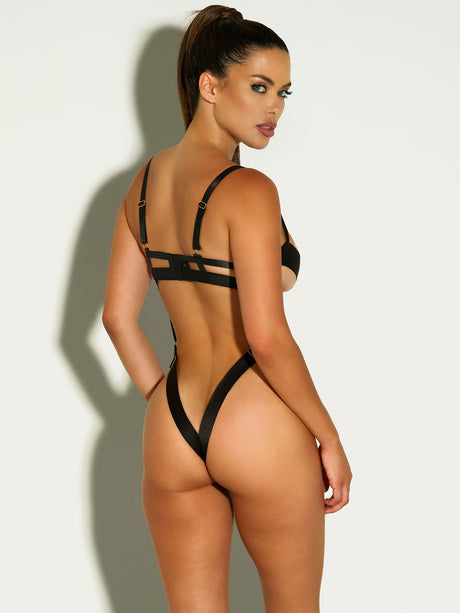
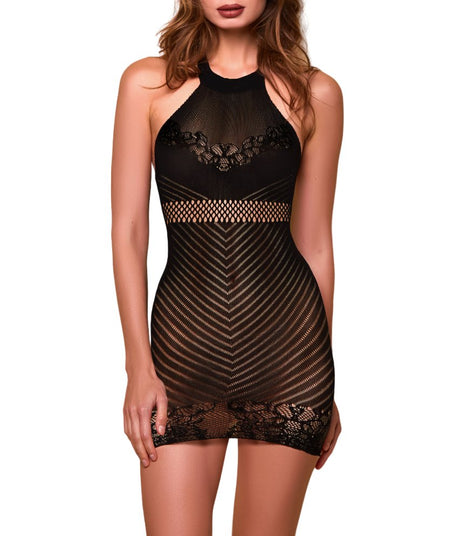
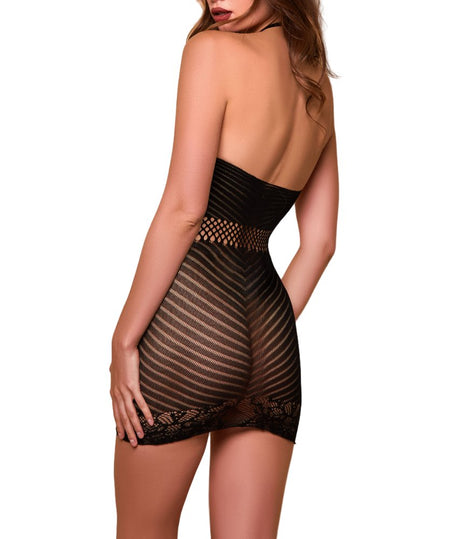
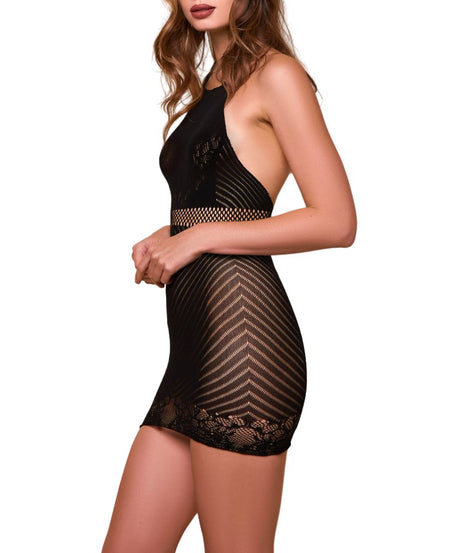
What bra do you wear with a backless, low back, halter or plunge dress?
Work out which anchor point the dress has taken away, and the answer follows. A bra holds position using three things: a band around the ribcage, a gore flat against the sternum, and straps over the shoulders. Difficult dresses are difficult because they remove one of those. A low back or backless dress removes the band position. A plunge neckline removes the gore. A halter removes the normal strap path. Each has its own answer, and the same rule governs all of them: keep the most band the garment will hide, because band tension is where roughly eighty percent of support comes from. For a low back, that means a converter strap on a bra you already own before an adhesive one. For a plunge, a plunge bra with a very low gore before going without. For a halter, a convertible bra restrapped before anything else. The instinct is to reach for the most hidden option; the better move is the most supportive one the dress permits.
Every guide to this lists products. Almost none explain why one works and another does not, which is why people end up with a drawer of adhesive bras that failed.
There is a single principle underneath all of it, and once you have it the choice is usually obvious.
- Three anchor points: band, gore, straps. Each difficult dress removes one.
- Keep the most band the dress will hide. Band tension is ~80% of support.
- Low back: converter strap first, dedicated low back bra second, adhesive last.
- Plunge: a plunge bra with a low gore covers most deep Vs. Going without is a choice, not a requirement.
- Halter: convertible bra restrapped, or a racerback.
- Slipping is a loose band, not a flaw in the style. Go down a band, up a cup.
- Adhesive bras are coverage, not support. Least effective above a D.
The Three Anchor Points
A bra stays where it is using a band around the ribcage, a gore against the sternum and straps over the shoulders. Take one away and the garment still works, with less margin. Take two away and you are into compromise. That framework covers every difficult neckline and back.
| Garment | Anchor removed | First choice |
|---|---|---|
| Low back dress | Band position | Low back converter on your usual bra |
| Backless to the waist | Band entirely | Adhesive cups, or built-in cups |
| Plunge or deep V | Gore | Plunge bra with a very low gore |
| Halter | Normal strap path | Convertible bra restrapped to halter |
| Halter and backless | Straps and band | Adhesive cups, or a halter bodysuit |
| Strapless | Straps | Strapless bra, band one size tighter |
| One shoulder | One strap | Convertible restrapped, or strapless |
Backless and Low Back Dresses
This is the band-position problem, and there are four solutions in descending order of support. The right one is the highest on this list that your dress will conceal.

Plunge and Deep V Necklines
A plunge neckline removes the gore rather than the band, which is a much smaller problem than people assume. In most cases you do not need to go without a bra at all, and the common belief that you do is the reason this gets treated as harder than it is.
A plunge bra has a very low centre gore and cups angled inward, so the front of the bra sits below a deep V. That covers the large majority of plunge dresses and tops. Because the gore is doing less anchoring than in a full cup, a plunge bra wants a particularly firm band to compensate, which is the trade rather than a fault.
Where the neckline goes lower still, three options remain before going without. Adhesive cups or a U-shaped backless plunge bra, which uses a flexible U-wire connecting the cups low at the front. Fashion tape, which is double-sided tape securing the fabric to skin at the deepest point; it holds the neckline in position and provides no support, so it is a positioning tool rather than a bra. And a bodysuit or dress with built-in cups, which avoids the problem by design.
Adhesives vary and skin varies. If you plan to rely on fashion tape for an evening, put a small piece on for an hour a few days beforehand to check for irritation, and test it against the actual dress fabric, since it holds poorly on some silks and heavy beading. It also holds far better on clean dry skin than over moisturiser or body oil.
Halter Tops and Necklines
A halter removes the normal strap path rather than the band, so the band keeps doing its job and the solutions are easy.
- A convertible or multiway bra restrapped to halter is the simplest answer and keeps everything else intact. Most multiway bras include this configuration, and detaching both straps and reattaching them to a single point behind the neck takes a minute.
- A racerback bra, or any bra whose straps cross or converge at the back, disappears under most halter necklines without any reconfiguration.
- Adhesive cups where the halter is also backless, since then two anchors are gone rather than one.
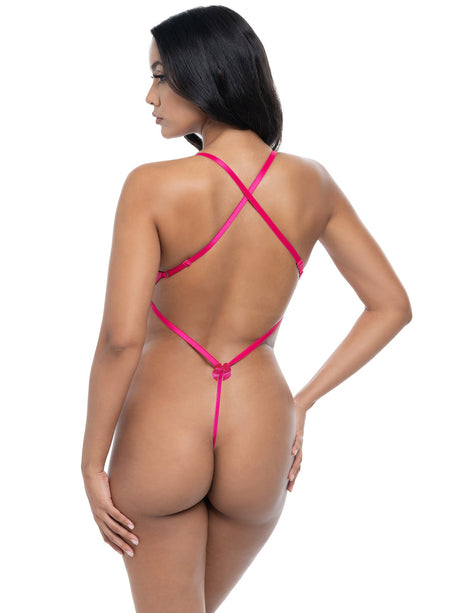
- A halter bodysuit, which solves it in a single garment where the top is loose enough to conceal one.
One thing worth knowing: a halter configuration puts all the strap load onto the back of the neck rather than distributing it across two shoulders. At larger cup sizes that becomes uncomfortable over an evening, which is an argument for making sure the band is genuinely firm so the straps are carrying as little as possible.
Low Back, Plunge and Multiway
Converter straps, low back bras, plunge constructions and multiway bras. Bands 28 to 46, cups A to K.
Shop BrasFind Your SizeWhy It Slips, and How to Stop It

Almost every complaint about strapless, low back and backless bras is the same complaint: it slid down. And it is almost always the same cause.
The band is too loose. With straps, a slightly loose band is masked because the shoulders take up the slack. Remove the straps or move the band down, and there is nothing to mask it. That is why the standard advice for strapless and very low back styles is to go down one band size and up one cup, which tightens the band while keeping cup volume identical.
Two other things help. Silicone grippers along the top edge of the band or cup add grip against skin. And a wider band spreads tension over more surface, which resists rolling downward better than a narrow one.
What does not help is tightening the straps where straps exist, since that pulls the back panel upward and makes the band looser still.
Above a D Cup
The options narrow, and the rule matters more rather than less. Support comes from the band, so at larger cup sizes the constructions retaining a real band are the only ones that genuinely work.
In practice that means: a converter strap with a well-fitting wired bra is the best available option, since you retain full cup construction and wire support. A dedicated low back bra with a wide integral band, particularly a longline, is the next best. And bodysuits work well where the dress conceals them.
Adhesive cups are the weakest option above a D and it is worth being blunt about why. There is no band, so the adhesive is holding the full weight of the tissue against skin, and adhesive strength does not scale with cup size while weight does. Add body heat over an evening and the margin disappears. They can work for photographs and short periods; they are not a plan for a wedding.
If a dress genuinely cannot accommodate any band-based construction and you are above a D, the honest options are to have the dress altered to include internal support, or to choose a different dress. That is not the answer people want, and it is more useful than pretending a stick-on cup will hold.
People buy an adhesive bra because the dress is backless, when the back was only cut to mid-shoulder-blade. A three-pound converter strap would have kept the bra they already owned.
HauteFlair Fit Team
What This Means for You
A bra anchors on three things: band, gore, straps. Every difficult dress takes one away, and knowing which one turns a confusing problem into a simple one.
Low back takes the band position, so use a converter on a bra that fits before anything else. Plunge takes the gore, and a plunge bra covers most of them, so going without is a choice rather than a requirement. Halter takes the strap path, and a convertible bra restrapped solves it in a minute.
Throughout, keep the most band the dress will hide, go down a band and up a cup if it slips, and treat adhesive cups as coverage rather than support, especially above a D.
Bras for Difficult Dresses
Low back bras and converters, plunge constructions, multiway and strapless styles. Bands 28 to 46, cups A to K. Free returns on unworn bras.
Shop BrasPlus Size Bra GuideFrequently Asked Questions
What bra do you wear with a backless dress?
What is a low back converter?
How do you wear a plunge dress without a bra?
What bra do you wear with a halter top?
Do stick-on bras actually work?
Why does a low back bra feel less supportive?
What bra do you wear with an open back dress?
Can you wear a normal bra with a backless dress?
How do you keep a strapless or backless bra from slipping?
What is fashion tape and does it work?
Are there backless bras for large busts?
What is a plunge bra?
How low can a low back bra go?
Do bodysuits work under backless dresses?
How do you measure for a low back bra?
This article is for informational purposes only. Fit recommendations are general and may vary based on individual body composition, garment cut and brand-specific sizing. Adhesive products should be patch tested before extended wear, and discontinued if any skin irritation occurs.