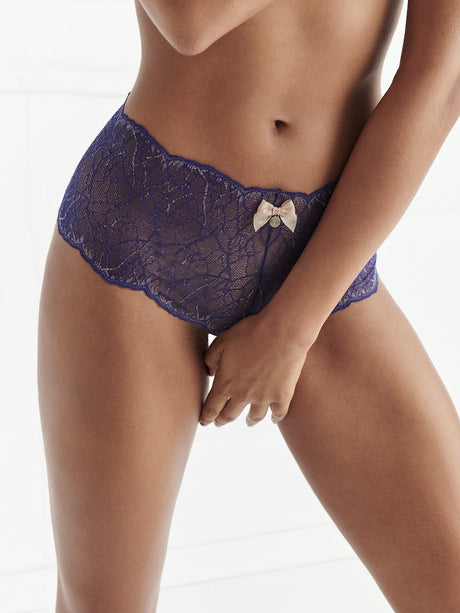
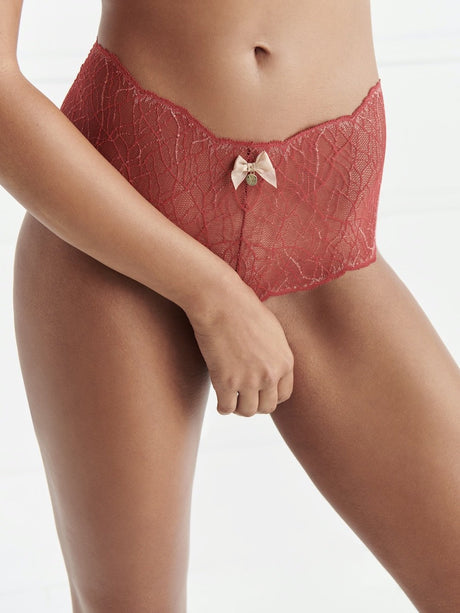
What is the difference between swim shorts and board shorts?
Board shorts were built for surfing and swim shorts were built for swimming, and every difference between them follows from that. A board short has a longer inseam, a flat non-elasticated waistband secured with a lace-up tie, and a tightly woven fabric with little or no stretch. That combination resists abrasion against a board, dries fast, and stays closed when a wave hits. General women's swim shorts are usually shorter, cut from stretch swim knit with 15 to 20 percent elastane, and secured with an elasticated or bonded waistband and an internal drawstring, which is more comfortable to swim and move in. Neither is better; they are answers to different problems. What decides whether either pair stays put is the same in both cases, and it is not the size. It is the leg hem. A bonded edge or an internal silicone gripper holds the hem where you put it. A plain hemmed edge travels up the thigh, and that is the single most common complaint about the category.
Swim shorts get bought on length and colour, and abandoned because they ride up or chafe.
Both of those are decided by two details that almost no listing highlights: how the leg hem is finished, and where the inseam puts it on your thigh.
- Board shorts: woven, longer, lace-up flat waist. Built for surf and abrasion.
- Swim shorts: stretch knit, shorter, elastic or bonded waist. Built for swimming and comfort.
- The leg hem decides riding up. Bonded edge or silicone gripper, not a plain hem.
- Pick the inseam so the hem misses the widest part of your thigh.
- Bonded flat waistband with internal drawstring for a clean line and real adjustment.
- Check whether they are lined. Unlined needs a swim brief, never ordinary underwear.
- Flatlocked seams, because raised seams against wet skin chafe fast.
Two Garments, Two Jobs
Board shorts came from surfing, where the garment has to survive being dragged across a waxed board, dry quickly in wind, and stay fastened when a wave hits. Swim shorts came from swimming, where the priorities are stretch, low drag and comfort against skin. Every construction difference between them traces back to that split.
| Board shorts | Swim shorts | |
|---|---|---|
| Fabric | Tightly woven polyester, little or no elastane | Stretch knit, typically 15 to 20 percent elastane |
| Inseam | Longer, commonly 7 inches and up | Shorter, commonly 2 to 6 inches |
| Waistband | Flat, non-elasticated, lace-up tie or hook closure | Elasticated or bonded, internal drawstring |
| Stretch | Minimal. Movement comes from cut and side slits | Substantial. Moves with you |
| Best for | Surfing, paddleboarding, abrasion, sun coverage | Swimming, general beach and pool wear |
| Drag in water | Higher. More fabric, no stretch | Lower. Shorter and closer-fitting |
| Lining | Frequently unlined | Frequently lined |
The practical consequence is that you can swim in board shorts perfectly well, and they will feel like more work than a stretch short over any distance. And you can wear swim shorts to surf, and they will abrade faster. Choosing between them is a question about what you are doing rather than which is better made.
Swim Shorts and Board Shorts That Stay Put
Bonded hems, silicone grippers, flat waistbands and inseams from two to nine inches. Full size range, free returns on unworn pieces.
Shop SwimwearTankini GuideWhy They Ride Up, and What Stops It
This is the reason swim shorts get worn twice and then left in a drawer, and it is almost entirely a construction problem.

A short leg is a tube of fabric sitting on a thigh that changes circumference as you walk, sit and swim. Every step slides the fabric slightly upward, and nothing pulls it back down. Over an afternoon the hem migrates, which is both uncomfortable and the point at which thigh-on-thigh contact starts.
Two things fix it, and a third makes both work better.
Choosing a Length
Inseam is the measurement to choose first, because it determines coverage, drag and where the hem sits.
| Inseam | Sits | Best for |
|---|---|---|
| 2 to 3 inches | Upper thigh, boy-cut | Swimming with least drag. Least thigh coverage, so chafing is possible. |
| 4 to 6 inches | Mid-thigh | The general-purpose range. Enough fabric to stop chafing, short enough to swim in. |
| 7 to 9 inches | Lower thigh, board short length | Sun coverage and abrasion resistance. Noticeably more drag when swimming. |
| Knee length | At or just above the knee | Maximum coverage. Best for surf, paddleboarding and long days out of the water. |
Stand up and find the widest point of your thigh, then measure from your crotch down to it. If a pair of shorts has an inseam close to that number, the hem will sit on the widest point and will slide. Pick an inseam either shorter or longer than that measurement and the hem has somewhere stable to rest. It takes a minute and it explains why one length works on you and another never does.
Waistbands

Three constructions, and they are not equivalent.
Bonded flat waistband with an internal drawstring is the best of the three for stretch swim shorts. The band lies smooth against the body with no gathering, the drawstring provides genuine adjustment, and there is no bulk under a fitted cover-up. It is more expensive to make, which is why it appears further up the range.
Gathered elastic is the common default. It is comfortable and it bunches fabric into small vertical folds around the entire waist, which adds visible bulk exactly where a swim short meets a tankini top or a bare midriff. It also relaxes faster than a bonded band.
Flat lace-up, board short style, uses a non-elasticated waistband closed with a cord through eyelets, sometimes with a hook or velcro fly. It is the most secure closure available and the reason board shorts stay on under wave impact. The trade-off is no give at all, so the size has to be right.
What to Wear Underneath
Lined shorts are worn on their own. Unlined shorts need a swim brief or bikini bottom underneath. Ordinary underwear is not an option: it absorbs and holds water, becomes transparent when wet, chafes badly, and takes hours to dry.
The complication is that board shorts are frequently unlined and listings do not reliably say so. Women's board shorts in particular are often sold without a liner on the assumption you will wear a bikini bottom, which is a fair assumption and an annoying surprise if nobody mentioned it.
Where a lining is present, it is usually a light mesh or a brief-shaped panel. A full mesh liner is more comfortable for swimming; a brief-shaped liner gives more coverage. Neither is a substitute for a swim brief if you want the shorts to come off separately at any point.
What to Pair Them With
Swim shorts are one of the more useful pieces in a swim wardrobe precisely because they pair with almost everything.
- A tankini top gives full torso and thigh coverage with independent sizing at both ends. Many brands sell tankini sets with shorts rather than briefs for exactly this reason, and it is a genuinely practical combination.
- A bikini top is the standard pairing and gives the most flexibility, since the two pieces need have nothing to do with each other.
- A rash guard or swim tee covers the shoulders and back, which matters for long days in sun and is the usual surf pairing.
- A one-piece worn underneath, with the shorts over the top, gives thigh coverage without a separate brief and works well if you already own a one-piece you like.
Care, and What Wears Out First

Chlorine degrades elastane, and the damage is a function of how long chlorine sits in the fabric rather than how long you swam. That single fact drives most of the care advice.
- Rinse in cool fresh water immediately after getting out, not at the end of the day.
- Hand wash gently, never wring. Wringing distorts the knit permanently.
- Dry flat, out of direct sun. UV degrades elastane and fades colour.
- Never tumble dry. Heat accelerates everything above.
- Mind the pool edge. The seat abrades against concrete faster than any other part, and it is usually what fails first.
- Choose chlorine-resistant fabric for regular pool use. It holds shape considerably longer.
Expect one to three seasons. Woven board shorts generally outlast stretch swim shorts, simply because there is less elastane in them to degrade.
People try three sizes trying to stop swim shorts riding up. It is almost never the size. It is a plain hem finishing exactly where the thigh is widest.
HauteFlair Editorial Team
What This Means for You
Swim shorts and board shorts are different tools. Board shorts are woven, longer and lace-up, built to survive surf. Swim shorts are stretch knit, shorter and elasticated, built to swim in. Pick by what you are doing rather than by which looks better on a hanger.
Then solve the thing that actually determines whether you keep wearing them. Look for a silicone gripper or a bonded edge at the leg, and choose an inseam that puts the hem above or below the widest part of your thigh rather than on it. Those two together eliminate almost all riding up and most chafing.
Check whether they are lined, wear a swim brief rather than underwear if they are not, and rinse them in fresh water the moment you are out of the pool.
Swim Shorts at HauteFlair
Swim shorts, board shorts and tankini sets with bonded hems, silicone grippers and flat waistbands. Inseams from two to nine inches, full size range. Free returns on unworn pieces.
Shop SwimwearSwim Dress GuideFrequently Asked Questions
What are swim shorts?
What is the difference between swim shorts and board shorts?
Can you swim in women's board shorts?
What do you wear under unlined board shorts?
Why do my swim shorts ride up?
How do I stop swim shorts chafing between the thighs?
What length should women's swim shorts be?
Are swim shorts good for plus sizes?
Can I wear swim shorts with a tankini top?
Do swim shorts have pockets?
What fabric are swim shorts made of?
Are swim shorts see-through when wet?
How should swim shorts fit?
How do I wash swim shorts?
How long do swim shorts last?
This article is for informational purposes only. Inseam ranges, fabric compositions and garment lifespans quoted are general working guidelines rather than industry standards, and vary between manufacturers. Always follow the care instructions on the specific garment.