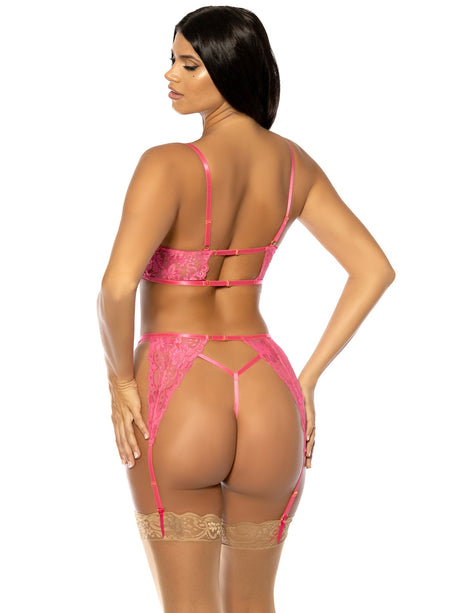
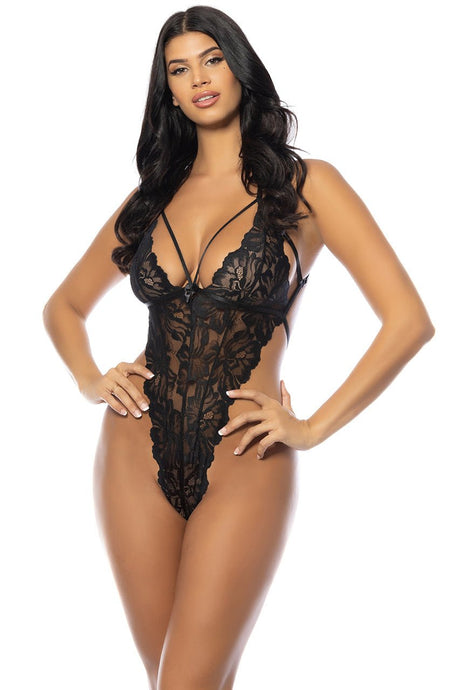
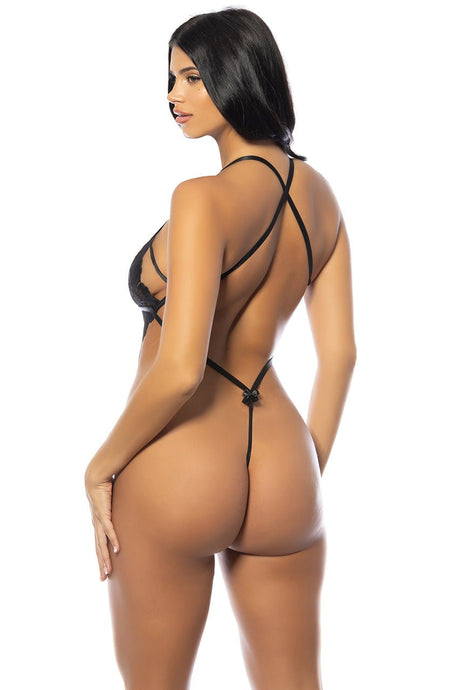
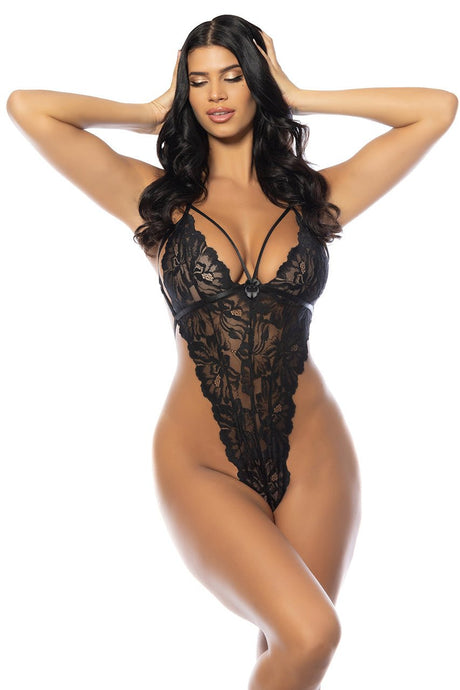
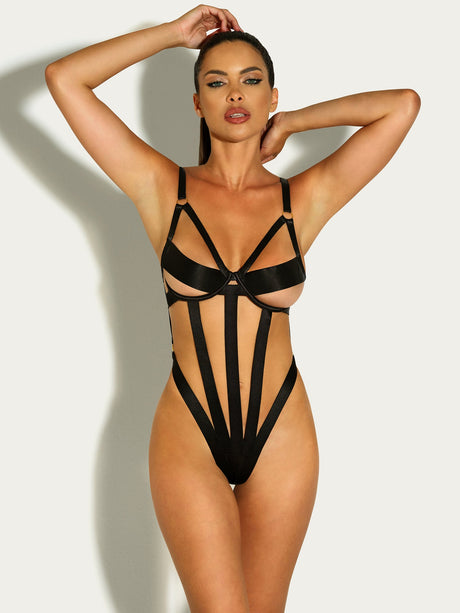
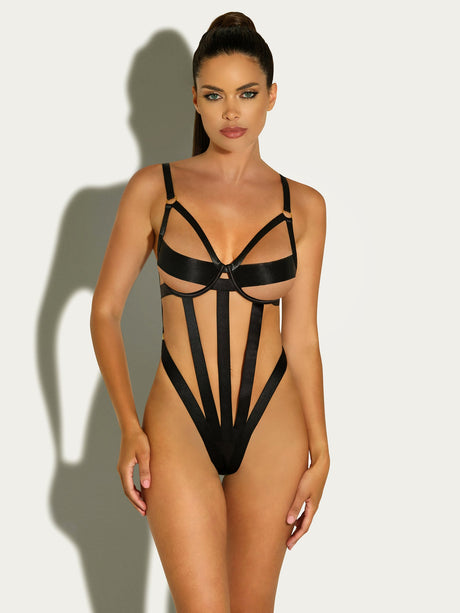
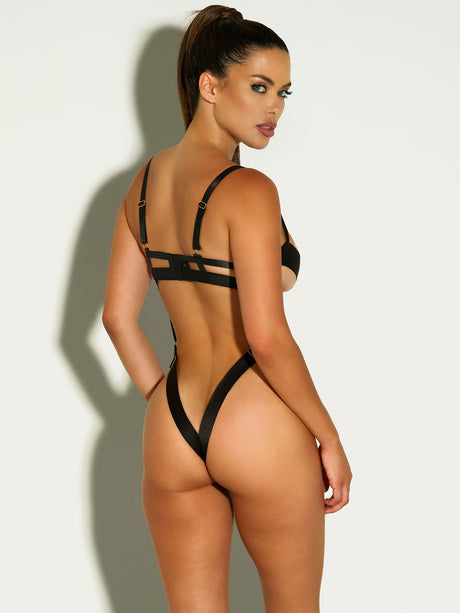
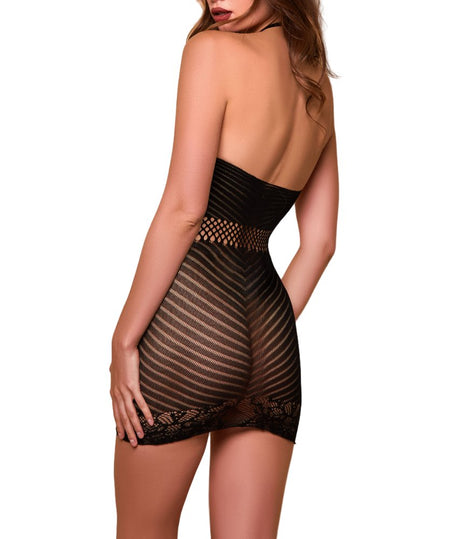
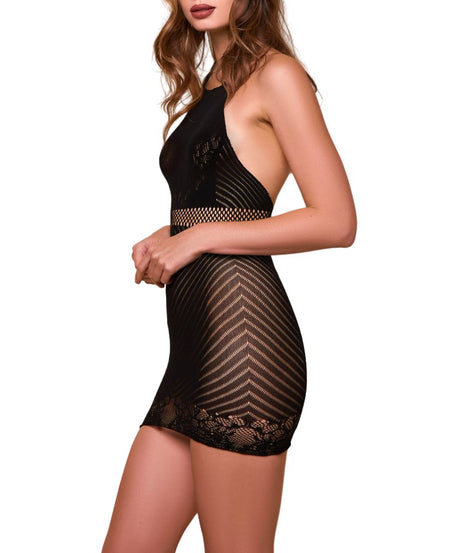
What is an extreme bikini?
It is not a style. It is a position on a spectrum, and the words describing it are used interchangeably by people who mean different things. Mini is the entry point: a reduced panel and a slightly higher leg than a standard cut. Micro is the mainstream minimal: a narrow front, a high leg opening, and a back running anywhere from cheeky to thong. Nano is the smallest end, where panels shrink to the minimum a functional two-piece allows. Nothing standardises these terms, so one brand's micro is another's mini, and the measurements on the product page are worth more than the word in the title. The second thing worth knowing is counterintuitive: because there is less fabric carrying the same load, construction matters more here than in a standard suit, not less. Reinforced tie points, gripping sliders and double-lined panels are what separate a suit that holds from one that does not.
Most guides to this category list the cuts and call it a definition, which explains nothing about what you are actually choosing between.
The confusion is the label, not the swimsuit. Work out where on the spectrum you want to be, then judge the construction.
- Mini, micro, nano are three amounts of fabric, not one word.
- No standards govern the terms. Read the measurements, not the label.
- Less fabric means more load per seam. Construction matters more, not less.
- Check the tie points for reinforcement stitching before anything else.
- Double-lined panels keep shape and stay opaque when wet.
- These are static-wear cuts. Drag and slippage rise sharply in water.
- Minimal fabric, minimal UV barrier. SPF is not optional here.
The Coverage Spectrum
Barely-there, micro, mini, microkini, nano. These get used as synonyms in listings and they describe materially different garments. Placing them on one axis is most of what you need.

No standards body defines any of these words. One shop's micro is another's mini, and "world's smallest" is a marketing claim rather than a measurement. The reliable move is to find the garment measurements, in centimetres or inches, and compare them against something you already own and know the fit of. If a listing gives no measurements at all, that absence tells you something about the seller.
Tops
| Cut | What it is | Best for |
|---|---|---|
| Triangle | Scaled-down triangles with ties at neck and back | The most adjustable, and the most forgiving across cup sizes. |
| String | Ultra-fine ties, small panels, minimal hardware | Minimalist look. No structural support at all. |
| Bandeau | A narrow band across the bust, no straps | No shoulder marks. Needs a firm band to stay put. |
| Halter | Ties behind the neck, more lift than a triangle | Silhouette and photography. Load sits on the neck. |
| Floss | The thinnest ties in the category | Static wear. Carry spares. |
One honest limit worth stating: a string or floss top provides no support. It positions fabric, and that is all. Above a D cup it will not hold, however tightly you tie it, because there is no band tension and no cup structure to work with. If you want minimal styling with real support, look for a bra-sized swim top or an underwired triangle, which exist and solve exactly this problem. That is the same ceiling that applies to bralettes and shelf-cup lingerie, and it does not move because the garment is for a beach.
Minimal Coverage Swim
Micro, string and thong cuts, plus bra-sized swim tops when you want minimal styling with real support.
Shop Extreme BikinisBra-Sized SwimBottoms
Two variables again, exactly as in underwear: how wide the front panel is, and how high the leg is cut. Everything with a name is a combination of those two.
| Cut | Coverage | Note |
|---|---|---|
| Cheeky | Partial back, standard front | The entry point. Micro in spirit, not in exposure. |
| Brazilian | Narrow back, moderate front | Balanced. The most wearable minimal cut. |
| High cut | Full front, very high leg | Lengthens the leg while keeping front coverage. |
| Thong | Minimal back, narrow front | Even tan, no back line. |
| Tie side | Varies. You set it | Adjustable rise and width. Best for between sizes. |
| String / micro | Minimum panel | The smallest end. Tension does the work. |
Tie sides are the most practical purchase in the category and worth knowing about specifically. Because you set the rise and width yourself, they accommodate a waist and hip that fall in different size bands, and they adjust with day-to-day change rather than fitting on some days and not others. The trade is security: a tie can work loose where a fixed waistband cannot.
What Actually Holds
Here is the part that runs against intuition. Less fabric does not mean construction matters less. It means every remaining seam carries more of the load, so the failure points are fewer and more consequential.

Fit and Sizing
Minimal is not the same as tight, and the two get conflated constantly. A well-fitting minimal cut still drapes; it does not stretch to its limit across you.
- Order from the brand's measurements, not your usual size. There is little seam allowance and no ease in these cuts, so a size that works in a standard bikini can be wrong here.
- Fabric should lie flat with a slight drape. Pulled taut across the bust or hip means too small, and the fabric will go translucent under that tension.
- Ties should not dig. A tie leaving a mark is carrying load it was not designed for, usually because the size is wrong.
- The bottom should sit evenly. Riding higher on one side is a sizing or cut problem, not something that settles with wear.
- If between sizes, take a tie side. You set the fit yourself, which removes the decision entirely.
Minimal fabric means minimal UV barrier, and this is worth taking seriously rather than treating as a footnote. Use a broad-spectrum SPF 30 or higher across all exposed skin and reapply after every swim and towel dry. Any UPF rating printed on a garment describes the dry fabric itself and tells you nothing about the skin it does not cover. Tan-line elimination is one of the main reasons people buy at this end of the range, which makes the exposure question more relevant here, not less.
Where These Actually Work
These are context-specific garments and pretending otherwise does nobody a favour.
They suit private pools, villa and yacht settings, resorts with relaxed norms, designated beaches, tanning and photography. They are poor for active swimming, where drag and slippage rise sharply, and for any setting where you would rather not think about the garment at all.
If you want real water time, a sport cut with power mesh lining and a racerback gives security these styles structurally cannot. That is not a compromise, it is a different tool.
Worth checking local norms before travelling, too. Public and family beaches vary widely by country, and some jurisdictions regulate swimwear coverage directly. A cover-up solves most of it: an open linen shirt, a sarong tied as a skirt, a mesh or crochet dress, or high-waisted linen shorts all extend where a minimal suit can go.
The suits that fail are almost never the ones with the least fabric. They are the ones where a thin tie was stitched to a thin panel by someone who assumed nothing would pull on it.
HauteFlair
Care

- Rinse in cool fresh water immediately after chlorine or salt. This single habit does more for swimwear life than anything else.
- Hand wash with a mild detergent. No bleach, no fabric softener, which coats fibres and kills elastic recovery.
- Never wring. Press water out between a towel instead; wringing permanently distorts thin panels.
- Dry flat in shade. Direct sun and heat destroy elastane faster than wear does.
- Never tumble dry, for the same reason.
- Rotate suits if you swim often. Elastane needs time to recover between wears, and a thin panel has less to give.
What This Means for You
Extreme bikini is a spectrum, not a style. Mini at the entry, micro as the mainstream minimal, nano at the smallest end, with no standard governing which word a manufacturer uses. So decide where you want to sit, then read the measurements rather than the title.
Then judge construction, because less fabric concentrates load rather than reducing it. Reinforced tie points, double-lined panels, sliders that grip, fabric with real recovery. Those four decide whether a suit lasts a season or a weekend.
Size from the brand's measurements rather than your usual, expect drape rather than tension, take a tie side if you are between sizes, and be honest about where you plan to wear it.
Extreme and Micro Bikinis
Micro, string, thong and tie-side cuts across the coverage range, plus bra-sized swim tops for minimal styling with real support.
Shop Extreme BikinisMicro BikinisFrequently Asked Questions
What is an extreme bikini?
What is the difference between mini, micro and nano bikinis?
Can you swim in an extreme bikini?
How do I know if an extreme bikini will hold?
Does an extreme bikini protect against sun?
What size should I order?
How should an extreme bikini fit?
What is a tie-side bottom and why choose one?
Are extreme bikinis suitable for larger busts?
What should I wear over one?
How do I care for minimal swimwear?
Where is it appropriate to wear one?
This article is for informational purposes only and is intended for adults. Coverage terminology is not standardised across manufacturers, so garment measurements are more reliable than category labels. Swimwear coverage norms and regulations vary by country and locality; check local rules before travelling. Minimal-coverage swimwear provides minimal protection from ultraviolet radiation, and adequate broad-spectrum sunscreen should be used on all exposed skin.