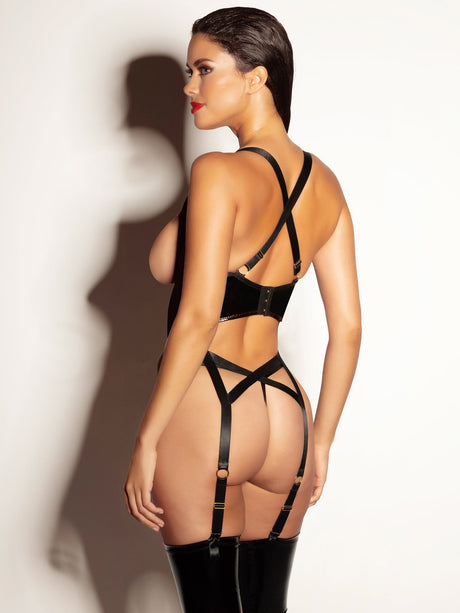
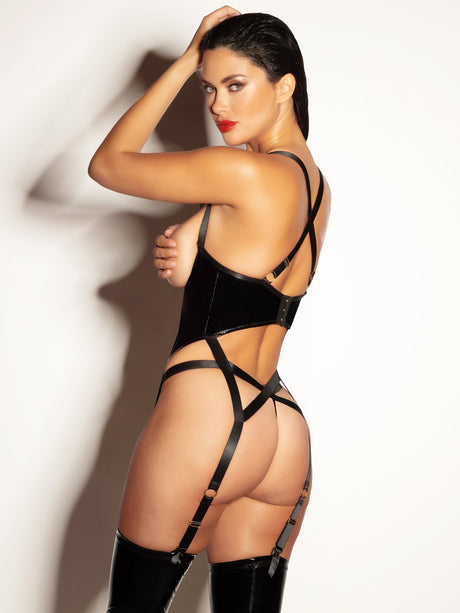
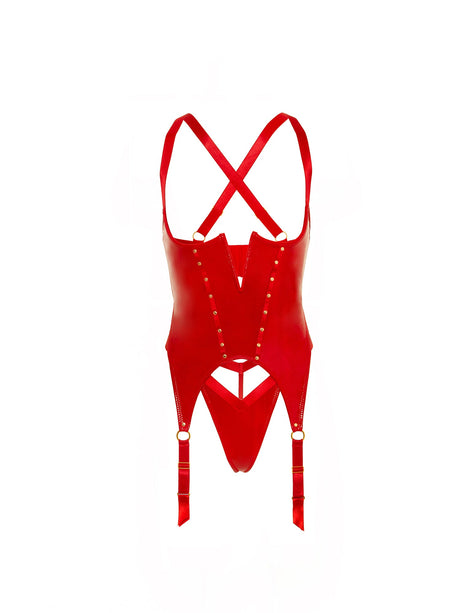
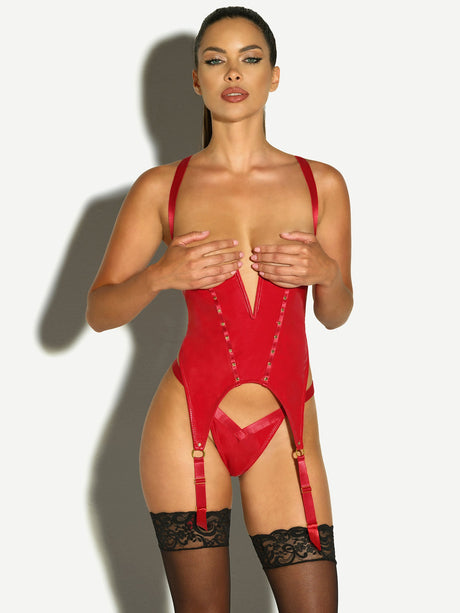
What changes when the clasp moves to the front?
Three things, and only one of them is convenience. The obvious change is that you fasten it in front of you, which needs far less shoulder rotation than reaching behind your back. That matters more than it sounds: it is the reason front-closure bras are standard in post-surgical, arthritis and limited-mobility contexts. The second change is the back. With no hooks and no closure seam, the band is one uninterrupted panel, so nothing prints through a fitted top and racerback or convertible straps become straightforward. The third change is the one nobody mentions and it is a genuine trade: the closure is now structural. It sits where the centre gore would be, so it carries centre tension rather than merely holding two ends together. And many front-closure bras have a fixed back, meaning no hook rows and therefore no adjustment as the elastic relaxes over the months. That is the cost, and it is worth knowing before you buy rather than after.
Moving a fastening seems like a small change, and structurally it is not.
The clasp stops being a way of getting dressed and becomes a component that has to hold.
- The clasp becomes structural, carrying centre tension rather than just closing.
- Many have a fixed back and therefore no adjustment over time.
- The back panel is uninterrupted, so nothing prints through.
- Racerback and convertible straps become straightforward.
- Far less shoulder rotation needed to put it on.
- If the closure gapes, the band is too small, not the clasp faulty.
- Look for reinforced stitching where the clasp meets fabric.
What Actually Changes
Worth separating the genuine structural consequences from the convenience, because they pull in different directions.

Access. Fastening in front requires far less shoulder range than reaching behind. For most people this is a mild convenience. For anyone with restricted mobility it is the difference between dressing independently and not.
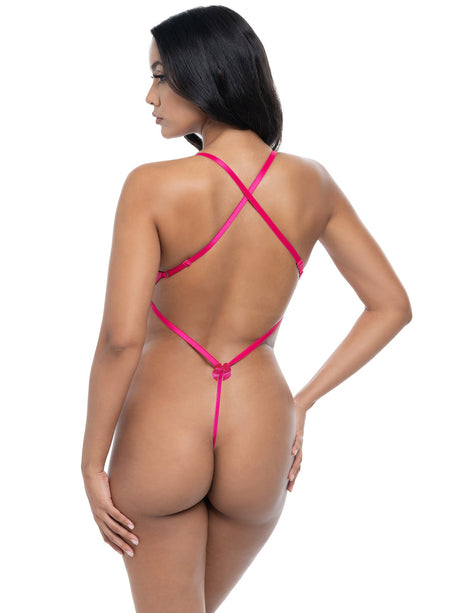
The back line. A back-closing bra has hooks, a closure seam and often a stepped edge where the band meets them. All of that can print through fitted fabric. A front closure leaves the back as a single smooth panel, which is why so many front-closure styles are also racerback or convertible.
Where the tension sits. This is the real one. In a back-closing bra the closure is at the point of least structural demand, and the centre gore braces against the sternum. Move the closure to the front and it occupies the gore position, meaning it is now holding the two halves of the garment together against the outward force of the bust. It has become load-bearing.
The Closure Types

| Type | How it works | Note |
|---|---|---|
| Interlocking clasp | Two moulded halves that slot and lock | The most common. Robust when wide and well anchored. |
| Front hook and eye | Conventional hooks moved to the front | Sometimes offers rows, which means adjustment. |
| Zip | Full-length centre zip | Very easy access. Check for a fabric guard behind it. |
| Magnetic | Magnets aligned at the centre | Easiest with limited grip strength. Usually lower load. |
| Racerback pull-on | Front clasp plus a fixed racerback | Smoothest back. No band adjustment at all. |
Front Closure Bras
Clasp and zip fastenings, wired and wire-free, including racerback and convertible styles.
Shop Front ClosureAll BrasWho Benefits Most

The Trade-Off Nobody Mentions
Every construction decision costs something. Here the cost is adjustment, and it is worth understanding before buying.
A conventional bra has two, three or four hook rows. That is not for variety: it is planned adjustment. Elastic relaxes with wear and washing, and moving to a tighter row restores tension. It is why you should buy fastening on the loosest hook.
Many front-closure bras have a fixed back, with band tension set at manufacture. When the elastic relaxes there is nowhere to go, and the useful life of the garment ends earlier than it would otherwise.
Two things follow. First, look for designs that keep rear hooks as well as a front clasp; they exist and give you both benefits. Second, if the back is fixed, expect a shorter functional life and factor that into what you pay.
A front closure carries the outward force of the bust at the centre. If it strains, gapes or opens, the usual cause is a band that is too small, putting more tension through the clasp than it was built for. The instinct is to blame the fastening, and occasionally that is right, but going up a band size resolves it far more often. If the band is correct and the clasp still strains, the closure genuinely is underbuilt for the load.
Front Closure at Larger Sizes
The range is narrower than back-closing styles, and the reason is structural rather than arbitrary: as cup volume increases, the outward force at the centre increases with it, and the closure has to carry all of it.
That does not mean front closure is unavailable at full-bust sizes. It means construction matters more, and there are four things to look for:
- A wide, robust clasp rather than a small clip, with visible reinforcement where it meets fabric.
- A firm band, ideally with rear hooks retained for adjustment.
- Seamed rather than moulded cups, for the same reasons set out in our guide to moulded versus seamed construction.
- Full-length wires extending toward the underarm rather than stopping short.
The clasp is the part everyone looks at and the stitching around it is the part that matters. One is a mechanism; the other is what stops the mechanism tearing out of the fabric.
HauteFlair Fit Team
Fit and Care
- The band should sit level all the way round and feel firm without restricting breathing, exactly as in any bra.
- The closure should lie flat against your sternum without gaping or visible strain.
- Scoop and check the cups contain everything, with the top edge lying flat.
- If there are rear hooks, fasten on the loosest when new.
- Fasten the closure before washing so it cannot catch on other garments in the wash.
- Watch the closure over time. A clasp that has loosened or a zip that catches is usually what ends the garment's life, well before the fabric wears out.
If you are buying a front-closure bra for post-surgical wear, follow your surgeon's or breast care nurse's specific instructions on compression level, whether wires are permitted, and when to resume a standard bra. Those requirements vary considerably by procedure and stage of healing, and general guidance is not a substitute for advice about your own recovery.
What This Means for You
Moving the closure to the front changes three things: how you put it on, how the back reads under clothing, and where the tension sits. The first two are advantages. The third is a design constraint the garment has to be built for.
So judge a front closure by the clasp and its anchoring rather than by the cup. Look for a wide fastening with reinforced stitching, and prefer designs that keep rear hooks so you retain adjustment as the elastic relaxes.
And if the closure strains or gapes, go up a band size before concluding the style does not work for you.
Front Closure Bras at HauteFlair
Clasp, hook and zip fastenings across wired and wire-free styles, including racerback and convertible options.
Shop Front ClosureFind Your SizeFrequently Asked Questions
What is a front closure bra?
Are front closure bras supportive?
Do front closure bras have adjustable bands?
Who benefits most from a front closure bra?
Do front closure bras give a smoother back?
Do front closure bras come undone?
Can you get front closure bras in large sizes?
What is the difference between a front closure bra and a front clasp bralette?
How should a front closure bra fit?
Are front closure bras good after surgery?
Can front closure bras be worn with a racerback top?
How do you care for a front closure bra?
This article is for informational purposes only and is not medical advice. Post-surgical garment requirements vary by procedure and stage of recovery; follow the guidance of your surgeon or breast care nurse. Construction varies between manufacturers; always check the individual product description.