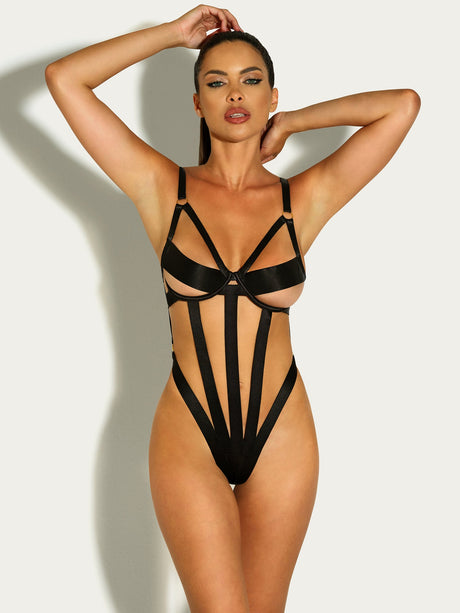
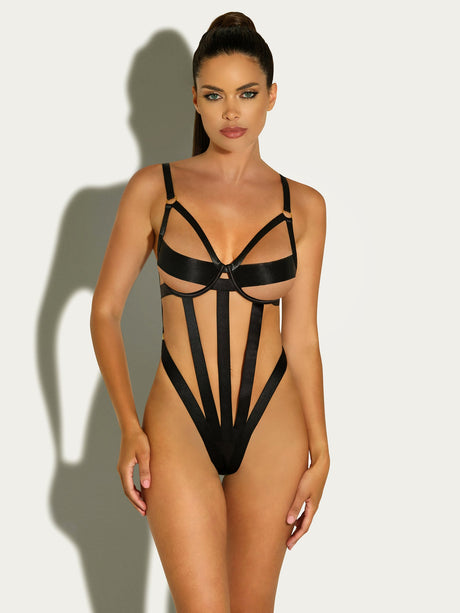
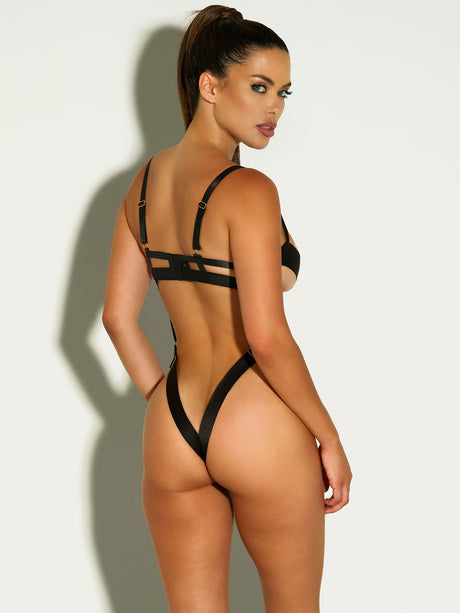
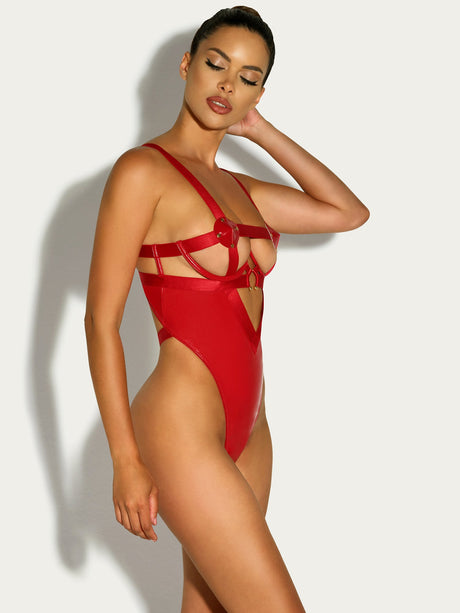
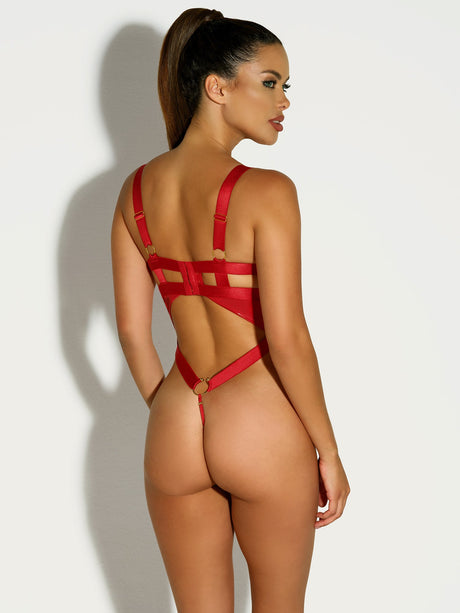
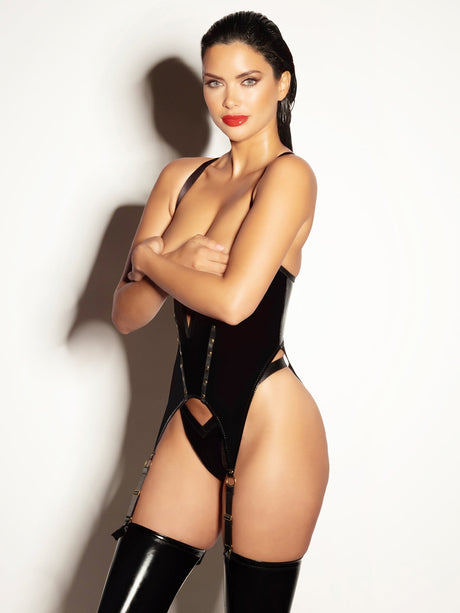
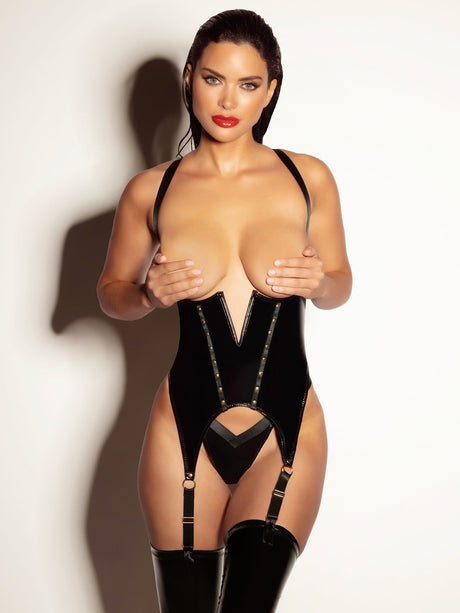
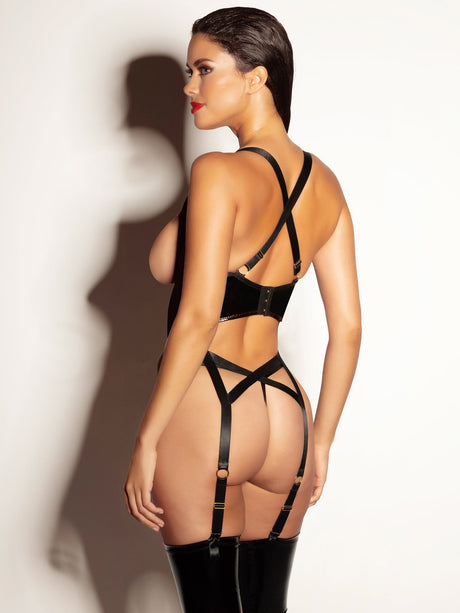
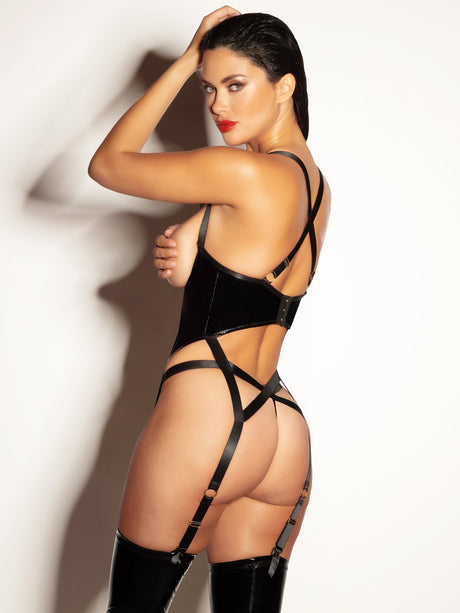
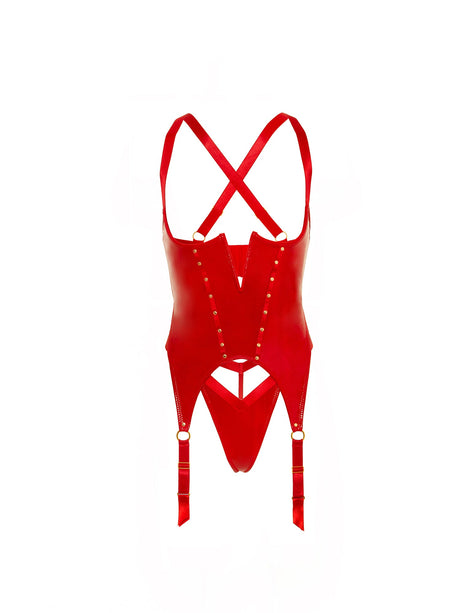
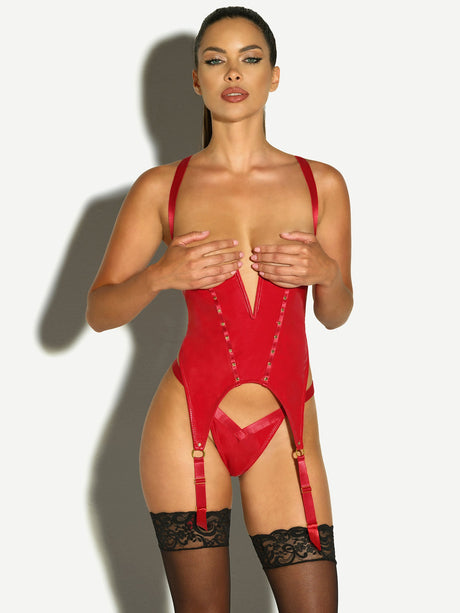
What does a longline bra actually do?
It extends the one component that was already doing most of the work. In any bra, roughly eighty percent of the load is carried by the band around your ribcage, not by the straps. A longline takes that band and extends it downward, typically two to eight inches below the cups. Same weight, more surface area. The consequences follow directly from that: less pressure at any single point, so it digs less; more resistance to rolling and riding, because a deep band cannot fold as easily as a narrow one; and a smoothing effect across the ribcage, since there is no sharp band edge for tissue to bulge around. It is also why strapless longlines hold when narrow strapless bras slip: with no straps, everything depends on band tension and friction, and a deeper band gives far more of both. Nothing here is a marketing claim. It is the same load spread over more area.
Longline bras are usually sold on how they look, which undersells them considerably.
The reason they work is mechanical, and once you see it the whole category makes sense.
- The band already carries 80% of the load. A longline extends it.
- Same weight, more surface means less pressure per point.
- Vertical stays stop it rolling. Without them a deep band folds.
- Smoothing is geometry, not compression. No sharp edge to bulge around.
- Strapless longlines hold where narrow strapless bras slip.
- Order your usual size. Longline describes band depth, not sizing.
- Check torso length. Too deep and it jabs when you sit.
Why a Deeper Band Supports Better
This is one of the few claims in lingerie that is straightforwardly physical rather than a matter of preference.

Pressure is force divided by area. The force is your bust weight and it does not change. The area is how much of your ribcage the band is spread across, and that is exactly what a longline increases.
Three things follow:
It digs less. A narrow band concentrates the same load into a thin strip, which is why narrow bands leave marks and deep ones tend not to.
It rides up less. A band rides when it can fold and travel. A deep band with vertical stays cannot fold easily, so it stays where it was put. If you have read our guide on why bras ride up at the back, this is the structural version of the same fix.
It twists less. More contact area means more friction against the body, which resists rotation. That matters most in strapless styles where there is nothing else preventing it.
The Lengths, and What Each Is For
Longline Bras and Bustiers
48 styles from short-line everyday to full bustier length, wired and wire-free, with stays and multi-row closures.
Shop Longline BrasStrapless BrasThe Smoothing Effect, Explained Honestly
Longline bras are often marketed as hiding back bulge. They do reduce the appearance substantially, and it is worth being precise about why, because the mechanism is not what most listings imply.
A narrow band creates a single line of pressure. Soft tissue sits above and below that line, and the contrast between the compressed strip and the uncompressed tissue either side is what reads as a visible ridge under clothing.
A deep band spreads the same pressure across a much wider area, so no sharp transition forms. Nothing has been removed and nothing is being squeezed harder. The garment simply stops creating the line that was drawing the eye.
That distinction matters practically: it means the fix is band depth rather than band tightness. Sizing down to reduce bulge does the opposite, since it increases pressure at the same narrow line. Our guide to bras that smooth the back covers the same reasoning across other constructions.
Why Strapless Longlines Actually Work

A strapless bra has one load path instead of two. With nothing running over the shoulders, the band alone holds the garment through tension and friction against the ribcage. That is the same mechanism described in our guide to bandeau tops, and it has the same failure mode: as tension drops slightly, friction reduces and the garment migrates downward.
A longline fixes that by increasing both variables at once. More surface means more total friction. More depth means the band resists folding, which is what causes tension to drop in the first place.
So if strapless bras have never stayed up for you, the answer is usually not a tighter band. It is a deeper one.
Four Things to Check

- Internal vertical stays. The single most important feature. A deep band without stays folds when you sit or bend, which cancels the mechanical advantage. Usually mentioned in the description when present.
- Multiple hook columns. Two or three rows spread the closure over depth and give adjustment as elastic relaxes over months.
- The lower edge finish. Bonded or flat-finished if you will wear it under fitted clothing; a rolled elasticated hem prints through and undoes the smoothing benefit.
- Breathable lower panel. Power mesh or open knit rather than solid fabric, since more coverage means more heat. This is the difference between a longline you wear daily and one you wear twice.
Fitting a Longline
Sizing is your usual band and cup, since longline describes depth rather than a separate system. What changes is that a second measurement now matters.
- Check torso length first. Measure from underbust to lap while seated and compare against the garment's front length. A longline too deep for your torso will jab when you sit down, and no amount of adjustment fixes it.
- Sit down before removing tags. The test people skip. If it digs at the waist seated, it is too long regardless of how it feels standing.
- The band should lie flat along its whole depth, with no gaping at the lower edge and no digging at the top.
- Fasten on the loosest hook when new, as with any bra.
- If it rolls, go up a band size. Rolling means the fabric is compressed and folding, not that the band is too loose.
- Check it under clothing in daylight if smoothing is why you bought it, since edge finish is easier to judge on the body than on a hanger.
People buy longline bras for the look and keep wearing them because they stop noticing the band. That is the whole review.
HauteFlair Fit Team
What This Means for You
A longline extends the band, which was already carrying most of the weight. Spreading that load over more surface reduces pressure, resists rolling and twisting, and removes the sharp band edge that creates a visible line under clothing.
Choose the length by use: two to three inches for everyday smoothing, four to six for real support, bustier length for occasions and fitted dresses. Check for internal stays above everything else, since a deep band without them folds and loses the advantage.
Order your usual size, check the front length against your seated torso, and if strapless bras have always slipped on you, try a strapless longline before trying a tighter band.
Longline Bras at HauteFlair
48 styles across every length, wired and wire-free, in bands 28 to 48 and cups A to K.
Shop Longline BrasFind Your SizeFrequently Asked Questions
What is a longline bra?
Are longline bras more supportive?
Do longline bras help with back fat or bulging?
Are longline bras good for large busts?
What is the difference between a longline bra and a bustier?
Can a longline bra be strapless?
Do longline bras roll up?
How should a longline bra fit?
What size longline bra should I order?
Can you wear a longline bra under normal clothes?
Is a longline bra the same as a longline bralette?
Are longline bras comfortable in warm weather?
This article is for informational purposes only. Construction and band depth vary between manufacturers; always check the individual product measurements. Fit guidance is general and depends on individual proportions.