Why does bra size keep changing?
Because bra size is not one number, it is two numbers that both move, and the cup letter is not even a direct measurement. The band tracks your ribcage and responds to body composition and fluid retention. The cup letter is the gap between your bust and your ribcage, so a change in either measurement changes it. Eight things move these numbers: the menstrual cycle, hormonal contraception, pregnancy and postpartum recovery, perimenopause and menopause, weight change, certain medications, strength training, and age-related tissue composition. A movement of one full cup letter within a single month is normal, not a sign that something was measured wrong.
Bra size is treated like a fixed personal fact, something you are told once and carry forever. It is not. The honest answer to why your size keeps changing is that a changing size is the normal state of affairs.
Knowing which of the eight drivers is operating tells you whether to buy a different size, a different construction, or nothing at all and wait.
- The monthly cycle: up to a full cup letter, peaking in the week before a period. The single most common cause.
- Hormonal contraception: commonly increases cup volume, most noticeably in the first few months of a new method.
- Pregnancy and postpartum: the largest and longest movement, often settling somewhere new rather than returning.
- Perimenopause and menopause: changes tissue composition as well as volume, so shape shifts and old styles stop suiting.
- Weight change: band falls first and most predictably. Cup letter can rise even as the bust gets smaller.
- Medication: anything affecting hormones, weight, or fluid retention moves one or both numbers.
- Strength training: raises band measurement by adding muscle around the ribcage.
- Age: gradual shift in the ratio of glandular to fatty tissue, changing shape more than size.
Bra Size Is Two Numbers, and They Move Independently
The band number measures the ribcage. The cup letter measures the difference between the bust and the ribcage. Because the cup letter is derived from a subtraction, a change in either measurement changes it, which is why the cup letter can climb while the bust itself gets smaller.
Almost every frustrating experience with sizing comes back to the fact that the cup letter is not a direct measurement of anything. It is the gap between two measurements. Measure the ribcage, measure the bust, subtract, and each inch of difference is a cup letter. The number on the label describes a relationship rather than an object.
The consequence catches people out constantly. Someone loses weight, the ribcage shrinks by two inches, the bust shrinks by one. The bust is objectively smaller. The gap between the two measurements has grown by an inch, so the cup letter goes up. The person concludes the measurement is wrong, or that something strange has happened, when the arithmetic is behaving exactly as designed. This is the mechanism behind the very common experience of going from a 44DD to a 40F while getting smaller overall.
The reverse happens too. Someone builds back and chest strength, the ribcage measurement rises with added muscle, the bust stays where it was. The gap narrows, so the cup letter falls even though nothing about the breast changed. Same body, same bust, different label.
Sister sizes fall directly out of this arithmetic and are the most useful practical tool available for a moving size. A 40G and a 38GG hold nearly identical cup volume on different band widths. Going down a band and up a cup keeps capacity constant while tightening the ribcage fit. For anyone whose size moves, holding two bras a sister size apart covers far more of the range than two bras in the same size ever could.
Bras Built for a Size That Moves
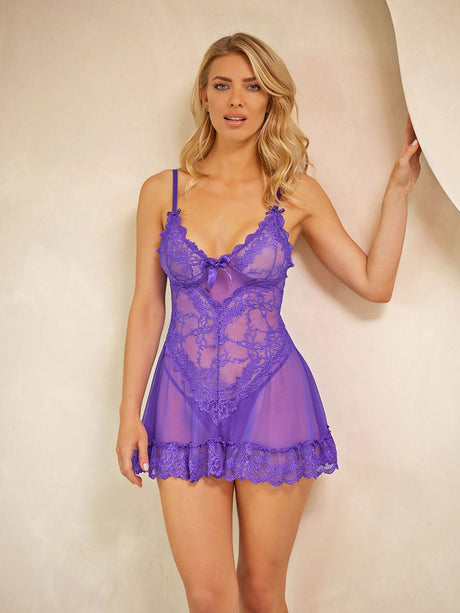
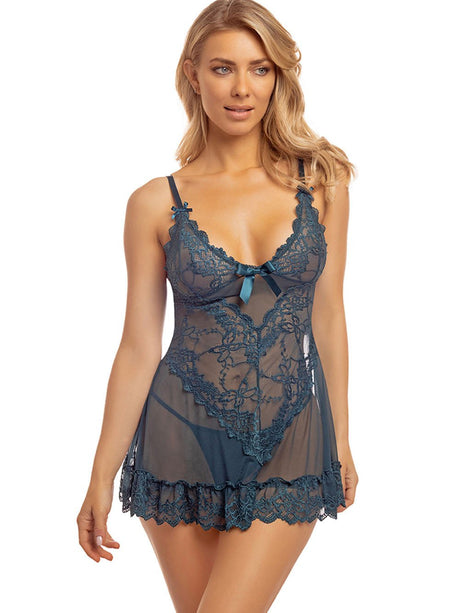
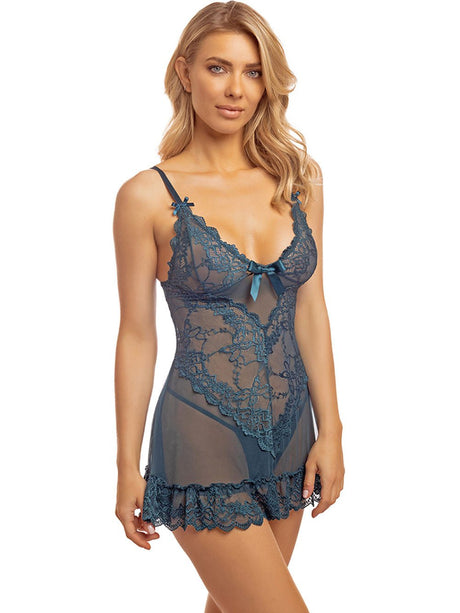
Four-row closures, stretch-lace and seamed cups, and generous strap adjustment: the constructions that tolerate a full cup letter of movement without spilling or riding up. Every size graded individually, so a sister size genuinely holds the same cup.
Shop Plus Size BrasShop Wireless BrasThe Eight Things That Move Bra Size
Each of these moves band, cup, or both, and each moves on a different timescale. Identifying which is operating determines whether the right response is a new size, a different construction, or patience.
The single change that makes re-measurement useful is consistency of timing. For anyone still cycling, days 5 to 10 give a number representing most of the month. Record the date next to the measurement, so the next one is a genuine comparison rather than two readings taken at different points on the same curve. Two measurements taken on day 6 and day 24 can differ by a full cup and tell you nothing about whether anything actually changed.
How Much Change Is Normal
Knowing the expected magnitude for each cause separates ordinary variation from something worth investigating, and prevents both over-reaction and under-reaction.
| Cause | Typical Band Change | Typical Cup Change | Timescale |
|---|---|---|---|
| Menstrual cycle | Up to 1 inch | Up to 1 full letter | Within each month, peaks before a period |
| Hormonal contraception | Minimal | Often 1 letter | First 2 to 3 months of a new method |
| Pregnancy and lactation | 1 to 2 sizes | 2 or more letters | Pregnancy through several months post-weaning |
| Perimenopause | 1 to 2 sizes | 1 or more letters, plus shape change | Gradual, across several years |
| Weight change | 1 size per roughly 10 to 15 lb, varies widely | Unpredictable direction | Follows the weight change with a lag |
| Strength training | Up to 1 size upward | Often 1 letter downward | Over several months of consistent work |
| Age | Gradual | Modest, shape changes more | Across decades |
Two patterns fall outside this table and are worth flagging. Change affecting only one side, and change that arrives suddenly rather than gradually, do not match any of the mechanisms above. Both belong in the section further down rather than in a shopping decision.
What to Buy When Your Size Moves
A moving size does not require more bras. It requires bras chosen for tolerance rather than precision, and a different logic for band and cup.

Buy the Band for the Smaller End of Your Range
A band has hooks, which give adjustment in one direction only. Fastening tighter is available; fastening looser than the last hook is not. Buy the band to fit correctly on the loosest hook at your smaller measurement, and the tighter hooks then absorb both monthly fluctuation and the elastic relaxing over months of wear. A band bought to fit on the tightest hook has nowhere left to go and will be unwearable within a few months.
Buy the Cup for the Fuller End of Your Range
Cups have no adjustment mechanism at all. A cup sized to your smallest point will spill at your fullest, and spillage is both uncomfortable and visible under clothing. A cup sized toward your fuller point can be managed at the smaller end with strap adjustment and a firmer band. When the range spans a full letter, size the cup up and choose constructions that tolerate volume change.
Choose Constructions That Move With You
Stretch-lace and seamed cups accommodate volume change considerably better than rigid molded cups, which hold one fixed shape and either fill it or do not. Four-row hook closures give roughly twice the band adjustment range of two-row. Generous strap length matters more than it seems, since the cup position needs adjusting as volume changes. Wireless styles tolerate a wider range than underwired ones, which is why they earn their place during any active transition. Browse wireless bras for the transition period.
Do Not Rebuild the Wardrobe Mid-Transition
During pregnancy, postpartum recovery, an active weight change, or the first year of a new medication, the size is still moving. Buying six bras at any single point in that process guarantees that most of them stop fitting. Two well-chosen bras carry you through, and the full rebuild happens once the range settles.
The Two-Size Wardrobe
The most useful structural change for anyone whose size moves is holding two sizes rather than one, chosen as sister sizes so the cup volume matches while the bands differ.
Take someone measuring 40G on day 6 and closer to 40GG by day 24. Rather than one size that is right for part of the month, the pair to hold is a 40G and a 38GG. The 40G handles the fuller week, where the roomier band accommodates fluid retention. The 38GG handles the rest of the month, where the firmer band gives better support and the larger cup letter compensates for the smaller band while holding the same volume.
Two bras, both wearable across the whole month, neither wasted. Compare that against six bras in a single size, of which perhaps two are comfortable in any given week.
The same logic applies across longer transitions. Through perimenopause or postpartum recovery, holding a pair one sister size apart means one of them fits at any point along the drift, and when the range finally settles you already know which direction to buy in.
People come in apologising for their size having changed, as though a body holding still were the normal condition and theirs had failed at it. Nobody's size holds still. The ones who stay comfortable are just the ones who stopped expecting it to.
HauteFlair Fit Team
Or Is the Bra Simply Worn Out?
A worn-out band produces symptoms nearly identical to a gained band size, and the two get confused constantly. Band elastic loses meaningful tension across roughly 6 to 9 months of regular wear, faster under a heavier bust. A stretched band rides up, transfers weight to the shoulders, and lets the cups sit wrong, which reads exactly like the band no longer fitting.
The test takes a minute. Fasten the bra on its tightest hook. If it fits correctly there, the band has stretched and the bra has reached the end of its life. A new bra should fit on the loosest hook, leaving the tighter ones as the margin that gets used up over the following months. If the tightest hook still feels loose, the size has genuinely changed.
A second test is comparison. If a newer bra in the same nominal size fits correctly while the older one does not, the size did not change. The older bra did.
Rotating two or three bras rather than wearing one daily roughly doubles the useful life of each, because elastic recovers between wears. It also makes the worn-out-versus-changed-size question far easier to answer, since a newer reference bra is always to hand.
When a Change Is Worth Raising With a Doctor
Almost everything on this page describes gradual, symmetrical change linked to a cycle, a life stage, a medication, or a shift in body composition. That is the expected picture. A few patterns do not fit it, and those are worth raising with a doctor promptly rather than treating as a fitting problem.
- Change affecting one breast only, or a noticeable increase in asymmetry that was not previously there
- A new lump, thickening, or firm area that persists across a full cycle
- Dimpling, puckering, or any change in the texture of the skin
- Nipple changes, including inversion that is new, or any discharge
- Persistent pain localised to one specific area rather than general cyclical tenderness
- Rapid change over days or weeks with no pregnancy, medication change, or weight change to explain it
None of these mean something is seriously wrong, and most turn out to be benign. They sit outside the range of normal fit variation, which makes them a question for a clinician rather than a fitter. Everything else on this page is a shopping problem.
What This Means for You
A size that keeps changing is not a sign that you have been measured badly or that your body is behaving unusually. It is the ordinary consequence of measuring a relationship between two numbers that both respond to hormones, composition and time.
Three habits make it manageable. Measure at a consistent point in your cycle, days 5 to 10, and note the date. Buy the band for the smaller end of your range and the cup for the fuller end, since only one of the two has adjustment. Hold two bras a sister size apart rather than six in one size, particularly during any active transition.
The size was always going to move. The wardrobe is what needs to be built for it.
Find Your Size as It Is Today
The guided calculator returns your current band and cup plus the sister sizes on either side. Two minutes, and the basis of a wardrobe that keeps fitting. Free returns on unworn bras.
Bra Size CalculatorShop Plus Size BrasFrequently Asked Questions
Why does my bra size keep changing?
How much does bra size change during the menstrual cycle?
When is the best time in my cycle to measure my bra size?
Does bra size change during perimenopause and menopause?
Can medication change bra size?
How often should I re-measure my bra size?
What should I buy if my bra size fluctuates every month?
What are sister sizes and how do they help with a changing size?
Does weight loss change band size or cup size more?
Is it normal for one breast to be a different size from the other?
Why does my bra fit in the morning but not the evening?
Does exercise change bra size?
How long after pregnancy does bra size settle?
When is a change in breast size worth seeing a doctor about?
Is my bra size changing or is my bra just worn out?
This article is for informational purposes only and is not medical advice. Fit recommendations are general and may vary based on individual body composition, brand-specific sizing and personal preference. Any sudden, one-sided or unexplained change in the breast should be assessed by a qualified clinician. For current bra size, use the HauteFlair bra size calculator or contact our fit team.