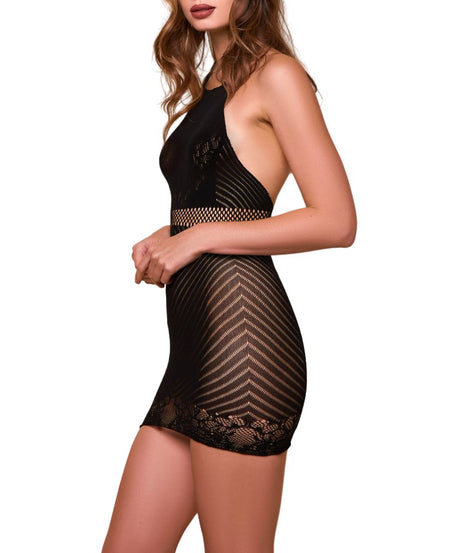
What is the difference between mini, midi and maxi?
The difference is where the hem falls, and the three lengths have measurements rather than vibes.
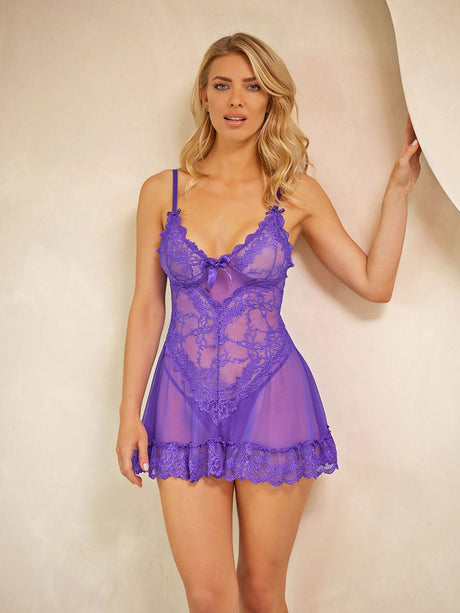
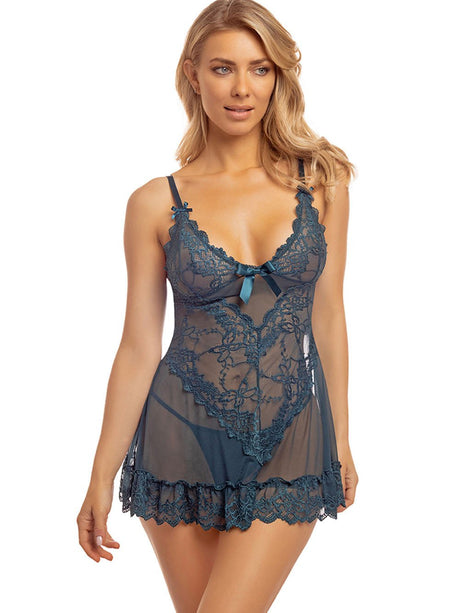
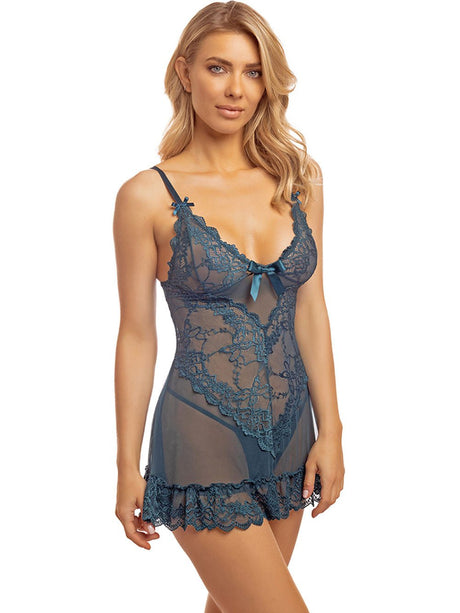
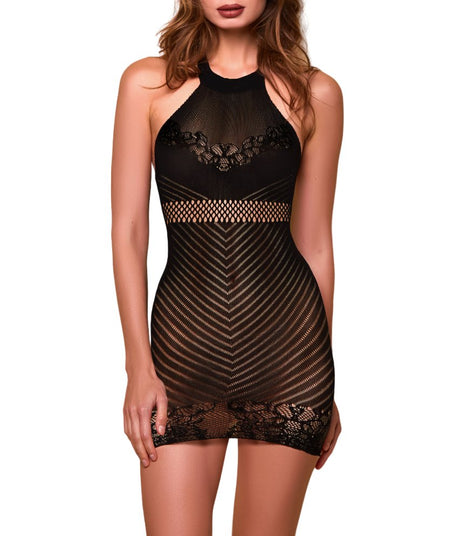
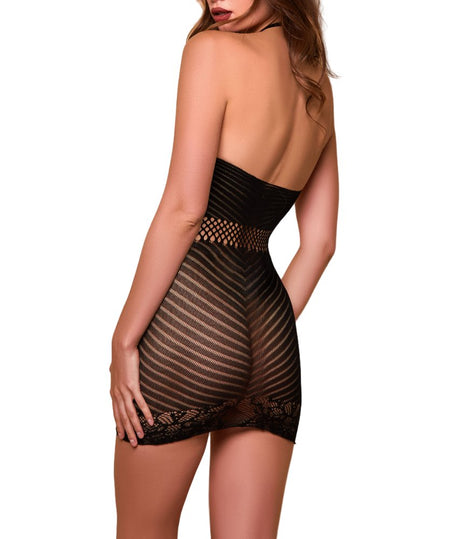
A mini ends well above the knee, typically around 32 to 34 inches in total length from shoulder to hem on a standard size. A midi ends between the knee and the ankle, most often at mid-calf. A maxi reaches the ankle or the floor.
The important caveat is that these describe hem position relative to your leg, not a fixed number. The same 33-inch dress reads as a clear mini on someone tall and sits close to the knee on someone shorter. Which is why the total length stated on a product page is more useful than the category name, and why two garments both called midi can look quite different.
Then there is the part that actually affects what you buy: length changes what you can wear underneath. A mini needs a shorter or seamless brief because a conventional leg opening sits close to the hem. A maxi hides the leg entirely but shows a waistband across the hip. Getting the dress right and the foundation wrong is the most common way an outfit fails.
Every guide to dress lengths describes the three categories and stops there, as though knowing the names were the hard part.
The useful question is not what they are called. It is which one suits what you are doing, and what has to go underneath it.
- Mini: hem well above the knee, roughly 32 to 34 inches total.
- Midi: hem between knee and ankle, usually mid-calf.
- Maxi: hem at the ankle or floor.
- Length is relative to your leg, so check stated inches, not the label.
- Mini needs a seamless thong or short brief. The hem sits near the leg opening.
- Maxi hides the leg but shows the waistband. Bonded edges matter.
- A hem at your narrowest point reads better than one at your widest.
The Three Lengths, With Numbers
Nobody publishes these, which is why so much dress shopping is guesswork.

| Length | Hem falls | Typical total length | Shop |
|---|---|---|---|
| Micro mini | Upper thigh | Around 28 to 31 in | Going out |
| Mini | Well above the knee | Around 32 to 34 in | Mini dresses |
| Above knee | Just above the knee | Around 35 to 37 in | Mini dresses |
| Midi | Knee to ankle, usually mid-calf | Around 40 to 48 in | Summer dresses |
| Maxi | Ankle or floor | Around 52 to 60 in | Maxi dresses |
Total length is measured from the highest point of the shoulder straight down to the hem. It is the number worth looking for on a product page, because it is the only length figure that is independent of the wearer.
Why the same dress is a different length on different people
The categories describe hem position relative to the knee, and the knee is at a different height on everyone. A 34-inch dress on someone five foot ten lands well above the knee and reads as a clean mini. The same dress on someone five foot two lands closer to the knee and reads as a short day dress.
Which gives a practical method. Measure a dress you already own that sits where you like, from shoulder to hem. That number is your reference, and comparing it against a stated total length tells you far more than the word mini or midi does.
They mean the same thing. Short dress is the broader, more casual phrase and mini dress is the more specific one, but both describe a hem above the knee. Retailers use them interchangeably, so searching either surfaces largely the same garments and there is no meaningful distinction to worry about.
Choosing by Occasion
The most common reason for buying the wrong length, and the easiest to fix.
Mini, Maxi and Going-Out Dresses
Short going-out styles, floor-length maxis and warm-weather summer dresses.
Mini DressesMaxi DressesGoing OutChoosing by Height and Proportion
There is one reliable principle here, and a lot of advice that is really just preference dressed as rule.
The principle: a hem that ends at the narrowest point of your leg reads better than one ending at the widest. The eye reads the hem as a horizontal line and the width of the leg at that line becomes the width of the whole silhouette.
For most people the narrowest points are just above the knee and at the ankle. The widest is usually mid-calf, which is precisely where a standard midi lands. That is the entire reason midi has a reputation for being difficult, and it is a solvable problem rather than a property of the length.
| If you are | Easiest | Needs attention | The fix |
|---|---|---|---|
| Shorter than average | Mini, above-knee | Midi, which can shorten the leg line | High waist, or a hem at the ankle rather than mid-calf |
| Average height | All three | Mid-calf midi | Check where the hem lands relative to your calf |
| Taller than average | Midi, maxi | Mini, which can read shorter than intended | Check total length; a 34-inch dress sits higher on you |
| Long torso | Maxi with a high waist | Dropped-waist styles | A defined waist above the natural waistline |
| Long legs | Mini, maxi | Midi, which can look mismatched | Ankle-length midi rather than mid-calf |
Maxi dresses and shorter frames
The common advice is that shorter people should avoid maxis. That is wrong, and the actual variable is where the waist sits rather than the length.
A maxi with a defined waist above the natural waistline lengthens everything below it and works at any height. A maxi with a dropped or undefined waist shortens the leg line and is harder to wear. The other thing to check is that the hem clears the floor by a small margin rather than pooling, since fabric gathering at the floor visually shortens the whole line and also gets stepped on.
Before buying a midi, stand in front of a mirror and find where your calf is widest. If the hem will land there, go longer or shorter by two inches and the same dress will read completely differently. This one check resolves most of what people describe as midis not suiting them.
What to Wear Underneath Each Length
The part that actually decides whether an outfit works, and the part most length guides skip entirely.


What actually removes visible lines is a bonded or laser-cut edge, where the fabric edge is fused rather than turned and stitched. Plenty of underwear described as seamless still has a conventional stitched edge. Look for the words bonded or laser-cut specifically, or look at a close product photograph of the leg opening, since the ridge is visible if it is there. Our guide to rise and coverage covers this in more detail.
Seamless, Thongs and Shapewear
Bonded edges that do not print through, in every cut from thong to high-waisted smoothing.
Shop SeamlessThongsShapewearNecklines and What Bra Goes With Them
Length decides the underwear. The neckline decides the bra, and the two are independent.
| Neckline | What works | The thing to check | Shop |
|---|---|---|---|
| Strapless or bandeau | Strapless bra | Band firmness, not cup | Strapless |
| Halter or high neck | Convertible with a halter setting | Strap length adjustment range | All bras |
| Deep V or plunge | Plunge bra with a low gore | Gore height against the dress | Plunge |
| Open or low back | Longline strapless, or adhesive | How far down the back opens | Strapless |
| Fitted, any neckline | Moulded T-shirt bra | Bonded rather than stitched edges | T-shirt bras |
The strapless point worth knowing
Strapless is the neckline that causes the most trouble, and the reason is structural. With no straps, the band carries one hundred percent of the load rather than the usual eighty. Everything about whether a strapless bra stays up comes down to the band.
So look for a band that feels firmer than your usual, silicone lining along the top edge, and ideally longline construction, which extends the band down the ribcage and spreads the load over more surface. If strapless bras have always slid down on you, the band was too loose rather than the style being impossible. Our guide to what actually supports you covers the mechanism.
Fabric and Season
Fabric weight matters more as length increases, because there is more of it and gravity acts on all of it.
Common Problems and What Causes Them
Five complaints that come up repeatedly, and what is actually going wrong in each.
| Problem | Actual cause | Fix |
|---|---|---|
| Hem rides up through the evening | Friction between lining and skin | A smoothing short, giving the dress a surface to move on |
| Underwear line shows | Stitched edge, not the cut | Bonded or laser-cut edges, or a thong |
| Waistband shows under a maxi | Fine fabric skimming the hip | High-waisted smoothing piece above the skim line |
| Strapless bra slides down | Band too loose | A firmer band, silicone edge, or longline |
| Midi looks wrong but fits | Hem landing at the widest calf point | Two inches longer or shorter |
| Chafing at the thigh in a mini | Skin against skin, no barrier | A smoothing short or a slip |
The pattern worth noticing: four of these six are solved by the layer underneath rather than by the dress. Buying a different dress when the foundation is the problem is the most expensive way to fix any of them.
People spend weeks choosing a dress and ten seconds choosing what goes under it. The dress is usually fine. The layer underneath is what decides whether it works.
HauteFlair Editorial Team
What This Means for You
Mini ends well above the knee at roughly 32 to 34 inches, midi between knee and ankle, maxi at the ankle or floor. But those are hem positions relative to your leg, so the stated total length on a product page is more useful than the category name.
Choose by occasion first: mini for evening, midi for daytime and crossover, maxi for formal or warm weather depending entirely on the fabric weight. Then check the hem against your leg, aiming for the narrowest point rather than the widest, which is why mid-calf is the hardest place for a hem to land.
Then decide what goes underneath, because that is where most outfits actually fail. A mini needs a thong or a high-leg seamless brief with bonded edges, and a smoothing short if it is fitted. A midi is forgiving. A maxi hides the leg but shows the waistband, so the smoothing piece needs to sit above where the fabric skims.
And the neckline decides the bra independently of all of this. Strapless comes down to band firmness, because with no straps the band is doing all of the work.
Dresses and What Goes Under Them
Mini, maxi and summer dresses, plus the seamless, strapless and smoothing pieces that make them work.
Shop Mini DressesSeamlessStrapless BrasFrequently Asked Questions
What is the difference between mini, midi and maxi dresses?
How long is a mini dress?
Is a short dress the same as a mini dress?
What should I wear under a mini dress?
What should I wear under a maxi dress?
Which dress length is most flattering?
What bra do I wear with a strapless dress?
Can short women wear maxi dresses?
What is a midi dress length?
Do I need shapewear under a dress?
What length dress is best for a wedding guest?
How do I stop my dress from riding up?
What is the difference between a slip dress and a mini dress?
What fabric works best for a maxi dress?
Does dress length change by season?
This article covers garment length, proportion and fit and is for informational purposes only. Stated measurements are typical figures for standard sizing and vary between manufacturers and between sizes within a range; check the total length given on the individual product page before ordering.