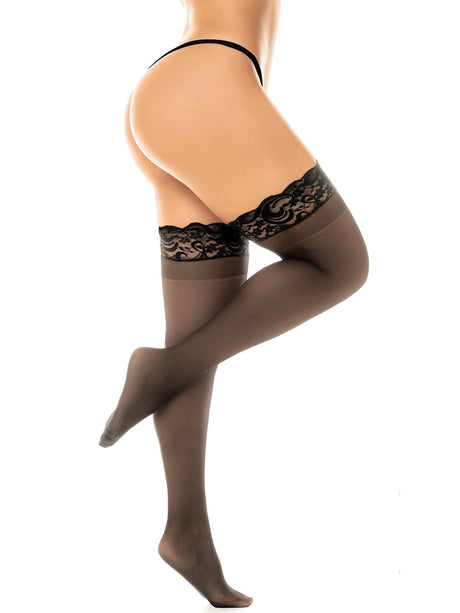
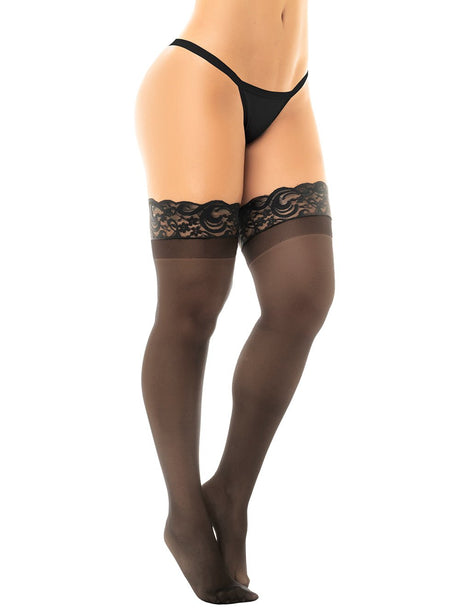
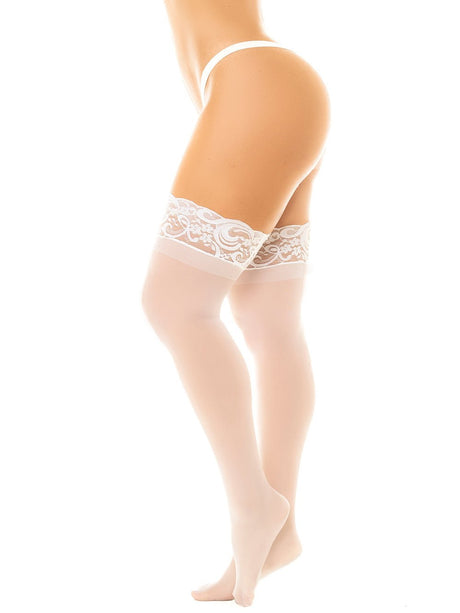
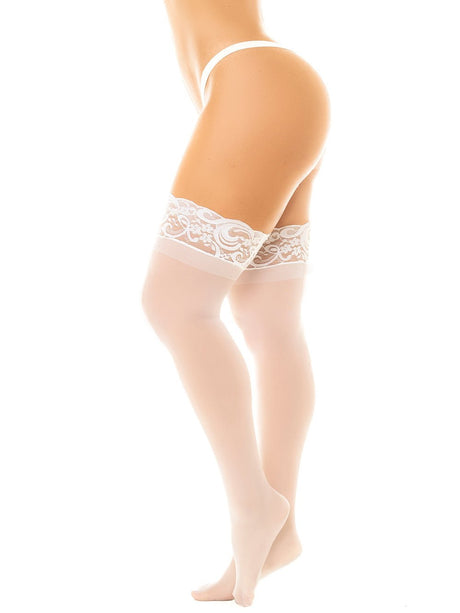
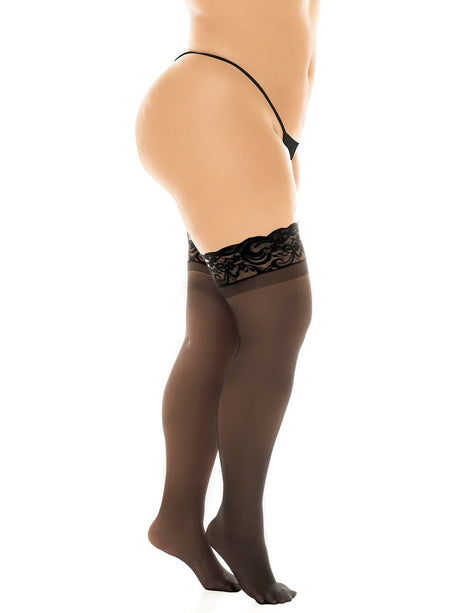
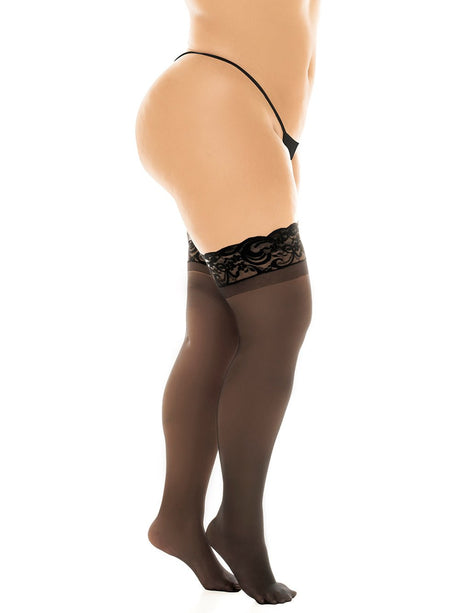
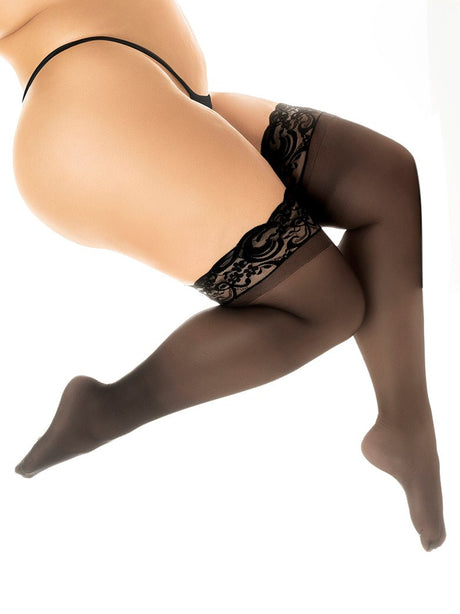
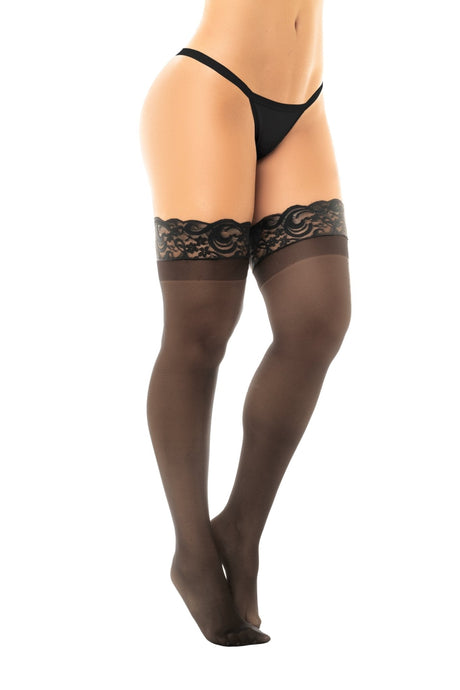
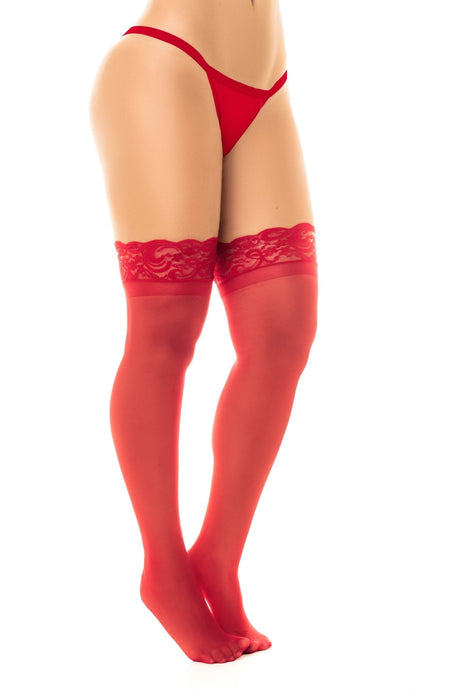
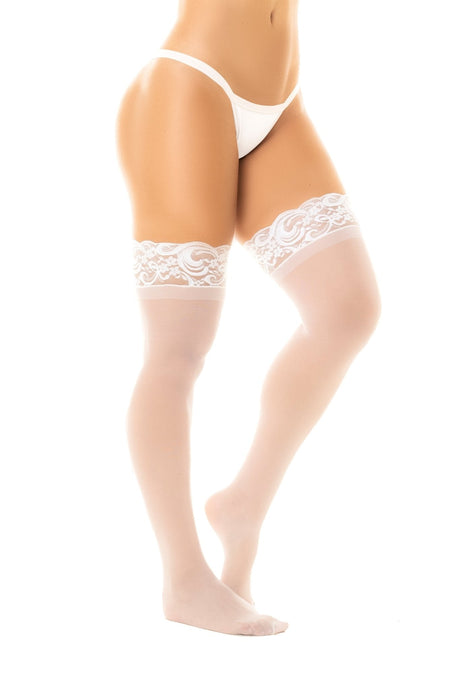
What is the difference between fishnet stockings and fishnet tights?
Fishnet stockings are two separate thigh-length pieces. Fishnet tights are one piece running from waist to toe. That single structural difference decides everything else about how they wear.
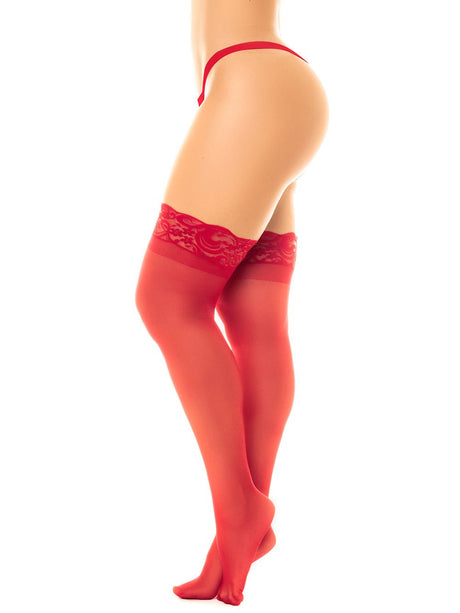
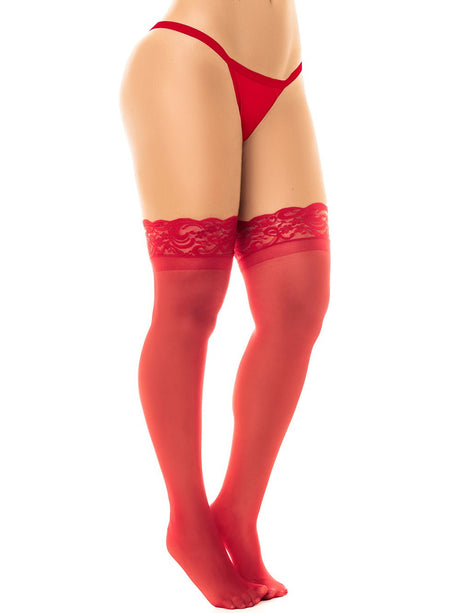
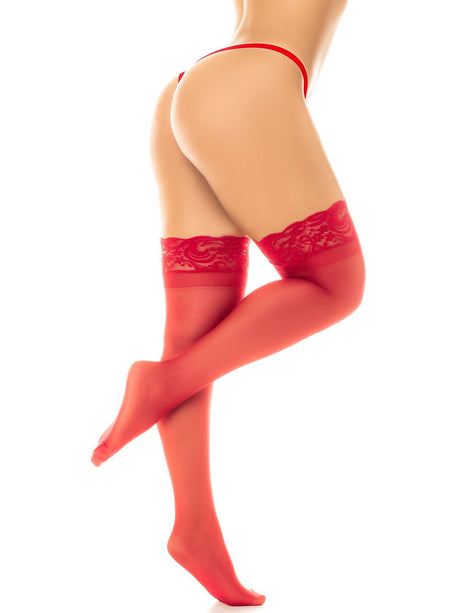
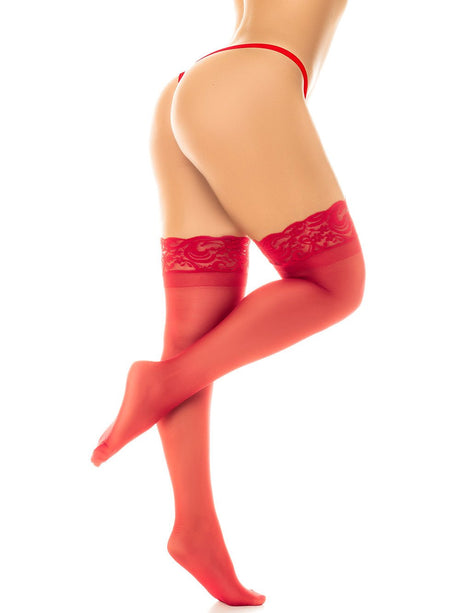
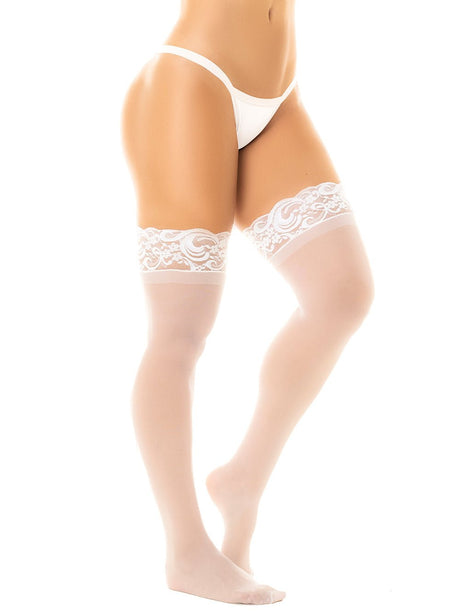
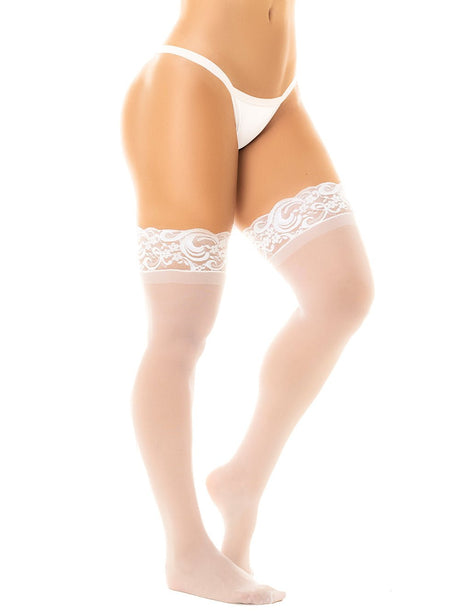
Because stockings end at the thigh and do not connect at the waist, something has to hold them up: either a garter belt clipped to the stocking top, or a silicone grip strip bonded inside a decorative lace band that grips skin directly. Tights need neither, since the waistband does the work.
The practical consequences follow from there. Tights are more secure, warmer, and show nothing under a short hem. Stockings are cooler, show a deliberate band at the thigh, and can be replaced one leg at a time when a ladder appears, which is a real advantage in a garment that ladders easily.
Most retailers treat the two words as synonyms. They are different garments, and buying the wrong one is the most common mistake in this category.
Almost every retailer files fishnet stockings and fishnet tights under the same heading, as though the words were interchangeable.
They are two different garments, and the one nobody explains at all is the thing that actually decides how a pair looks: the size of the holes.
- Stockings end at the thigh. Two pieces, need a garter belt or silicone grip.
- Tights run waist to toe. One piece, nothing to attach, more secure.
- Net scale matters more than anything else. Micro, classic or wide.
- Micro net reads as texture, not as fishnet, at conversational distance.
- Black is the default. White and red are deliberate choices.
- Roll them on from the toe. Most ladders happen before you are dressed.
- One size stretches the net too, which changes how the pattern reads.
Stockings, Tights and Socks, Side by Side
Three lengths, three ways of staying up. The names are used loosely, so this is the reference to work from.

| Fishnet stockings | Fishnet tights | Fishnet socks | |
|---|---|---|---|
| Length | Mid to upper thigh | Waist to toe | Ankle to mid-calf |
| Pieces | Two, one per leg | One | Two |
| Stays up by | Garter belt or silicone band | Built-in waistband | Elasticated cuff |
| Visible top | Yes, a lace band at the thigh | No | Yes, at the ankle |
| Warmth | Legs only | Legs and hips | Minimal |
| If one ladders | Replace that leg | Replace the pair | Replace that sock |
| Under a short hem | Band may show | Nothing shows | Not applicable |
| Shop | Fishnets | Fishnets | Hosiery |
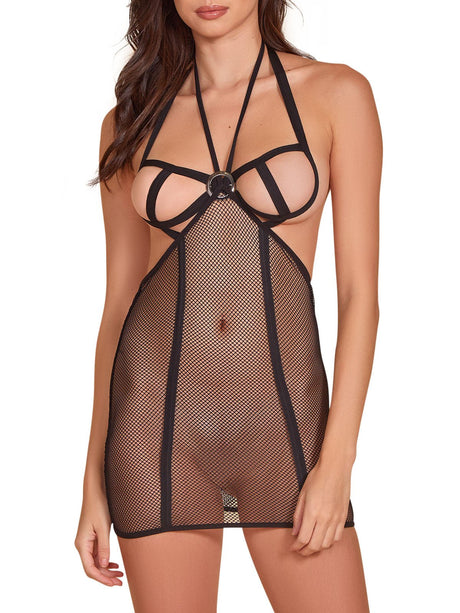
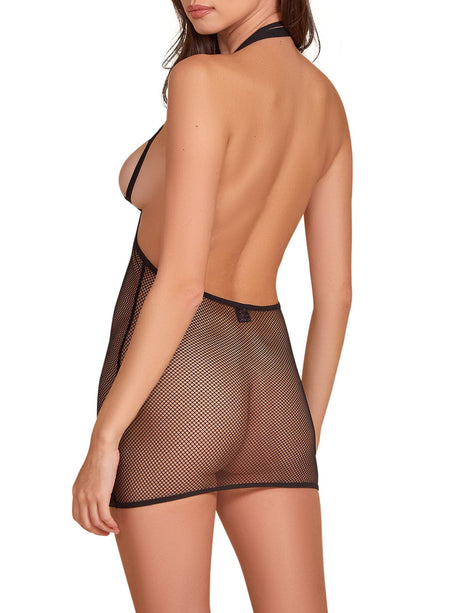
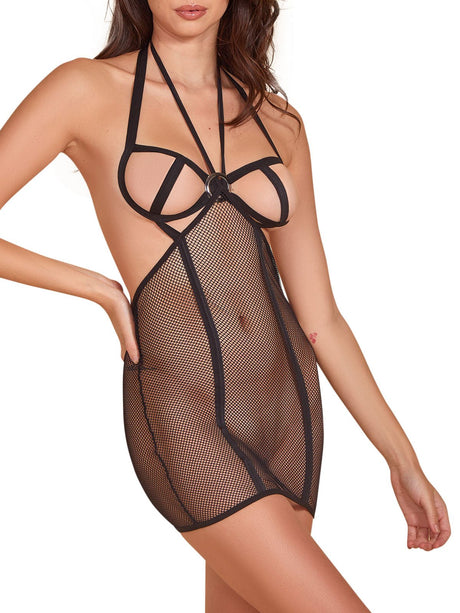
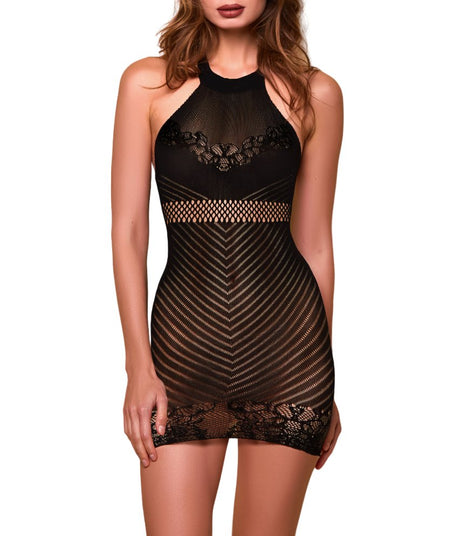
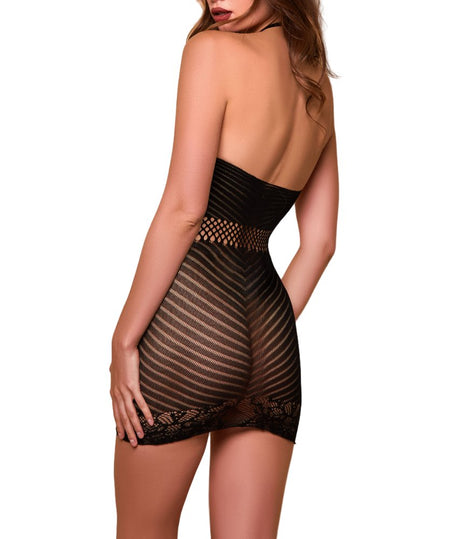
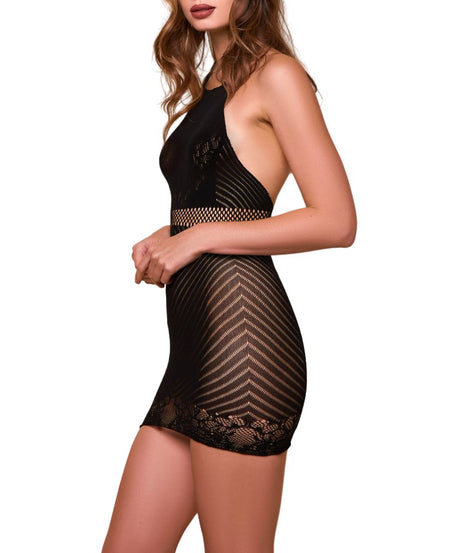
A fourth option exists and gets overlooked: the fishnet bodystocking, which extends the same mesh upward into a one-piece garment covering the torso as well. Because there is no waistband at all, there is nothing to roll down, though the fit then depends on your full torso length rather than just your hips. Our bodystockings range covers those.
You will see fishnet stockings, fish net stockings and the singular fishnet stocking used interchangeably online, and they all describe the same garment. The one-word spelling is the standard. The singular is slightly misleading, since stockings are sold and worn as a pair.
What Fishnet Actually Is
Worth understanding, because the construction explains the two things people complain about most: why it ladders, and why the fit behaves oddly.
Fishnet is a knitted open mesh, not a woven fabric with holes cut in it. Strands of yarn are looped together at regular junction points, and the open diamonds are the spaces between those junctions. The whole structure holds its shape through tension rather than through the fabric itself, which is the root of nearly everything that follows.
The fiber
Almost all modern fishnet is nylon blended with elastane, typically somewhere around eighty to ninety percent nylon and ten to twenty percent elastane. The two do different jobs:
- Nylon provides the strand strength. It is strong for its weight, holds dye well, and resists abrasion better than most alternatives at that fineness.
- Elastane provides the recovery. It is what lets the net stretch over a hip and return, and it is the component that dies first. A fishnet that sags at the knee has lost elastane, not nylon.
Higher elastane content generally means better recovery and a garment that holds its shape across a longer day. It is one of the few specification numbers worth reading on a hosiery listing, and it is usually stated.
Why denier does not mean much here
In solid hosiery, denier describes yarn thickness and correlates closely with opacity, which is why people use it as shorthand for sheerness. A 15 denier tight is sheer and a 100 denier tight is opaque.
In fishnet, that relationship breaks. Denier describes the thickness of the strand, not how much of your leg is covered, because coverage is decided by the size of the holes. A heavy-denier wide net covers less skin than a fine-denier micro net despite the thicker yarn. So if you are comparing two pairs, net scale tells you what denier tells you in ordinary hosiery, and denier tells you something else entirely: how chunky the visible strands look.
Why it ladders the way it does
In a solid knit, a broken thread has somewhere to go. The surrounding fabric absorbs the load and a small hole often stays a small hole.
In an open mesh, every strand is load-bearing. When one breaks, the tension it was carrying transfers directly to its neighbors, which are now carrying more than they were designed to. Those neighbors are then more likely to break, transferring load again. That is why a fishnet ladder accelerates rather than staying put, and why stopping it in the first seconds matters so much.
It also explains why wider nets ladder more readily. Longer unsupported strands between junctions mean more leverage on each strand and more load to redistribute when one goes.
Two construction features are worth looking for and rarely highlighted. A reinforced toe, where the mesh tightens or becomes solid at the toe box, is where most wear happens inside a shoe. And on tights, a separate gusset panel at the crotch rather than four seams meeting at a single point, which removes the strain concentration that causes tears in exactly the place they are most annoying to discover.
How Each One Stays Up
This is where most disappointed purchases come from, because the two kinds of stocking look nearly identical in a product photograph.

Stockings, version one: plain top
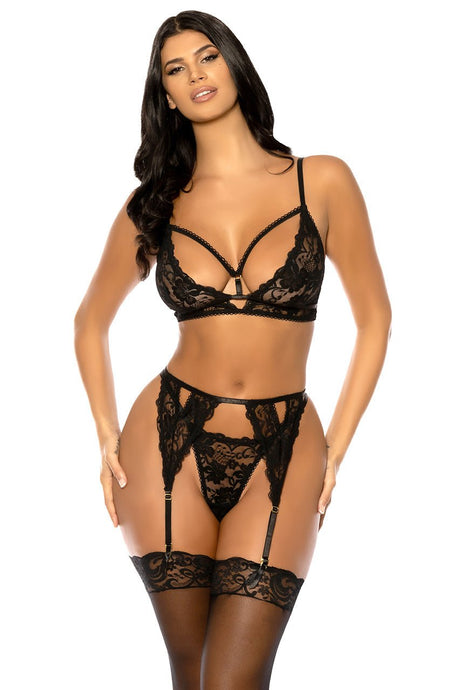
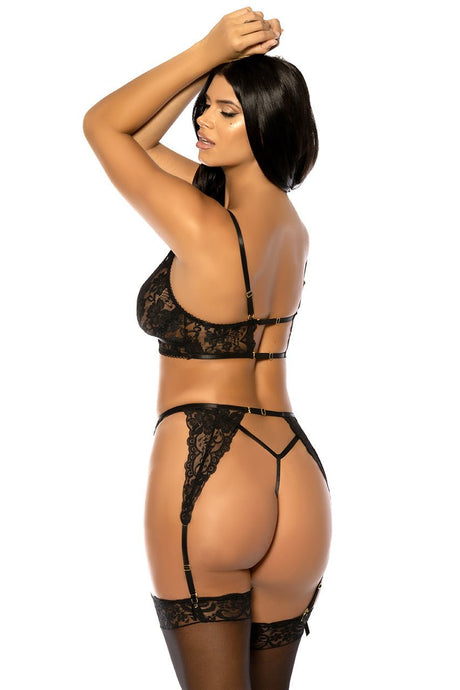
A plain-top stocking finishes with a band of lace or plain knit and nothing to grip with. It is designed to clip to a garter belt, which is worn at the waist with four or six straps running down to clip the stocking top front and back.
This is the traditional arrangement and it is the most secure of the two, because the garter belt anchors at the waist rather than relying on the thigh. It is also the one people buy by accident when they meant to buy stay-ups, then find the stockings around their knees within an hour.
Stockings, version two: stay-up with silicone
A stay-up stocking has a silicone grip strip bonded to the inside of the top band, usually in one or two lines running all the way round. The silicone grips skin directly, so no garter belt is needed.
These are far more convenient and slightly less reliable, and the reliability depends on two things. Silicone grips skin, not fabric or lotion. Applying moisturizer to the upper thigh shortly before wearing them is the single most common reason they slide. And the band needs to sit on a part of the thigh that is not actively changing shape as you move, which usually means a little lower than people first place them.
Tights: the waistband does everything
Tights have no top band to worry about, since the garment is continuous. What matters instead is waistband depth and body rise, meaning the vertical distance from the waistband to the crotch seam.
A shallow waistband on a long rise rolls down. A deep waistband on a correct rise stays flat. This is the single fit variable that decides whether a pair of tights is comfortable, and it becomes more important as sizes go up, which is covered in the plus size section below.
Fishnet Stockings and Tights
Stay-up stockings with silicone bands, plain tops for garter belts, and full tights across net scales.
Shop FishnetsGarter BeltsThigh HighsWhich One Should You Buy?
Rather than arguing for one, here is what each is genuinely better at.
Net Size Is the Decision Nobody Talks About
If you take one thing from this article, take this. Net scale changes the character of a fishnet more than length, color or price, and almost no listing explains it.

Net scale is the size of the open diamond, measured across. It is the variable that decides whether a garment reads as textured hosiery, as recognizable fishnet, or as a statement piece. Two pairs identical in length, color and fiber can look nothing alike if their net scales differ.
| Net scale | Diamond size | Reads as | Best for |
|---|---|---|---|
| Micro net | Roughly 2 to 4 mm | Texture, not mesh | Work, daytime, under trousers |
| Small net | Roughly 5 to 7 mm | Subtle pattern | Daytime with a longer hem |
| Classic diamond | Roughly 8 to 12 mm | Recognizable fishnet | Evening, the default choice |
| Wide net | 15 mm and above | Deliberate statement | Events, layering, photography |
Why micro net is the most useful thing in this article
At conversational distance, a micro-net fishnet in black does not read as fishnet. It reads as a textured opaque tight, closer in appearance to a patterned hosiery than to what most people picture when they hear the word.
That single fact opens up the whole category for settings where classic fishnet would be out of place. Micro net under trousers, under a midi skirt, or with boots is quietly textured rather than loud. It is the version you can wear to work, and it is almost never described that way on a product page.
Why wide net behaves differently
Wide net is not just more visible, it also wears differently. Longer unsupported strands between junction points mean more stretch under load, more movement, and considerably more vulnerability to catching. A wide net will ladder from a snag that a micro net would shrug off.
It also interacts with what is underneath. Over another layer, wide net creates a visible grid over color. Against skin it shows the most skin of any scale. Both are deliberate effects and both are why wide net belongs in the statement category rather than the everyday one.
Very few listings state a measurement. What you can do is look at the product photograph and compare the diamond against something of known size, usually the width of the lace band on a stocking or the waistband on a tight. If the photo is cropped too tight to judge, the number of diamonds visible across the width of a leg is a reasonable proxy: more diamonds means a smaller net.
Every Net Size in Stock
Micro net for texture, classic diamond for the recognizable look, wide net for statement. Stockings, tights and socks.
Shop FishnetsAll HosieryColor: Black, White, Red and the Rest

Color and net scale interact, which is why the same net looks stronger in white than in black.
What to Wear Them With
Organized by the garment you are starting from rather than by an abstract style category.
Fishnets Through the Year
The category is usually treated as evening-only. It works across all four seasons, but the right version changes considerably.
Fishnet Compared to Other Patterned Hosiery
Fishnet is one of several patterned hosiery families, and they are routinely confused in listings.
| Type | Structure | Reads as | Stretch behavior |
|---|---|---|---|
| Fishnet | Uniform open diamonds | Texture and structure | Even in all directions |
| Lace tights | Figured motifs and borders | Decoration | Distorts where the motif changes |
| Opaque patterned | Solid knit with woven pattern | Print or texture on solid | Even, pattern scales with stretch |
| Sheer | Fine solid knit | Bare leg, evened out | Gets sheerer as it stretches |
| Backseam | Solid with a vertical line | A single deliberate detail | Even, but the seam must stay straight |
The distinction worth holding onto is fishnet versus lace, since those two are confused most often. Fishnet is a uniform repeating mesh with identical diamonds across the whole garment. Lace carries a figured pattern with motifs, borders and areas of different density.
That structural difference has a practical consequence. Fishnet stretches evenly, so the pattern scales up uniformly as the garment stretches. Lace distorts, because the dense areas of the motif stretch less than the open areas around them, which is why a lace pattern can look different on different bodies while fishnet simply reads larger or smaller. Our full hosiery range covers all of these families.
How to Read a Fishnet Listing
Six things worth checking before ordering, in the order they matter.
- Stocking or tight? The title often says neither. Look for a waistband in the photograph, or the words thigh-high, stay-up or garter. If you cannot tell, the product description usually gives it away with the word pair, which implies stockings.
- Silicone or plain top? Only relevant for stockings, and it decides whether you also need a garter belt. Look for the words stay-up, silicone or non-slip. If none appear, assume plain top.
- Net scale. Rarely stated. Judge it from the photograph against the lace band or waistband, or count diamonds across the leg. This is the one worth spending thirty seconds on.
- Elastane percentage. Usually stated. Higher means better recovery and a longer usable life. This is the specification that most affects how long the garment stays the shape you bought.
- Sized or one-size. One-size stretches the net scale along with the garment, so the pattern you see in the photograph is the pattern at the small end of the range, not yours.
- Reinforced toe and gusset. Mentioned when present, absent when not. Both extend life at the two points that fail first.
Five Mistakes That Waste Money
Each of these accounts for a meaningful share of fishnets that get worn once and abandoned.
How to Stop Them Snagging and Laddering
The top complaint in the category, and most of it is preventable. The majority of ladders happen before the garment is fully on.
Open mesh is under tension everywhere. When one strand breaks, the load it was carrying transfers to its neighbors, which is why a ladder in fishnet travels faster than a run in solid hosiery. Prevention is far more effective than repair, and it comes down to what your hands are doing.
Before you put them on
- Check your nails. A rough edge or a split is the single most common cause. Run a file over the edges, or handle the garment with the pads of your fingers rather than the tips.
- Take off rings and bracelets. Stone settings, clasps and any raised edge will catch. This includes watches.
- Check your toenails too. A long or rough toenail catches on the way through the foot, which is the most awkward place to discover a ladder.
- Moisturize earlier, not now. Dry skin catches, but fresh lotion makes silicone bands slip. Moisturize well before dressing, not immediately before.
Putting them on
- Gather the whole leg in your hands first. Concertina the garment down to the toe rather than pulling it up the leg from the waist. This is the technique that matters most.
- Place the toe, then unroll upward. Let the garment unroll rather than dragging it. Dragging is what puts point load on individual strands.
- Work in stages. Foot, ankle, calf, knee, thigh. Adjust at each stage rather than pulling everything into place at the end.
- For tights, settle the waistband last. Get both legs on before adjusting the rise, so the fabric can distribute rather than stretching in one place.
While wearing them
- Mind zips and hooks on bags, jackets and chairs. A handbag zip at thigh height is a common culprit.
- Sit down deliberately on rough surfaces. Wicker, untreated wood and some upholstery will catch.
- Carry clear nail polish if the occasion matters. A dot on the broken strand ends stops a small break from spreading, which buys you the rest of the evening.
Clear polish stops a fresh, small break from spreading. It does not repair a ladder that has already opened across several diamonds, and nothing does so invisibly. Once a run is established, the garment is decorative rather than intact. This is the strongest practical argument for stockings over tights, since it costs you one leg rather than a pair.
Washing and Storage
Fishnets rarely wear out. They get damaged, and a good share of that damage happens in the wash and the drawer.
- Hand wash in cool water with mild detergent. Two minutes of gentle movement is enough; there is very little fabric to clean.
- Or machine wash in a mesh bag on a cool delicate cycle. The bag is not optional, since loose fishnets tangle with everything and catch on the drum.
- Never tumble dry. Heat degrades the elastane that gives the net its stretch, and a fishnet that has lost its stretch sags at the knee and never recovers.
- Skip fabric softener. It coats the fibers and reduces elastic recovery, which shortens the life of the garment for no benefit.
- Lay flat to dry, or drape rather than hanging by one end, which stretches the leg unevenly.
- Store them rolled and separate. Not loose in a drawer with jewelry, belt buckles, bra hooks or anything with a zip. A small zip bag or a dedicated drawer section costs nothing and prevents most storage damage.
- For silicone-band stay-ups, keep the silicone clean and away from lint. Silicone picks up fluff, and fluffy silicone grips considerably less well. Wipe it with a damp cloth when needed.
Given how fishnets fail, buying two identical pairs at once is a rational strategy rather than an indulgence. With stockings it is even better: two pairs gives you four legs, and a single ladder leaves you with three matched survivors rather than a lone orphan. It is the cheapest form of insurance in hosiery.
Plus Size and Fit
Fishnet is stretchy, which leads to the assumption that sizing barely matters. It matters more than in solid hosiery, not less.
Why one size is a real limitation here
In a solid tight, stretching the fabric makes it thinner and more sheer. In a fishnet, stretching the fabric makes the holes bigger. That is a visible change in the character of the garment, not just the fit.
So a one-size fishnet labelled as classic diamond net will read as classic diamond at the smaller end of its range and as something closer to wide net at the top of it. If the net appearance matters to you, buy a sized garment rather than a one-size one. This is the single most useful sizing fact in the category and it is essentially never mentioned.
What to look for in plus size tights
- A deeper waistband. Two inches or more. A narrow waistband on a larger garment concentrates tension into a small area, which is exactly what makes it roll.
- A longer body rise, not just a wider one. Garments graded only for width run short in the body and pull down at the shoulders of the hip, which is the other cause of rolling.
- A gusset. A separate panel at the crotch rather than four seams meeting at a point. It reduces the strain concentration that causes tears in exactly the place they are most annoying.
- A stated size range rather than one-size, for the net-scale reason above. Shop plus size tights
What to look for in plus size stockings
- A wider silicone band, ideally two strips rather than one. More grip area spreads the holding force and slides less.
- A longer stocking, since a standard length that sits at mid-thigh on one person sits above the knee on another, and a band below the knee will not stay.
- Or a garter belt, which sidesteps the grip question entirely by anchoring at the waist. For many people this is the more reliable route at any size. Shop garter belts
Plus Size Fishnets and Tights
Deeper waistbands, longer body rise and stated sizing rather than one-size, so the net scale stays the scale you bought.
Shop Plus Size TightsFishnetsSocks, Leggings, Panties and Bodystockings
Four adjacent garments that use the same mesh and get confused with the two main ones.
People spend a long time choosing between black and white, and almost no time on the size of the holes. The hole size is the decision. Everything else is a preference.
HauteFlair Editorial Team
What This Means for You
Stockings are two thigh-length pieces that need a garter belt or a silicone band. Tights are one piece from waist to toe with nothing to attach. That is the whole distinction, and it decides security, warmth, whether a band shows, and whether one ladder costs you one leg or two.
Choose tights for security, warmth and a short hem. Choose stockings for the visible band, for cooler wear, and for the ability to replace one leg. Choose socks if you are testing the category for the first time.
Then spend your real attention on net scale, because it changes the garment more than anything else. Micro net reads as texture and goes places classic fishnet cannot. Classic diamond is the recognizable look. Wide net is a statement and ladders more readily for structural reasons.
Black recedes and is the default. White contrasts and needs a smaller scale for a comparable effect. And roll them on from the toe with your rings off, because most ladders happen before you are even dressed.
Fishnet Stockings, Tights and Socks
Every net scale and length, with stay-up silicone bands, plain tops for garter belts, and plus sizes through 4X.
Shop FishnetsAll HosieryGarter BeltsFrequently Asked Questions
What is the difference between fishnet stockings and fishnet tights?
Do fishnet stockings need a garter belt?
Which is better, fishnet stockings or tights?
What size fishnet should I choose?
What is fishnet made of?
Why do fishnets ladder so easily?
Can you wear fishnets under jeans?
Can you wear fishnets in winter?
How do you stop fishnets from laddering?
Can you repair a ladder in fishnets?
What is the difference between fishnet and lace tights?
Can you wear fishnets to work?
Are white fishnets harder to wear than black?
What does one size fit all mean for fishnets?
Do fishnet tights come in plus sizes?
What is the difference between fishnet tights and fishnet leggings?
What is the difference between fishnet socks and fishnet stockings?
What is a fishnet bodystocking?
How do you wash fishnet stockings and tights?
How long do fishnets last?
This article covers garment construction, fit and care and is for informational purposes only. Net scale measurements, fiber percentages and denier figures are approximate and are not industry standards, so product photographs and individual product specifications are more reliable than category labels. Sizing varies between manufacturers; check the individual product page before ordering.