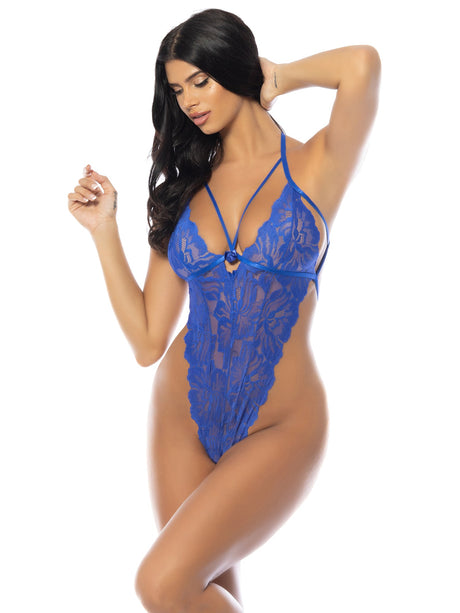
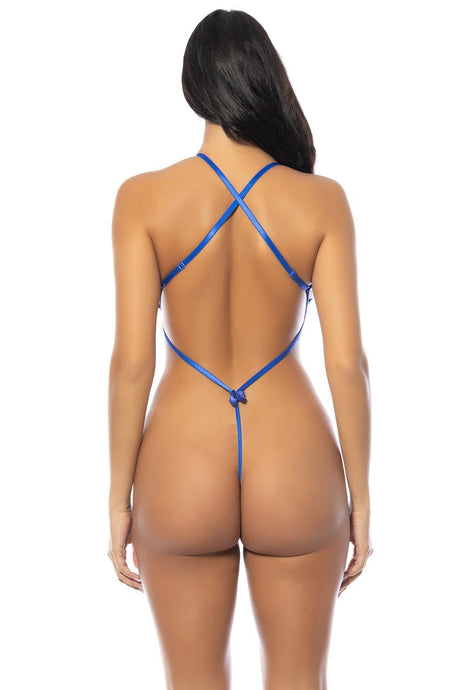
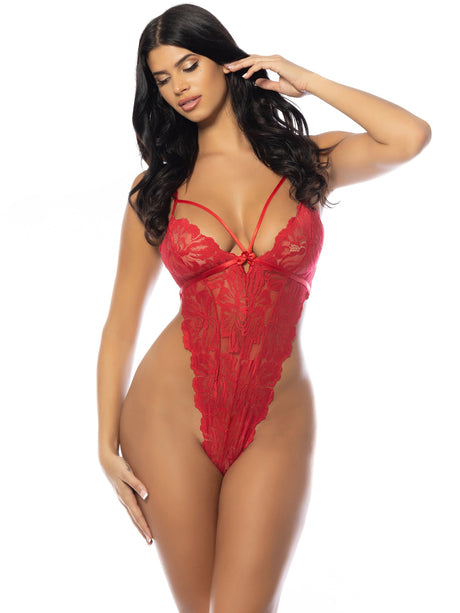
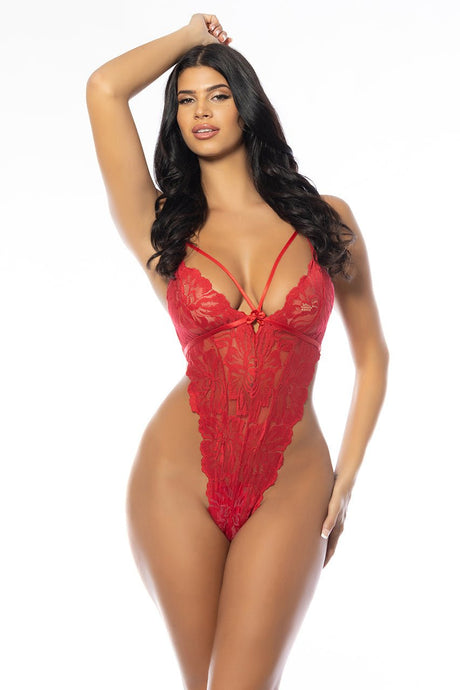
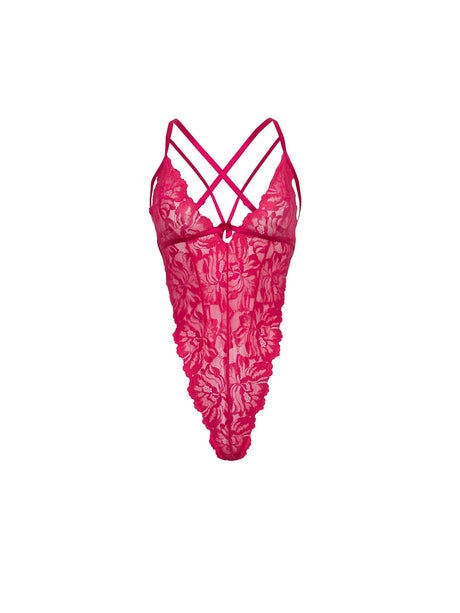
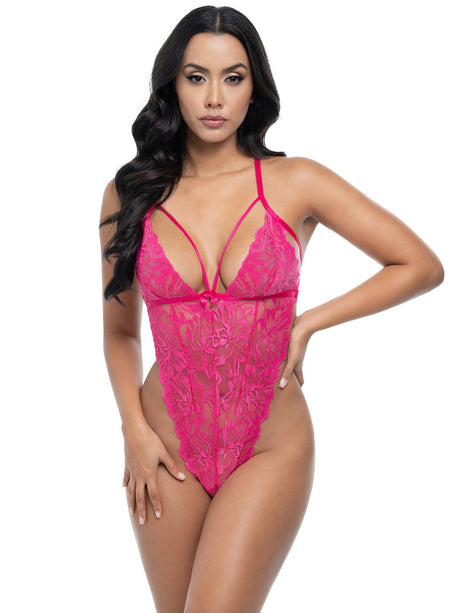
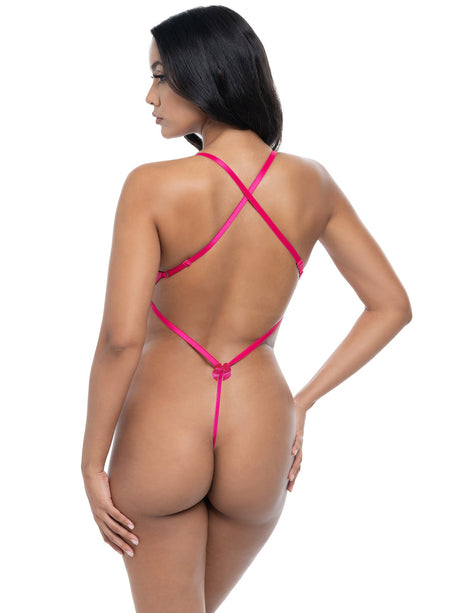
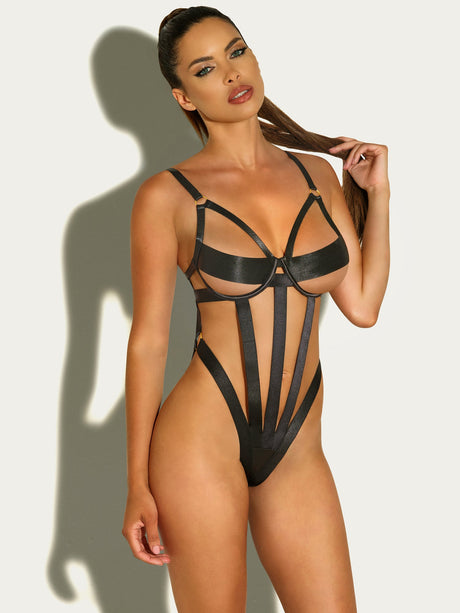
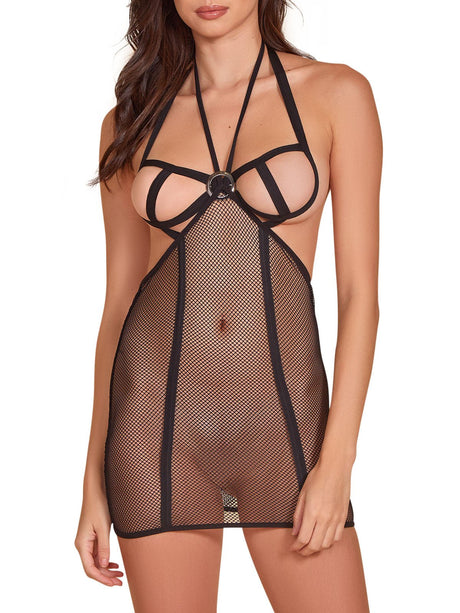
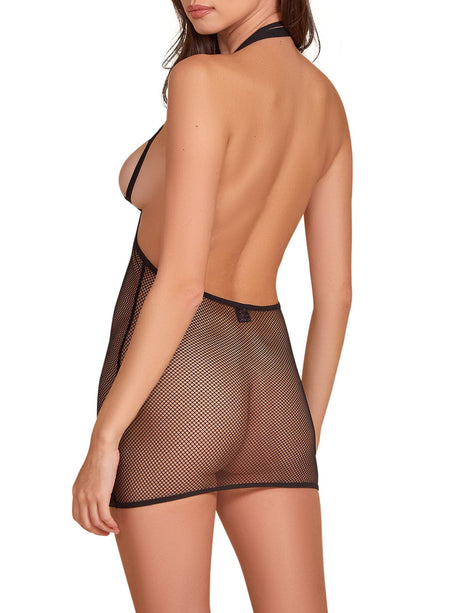
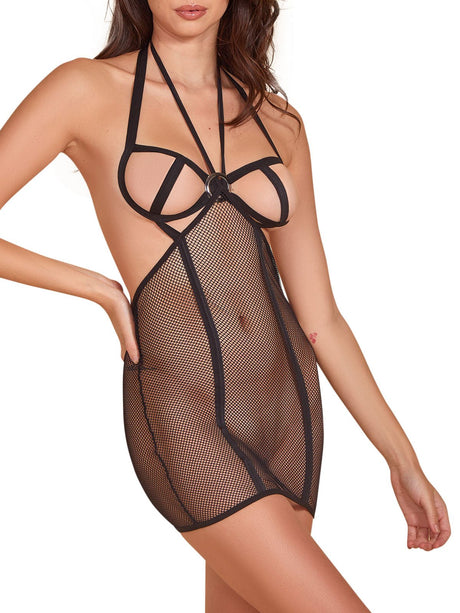
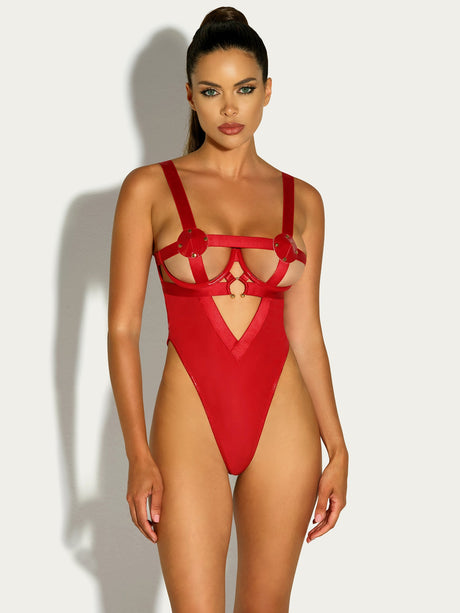
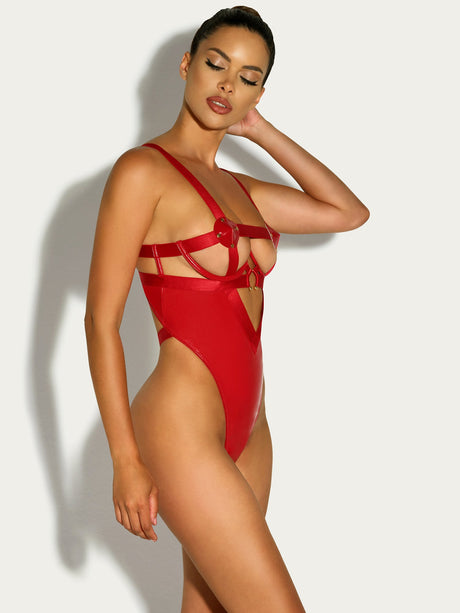
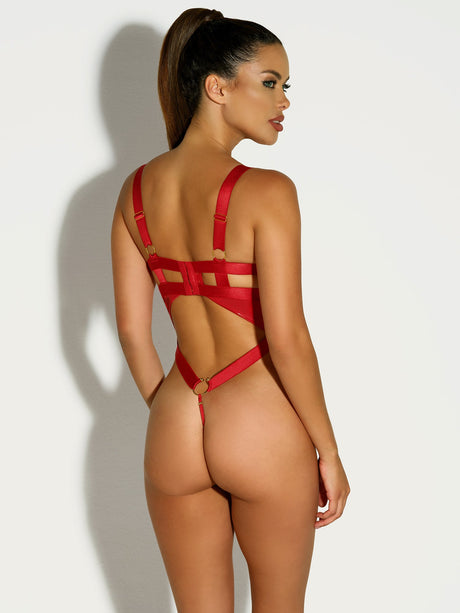
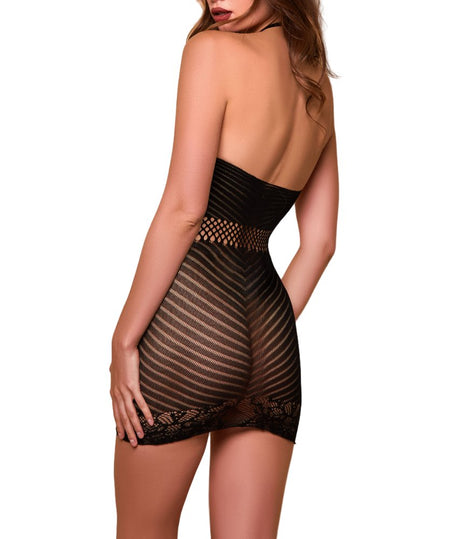
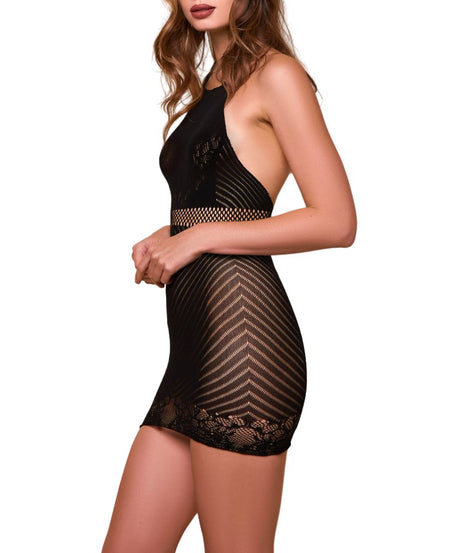
What is a one-piece swimsuit?
A one-piece swimsuit is a single garment that covers the torso from the bust to the bottom, joined at the crotch and held up by straps, a halter or a fitted neckline. It is the classic alternative to a bikini or tankini, and the most common style of swimsuit in the world.
Because it is one piece, it has to match two measurements at once: your bust and hips, and the length of your torso from shoulder to crotch. Torso length is the measurement most people never check, and it causes most fit problems.
Choosing one comes down to four things: torso fit, bust support, leg line and neckline. Get the torso right first and the cut is a matter of taste.
The one-piece looks like the easiest swimsuit to buy. There is only one part, so there is only one decision.
In practice it is the hardest to fit, because a single stretch of fabric has to reach from your shoulders to between your legs and sit flat everywhere in between. Once you understand that, choosing one gets much easier.
- Torso length decides the fit. Measure shoulder to crotch and back up before you choose a size.
- Too short means straps that dig and a seat that rides up; too long means wrinkles at the waist.
- Bust support ranges from a shelf bra to underwire and bra-sized cups. Match it to your cup size.
- A higher leg line lengthens the leg; a lower one covers more of the hip and thigh.
- Ruching, prints and power mesh smooth the tummy; solid, shiny fabric shows everything.
- Rinse after every swim and dry flat in the shade. Chlorine, sun and heat wear out spandex.
What a One-Piece Is Made Of
Five parts decide how a one-piece looks and fits. Two of them, the torso and the bust support, decide whether it stays put.
Every one-piece swimsuit has a neckline, a way of staying up (usually straps, sometimes a halter or a strapless band), some form of bust support, a torso that runs from the shoulder to the crotch, and a leg line where the suit is cut away at the hip. Most also have a full or partial lining inside the front, and many have a shelf bra or pockets for removable cups.
The neckline, straps and leg line are the parts you see in photos, and they set the style. The torso length and bust support are the parts you feel, and they decide whether the suit stays where it should when you swim, bend or climb out of the pool. A suit that looks right on the hanger but has the wrong torso length will never sit right on you.
A one-piece differs from a bodysuit worn as clothing in a few practical ways. It is made in swim fabric, usually nylon or polyester with spandex, that holds its shape wet and dries quickly. Its lining is opaque when wet. And its elastic is chlorine resistant to some degree, so it survives the pool. A fashion bodysuit can look similar on land, but it is not built for the water.

Torso Length Is the Fit That Matters Most
A one-piece is sized by bust and hip, but it fits by torso length. If the torso is wrong, no size will feel right.
Two people who both wear a medium can need very different suits. One has a long torso and finds every medium pulls at the shoulders. The other has a short torso and finds the same suit bags at the waist. Neither is the wrong size. The distance from shoulder to crotch is simply different, and a one-piece cannot stretch to make up for much of it.
| Sign | What it means | What to do |
|---|---|---|
| Straps dig into the shoulders | Torso too short | Try a long-torso suit, or one with adjustable straps |
| Seat rides up or wedges | Torso too short | Size up, or choose a long-torso style |
| Leg line cuts in at the hip | Torso too short or leg cut too high | Try a lower leg line |
| Fabric wrinkles across the waist | Torso too long | Size down, or choose a petite or short style |
| Neckline gapes and bust sags | Torso too long | Shorten the straps, or size down |
| Straps keep slipping off | Torso too long or straps too wide set | Try a crossback, racerback or halter |
A suit that is too short in the torso pulls in two directions at once: the straps drag the front up and the crotch drags it down. You feel it on the shoulders, at the seat and along the leg openings. A suit that is too long has spare fabric with nowhere to go, so it pools at the waist and the bust support drops below the bust.
Adjustable straps are the single most useful feature for torso fit. They let you take up or let out roughly an inch, which is often all the difference needs. A long-torso version, offered by some brands, typically adds an inch or two to the body. If you are tall, long in the body or have a fuller bust, which uses up length at the front, it is worth looking for one.
Sometimes. Sizing up adds torso length but also adds width, which can leave the suit loose at the bust and hips. If the width fits and only the length is wrong, adjustable straps or a long-torso style is a better fix than a bigger size.
How to Measure Your Torso
One loop of a soft tape measure from the shoulder, through the legs and back up, gives the number most size charts call girth or torso.
Swimwear brands that publish a torso measurement usually call it torso girth or torso loop. It is a single measurement in a closed loop, and it takes less than a minute.
Not every brand lists a torso measurement, and the numbers vary between makers. If a size chart gives one, use it alongside bust and hip. If it does not, the fit signs in the table above are a reliable guide. A suit that fits at the bust and hips but pulls at the straps tells you that you need more length in that brand.
Even a thin layer adds length to the loop. Measure over underwear or a swimsuit, and ask someone to help keep the tape flat across your back.
One-Piece Swimsuit Styles
The neckline and straps set the look and much of the support. Here are the cuts you will see most.
| Style | What it is | Support | Good for |
|---|---|---|---|
| Maillot or tank | Scoop or square neck, wide straps, simple lines | Medium | Swimming, a classic look |
| Scoop neck | Rounded neckline, usually wider straps | Medium | Everyday wear, most bust sizes |
| Square neck | Straight neckline with corners | Medium | A structured, retro look |
| V-neck or plunge | A V that can drop to the ribs | Low to medium | Lengthening the torso |
| Sweetheart | Curved, heart-shaped neckline, often with cups | Medium to high | Fuller busts, a vintage look |
| Bandeau | Straight strapless neckline, removable straps | Low | Even tans, smaller busts |
| Halter | Straps tie or fasten behind the neck | Medium to high | Lifting and shaping the bust |
| One-shoulder | A single strap across one shoulder | Low to medium | A sculptural, asymmetric look |
| High neck | Neckline at the collarbone or above | Medium | Coverage and sun protection |
| Racerback or crossback | Straps meet or cross between the shoulder blades | High | Laps, active days, straps that stay put |
| Cutout or monokini | Panels cut away at the sides, waist or back | Varies | A two-piece look in one piece |
| Long-sleeve | Sleeves to the elbow or wrist, often a zip front | Medium | Sun protection, surfing, modest coverage |
The maillot is the classic one-piece: the word is French for a close-fitting garment, and in swimwear it means a simple tank suit with no skirt and few details. It is the style most people picture when they hear the words one-piece, and it is the easiest to swim in.
A plunge or deep V lengthens the torso visually and shows more of the chest, so it needs either a smaller bust or good built-in support to stay in place. A bandeau one-piece gives an even tan across the shoulders and usually comes with removable straps for swimming. A halter lifts the bust from the neck, which some people love and others find tiring on the neck over a long day.
Crossback and racerback straps solve the most common one-piece complaint, which is straps sliding off the shoulders. Pulling the straps toward the center of the back keeps them on, and they are standard on suits made for swimming laps.
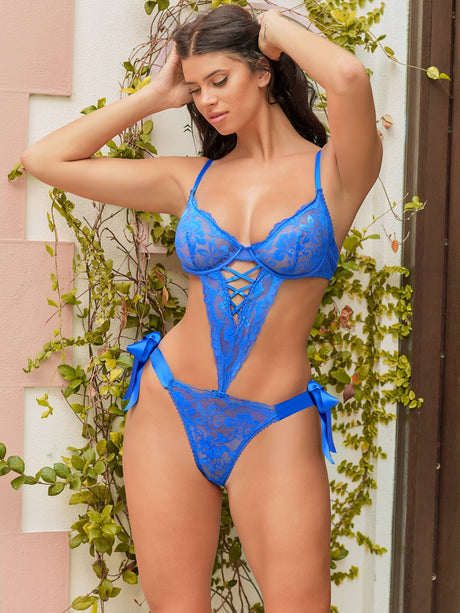
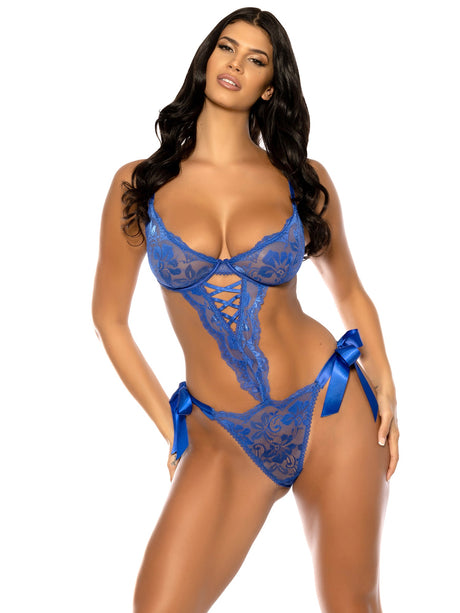
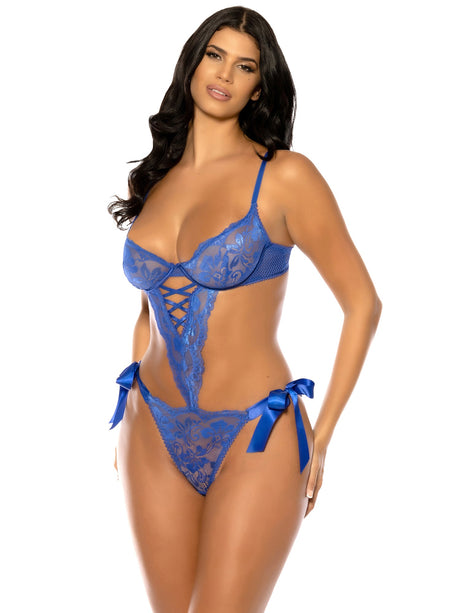
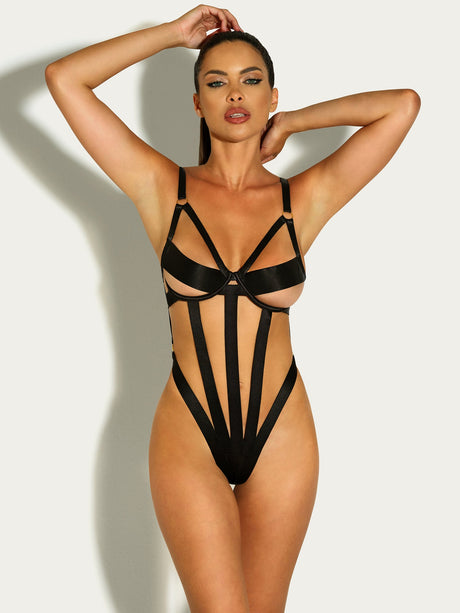
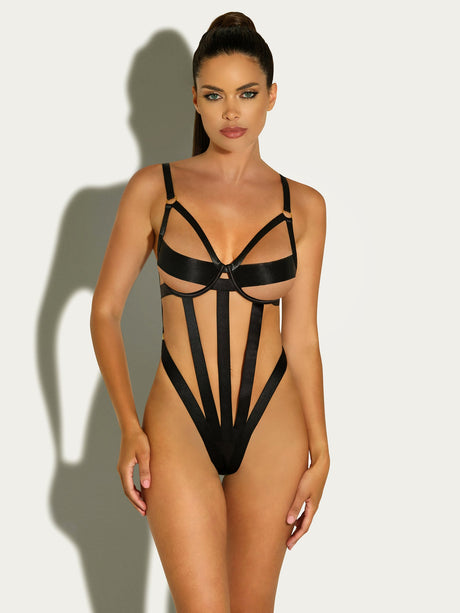
A monokini today means a one-piece with large cutouts at the sides or midriff, so it looks like a bikini joined by a strip of fabric. The cutouts change how the suit holds you: the less fabric across the waist, the more the bust and bottom have to stay in place on their own.
At HauteFlair, our one-piece swimsuits include the Hanky Panky Bandeau One Piece, with removable straps, a double-layer shelf, removable padding and ruching across the front; the Hanky Panky Ruched Bow One Piece, a scoop neck with adjustable bow straps; and the Sunsets Veronica One Piece, with a low V-neck, a hidden shelf bra, removable cups and straps that convert to a crossback. Availability changes by season, so check each listing for sizes and colors.
Leg Line: How High the Cut Sits
The leg line is where the suit is cut away at the hip. Higher cuts lengthen the leg; lower cuts cover more.
| Leg line | Where it sits | Effect | Watch for |
|---|---|---|---|
| Boyleg | Across the upper thigh | Most coverage; a sporty look | Can ride up on fuller thighs |
| Classic | At the leg crease | Balanced; suits most people | Very little |
| High-leg | Above the hip bone | Lengthens the leg | Needs a longer torso to sit flat |
| Ultra high | Near the natural waist | A strong 1980s and 1990s look | Shows a lot of hip; less back coverage |
A high-leg cut makes the legs look longer because it moves the line where the suit ends higher on the body. It is flattering on most people, but it uses up torso length: the higher the cut at the side, the more the suit relies on a long enough body to sit flat. If high-leg suits always seem to cut in at the hip, the torso is usually the problem, not the cut.
A boyleg or short-leg one-piece covers the top of the thigh like a pair of shorts. It gives the most coverage and suits active swimming and modest dress codes. On fuller thighs, look for a leg band with a little grip so it does not roll up.
Back Coverage
One-pieces range from full seat coverage to a thong back. The label to look for is the coverage, not the size.
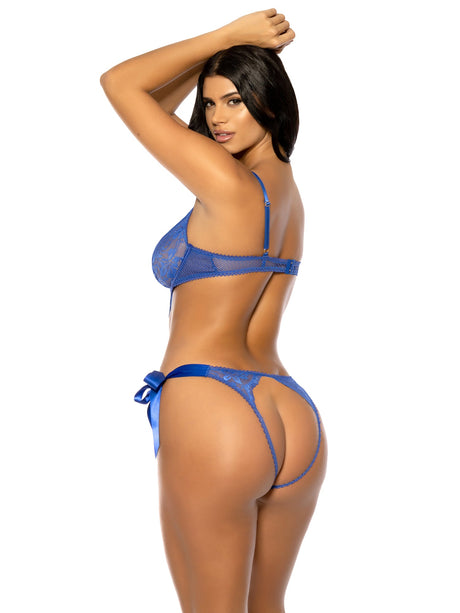
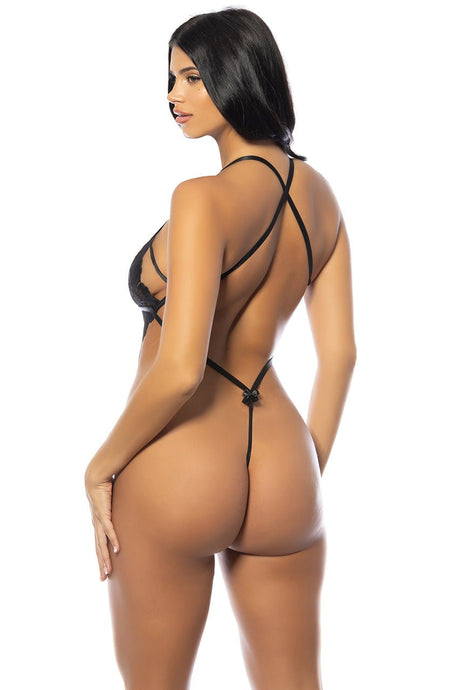
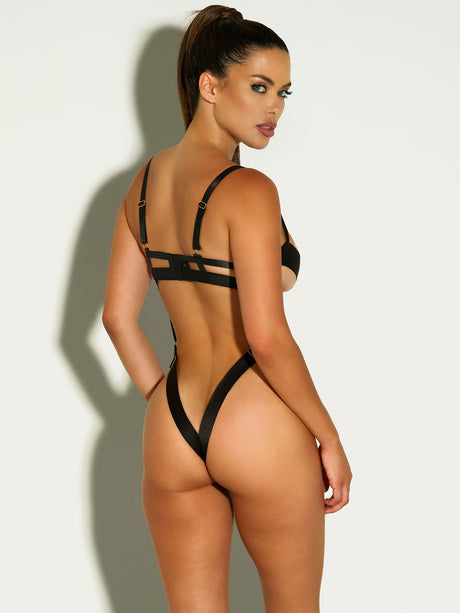
One-piece suits use the same back-coverage terms as bikini bottoms. Full coverage covers the whole seat. Moderate covers most of it. Cheeky shows the lower curve of the seat, and is now common on fashion one-pieces. Thong one-pieces narrow to a strip at the back.
Product photos are usually taken from the front, so check the back view and the description before you buy. If you are between coverage levels, a moderate back is the most versatile. Our guide to Brazilian, thong and G-string backs explains each step on the scale, and types of bikinis covers the same cuts on two-piece suits.
Back coverage and leg line are separate choices. A suit can have a high leg and a full back, or a classic leg and a cheeky back. Many one-pieces sold as flattering or sculpting have a cheeky back, so if you want full coverage, look for it by name.
Bust Support in a One-Piece
Support ranges from a simple lining to underwire cups sized like a bra. The bigger the bust, the more structure the suit needs.
If you wear a D cup or above, a one-piece sized only by small, medium and large is a compromise: the body can fit while the bust spills out, or the bust can fit while the body bags. Bra-sized swimwear solves this by sizing the suit by band and cup. Our guide to bra-sized swimwear explains how cup sizing changes the fit, and the bra-sized swimwear collection is the place to start.
Removable cups are worth a word. They often shift or fold in the wash, and they can migrate inside the pocket while you swim. Take them out before washing, reinsert them flat, and if a suit's cups never sit right on you, a suit with sewn-in molded cups may suit you better.

Tummy Control and Smoothing
A one-piece can smooth the stomach in three ways: a power mesh panel, ruching and print.
Tummy control in swimwear usually means a panel of firmer power mesh sewn inside the front of the suit. It smooths the stomach gently without the squeeze of shapewear. Ruching, the gathered fabric across the front of many one-pieces, does not compress anything but breaks up the surface so that it does not cling. Prints and darker colors do the rest.
These are different features, and suits often combine them. If smoothing matters to you, check the description for the words panel, power mesh or control lining, since ruching alone is a style detail. Our tummy control swimsuits guide explains what each one does, and the tummy control collection gathers suits with panels and ruching.
Choosing by Body Shape
Every body suits a one-piece. The details below simply decide which one-piece feels best.
| If you want to | Look for | Why it works |
|---|---|---|
| Lengthen the torso | Plunge or V-neck, high leg | Both draw the eye up and down the body |
| Add curves | Cutouts, ruching, belts, a sweetheart neck | Breaks the line and adds shape at the waist |
| Support a fuller bust | Underwire, halter, wide straps, bra sizing | Lifts from below and spreads the weight |
| Balance wider shoulders | Scoop, V-neck or halter | Narrows the line across the top |
| Balance wider hips | Detail at the top, a classic or high leg | Draws attention up and lengthens the leg |
| Smooth the middle | Power mesh panel, ruching, print | Smooths and stops fabric clinging |
| Stay put while active | Racerback, crossback, classic leg | Straps stay on and the seat stays down |
If you are petite or short in the body, look for a classic or slightly higher leg, a V-neck and adjustable straps, and avoid suits with a long, dropped body. If you are tall or long in the body, look for long-torso styles, high-leg cuts that are designed for length, and halter or adjustable straps that give you room.
These are suggestions, not rules. The best one-piece is the one you forget you are wearing, and that comes from fit far more than from any style formula.
Plus Size One-Piece Swimsuits
The fit priorities are the same in extended sizes: torso length, bust support and a leg line that stays flat.
Plus size one-pieces are cut with more room through the bust, waist and hips, and the best are also cut with more torso length, since a fuller bust and stomach both take up length at the front. If straps dig in or the seat rides up, the torso is too short for you even if the width fits.
Look for wide or adjustable straps that spread the weight, a shelf bra or underwire sized for the bust, a power mesh panel if you want smoothing, and a classic leg line with a soft elastic that does not cut in. A skirted one-piece adds coverage at the hips; our swim dress guide covers those. Browse plus size swimwear for extended sizes, and see our plus size swimwear guide for sizing, bust support and coverage by style.
Modest One-Piece Swimsuits
A one-piece is the starting point for most modest swimwear. Neckline, leg and sleeves add the rest.
A modest one-piece usually has a higher neckline, a full back, a lower leg line such as a boyleg, and sometimes sleeves or an attached skirt. It covers the torso fully and stays in place in the water better than separates. Adding a swim skirt or swim shorts over a one-piece is the easiest way to cover the hips and thighs with a suit you already own; our swim skirt guide explains which liners work over a one-piece.
For coverage beyond a one-piece, from long-sleeve suits to full swim sets, see our modest swimwear guide and the modest swimwear collection.
Swimming Laps vs Lounging
A suit for swimming laps and a suit for the pool deck are built differently, even when they look alike.
An athletic one-piece has a racerback or crossback, a classic or slightly high leg, a close fit and chlorine-resistant fabric, usually polyester or PBT. It has little or no padding, because cups fill with water. It is built to stay put through flip turns and dives.
A fashion one-piece has more shape: cups, underwire, cutouts, ruching, ties and a wider range of necklines. It is made to look good and feel supportive, and it swims well enough for a few lengths. It is not made for daily training in a chlorinated pool, where its spandex will wear out quickly.
If you swim laps more than once a week, keep a separate athletic suit for training. Your fashion suits will last years longer.
Fabric and Lining
Most one-pieces are nylon or polyester with spandex. The blend decides how they feel and how long they last.
| Fabric | Feel | Chlorine resistance | Best for |
|---|---|---|---|
| Nylon and spandex | Soft, smooth, very stretchy | Lower | Fashion suits, sea swimming |
| Polyester and spandex | Slightly firmer, holds color | Medium to high | All-round suits, pools |
| PBT or chlorine-resistant polyester | Firm, less stretch | High | Laps and training |
| Ribbed or textured | Raised texture | Depends on the base fiber | Hiding the outline when wet |
| Recycled nylon or polyester | Similar to new | Similar to new | Lower-impact choices |
Spandex, also sold as Lycra or elastane, gives a swimsuit its stretch and recovery, and it is the part that wears out. Chlorine, sunscreen, heat and sun all break it down over time, which is why an old suit goes baggy and thin. A higher share of polyester or a dedicated chlorine-resistant fiber slows that down.
Lining matters as much as the outer fabric. A full front lining stops show-through when wet, and a fully lined suit, or one double lined in the same fabric, feels more substantial and holds its shape longer. Pale colors and white suits need lining most. Most tightly knit swim fabrics also block a good share of UV, and some are tested and labeled with a UPF rating.
One-Piece vs Tankini, Monokini and Swim Dress
Four ways to cover the torso. The right one depends on how you swim, size and use the bathroom.
| One-piece | Tankini | Monokini | Swim dress | |
|---|---|---|---|---|
| Pieces | One | Two | One | One |
| Torso coverage | Full | Full, can lift | Partial | Full |
| Hip coverage | By leg line | By bottom | By leg line | Skirt |
| Sizing | One size for all | Top and bottom separate | One size for all | One size for all |
| Torso length issue | Yes | No | Less | Yes |
| Bathroom trips | Harder | Easiest | Harder | Harder |
The tankini is the main alternative: it gives the same coverage in two pieces, so you can size the top and bottom separately and torso length stops mattering. The trade-off is that the top can float up or lift when you raise your arms, which our tankini guide addresses. A swim dress is a one-piece with a skirt attached, and a monokini is a one-piece with cutouts. Our types of swimsuits guide compares every style on one page.
The one-piece wins when you want a single, smooth line, a suit that cannot separate in the water, and support that runs from the shoulders down. It is the right choice for swimming, diving and any day when you do not want to think about your swimsuit.
How to Style a One-Piece
A one-piece is the most versatile swimsuit out of the water. Treat it like a bodysuit.
Out of the water, a one-piece works as a bodysuit. Add high-waisted shorts, a wrap skirt or a sarong and it becomes a beach-to-lunch outfit. A linen shirt worn open, a kaftan or a crochet cover-up all work over it, and our guide to kaftans, sarongs and beach cover-ups shows how to tie a sarong four ways.
Black and navy one-pieces are the most versatile and the easiest to wear, which is why most people own at least one. Bright solids look striking against a tan and photograph well. Prints hide the outline of the body and the lining when wet. If you own one suit, choose a dark solid with adjustable straps; if you own three, add a print and a bright color.

How to Care for a One-Piece
Three habits double the life of any swimsuit: rinse it, wash it by hand and dry it flat in the shade.
Sunscreen deserves a mention. Some sunscreens leave yellow marks on light fabrics, and oils in many of them weaken spandex. Apply sunscreen before you put the suit on and let it dry, and avoid sitting on rough pool edges, which pill the fabric in one afternoon.
A Short History of the One-Piece
From wool tank suits to high-leg Lycra: the one-piece changed as fabric did.
Early bathing costumes were heavy wool dresses worn over bloomers. In the early 1900s, the fitted one-piece began to replace them, helped by competitive swimmers who wanted something they could actually swim in. By the 1920s, knitted wool tank suits were common, and manufacturers were marketing swimsuits as clothing made for swimming rather than bathing.
The big changes came with fabric. Elastic yarns in the 1930s made suits fit closer, and the arrival of spandex in the late 1950s and 1960s let swimsuits stretch and recover in a way wool never could. The 1980s brought the high-leg cut, and the 1990s made it famous. Since then the one-piece has moved from a practical choice to a fashion piece, with plunges, cutouts and one-shoulder cuts sitting alongside the classic maillot.
Common One-Piece Mistakes
Five things that make a good suit feel wrong.
One-Piece Fitting Checklist
Try these moves before you remove the tags.
- Raise your arms: the straps should not dig and the neckline should stay put.
- Squat: the seat should stay down and the leg openings should not cut in.
- Bend forward: the neckline should not gape and the bust should stay in the support.
- Sit down: the fabric should not bunch at the waist or pull at the shoulders.
- Check the back: make sure the coverage is what you expected.
- Check the lining: the front should be lined, especially in pale colors.
What This Means for You
A one-piece swimsuit is a single garment from the bust to the bottom, and it fits by torso length as much as by size. If the straps dig and the seat rides up, the suit is too short in the body; if it wrinkles at the waist, it is too long.
Choose the torso fit first, with adjustable straps or a long-torso style if you need them. Then choose the bust support for your cup size, the leg line for how much hip you want to show and the neckline for the look you like.
Rinse it after every swim and dry it flat in the shade, keep a separate suit for laps, and a good one-piece will be the swimsuit you reach for every time.
Tankini, Tummy Control and Swim Dress
The closest relatives of the one-piece: two-piece suits with full coverage, suits that smooth the middle and one-pieces with a skirt.
TankiniTummy ControlSwim DressFrequently Asked Questions
What is a one-piece swimsuit?
How should a one-piece swimsuit fit?
How do I know if a one-piece is too short in the torso?
How do I know if a one-piece is too long in the torso?
How do you measure torso length for a swimsuit?
What is a long-torso swimsuit?
What is the difference between a one-piece and a monokini?
What is a maillot swimsuit?
Which one-piece is best for a large bust?
Are one-piece swimsuits good for tummy control?
Should I size up or down in a one-piece?
What does a high-leg one-piece do?
What is the best one-piece for swimming laps?
Can you wear a one-piece as a bodysuit?
How long does a one-piece swimsuit last?
How do you wash a one-piece swimsuit?
This guide covers one-piece swimsuit styles, fit, fabrics and care and is for general information. Torso length, cup sizing and fit vary between makers, so check the size chart and product details for any individual suit.