Dominique
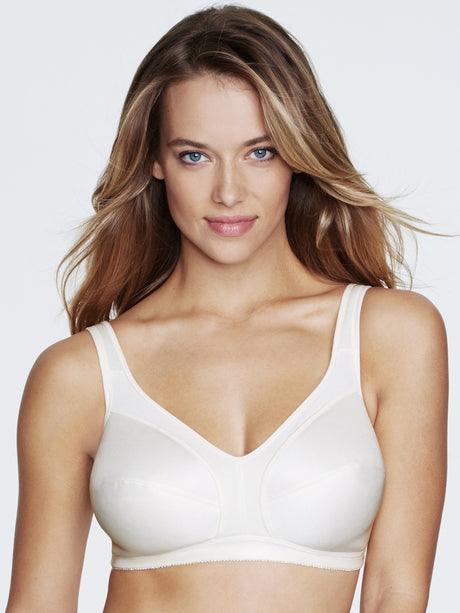
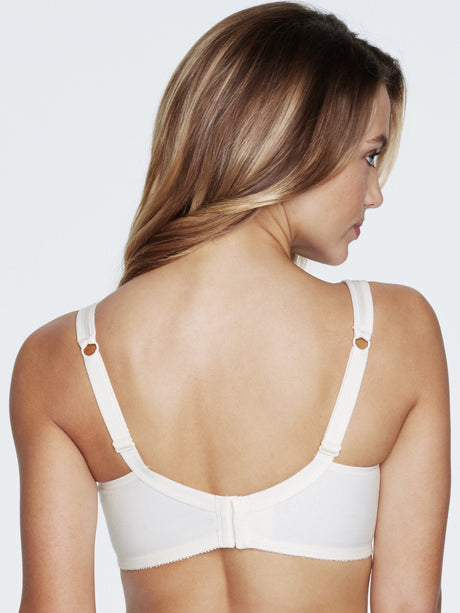
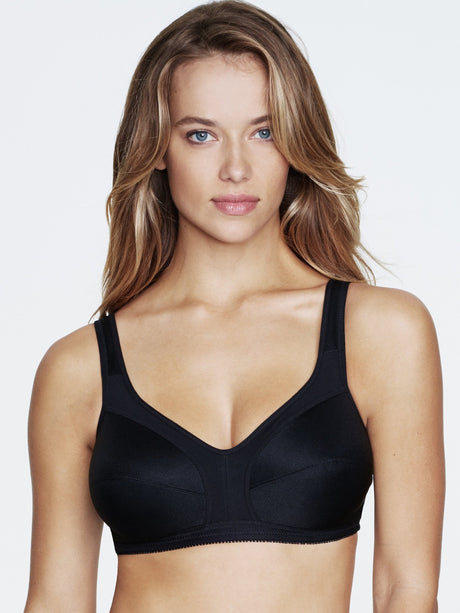
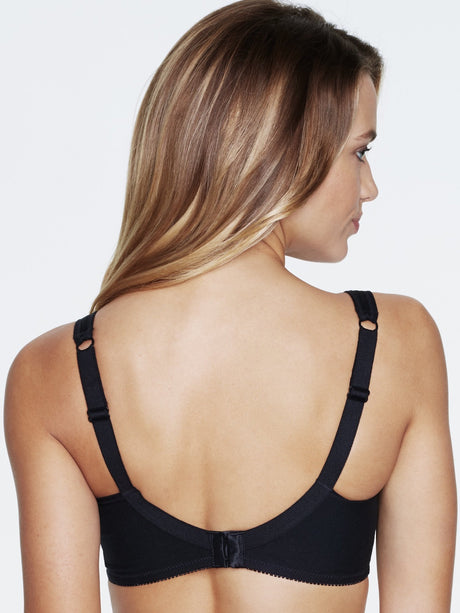
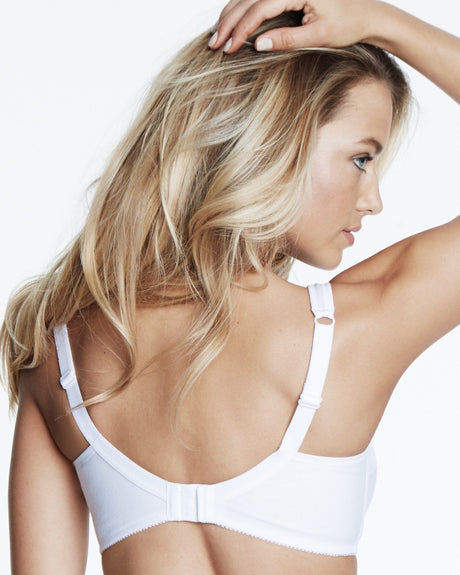
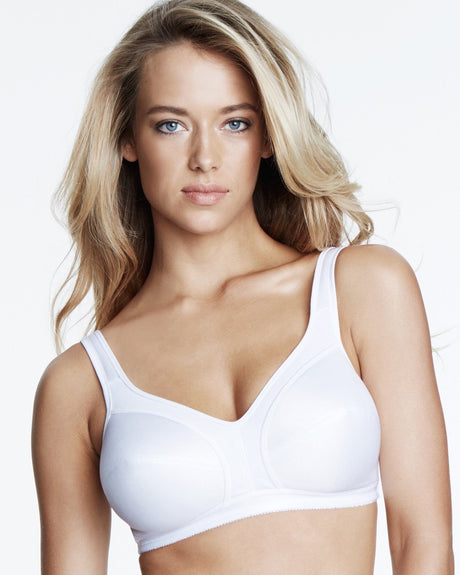
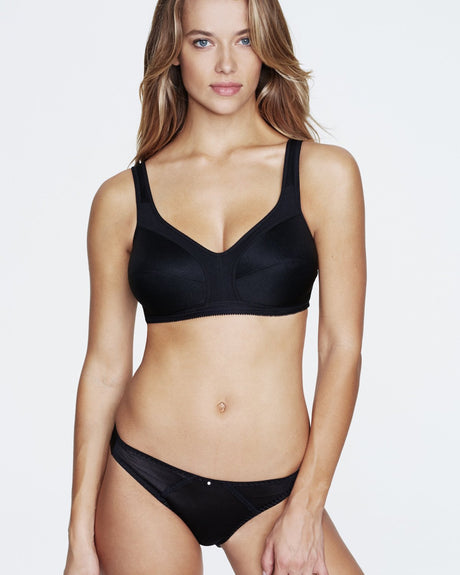
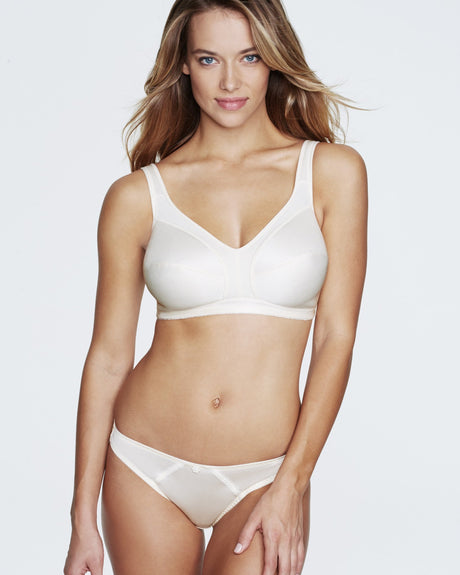
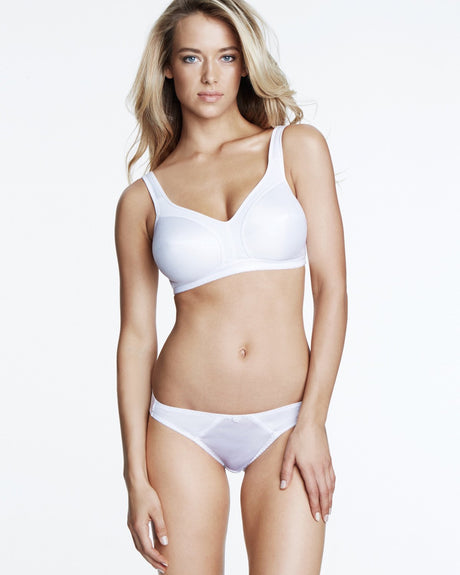
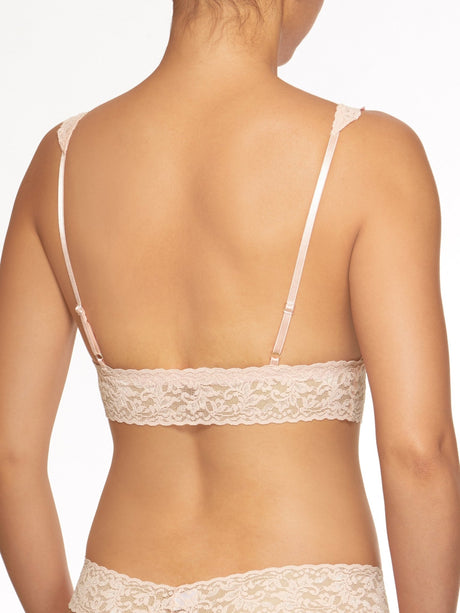
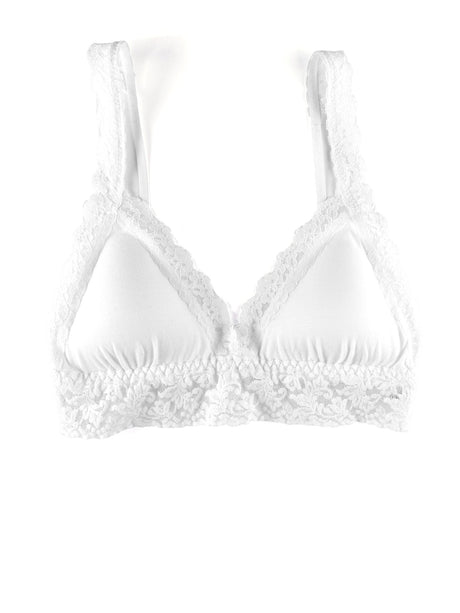
Isabella Plus Size Cotton Lined Wireless T-Shirt Bra, Dominique 5316
$34.00Unit price /Unavailable-
Natori
Natori Bliss Pima Cotton Nursing Wireless Bra
Almost gone (2 units)$55.00Unit price /Unavailable-
-
-
-


Cotton Bras: What "Cotton" Actually Means on a Bra Label
Almost no bra is 100 percent cotton, and the ones that claim to be are usually counting only the cup lining.
That is not a cheat. A bra band has to stretch and snap back thousands of times, and cotton stretches without recovering, so the band needs elastane. A wire channel has to resist being sawn through, so it needs nylon. What a cotton bra gives you is cotton where the bra touches your skin, which is the part you can actually feel. Below: how to read the fiber content, why Pima and Supima are worth the premium, and when cotton is the wrong choice.
What is a cotton bra?
A cotton bra is a bra with a cotton cup lining, not a bra made entirely of cotton. Cotton cannot carry a bra on its own: the band needs elastane to stretch and recover, and the wire channel needs nylon to stop the wire working through, so a typical cotton bra runs roughly 60 to 95 percent cotton in the cup and a blend everywhere else. The upgrade worth paying for is the grade of cotton: Pima and Supima are long-staple cottons with fibers roughly twice the length of ordinary upland cotton, which makes them smoother against skin, stronger wet, and far slower to pill. Cotton is the right fiber for all-day wear because it is breathable and soft, and the wrong fiber for workouts, because cotton absorbs moisture and holds it rather than wicking it away. Styles here run bands 30 to 50, cups A to DDD, from $34 to $68. Shop cotton bras at HauteFlair.
Reading the fiber content
The same word on four different labels means four different garments.
| What the label says | What it actually is | What you will notice |
|---|---|---|
| Cotton lined | Synthetic cup with a cotton panel on the inside face. The most common construction | Cotton against skin, synthetic shaping. Holds its shape well |
| Cotton blend | Cotton spun with elastane or modal through the whole fabric, often 90 to 95 percent cotton | Soft and slightly stretchy. Recovers better than pure cotton |
| Pima or Supima cotton | Long-staple cotton. Supima is the trademark for American-grown Pima and is certified | Noticeably smoother, stronger when wet, slow to pill |
| Organic cotton | Grown without synthetic pesticides. A farming claim, not a fiber-quality claim | Feels like whatever grade it is. Organic upland is not Pima |
| 100 percent cotton | Possible on an unstructured bralette. Not possible on a bra with a stretch band | On a bralette it will relax through the day and wash back |
The useful shortcut: read the fiber content for the cup lining and ignore the headline. A bra described as 62 percent cotton with a Supima lining will feel better than one described as 95 percent cotton in ordinary upland.
When cotton is right, and when it is not
Cotton absorbs water into the fiber. Synthetics move it across the surface. Everything follows from that.
| Situation | Cotton or not | Why |
|---|---|---|
| All-day office or home wear | Cotton, clearly | Breathable, soft, no slick synthetic feel against skin for twelve hours |
| Sensitive or reactive skin | Cotton, clearly | Fewer finishes and dyes sit against the skin than on a bonded synthetic cup |
| Hot and humid weather | Cotton for comfort, with a caveat | Breathes well dry. Once damp it stays damp, so a spare helps |
| Workouts and running | No. Choose a technical fabric | Cotton absorbs sweat and holds the weight of it. This is what chafes |
| Under a fitted top | Cotton, in a molded or contour cup | A cotton-lined T-shirt bra gives a smooth line and a cotton inside face |
| Nursing | Cotton, clearly | Softest option against skin that is already sore, and washes at temperature |
If you came here for a sports bra in cotton, this is the one place to push back: cotton is the fiber that chafes once it is wet, and that is a fabric problem no fit can solve.
One sizing note specific to cotton: buy to fit on the loosest hook. A cotton-lined band relaxes slightly over the first few wears in a way an all-synthetic band does not, and you want hooks left to tighten into. For a starting size, the Brasize.ai calculator handles band, cup and sister sizes.
Find your cotton bra
Six cards, matched to what you actually want from it.
Smooth under clothes
A Pima cotton convertible contour T-shirt bra, bands 30 to 38 and cups A to DDD. Molded cup for the line, cotton inside.
Shop T-shirt bras →No wire at all
Wireless cotton styles, including a cotton-lined plus-size soft cup that runs to a 50 band and a padded Supima bralette.
Shop wireless →Support with cotton inside
A cotton underwire bra in bands 30 to 36, cups A to DDD. Real wire support with a cotton cup face against the skin.
Shop all bras →Softest thing I own
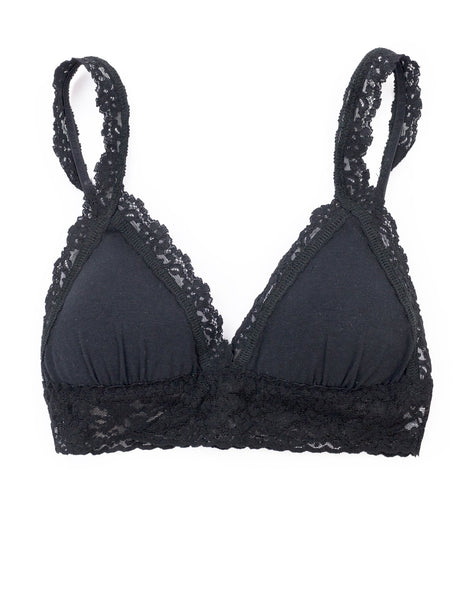
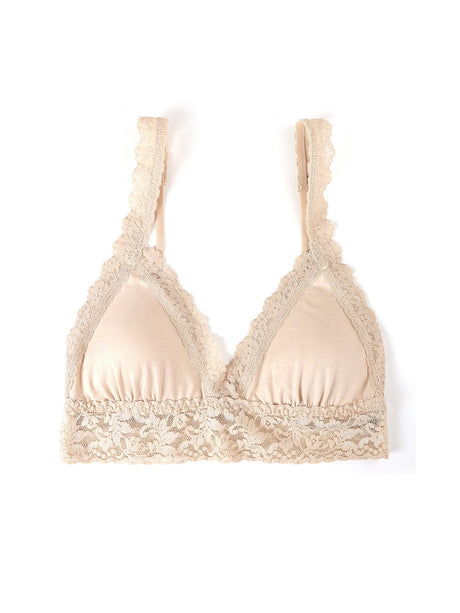
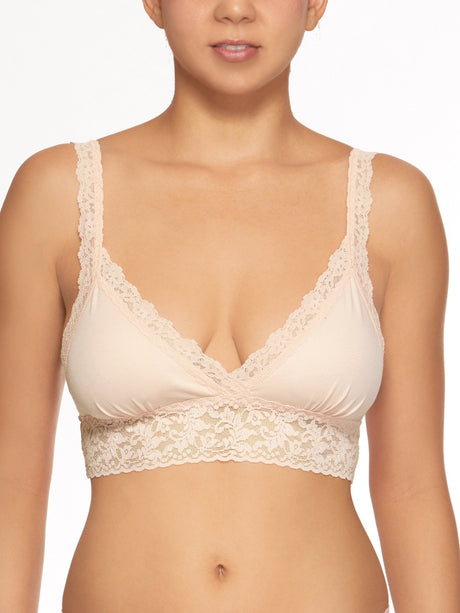
A padded Supima cotton bralette in S through to M. No wire, no hooks, light shaping from the pad rather than structure.
Shop bralettes →Nursing and postpartum
Wireless Pima cotton nursing styles, for skin that is sore and laundry that happens at 60 degrees.
Shop nursing bras →Match the panties
The cotton depth here is in panties: Pima cotton briefs, girl briefs, boyshorts, thongs and bikinis, in far more sizes.
Shop cotton panties →Cotton is the only fiber in a bra you can feel with your eyes closed. Everything else in the garment is there so the cotton does not have to do a job it is bad at.
The HauteFlair StandardThe complete cotton bra guide
Fiber grades, construction, washing, sizing and the honest limits of cotton.
01 Why no bra is really 100 percent cotton
A bra has three jobs that cotton cannot do, and understanding them tells you exactly where the synthetics are and why they are fine.
The band has to recover. It stretches every time you put the bra on and has to snap back to the same length, thousands of times. Cotton stretches and stays stretched. This is why cotton socks go baggy and cotton T-shirt necks droop. Without roughly 10 to 20 percent elastane in the band, a cotton bra would fit for a week and then hang off you.
The wire channel has to resist abrasion. An underwire is a thin piece of steel moving against fabric all day. Cotton frays and the wire eventually works through and pokes out. Nylon channeling is what stops that, and it is why a cotton bra with wires will always have a synthetic channel.
A molded cup has to hold a shape. Molded foam cups are thermoformed, which only works with synthetics. A genuinely all-cotton cup cannot be molded, which is why 100 percent cotton exists on soft unstructured bralettes and nowhere else.
So the honest version is this: a cotton bra is cotton where it matters and synthetic where it has to be. A label reading 62 percent cotton, 33 percent nylon, 5 percent elastane is not a cheap cotton bra. It is a well-built one.
02 Pima, Supima and why staple length matters
This is the one cotton upgrade that is a real material difference rather than a marketing word, and it is easy to verify on a label.
Staple length is the length of the individual cotton fiber. Ordinary upland cotton, which is most of the world's crop, has a staple of around 1 inch. Pima cotton runs roughly 1.4 to 1.6 inches, so nearly half again as long. Supima is the certification mark for Pima grown in the United States, which means the fiber content has been verified rather than claimed.
Three consequences you will actually notice:
Smoother. Longer fibers mean fewer fiber ends poking out of the surface of the yarn. Fewer ends is what reads as softer against skin, and it is also why long-staple fabric does not get that fuzzy bloom after a month.
Stronger wet. Cotton gains strength when wet, and long-staple gains more. That matters because a bra is a garment you wash constantly and the band is under tension while damp.
Slow to pill. Pilling is short fibers working loose and tangling. Long-staple has far fewer short fibers to lose, so a Pima cup lining still looks new after a year where an upland one has gone bobbly.
Worth knowing: organic and Pima are different claims. Organic describes how the cotton was farmed. Pima describes the fiber itself. Organic upland cotton is still short-staple, and if what you want is the feel, Pima or Supima is the label to look for.
03 Absorbing versus wicking, and what it means for you
Every piece of good and bad advice about cotton comes from one property, and once you know it you can predict the rest yourself.
Cotton is hydrophilic: water is drawn into the fiber itself, and cotton can hold around a quarter of its own weight in moisture before it even feels wet. Synthetics are hydrophobic: water cannot get into the fiber, so it travels along the surface and out to where it can evaporate. That is wicking.
Why cotton is lovely all day. Light perspiration gets absorbed into the fiber and out of contact with your skin, and a dry cotton weave moves air well. For twelve hours of ordinary wear, cotton stays comfortable in a way a bonded synthetic cup does not.
Why cotton fails in a workout. Once the fiber is saturated it has nowhere to send the moisture, so it stays wet, gets heavy, cools you down when you stop, and moves against skin while loaded with water. That last part is chafing. It is a fabric limitation, not a fit problem, and no amount of sizing will fix it.
The practical rule. Cotton for the hours you are not sweating, technical fabric for the hour you are. In hot and humid weather, carrying a spare cotton bra is more effective than buying a thinner one.
04 Making cotton bras last, which is mostly about heat
A cotton bra has two components with completely different tolerances, and the elastane is the one that dies first.
Heat is what kills the band. Elastane degrades with heat, not with wear. A tumble dryer will take a cotton bra from a good fit to a loose band in a few months, and you will blame the bra. Hang drying is the single highest-value habit here, and it is more important than hand washing.
Cotton shrinks, the blend does not shrink evenly. Washing hot shrinks the cotton lining while the nylon cup shell stays the same, which puckers the cup. Cold or warm water keeps the two layers the same size.
Rotate. Elastane needs time to recover its length. Wearing the same bra on consecutive days gives the band no chance to relax back, and three bras rotated last considerably longer than three worn in sequence until each dies.
Fasten the hooks before washing so they do not catch cotton knit, and use a bag for molded cups so the cup does not get crushed into a crease it keeps.
What to expect: a cotton-lined molded bra, hang dried and rotated, holds its fit for a year to eighteen months of regular wear. The lining will outlast the band, which is the opposite of what people assume.
05 What this collection carries, and what it does not
Straight about the size of it: this is six styles, not sixty, and the value is in the range they cover rather than in the number.
The two deep anchors. A Pima cotton convertible contour T-shirt bra in bands 30 to 38 and cups A to DDD, and a cotton underwire bra in bands 30 to 36 with the same A to DDD cup run. Between them they cover most people who wear a 30 to 38 band, in three colorways each.
The wireless side. A padded Supima cotton bralette in S to M, and a plus-size cotton-lined wireless soft cup that runs to a 50 band in cups A to C, which is a genuinely useful size to find in cotton.
Thin on the edges. The Pima cotton nursing wireless bra and the Calm cotton sheer lace unlined underwire are each down to a single size and color right now. They are listed because they exist, not because they are stocked, and nursing bras is the better place to start if that is what you need.
What is not here. Cotton sports bras, deliberately, for the reason above. Also note that HauteFlair's cotton depth is overwhelmingly in cotton panties, where Pima cotton briefs, girl briefs, boyshorts, thongs and bikinis run to tens of thousands of units across a full size range. If you are building a cotton drawer, start there.
Cotton bra FAQ
The questions shoppers ask most.
What is a cotton bra?
A bra with a cotton cup lining, rather than a bra made entirely of cotton. The band needs elastane so it can stretch and recover, and a wire channel needs nylon so the wire does not work through, so a typical cotton bra is cotton in the cup and a blend everywhere else. The cotton is where the bra touches your skin, which is the part you feel.
Are there any 100 percent cotton bras?
Only on unstructured bralettes, and even then the elastic is usually a blend. A bra with a stretch band or a molded cup cannot be all cotton: cotton stretches without recovering, so the band would loosen permanently, and molded foam cups can only be formed from synthetics. A label reading 62 percent cotton with a nylon channel and elastane band is a well-built cotton bra, not a compromised one.
Is Pima cotton better than regular cotton?
Yes, and for a measurable reason. Pima has a staple length of about 1.4 to 1.6 inches against roughly 1 inch for ordinary upland cotton. Longer fibers mean fewer loose ends at the surface, so the fabric is smoother, stronger when wet and much slower to pill. Supima is the certification mark for American-grown Pima, which means the content has been verified rather than claimed.
Is organic cotton the same as Pima cotton?
No. Organic describes how the cotton was farmed, without synthetic pesticides. Pima describes the fiber itself and its staple length. Organic upland cotton is still short-staple and will feel like ordinary cotton. If what you want is softness and resistance to pilling, Pima or Supima is the label to look for; if what you want is the farming standard, look for organic.
Are cotton bras good for sensitive skin?
Generally yes, and it is one of the main reasons people seek them out. A cotton lining is breathable, carries fewer surface finishes than a bonded synthetic cup, and does not trap heat against the skin in the same way. If you react to specific dyes, an undyed or white colorway removes one more variable. If you have a diagnosed skin condition, check with your clinician rather than relying on fabric choice alone.
Can I wear a cotton bra to the gym?
It is the one thing cotton is genuinely bad at. Cotton absorbs moisture into the fiber rather than wicking it to the surface, so it stays wet, gets heavy, and moves against your skin while loaded with water, which is what causes chafing. Choose a technical fabric for training and keep cotton for the rest of the day.
Do cotton bras lose their shape?
The band does, and heat is usually the reason rather than wear. Elastane degrades when it gets hot, so a tumble dryer will loosen a band in a few months. Hang drying matters more than hand washing. Washing cold also stops the cotton lining shrinking while the synthetic cup shell stays the same size, which is what puckers a cup.
How do I wash a cotton bra?
Cold or warm water, hooks fastened, molded cups in a mesh bag, and hang dry rather than tumble. Hot water shrinks the cotton lining unevenly against the synthetic shell, and dryer heat is what breaks down the elastane in the band. Rotating between three bras rather than wearing one until it dies also makes a real difference, because elastane needs time to recover its length.
What sizes do cotton bras come in here?
Bands 30 to 50 and cups A to DDD across the collection, plus a bralette in S to M. The two deepest styles cover bands 30 to 38 and bands 30 to 36 with a full A to DDD cup run. There is also a plus-size cotton-lined wireless soft cup that goes to a 50 band in cups A to C, which is unusual to find in cotton.
Is a cotton bra good for everyday wear?
It is what cotton is for. Dry cotton moves air well, absorbs light perspiration away from the skin and has none of the slick feel of a synthetic cup over a long day. For office, home and travel wear it is the most comfortable fiber against the skin, which is exactly why the trade-off at the gym is worth accepting.
Can you get a cotton T-shirt bra with a molded cup?
Yes, and it is the most popular construction here. The cup is molded from synthetic foam so it holds a smooth shape under clothes, and a cotton lining is bonded to the inside face so cotton is what sits against you. You get the clean line of a T-shirt bra and the feel of cotton at the same time, which is the whole point of cotton-lined construction.
Are cotton bras good for nursing?
Cotton is the usual recommendation, because it is soft against skin that is already sore and it tolerates frequent hot washing better than delicate synthetics. Wireless cotton styles are the common choice for the early weeks. Stock in cotton nursing styles is thin here at the moment, so the nursing bras collection is the better starting point.
How do I find my bra size?
Measure your ribcage snugly under the bust for the band and around the fullest part for the bust, then take the difference for the cup. The Brasize.ai calculator will do that and handle sister sizes and international conversions as well. One cotton-specific note: buy to fit on the loosest hook, because a cotton-lined band relaxes slightly in the first few wears.
Fiber content varies by style and by production run, so check the composition on the individual product page before buying if a specific percentage matters to you. Fit guidance here is general and shapes vary between people and between makers. Use the linked size calculator as a starting point rather than a final answer. Style, size and color availability reflect current stock. Last reviewed October 2026.
Shop cotton bras
Pima and Supima cotton T-shirt, underwire, wireless and bralette styles, in bands 30 to 50 and cups A to DDD.