Do adhesive bras actually work?
Yes, within a range that most brands are careful not to state. An adhesive bra holds by sticking medical-grade silicone to skin, so the weight it can carry is limited by surface area and skin condition rather than by engineering. That makes it reliable for smaller and mid-range cups and progressively less reliable as cup volume grows. In our own adhesive range, most styles stop at a D or DD — and exactly one, a structured plus-size design, goes as far as a G. Anything promising a stick-on cup for any size is overselling. The honest version: sticky bras solve a garment problem (no straps, no back, deep neckline), not a support problem.
This guide covers what the category actually contains (it is five different products wearing one name), where the size ceiling genuinely sits, why adhesion fails when it fails, how to apply one so it lasts an evening rather than an hour, and what to reach for instead when the answer is that a sticky bra is the wrong tool.
- "Adhesive bra" covers five different products — silicone cups, backless convertible bras, nipple covers, lift tape and bodysuits. They are not interchangeable.
- The real ceiling is around a D or DD for pure stick-on styles. Structured backless designs go further because a band, not the glue, carries the load.
- Skin condition beats cup size as a predictor. Oil, lotion, sweat and fine hair defeat adhesive faster than volume does.
- Application is most of the outcome. Clean, dry, cool skin and a lean-forward placement roughly doubles hold time.
- Wear time is hours, not a day. Treat one as event wear, not a daily bra.
- They lift very little. A cup that promises dramatic lift is relying on the tape underneath it, not the cup.
"Adhesive bra" is really five different products
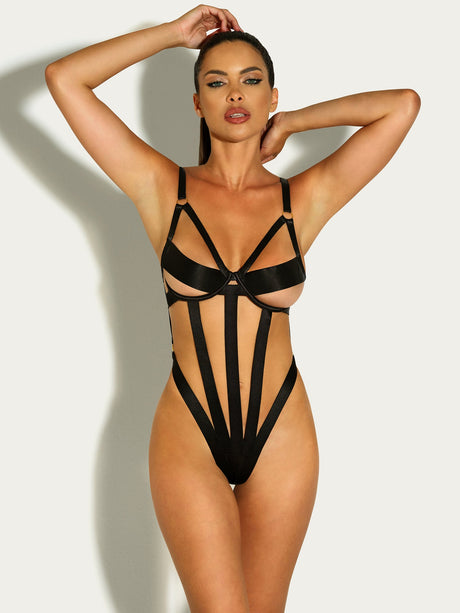
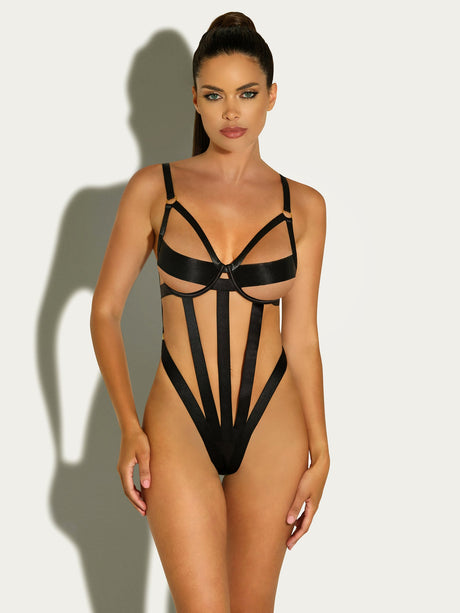
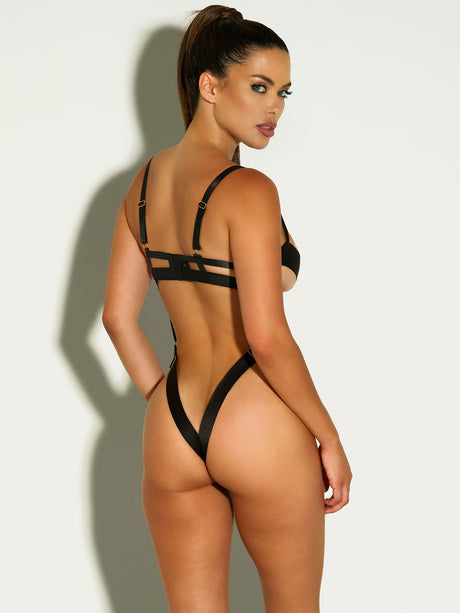
The single biggest source of disappointment in this category is buying one thing while expecting another. Our adhesive edit runs to 227 pieces, and they fall into five groups that behave completely differently.
If your problem is visibility, buy nipple covers. If it is a low back, buy a backless convertible bra. If it is lift, buy tape. Only buy pure silicone cups when the garment leaves genuinely nowhere to hide a band — they are the last resort, not the default.
The size ceiling, stated plainly
Here is the part that usually goes unsaid. We checked every adhesive and backless style in our own range and listed the largest cup each one is actually made in. The pattern is consistent and it is worth seeing before you buy.
| Style | Type | Sizes made | Verdict |
|---|---|---|---|
| U Plunge Plus Size Backless | Structured backless | B, C, D, DD, DDD, G | Goes furthest |
| Go Bare Backless Strapless | Structured backless | A to DD | Solid mid-range |
| Adhesive Backless Bra | Structured backless | A to DD | Solid mid-range |
| U Plunge Backless Strapless | Structured backless | A to D | Stops at D |
| Le Lusion Adhesive Bra | Adhesive | A to D | Stops at D |
| Lace Ultimate Boost Backless | Structured backless | A to D | Stops at D |
| Backless Strapless Plunge Push Up | Adhesive push-up | A/B, B/C, C/D | Paired sizing |
| Silicone cups & pasties | Pure adhesive | S/M, L/XL | Not bra-sized |
Two things fall out of that table. First, only one product in the entire range is made past a DD, and it is a structured design with a band rather than a pure stick-on. Second, the products sized S/M and L/XL are not making a claim about your cup size at all — they are making a claim about the diameter of a disc. If you wear a DD or above and a listing offers you a choice of two sizes, that is a coverage product, not a support one.
"Fits A to DDD" on a two-size silicone cup is not a size range, it is a hope. A cup moulded for an A cup cannot also contain a DDD, and adhesive cannot bridge that gap. Bra-sized listings — where you choose an actual cup letter — are the ones to trust.
Why adhesive fails, and what actually predicts it
Adhesion is a surface phenomenon. The silicone bonds to the outermost layer of skin, and the bond holds until the downward force at the edge of the cup exceeds what that contact patch can resist. Everything that goes wrong with a sticky bra traces back to that sentence.
Cup volume grows roughly with the cube of its dimensions while the contact area grows with the square. Each cup size up asks noticeably more of the same amount of glue. This is the real reason the ceiling exists.
Moisturiser, body oil, self-tan, SPF and natural sebum all sit between silicone and skin. A B cup over lotion will fail before a DD over clean skin. Most "it did not work for me" reviews are this.
Warmth softens the adhesive and perspiration lifts it from the edges inward. An outdoor summer wedding is the hardest test you can set one; an air-conditioned dinner is the easiest.
Adhesive resists sliding far better than it resists peeling. Once one edge lifts, the rest unzips quickly. That is why failures feel sudden rather than gradual, and why edge sealing matters most.
There is a useful consequence in all of this: the variables you control matter more than the one you do not. You cannot change your cup size before an event, but you can absolutely change whether your skin is clean, cool and dry — and that is the difference between three hours and eight.
How to apply one so it actually lasts
Application accounts for more of the outcome than the product does. This sequence is the difference between a sticky bra that survives an evening and one that comes off in a bathroom halfway through.
Prepare the skin, properly
- Wash and dry completely. Soap and water, then a towel, then a few minutes of air. Damp skin is the most common failure.
- Skip lotion, oil, SPF and perfume on the chest that day. If you have already applied something, wipe the area with micellar water or a little rubbing alcohol and let it dry.
- Cool down first. Apply before you dress, before hair and makeup, and before you have been rushing. Warm skin bonds worse.
Place it lower than feels right
- Lean forward at the waist so the breast falls into the cup naturally, then position and press. Applying while upright gives you a cup sitting on top of tissue rather than around it.
- Start at the outer edge and roll inward toward the centre. This tensions the cup and creates the lift, which comes from placement rather than from the cup itself.
- Aim lower than instinct suggests. The finished position rises once you stand up, and a cup placed high has nowhere to go but off.
Seal the edges and leave it alone
- Press the perimeter firmly for 20 to 30 seconds with a flat palm. Adhesive builds strength with pressure and time, not with instant contact.
- Do not keep repositioning. Every peel costs adhesion permanently. Two attempts is the practical limit before performance drops noticeably.
- Give it ten minutes before dressing so the bond has set before fabric starts pulling at it.
Peel slowly from the top edge downward, supporting the skin with your other hand. If it resists, warm water or a little baby oil at the edge releases it without dragging at the skin. Never pull a stuck cup off quickly — that is how people end up with irritation they then blame on the adhesive itself.
Patch test on the inside of your forearm for a few hours before wearing anything adhesive for a whole evening, particularly if you have sensitive or reactive skin. Do not apply over broken, sunburned, freshly shaved or recently waxed skin, or over a healing scar. If you notice persistent redness, itching or a rash after wearing, stop using the product and speak to a pharmacist or doctor — non-adhesive nipple covers and structured backless bras are alternatives that avoid skin contact adhesive entirely.
When a sticky bra is the wrong answer
Half of getting this right is knowing when not to buy one. Matched to the garment, here is what actually works.
| The garment | Best answer | Why |
|---|---|---|
| Backless dress, low back | Backless convertible bra | A low-back strap carries the weight, so the adhesive only has to steady the cup rather than hold it |
| Strapless with a normal back | A proper strapless bra | If the back is covered you do not need adhesive at all, and a real band will always outperform one |
| Deep plunge neckline | U plunge backless style | The U-shaped converter clears the neckline while still giving you a band |
| Sheer or thin fabric | Nipple covers | The problem is visibility, not support — do not overbuy |
| Halter or one shoulder | Bandeau or convertible | One strap is usually available, which beats none |
| Low back and a DD or larger | Structured plus-size backless, or shapewear | Pure adhesive is outside its range here; a garment-anchored solution is the realistic route |
| Swimming or water | Bra-sized swimwear | No adhesive survives immersion. Cup-sized swim tops give real support in the water |
| All-day everyday wear | A conventional bra | Adhesive is event wear. Daily use is expensive, uncomfortable and hard on skin |
If you are shopping for a wedding specifically, the back and neckline of the dress decide everything, and the choice is more nuanced than adhesive versus not. Our guides to bra solutions for backless dresses and backless dress bra options work through it by dress style.
Care, reuse and when to throw one out
A reusable silicone cup is sold on the promise of many wears, and it will deliver them — but only if it is washed after every single use. Skin oil and residue are what kill adhesive, and they accumulate invisibly.
- Wash after every wear in lukewarm water with a drop of mild soap, using fingertips only. Never a cloth, a brush or anything abrasive on the adhesive face.
- Air dry sticky side up. Do not towel it dry, do not use heat, and do not put it anywhere near a radiator.
- Store with the plastic film on and in the original case. The film is not packaging, it is what protects the surface between wears.
- Replace when tackiness stops returning after washing. Most reusable cups give somewhere between 20 and 50 wears depending on skin type and how carefully they are cleaned. A cup that no longer feels tacky when clean and dry will not hold, and no amount of pressing will change that.
- Tape and pasties are single use. Reusing them is the false economy in this category.
The most useful thing to know about adhesive bras is that they are a garment solution, not a support solution. Ask what the dress needs, not what your bust needs — and if the answer is real support, the adhesive is not the product.
HauteFlair Editorial
Frequently asked questions
Do adhesive bras work for a large bust?
How long does a sticky bra stay on?
Why does my adhesive bra keep falling off?
Do sticky bras give any lift?
How many times can you reuse an adhesive bra?
Are adhesive bras safe for sensitive skin?
Can you wear an adhesive bra swimming?
What is the difference between an adhesive bra and a backless bra?
Do adhesive bras work under a plunge neckline?
Can I wear a sticky bra every day?
What size adhesive bra should I buy?
Will an adhesive bra show under a tight dress?
Sizing and fit guidance here is general and reflects our own range as stocked. Individual results vary with skin type, climate and garment. Always check the size chart on the product, and patch test adhesive products before extended wear. This article is not medical advice.