Ships in 24–72 hrs · Free U.S. shipping $50+

Discreet packaging · Shipped Securely

Pay later with Shop Pay, Sezzle & Afterpay

Best Backless Shapewear for Low Back and Strapless Wedding Dresses

Bride in an open-back wedding gown with nude low-back shapewear keeping a smooth invisible line beneath the dress
By HauteFlair Editors Updated July 23, 2026 12 min read Bridal & Foundations

What is backless shapewear?

Backless shapewear is a shaping undergarment cut so the back panel sits below the back opening of a low back, open back, or backless dress, keeping it invisible from behind. Standard shapewear has a full back with a band across the shoulder blades, which shows under an open back gown. Backless versions either drop to the waist or below, or remove the upper back entirely. The five main types are the low back bodysuit shaper, the longline bridal corset or bustier, the high waisted shaping brief or short, the shaping slip, and the strapless body shaper.

Shop the collection Bridal shapewear built for low back, open back and strapless gowns.
Shop Bridal Shapewear →
A low back gown creates one specific problem: almost every shaping garment ever made has a back. Bands, panels, and closures all sit exactly where an open back dress leaves nothing to hide them.

This guide solves that. It covers the five types of backless shapewear and what each one is actually for, how to match a type to your gown's back and neckline, how to size it properly, and the fabric and colour decisions that determine whether it stays invisible. It is organised by garment type rather than by product, so the advice holds whatever is in stock when you read it.

If you are earlier in the process and still working out the full picture, start with what to wear under a wedding dress, which covers every layer. This page goes deep on one of them.
✦ At a glance
  • Measure the back opening first. Everything else follows from where the gown's lowest back point falls against your spine.
  • Shapewear must end below that point, by an inch or two, so movement cannot bring it into view.
  • Strapless as well as backless? One garment usually has to do both jobs. That points to a longline corset or a bodysuit with built-in cups.
  • Choose colour by your skin tone, not by the gown. White shapewear often reads as a lighter patch under a white dress, especially with flash.
  • Sizing down does not smooth more. It creates a visible ridge and becomes uncomfortable within an hour.
  • Buy before the final fitting so the gown is altered over the foundation you will actually wear.
  • Heavier gown fabrics hide more. Crepe, satin and jersey show every edge; mikado and layered tulle forgive almost anything.
Four types of backless bridal shapewear laid flat: a low back bodysuit, an ivory lace bustier, a high waisted shaping short, and a shaping slip
The core options for an open back gown, each cut to sit below the back opening.

Why a Low Back Gown Changes Everything

Ordinary shapewear is engineered around a full back. A bodysuit has a band across the shoulder blades. A shaping camisole has straps. A control brief has a waistband that sits at or above the natural waist. Under a gown with a closed back, none of that matters.

Open the back of the dress and each of those features becomes the thing everyone photographs. A band that would be invisible under a closed gown now runs straight across bare skin. This is why brides who buy shapewear the same week as the wedding so often end up wearing nothing underneath: the pieces they own were never designed for the gown they chose.

There are three variables to think about, and they are worth separating because they call for different solutions:

  • How low the back opening falls. Shoulder blades, mid back, natural waist, or below the waist. This determines the back drop you need.
  • Whether the gown is also strapless. If it is, the same garment usually has to carry the bust as well as shape the torso.
  • How closely the gown skims the body. A fitted sheath needs a smooth line from bust to below the hip. A full skirt only needs shaping through the bodice.
✦ Do this before you shop

Put the gown on and have someone press a fingertip against the lowest point of the back opening, then mark it with a strip of tape or note which vertebra it reaches. Write the measurement down. Product listings describe this as the back drop, and knowing your number rules out most of the market in about thirty seconds.

The Five Types of Backless Shapewear

Every option worth considering falls into one of five categories. Each does a different job, and the right one depends on your gown rather than on which is objectively best.

TYPE · WHAT IT DOES · BEST FOR
1. LOW BACK BODYSUIT SHAPER
One piece, bust to hip, deep plunge back The default choice for open back gowns. A single garment shapes the torso with no waistband to print through fabric, and the back plunges to the waist or below. Thong cut versions avoid a leg line at the seat. Most have built-in cups, so no separate bra is needed. Look for a stated back drop measurement and bonded or laser cut edges. Shop shapewear bodysuits →
2. LONGLINE CORSET OR BUSTIER
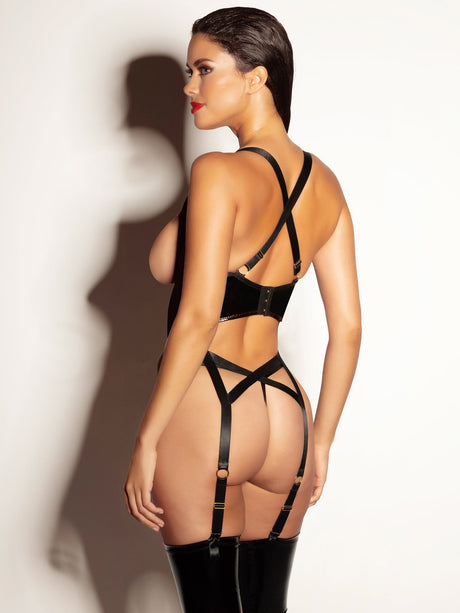
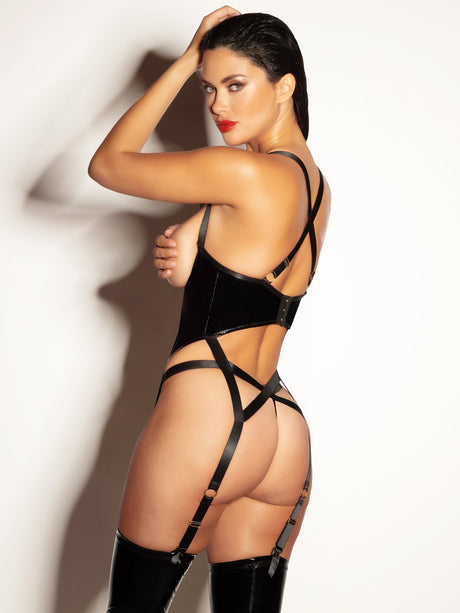
Structured bust support plus torso shaping The strongest option when the gown is strapless as well as backless, because boning and structured cups carry the bust without straps. Multiple hook and eye rows let you adjust the fit through the torso rather than relying on stretch. This is where labels like Va Bien and Dominique specialise, with low back bridal bustiers cut specifically for open back gowns. Our full guide to choosing a bridal corset covers neckline matching and sizing in detail. If you want the same spread of support with less structure, a longline bra extends the band down the ribcage without full corset boning. A lace or embroidered bustier is also the one type that carries over into wedding night lingerie afterwards. Shop bridal corsets and bustiers →
3. HIGH WAISTED BRIEF OR SHORT
Shapes the middle and hips only, no back at all The simplest solution, and often the most comfortable. Because it stops at the waist it has no back to hide, which makes it compatible with any back opening at all. Pair it with a separate backless bra or low back bra when the gown needs bust support, and see how to choose a bra for your wedding dress for which style suits which neckline. Shorts extend to mid thigh and prevent chafing under a fitted skirt; briefs stop at the hip. Shop high waisted shaping styles →
4. SHAPING SLIP
Smooths the whole line and adds a layer Does two jobs at once: light shaping plus an extra layer between skin and gown. Best under lighter crepe, satin, and unlined or lightly lined gowns where a thin fabric needs something to move over. Low back versions exist specifically for open back dresses. Lighter compression than a bodysuit, so choose it for line rather than for firm shaping. Shop slips and shapewear →
5. STRAPLESS BODY SHAPER
Full torso coverage without straps For gowns that are strapless with a moderately low back rather than a fully open one. Silicone grip along the top edge and adequate boning are what stop it sliding down over a long day. Check the back height carefully, since many strapless shapers still have a higher back than a true backless piece. Shop bodysuits →
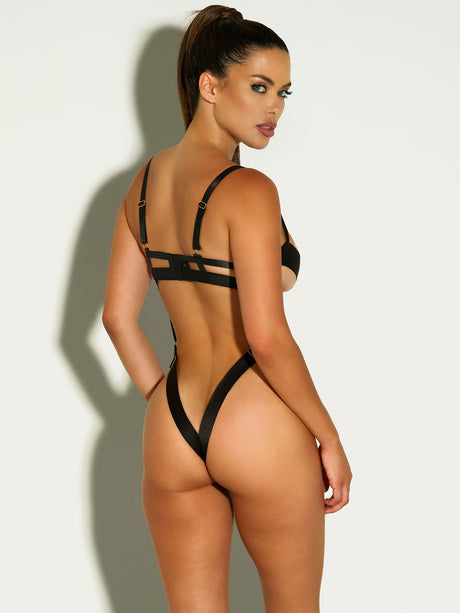
Back view of a Va Bien backless strapless thong bodysuit showing the deep V back drop and thong cut
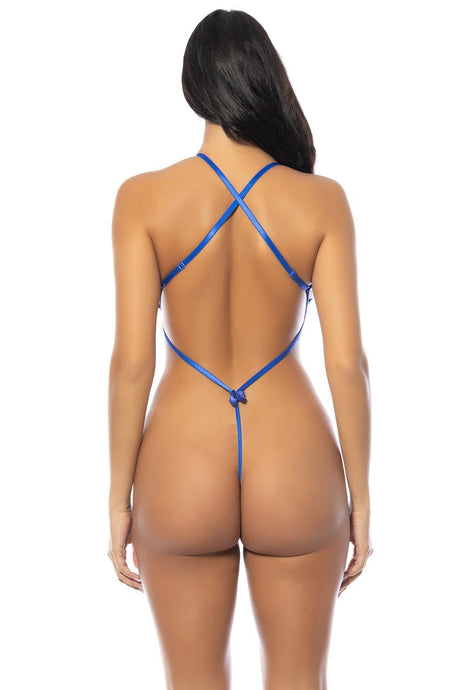
Type 1: the Va Bien low back bodysuit, back view. The deep V drops below the shoulder blades and the thong cut avoids a seat line.
Back view of a Dominique low back bridal bustier showing the low cut back for open back gowns
Type 2: a Dominique low back bridal bustier, back view. Structured support up front, cut low at the back to sit under an open back gown.
Start here

Bridal shapewear, built for open backs

Low back bodysuits, longline bustiers, shaping briefs and slips, chosen for gowns that leave the back bare.

Shop Bridal Shapewear → All Bridal Lingerie →

Matching Shapewear to Your Gown

Back view of an open back wedding gown showing nude low back shapewear sitting below the gown opening
The back drop is the measurement that matters. The shaping layer has to finish below where the gown opens.

The table below pairs the common gown configurations with the type that suits them. Where two options are listed, the first is usually the easier choice.

Your gown Best type Why
Backless and strapless Longline corset or bustier Carries the bust and shapes the torso in one garment with no straps or back band.
Low back, with straps or sleeves High waisted brief or short The gown supports the bust, so the shaping layer only needs to handle the middle.
Open back to the waist Low back bodysuit shaper Deep plunge back with no waistband to print through a fitted skirt.
Open back below the waist High waisted brief, or a corset with an extreme low back Almost no bodysuit drops far enough. A garment with no upper back is the safer bet.
Fitted sheath or mermaid Bodysuit or corset, plus a shaping short A close skimming silhouette needs a continuous line from bust to below the hip.
Ball gown or A-line with a full skirt Longline corset or bustier Only the bodice is visible against the body, so shape the top and let the skirt do the rest.
Lightweight crepe or slip gown Shaping slip Adds a layer as well as a line, which is what thin unlined fabric needs.
Deep V front and low back Corset with a low centre front, or a plunge bodysuit The centre front has to sit below the neckline as well as the back sitting below the opening.
✦ Interactive finder

Find Your Shapewear

Two questions about your gown. We will point you to the right type and the collection that carries it.

1 How low does the back of your gown go?
2 Does the gown support your bust?
Your recommendation

Shop this type →

Sizing: The Part Most People Get Wrong

More shapewear disappointment traces back to sizing than to any design flaw. The instinct is to size down for more smoothing. It does the opposite.

A garment that is too small cannot distribute tension across its surface, so the fabric bunches at the edges and prints a hard line through the gown. It also travels: too-tight shapewear rolls down as you move, which is why it always seems to need adjusting by the reception. Correctly sized shapewear stays where you put it and produces a softer, more even line.

A soft tape measure laid beside folded nude bridal shapewear, illustrating how to measure for the correct size
Measure to the chart for the specific piece. Shapewear sizing is not standardised, so your dress size is not a reliable guide.

Take four measurements

  1. Underbust. Snugly around the ribcage, directly beneath the bust.
  2. Bust. Around the fullest point, tape level all the way round.
  3. Natural waist. The narrowest part of the torso, usually just above the navel.
  4. Hip. Around the fullest part, generally seven to nine inches below the waist.

Then read the size chart for the specific piece. Shapewear sizing is not standardised, and the same nominal size varies considerably between labels. Bra-style pieces such as bustiers use band and cup sizing; briefs, shorts and bodysuits use waist and hip. If your measurements fall between two sizes, take the larger one.

⚠ Two sizing rules that save the day

First, never size by your dress size. Bridal gowns run notably small relative to ready to wear, and shapewear runs on its own scale again. Second, if the piece has hook and eye rows, start on the loosest setting. That is what the extra rows are for, and it leaves you somewhere to go across a long day.

Fabric and Colour

Two decisions determine whether a correctly sized garment actually stays invisible.

01 MATCH WEIGHT TO THE GOWN

Close fitting crepe, charmeuse, satin and jersey reveal every edge. Choose bonded seams, laser cut edges, and the lightest compression that gives the line you want. Heavier mikado, structured lace and layered tulle hide almost anything, so comfort can lead instead.

02 NUDE TO YOU, NOT WHITE

Under white and ivory fabric, a shade close to your own skin tone disappears more reliably than white does. Bright white shapewear frequently reads as a lighter patch beneath a white gown, and flash photography makes it worse.

03 AVOID FOLDED ELASTIC

A folded over elastic waistband is the single most common source of a visible horizontal line across the hip. Look instead for a wide soft band, a raw laser cut edge, or a bonded finish where the garment ends.

04 THINK ABOUT HEAT

A summer wedding, a marquee, and several hours of dancing add up. Mesh panels, cotton gussets and lighter compression are worth prioritising over maximum shaping if the day will be warm.

White and nude shapewear bodysuits on white bridal satin, showing how the nude shade blends and the white reads lighter
Against white gown fabric, a shade close to your own skin tone disappears more reliably than bright white.

Do You Need a Slip?

Slips are the most commonly skipped and most commonly missed layer. Whether you need one comes down to the gown, not to preference.

You probably need one if the gown is unlined or only lightly lined, the fabric is thin enough to show what is beneath it, the skirt clings when you walk, or the gown is a lightweight crepe or satin slip style. A slip gives the outer fabric something smooth to move over, which changes how the whole skirt hangs.

You probably do not need one if the gown is fully lined, which many bridal gowns are, or the fabric is a heavy mikado, a structured lace, or layered tulle. In those cases a slip adds warmth and bulk for no visual gain.

A shaping slip does both jobs at once and is worth considering when you want a light smooth line rather than firm shaping. For a white gown, the same colour rule applies: choose a shade close to your skin rather than bright white. Browse slips and shapewear for both, and our dedicated guide to slips and shapewear goes further into half slips, full slips, and which length suits which skirt.

Backless Shapewear for Plus Size Brides

The category is far better served than it was even a few years ago, but the engineering matters more at fuller sizes, and a straight size garment simply scaled up rarely performs.

An ivory longline bridal corset with visible boning channels and multiple hook and eye rows, cut for fuller sizes
Look for wide side panels, real boning, and a long column of hook and eye rows for genuine adjustment through the torso.

Look for pieces graded specifically for fuller sizes, which typically means:

  • Wider side panels that distribute tension over more surface area rather than concentrating it at the edges.
  • Firmer boning placed where the garment needs to hold its own shape instead of relying on compression alone.
  • A reinforced band that stays horizontal rather than riding upward.
  • Underwire support at fuller cup sizes, since moulded foam alone will not hold a DD and above through a long day.
  • Multiple hook and eye rows, which allow genuine adjustment through the torso and are far more useful than stretch.

Longline corsets and bustiers tend to be the strongest performers here for exactly that last reason. A structured closure gives you real control over the fit, and it can be loosened by a row when you sit down to dinner. Browse the plus size bridal collection and the bridal corsets for pieces cut with this in mind.

Five Mistakes Worth Avoiding

MISTAKE · WHY IT HAPPENS · THE FIX
BUYING IT LAST
The foundation arrives after the final fitting The gown gets altered to your body without the layer you will actually wear, then sits differently on the day. Buy the shaping layer three to four months out and take it to every fitting.
SIZING DOWN
Assuming smaller means smoother Too-small shapewear bunches, prints a hard edge, and rolls down as you move. Measure properly, read the chart for that specific piece, and size up when you fall between two.
IGNORING THE BACK DROP
Buying on style rather than measurement A beautiful low back bodysuit is useless if it ends an inch above where the gown opens. Mark the gown's lowest back point first, then filter by back drop.
CHOOSING WHITE
Matching the gown instead of the skin White under white reads as a lighter patch, particularly with flash. A shade close to your own skin tone is the more reliable choice under both white and ivory.
SKIPPING THE TRIAL
Trying it on for two minutes in front of a mirror Sit, walk, raise your arms, and eat a meal in it. Anything that pinches after twenty minutes will be intolerable after eight hours, and the wedding is not the day to find out.
Seamstress fastening the back of a wedding gown over low back shapewear during a fitting
Take the shaping layer to every fitting so the gown is altered over what you will actually wear.

"The single measurement that decides everything is where the back of the gown falls. Mark it before you shop, buy the foundation before the final fitting, and size to your actual measurements. Almost every shapewear problem a bride has on the day traces back to one of those three."

— HauteFlair Bridal Editorial Team

A Note on Waist Trainers

Waist trainers come up often in searches around wedding preparation, and they are a different category from shapewear. A waist trainer is a firmly boned garment intended for a longer term routine, not a wedding day undergarment. It is not designed to be worn comfortably through a ceremony, a meal, and an evening of dancing.

For the gown itself, choose shapewear or a bridal corset sized to fit you comfortably as you are now. Anything that restricts breathing or eating will make a long day genuinely difficult, and it will show in how you carry yourself far more than any smoothing will show in a photograph. If you are interested in the category separately from the wedding, the waist trainer collection is here.

Frequently Asked Questions

What is backless shapewear?
Backless shapewear is a shaping undergarment cut so the back panel sits below the back opening of a low back, open back, or backless dress, keeping it invisible from behind. Standard shapewear has a full back with a band across the shoulder blades, which shows under an open back gown. Backless versions either drop to the waist or below, or remove the upper back entirely. The main types are the low back bodysuit shaper, the longline bridal corset or bustier, the high waisted shaping brief or short, the shaping slip, and the strapless body shaper.
What shapewear do you wear under a backless wedding dress?
The most common choice is a low back bodysuit shaper, which shapes the torso in one piece and drops well below the back opening. If the gown is strapless as well as backless, a longline corset or bustier is usually better, because it provides bust support and torso shaping in the same garment. If the gown carries the bust with straps or sleeves, a high waisted shaping brief or short paired with a separate backless bra keeps things simpler and cooler.
How do I know which shapewear will stay hidden under my gown?
Put the gown on and mark the lowest point of the back opening against your spine. Any shaping garment must end below that point. Note whether the opening falls at the shoulder blades, mid back, natural waist, or below the waist, then check the back drop measurement listed for the shapewear you are considering. This single measurement rules out most of the options before you buy anything.
Should bridal shapewear be white or nude?
Choose a shade close to your own skin tone rather than matching the gown. Bright white shapewear frequently reads as a visible lighter patch under white or ivory fabric, and it is especially obvious in photographs taken with flash. A nude-to-you tone disappears more reliably beneath both white and ivory. The exception is a very heavy or fully lined gown, where the colour underneath makes no visible difference.
Can I wear shapewear with a strapless wedding dress?
Yes, but the garment needs to be built for it. Look for a strapless bodysuit shaper with moulded or underwired cups, or a longline corset or bustier, both of which support the bust without shoulder straps. Silicone grip along the top edge and adequate boning are what keep a strapless shaping garment from sliding down over a long day. Standard shapewear with a bra-style back will not work under a strapless gown.
What is the difference between a bridal corset and backless shapewear?
They overlap. A bridal corset or bustier is one type of backless shaping garment, distinguished by its boning, its structured cups, and the fact that it shapes from bust to hip. General backless shapewear also includes unboned bodysuits, high waisted briefs and shorts, and shaping slips. Choose a corset or bustier when you need real bust support and a defined waist under a strapless or fitted gown, and a softer bodysuit or brief when you mainly want a smooth line.
What size shapewear should I buy?
Measure your underbust, bust, natural waist, and the fullest part of your hip, then read the size chart for the specific piece you are buying rather than assuming your dress size. Shapewear sizing is not standardised between brands. Sizing down does not create more smoothing; it usually produces a visible ridge where the edge of the garment digs in, and it becomes uncomfortable within an hour or two. When measurements fall between two sizes, choose the larger one.
Do I need a slip under my wedding dress?
It depends on the gown fabric and lining. A slip helps when the gown is unlined or lightly lined, when the fabric is thin enough to show what is underneath, or when a skirt clings and needs a layer to move over. Many bridal gowns are already fully lined and need no slip at all. A shaping slip combines both jobs, smoothing the line and adding a layer, which suits lighter crepe and satin gowns particularly well.
What underwear do you wear under a wedding dress?
Most brides wear three things: a foundation that supports the bust and shapes the torso, chosen to match the gown's neckline and back; underwear that leaves no visible line, usually seamless or a thong in a shade close to skin tone; and in some cases a slip or shaping layer over the hips. The foundation is the piece that matters most, because it determines how the gown sits, and it should be bought before the final fitting. Our full guide to what to wear under a wedding dress covers every layer in detail.
Is there backless shapewear for plus size brides?
Yes. Look for pieces graded specifically for fuller sizes rather than a straight size garment scaled up, since the engineering differs. Useful features include wider side panels, firmer boning where the garment needs to hold its shape, a reinforced band, and underwire support at fuller cup sizes. Longline corsets and bustiers with multiple hook and eye rows are particularly good, because the closure allows real adjustment through the torso rather than relying on stretch alone.
How low does backless shapewear need to go?
It needs to end at least an inch or two below the lowest point of the gown's back opening, so that movement, bending, and raising your arms cannot bring it into view. Manufacturers usually describe this as the back drop. If your gown dips to the natural waist, look for a garment described as low back or plunge back. If it dips below the waist, you need a piece specifically built for extreme low back gowns, or a corset with a genuinely low cut back.
Will shapewear show through a fitted wedding dress?
It can, and fabric is the deciding factor. Close fitting crepe, satin, and jersey reveal edges, seams, and elastic bands. To avoid this, look for bonded seams, laser cut edges, and the lightest compression that still gives you the line you want, and avoid folded over elastic waistbands, which tend to print a horizontal line across the hip. Heavier fabrics such as mikado, structured lace, and layered tulle conceal far more.
When should I buy my wedding shapewear?
Buy it before your final gown fitting, not after. The seamstress fits the dress to your body as it will be on the day, including whatever you are wearing underneath, so arriving in the real foundation is what makes the gown hang correctly. Aim to choose it around three to four months out, have it in hand for fittings two to three months out, and leave enough time to exchange it if the fit or the back drop is wrong.
Can you wear a bra with backless shapewear?
Often you do not need to, because most backless shaping bodysuits and all corsets and bustiers have built-in bust support. Where the shaping garment has an open bust design, it is made to be paired with a separate bra, which lets you choose a backless, low back, strapless, or adhesive style to suit the gown. Check the product description for whether the piece is described as having a built-in bra or an open bust.
How do I stop shapewear from rolling down?
Rolling is almost always a sizing problem rather than a design fault. A garment that is too small compresses more than the fabric can hold and travels downward as you move. Size up first. Beyond that, look for silicone grip lining along the top edge, a wider waistband that distributes tension over more surface area, and styles with attachment loops that let you clip the shaping layer to a bra or corset above it.
What is the difference between shapewear and a waist trainer?
Shapewear is designed to smooth the line of clothing over the body and is made to be worn for a set occasion. Waist trainers are a separate category of firmly boned garment, usually worn as part of a longer term routine, and they are not intended as wedding day undergarments. For a gown, choose shapewear or a bridal corset sized to fit you comfortably as you are. Anything that restricts breathing or eating will make a long day miserable regardless of how it looks.

This guide is editorial. Fit, comfort and preference vary between bodies and between brands, and the right foundation is the one that fits you and suits your gown. Always check the specific size chart before ordering, and trial any shaping garment for a full sitting before the wedding. Last reviewed: July 23, 2026.