What is the difference between a kimono robe, a bathrobe, a dressing gown and a duster?
The difference is the job each one does. A kimono robe is a light wrap robe for lounging and getting ready. A bathrobe is an absorbent robe for drying off. A dressing gown is a long, warm robe for keeping comfortable indoors. A duster is a long, light layer worn open, often over clothes.
You can usually tell them apart from three details: the fabric, the collar and how it closes. A kimono robe has a flat band collar and straight sleeves; a bathrobe has a thick rolled collar or a hood in terry or waffle; a dressing gown has a tailored collar in a warm fabric; a duster usually has no belt at all.
The names overlap. In the US, robe covers all four; in the UK, dressing gown does. What matters when you buy is whether the robe matches the moment you will wear it.
Ask four people what a robe is and you will get four different garments: a satin wrap for doing makeup, a thick towel robe from a hotel, a long winter gown, a flowing layer over jeans.
They are all robes, and none of them does the others' jobs well. Knowing which one is which saves you from buying a beautiful robe for the wrong part of the day.
- Kimono robe: light, straight sleeves, band collar and sash. For lounging and getting ready.
- Bathrobe: terry or waffle, shawl collar or hood. For drying off after a bath or shower.
- Dressing gown: long and warm, with a tailored collar. For cold mornings and evenings at home.
- Duster: long, light and worn open. A layer that works over sleepwear or clothes.
- Only a bathrobe dries you; the others look better but hold water against your skin.
- Choose by the moment you will wear it, not by the name on the label.
The Four Robes at a Glance
Side by side, the four robes differ in almost every detail. The fabric and the collar are the quickest giveaways.
| Kimono robe | Bathrobe | Dressing gown | Duster | |
|---|---|---|---|---|
| Main job | Lounging, getting ready | Drying off | Warmth indoors | Layering |
| Fabric | Satin, silk, viscose, cotton | Terry, waffle cotton | Flannel, wool blend, plush, quilted | Jersey, knit, chiffon |
| Collar | Flat band | Rolled shawl collar or hood | Shawl or notched collar | Flat or none |
| Sleeve | Straight and wide | Set-in, roomy | Set-in, tailored | Set-in or dropped |
| Closure | Self-fabric sash | Belt through loops | Belt, sometimes buttons | Usually none |
| Length | Hip to ankle | Knee to calf | Calf to ankle | Calf to ankle |
| Pockets | Rarely | Patch pockets | Usually | Sometimes |
The Kimono Robe
The lightest of the four, and the easiest to fit. It is made for wearing, not for drying.
A kimono robe borrows the T-shaped cut of the Japanese kimono. The body and sleeves are cut as straight rectangles, a flat band runs around the neck and down both fronts, and a sash in the same fabric holds it closed. Because it has no shoulder seam, it drapes from the neck and fits a wide range of bodies in very few sizes.
It is usually made in satin, silk, viscose or light cotton, which makes it the robe for lounging, getting ready and warm weather. It is also the traditional robe for a wedding morning. What it cannot do is dry you: smooth fabrics hold water on the surface and feel cold over wet skin. Our kimono robe guide covers how it is cut, the fabrics and the sleeve choices in detail.
The Bathrobe
The working robe. It replaces the towel and keeps you warm while you dry.
A bathrobe is built to absorb water. The classic version is made in looped terry cloth, the same fabric as a bath towel, or in lighter waffle cotton, which dries faster and packs smaller. It has set-in sleeves, a thick shawl collar that rolls back and can be turned up, patch pockets and a belt threaded through loops. Some versions swap the collar for a hood, which helps with wet hair.
The word is also used for warm plush, fleece and sherpa robes cut in the same shape. These are softer and warmer, but they are made from polyester and do not absorb water the way cotton does, so they are better for warming up after a bath than for drying off. Fabric softener has the same problem on terry: it coats the loops and stops them absorbing.

The Dressing Gown
The warm one. Longer and more tailored than a bathrobe, and worn for comfort rather than drying.
A dressing gown is a long, warm robe worn over nightwear at home. The name comes from the time you spend in it: the gown you wear while getting dressed, doing your hair and having breakfast. In the 1700s, well-off men wore a loose silk or wool gown at home called a banyan, and the dressing gown grew out of that habit of a comfortable garment for private hours.
Today it is usually made in flannel, brushed cotton, wool blends, quilted fabric or plush, often with a shawl or notched collar, piping along the edges, deep pockets and a belt. It is longer than most bathrobes, falling to the calf or ankle, and it is the robe for a cold house, an early start or a slow evening. In British English, dressing gown is the everyday word for any robe, which is one reason the terms blur.
The Duster
The one you can leave the house in. Long, light and worn open.
A duster takes its name from the duster coat, a long, light coat that riders and early motorists wore to keep dust off their clothes. As a robe, it is a long, open-front layer that falls to the calf or ankle, usually made in jersey, knit, chiffon or light satin, and usually worn without a belt.
That makes it the most versatile of the four. A duster works over pajamas and loungewear at home, over a slip dress on a warm evening and over a swimsuit at the beach. A kimono duster or duster kimono is the hybrid: a long, kimono-cut layer with straight sleeves, worn open like a duster. Our loungewear guide shows where a duster fits between sleepwear and clothes, and our beach cover-ups guide compares it with a kaftan and a sarong.
How the Four Compare
Each robe is strong at something and weak at something else. None does everything.
| If you want | Choose | Avoid |
|---|---|---|
| To dry off | Terry or waffle bathrobe | Satin, silk or plush |
| Warmth in a cold house | Dressing gown or plush bathrobe | Satin kimono or chiffon duster |
| Something to get ready in | Kimono robe | Bulky terry that crushes hair and clothes |
| A robe that fits easily | Kimono robe or duster | Tailored set-in robes if your shoulders are hard to fit |
| A layer to wear outside | Duster or cotton kimono | Bathrobe or dressing gown |
| A robe for travel | Waffle bathrobe or light kimono | Heavy terry or plush |
Fit follows construction. The kimono robe and duster are cut loosely and close with a wrap or not at all, so they fit almost anyone. The bathrobe and dressing gown usually have a set-in sleeve and a shoulder seam that needs to sit near your shoulder point. Our robes guide explains the two constructions, and our plus size robe guide covers wrap overlap and sleeve width across sizes.

Robe, Dressing Gown, Housecoat: Why the Names Overlap
Much of the confusion is regional. The same garment goes by different names depending on where you shop.
| Term | What it usually means | Where you hear it |
|---|---|---|
| Robe | Any of the four; the general word | United States |
| Dressing gown | Any robe, often a warm, long one | United Kingdom, Australia |
| Bathrobe or bath robe | An absorbent robe for after bathing | Everywhere |
| Housecoat | A long robe that buttons or zips | Older American usage |
| Japanese robe | Usually a kimono robe or a yukata | Online search |
| Kimono duster | A long, open, kimono-cut layer | Fashion retail |
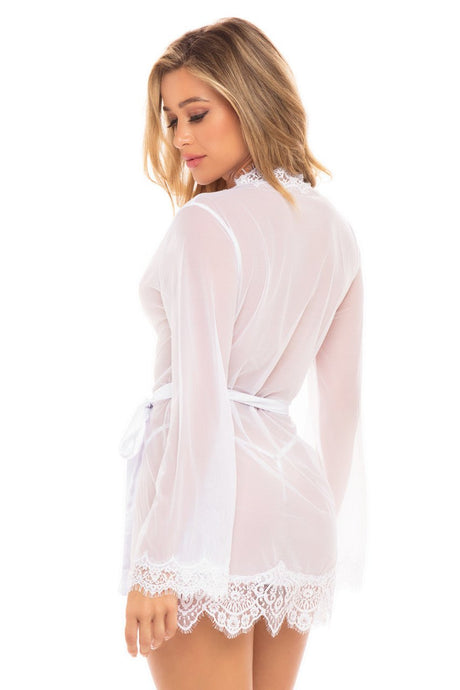
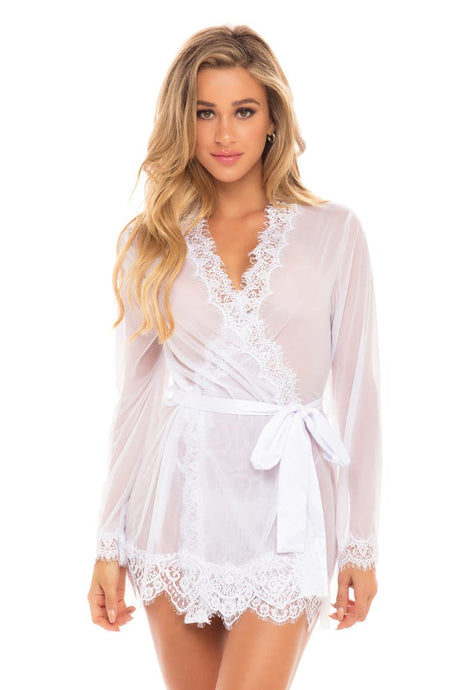
| Peignoir | A sheer robe sold with a matching gown | Lingerie |
When someone searches for a Japanese robe, they usually mean a kimono-style robe or a yukata, the light cotton kimono worn in Japan in summer and after bathing. Our kimono robe guide explains the difference between a kimono robe, a traditional kimono and a yukata. For how robes sit next to pajamas, nightgowns and chemises, see our types of pajamas guide.
Hybrids That Blur the Lines
Plenty of robes borrow from two categories at once. Judge them by fabric first and cut second.
Which One Should You Buy?
Start with the moment you will wear it. Most people need two of the four at most.
If you only buy one robe, buy for the moment you use a robe most. For most people that is after a shower, which makes a waffle bathrobe the most useful single robe; if you already have towels you love, a kimono robe will get more wear. Our robes guide covers how to build a two-robe wardrobe.
If you do not know the person's size, a kimono robe or a duster is the safest gift. Both are cut loosely and close with a wrap or not at all, so the fit depends far less on the size you choose.

Robes at HauteFlair
Our robes lean toward kimono robes for lounging and plush robes for warmth, with a duster for layering.
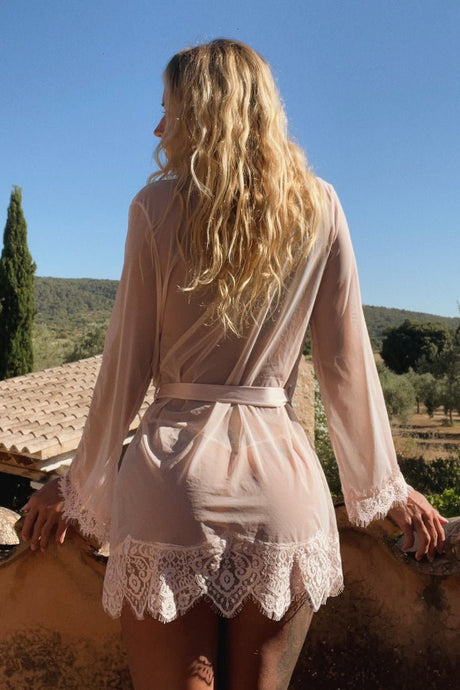
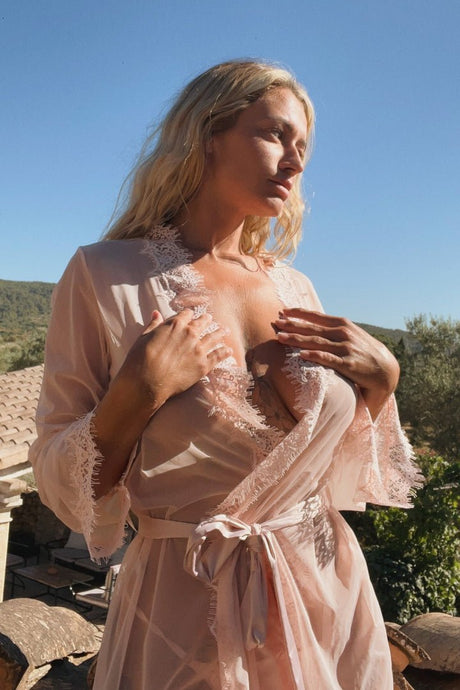
For a kimono robe, the iCollection Marina Satin Kimono Robe is the classic short satin version with wide sleeves, and the Davina Viscose Kimono Robe is softer and matte with lace trim. Both come in plus sizes; see plus size kimono robes, and bridal robes for wedding mornings.
Our bathrobes are warm robes rather than drying robes: plush, fleece and sherpa styles that work like a dressing gown. The BeWicked Helena Plush Full-Length Robe ties at the waist and falls to the ankle, the Janette Plush Fleece Robe has a hood and sherpa lining, the Kimmie Sherpa Robe is an ultra-soft sherpa robe, and the Starry Button-Up Robe closes with buttons instead of a belt. We do not currently carry terry or waffle bathrobes.
For a duster, the Hauty Metropolitan Long Duster has puff sleeves and a dropped shoulder and is made to be worn open. Availability changes by season, so check each listing for sizes and colors.
What This Means for You
A kimono robe, a bathrobe, a dressing gown and a duster look alike on a hanger but do four different jobs. The kimono robe is for lounging and getting ready, the bathrobe for drying off, the dressing gown for warmth and the duster for layering, including outside the house.
Choose by the moment you will wear it and check the fabric before the name. Only terry and waffle cotton dry you; plush and flannel keep you warm; satin, silk and jersey drape. Most people are well served by two: one that absorbs and one that suits the rest of their day.
Robes, Kimonos and Fit
Every robe style, how a kimono robe is cut, and how robes fit in extended sizes.
Robes for WomenKimono RobesPlus Size RobesFrequently Asked Questions
What is the difference between a robe and a bathrobe?
What is the difference between a bathrobe and a dressing gown?
What is the difference between a kimono robe and a bathrobe?
What is a duster robe?
What is a kimono duster?
Is a dressing gown the same as a robe?
What is a Japanese robe called?
Which robe is best after a shower?
Which robe is warmest?
Can you wear a duster outside?
This guide compares robe styles and is for general information. Names, cut and fabric vary between brands, so check the product details and care label for any individual robe.