What is a kimono robe?
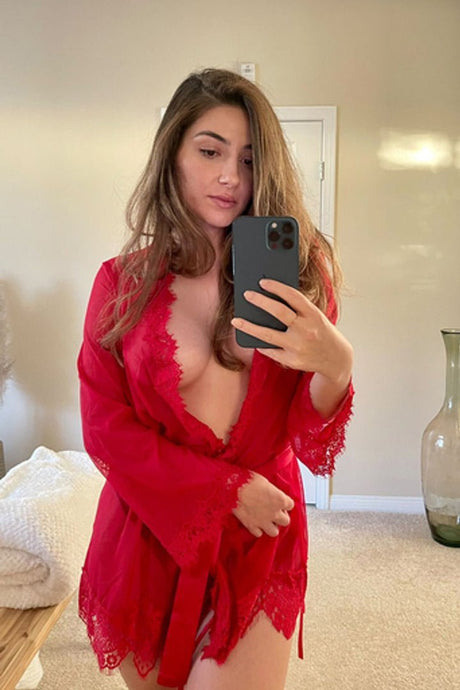
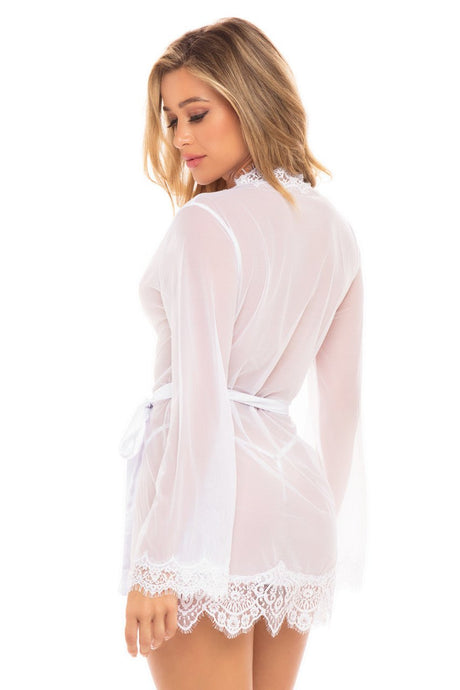
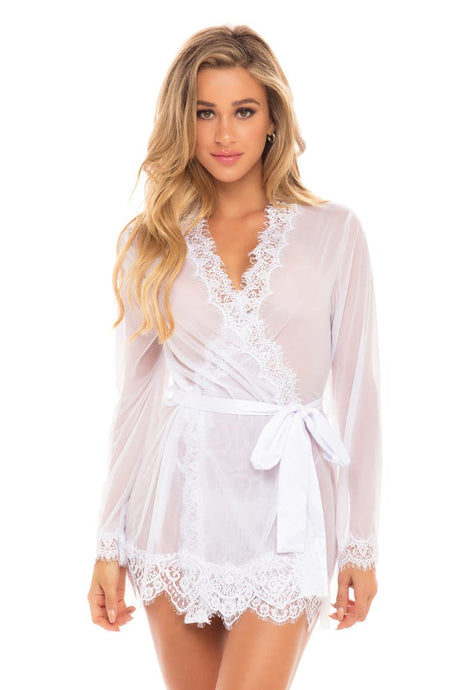
A kimono robe is a loose, T-shaped wrap robe based on the cut of the Japanese kimono. It has straight, wide sleeves, a flat band around the neck and down both front edges, no buttons, and a self-fabric sash that holds the front panels closed.
What makes it a kimono robe is the construction, not the fabric or the print. The body and sleeves are cut as straight rectangles with no shaped armhole and no shoulder seam, so the robe drapes from the neck instead of fitting at the shoulder. That is why one size fits a wide range of bodies.
Kimono robes are usually made in satin, silk, viscose or light cotton and range from hip length to the ankle. They are built for lounging, getting ready and warm weather rather than for drying off after a bath.
The kimono robe is the most borrowed shape in sleepwear. It shows up in satin on wedding mornings, in printed viscose on beach holidays and in plain cotton on the back of a bathroom door.
The name gets used loosely, but a real kimono robe is defined by a handful of construction details. Knowing them tells you how a robe will fit, how it will feel to wear and what it is good for before you ever try it on.
- A kimono robe is a T-shaped wrap robe with straight sleeves, a band collar and a sash.
- No shoulder seam: the body runs over the shoulder in one piece, so it drapes rather than fits.
- It wraps and ties instead of buttoning, which lets the same robe suit many bust and waist sizes.
- It is a lounging robe, not a drying robe; satin, silk and viscose do not absorb water.
- Check the sleeve and the overlap, not the size label, when you choose one.
- It is not a traditional kimono: it borrows the shape, not the dress rules.
The Anatomy of a Kimono Robe
Six details separate a kimono robe from any other robe. If most of them are missing, it is a wrap robe with a kimono name.
How a Kimono Robe Is Cut
The kimono shape comes from cutting cloth in straight lines. That one decision explains how a kimono robe fits and moves.
A traditional Japanese kimono is made from a single narrow bolt of cloth, roughly 14 inches wide, cut across into straight rectangles: two sleeves, two long body pieces, two narrow front overlap panels and a collar. Nothing is curved. Each body piece is twice the length of the garment and folds over the shoulder, so the front and back are one continuous piece of cloth.
A kimono robe keeps the principle but simplifies it. Most are cut from wider modern fabric, many skip the separate overlap panels and simply make the fronts wider, and almost all replace the kimono's wide obi belt with a narrow sash. What they keep is the part that matters for fit: straight sleeves, a straight body and no seam on top of the shoulder.
That last point is the reason kimono robes have a reputation for fitting almost everyone. A coat-style robe with a set-in sleeve only hangs well when its shoulder seam lands on your shoulder point. A kimono cut has nothing that needs to land anywhere. Our plus size robe guide explains how this plays out across sizes, and our robes guide compares the two constructions side by side.
Look at the top of the shoulder. If there is a seam running from the neck to the sleeve, the robe has a set-in or dropped shoulder. If the fabric runs smoothly over the shoulder and the sleeve is joined straight down the side, it is a kimono cut.
From Kimono to Kimono Robe
The kimono robe is a Western garment built on a Japanese shape. The two have different histories and different rules.
Kimono means simply "thing to wear" in Japanese. The garment grew out of the kosode, a robe with small wrist openings that became everyday dress in Japan several centuries ago, and the word kimono became the standard name for traditional Japanese clothing in the late 1800s, as Western dress spread in Japan.
At the same time, Japanese art and textiles were reaching Europe and America, and the kimono became a fashionable at-home garment there. By the early 1900s, Japanese makers were producing kimono-style dressing gowns made specifically for Western buyers, with simplified construction and a belt in place of the obi. The kimono robe you buy today descends from those export gowns as much as from the kimono itself.
The closest Japanese relative is the yukata, a light, unlined cotton kimono. It is worn in summer and at festivals, and Japanese inns and hot spring resorts provide one to wear after bathing. That is the role a kimono robe plays at home, which is why the two are so often confused.
A kimono robe is a robe, not a kimono, and it does not come with the kimono's dress code. If you do want to follow the traditional convention, wrap the left front panel over the right. In Japan, right over left is reserved for dressing the deceased.
Kimono Robe vs Kimono vs Yukata
Three garments share one silhouette. They differ in fabric, closure and where they are worn.
| Kimono robe | Traditional kimono | Yukata | |
|---|---|---|---|
| What it is | A Western robe in the kimono shape | Formal or everyday Japanese dress | A light summer kimono |
| Fabric | Satin, silk, viscose, cotton | Silk, wool, synthetics | Unlined cotton or linen |
| Closure | Self-fabric sash | Obi, with ties and padding beneath | A simpler obi |
| Length | Hip to ankle | Floor length, folded at the waist | Ankle length |
| Sleeves | Wide, straight, often shorter | Long, with a hanging sleeve pocket | Shorter, open sleeves |
| Worn | At home, over sleepwear | Ceremonies, formal events, daily wear | Summer festivals, after bathing |
A traditional kimono is cut long and adjusted by folding the excess at the waist, a fold called the ohashori, then held by an obi tied over several layers of cords and padding. A kimono robe is cut to its finished length, so it goes on in seconds. Some fashion labels also sell a kimono jacket or kimono cardigan: a short, open layer in the same shape, worn over clothes rather than sleepwear.
Kimono Robe vs Other Robes
The kimono robe is one of six main robe styles. Here is how it differs from the ones it is most often confused with.
| Kimono robe | Bathrobe | Duster | Dressing gown | |
|---|---|---|---|---|
| Collar | Flat band | Rolled shawl collar or hood | Flat or none | Shawl or notched collar |
| Sleeve | Straight and wide | Set-in, narrower | Set-in or dropped | Set-in |
| Closure | Sash | Belt through loops | Usually worn open | Belt or buttons |
| Fabric | Satin, silk, viscose | Terry, waffle, plush | Jersey, chiffon, knit | Wool, flannel, brushed cotton |
| Main job | Lounging, getting ready | Drying off, warmth | Layering | Warmth indoors |
The practical difference is the job. A bathrobe is made to absorb water and hold heat; a kimono robe in satin or silk does neither, but it is lighter, cooler and far easier to fit. A duster is longer and is worn open as a layer. Our robes guide covers every style, and our types of pajamas guide shows where robes sit beside pajamas, nightgowns and chemises.

Kimono Robe Fabrics
The kimono shape works in almost any fabric that drapes. Each one changes how the robe feels and what it is good for.
| Fabric | Feels like | Good for | Watch for |
|---|---|---|---|
| Satin (polyester) | Smooth, cool to the touch, glossy | Getting ready, gifts, photographs | Does not breathe or absorb; sash can slip |
| Silk charmeuse | Fluid, light, warm for its weight | Lounging, evenings, travel | Price; hand washing; water marks |
| Viscose and modal | Soft, matte, breathable | Warm weather, everyday lounging | Shrinks in hot water; creases |
| Cotton and cotton voile | Crisp, light, breathable | Summer mornings, beach cover-up | Less drape; creases |
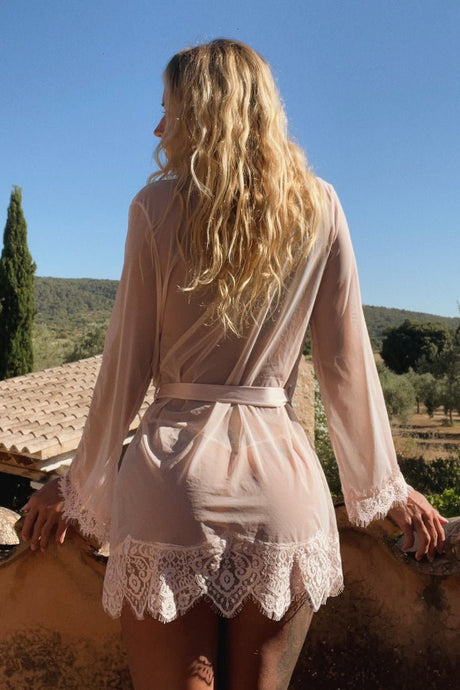
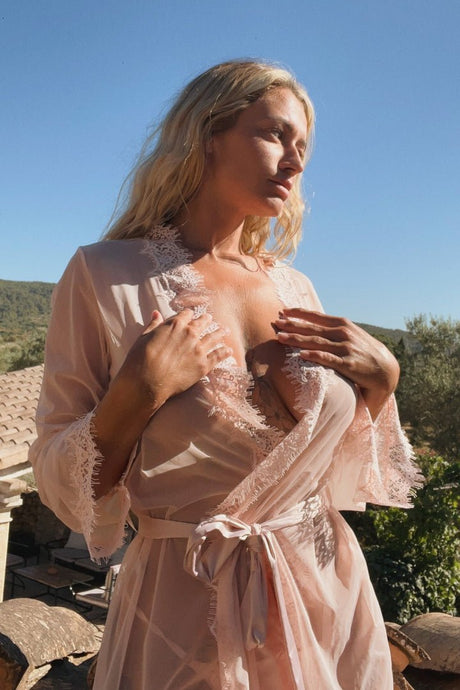
| Chiffon and lace | Sheer, airy, decorative | Over lingerie, bridal mornings | No warmth; delicate |
| Jersey and stretch knit | Stretchy, soft, opaque | Everyday wear, travel, ease of care | Can cling; less structure |
A silk kimono robe is the luxury version of the shape: silk drapes and moves better than any polyester satin and is warm without bulk. The word satin describes a weave, not a fiber, so a satin kimono robe can be silk, polyester or a blend. Our silk lingerie guide explains how to tell silk from polyester satin, and our silk pajamas guide covers momme weight, the measure that decides how dense and durable a silk is.
Whatever the fabric, a kimono robe is a lounging robe. Satin, silk and viscose do not dry you; over wet skin or hair they feel cold and clammy. If you want one robe for after a bath, choose a terry or waffle bathrobe and keep the kimono for the rest of the day.
Kimono Sleeves and Lengths
The sleeve and the length change a kimono robe more than anything else. Choose them for how you will move in it.
| Sleeve | What it looks like | Best for |
|---|---|---|
| Wide full-length | Straight sleeve to the wrist or past it | The classic look; cool evenings |
| Three-quarter | Ends below the elbow | Getting ready, cooking, washing up |
| Elbow or short | Ends at or above the elbow | Warm weather; nothing to dip in the sink |
| Bell or flutter | Flares toward the cuff | A softer, more romantic line |
| Split with tie | Opens along the sleeve and ties | Movement; a lighter look |
A wide sleeve is beautiful and the least practical part of a kimono robe. It catches on door handles and dips into a sink or a cup. If you will wear the robe while making breakfast or doing your makeup, a three-quarter or short sleeve is the better choice.
| Length | Where it ends | Best for |
|---|---|---|
| Short | Hip to mid-thigh | Over lingerie or a chemise; getting ready |
| Knee | At or just above the knee | Everyday lounging; the most versatile |
| Midi | Mid-calf | A long, elegant line without a trip hazard |
| Long | Ankle or floor | Evenings; the most dramatic, least practical on stairs |
Short kimono robes are the most common, and the classic choice for bridal robes on a wedding morning. A long silk or satin kimono is the most formal version and the one that shows the drape of the fabric best. Our plus size robe guide also covers how belt loop height works with each length.

How a Kimono Robe Should Fit
A kimono robe is easy to fit because most of it is not fitted at all. Three things still matter.
Because there is no shoulder seam, kimono robes are often sold in fewer sizes than other robes, sometimes just small/medium and large/extra large. That works because the robe drapes from the neck and closes with a wrap. Bust and waist differences are taken up by how far the fronts overlap and how tightly you tie the sash.
If the overlap is too shallow, size up rather than tightening the sash: pulling harder drags both panels outward and makes the gap worse. Our plus size robe guide explains wrap overlap in detail, and plus size kimono robes are cut with wider fronts for sizes 1X to 3X.
How to Wear and Tie a Kimono Robe
A kimono robe goes on in seconds. A few habits keep it closed and looking deliberate.
A kimono robe is the traditional getting-ready robe for weddings because it opens easily, does not disturb hair or makeup, and photographs well. Our bridal lingerie guide covers what to wear under it. For the beach, our beach cover-ups guide compares a kimono with a kaftan and a sarong, and swimsuit cover-ups collects lighter options.

How to Care for a Kimono Robe
Care depends on the fabric. The label always wins, but these are the usual rules.
| Fabric | Washing | Drying |
|---|---|---|
| Satin (polyester) | Cold, gentle cycle in a mesh bag | Hang to dry; iron on low if needed |
| Silk | Hand wash cool with a pH-neutral detergent | Roll in a towel, then hang away from sun |
| Viscose and modal | Cold, gentle cycle or hand wash | Hang or dry flat; never tumble hot |
| Cotton | Machine wash cold | Line dry or tumble low |
| Lace and chiffon | Hand wash cold | Dry flat |
Untie the sash before washing so it does not knot around the robe, and store the robe on a wide hanger rather than a hook, which stretches the collar band over time. Wash the sash with the robe so the two fade at the same rate.
Kimono Robes at HauteFlair
Most of our kimono robes are short satin and viscose styles, many with lace trim, in standard and plus sizes.
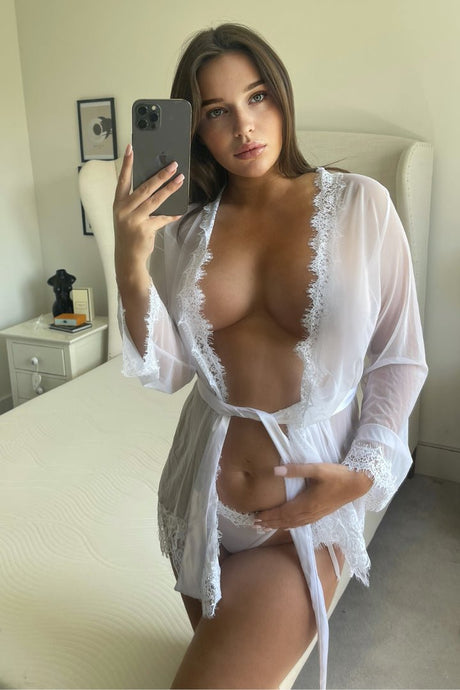
The iCollection Marina Satin Kimono Robe is the classic version: short, with full wide sleeves and a self-tie sash. The Celina Satin Kimono Robe adds lace panels at the sleeves, and the Ivy Hummingbird Print Kimono Robe has split sleeves that tie. For a softer, matte feel, the Davina and Alina viscose kimono robes are trimmed in lace, and the Lorelei Viscose Kimono Robe has short sleeves for warm days. The Esme Organic Cotton Kimono Robe is a relaxed cotton-blend version with dropped shoulders.
Most of these come in plus sizes as well; see plus size kimono robes. We carry very few silk kimono robes at the moment, so if silk is what you want, use our silk guides above to judge quality wherever you buy. Availability changes by season, so check each listing for sizes and colors.
Kimono Robe Checklist
Five questions to settle before you buy.
- Is it a true kimono cut? Look for straight sleeves and no seam on top of the shoulder.
- What will you do in it? Lounging and getting ready suit satin; warm weather suits viscose or cotton.
- Which sleeve suits your routine? Choose three-quarter or short if you cook or do your makeup in it.
- Does the overlap pass the sitting test? Belted, seated and legs crossed, it should stay closed.
- Is the length right for you? Measure from the back of your neck and compare.
What This Means for You
A kimono robe is a T-shaped wrap robe borrowed from the cut of the Japanese kimono: straight wide sleeves, a flat collar band, no buttons and a self-fabric sash. Its defining feature is the lack of a shoulder seam, which lets it drape from the neck and fit a wide range of bodies in very few sizes.
It is a lounging and getting-ready robe rather than a drying one. Choose the fabric for the season, the sleeve for how much you will use your hands, and check the overlap with the sitting test rather than trusting the size label.
Robes, Fit and Fabric
Every robe style, how robes fit in extended sizes, and how to judge silk.
Robes for WomenPlus Size RobesSilk GuideFrequently Asked Questions
What is a kimono robe?
What is the difference between a kimono and a robe?
What is the difference between a kimono robe and a bathrobe?
Is a kimono robe the same as a yukata?
Why do kimono robes fit so many sizes?
Which side goes over in a kimono robe?
What is the best fabric for a kimono robe?
Can you wear a kimono robe after a shower?
How long should a kimono robe be?
Can you wear a kimono robe outside?
How do you keep a kimono robe closed?
What is a kimono jacket?
This guide covers kimono robe construction, fabrics, fit and care and is for general information. Sizing, cut and fabric vary between brands, so check the size chart, care label and product details for any individual robe.