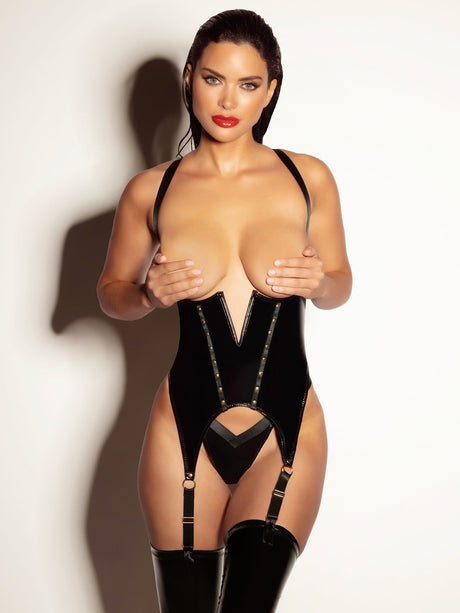
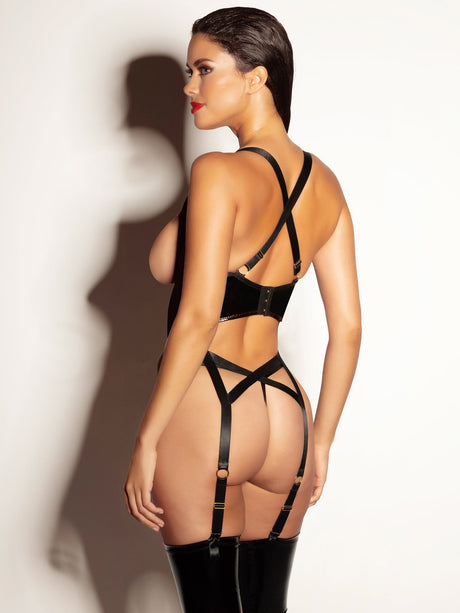
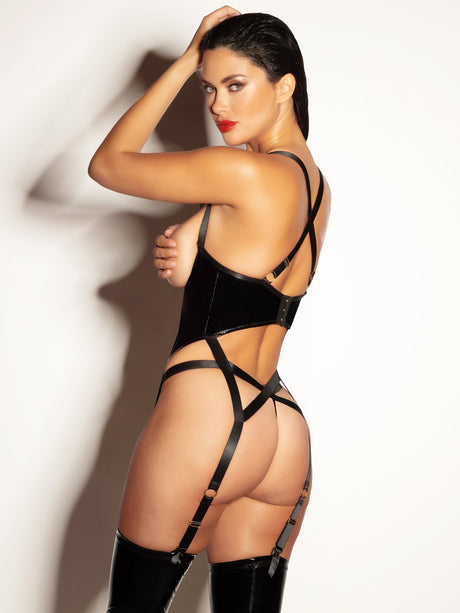
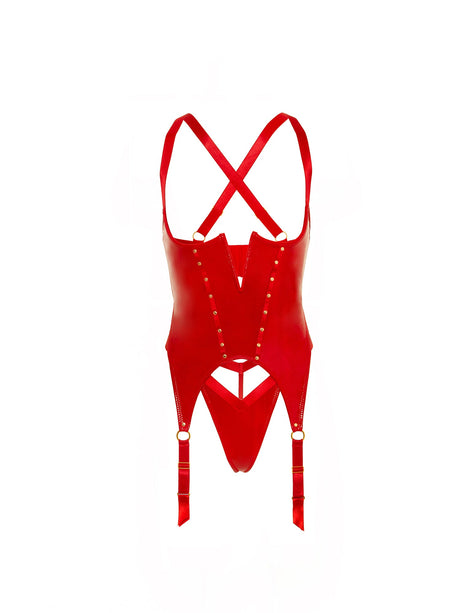
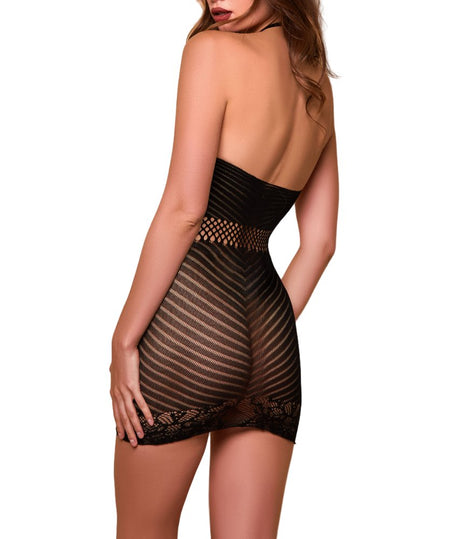
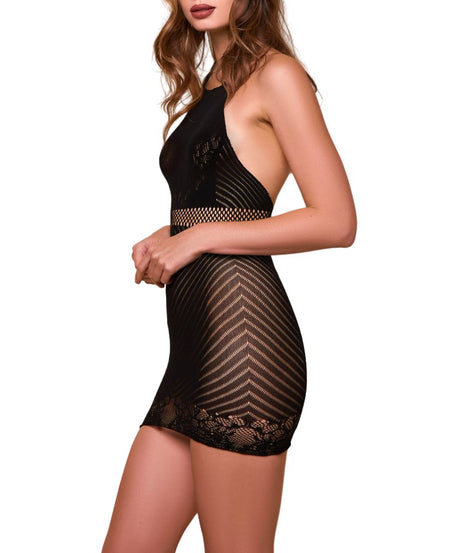
What is a vintage style swimsuit?
A vintage style swimsuit is a new swimsuit cut in the shapes of an earlier decade, most often the 1940s and 1950s: high-waisted bottoms, sweetheart and halter necklines, structured cups, ruching and skirted or boyleg legs. It gives the look of an old suit with modern stretch fabric, lining and sizing.
Strictly, a vintage swimsuit is an original that is at least 20 years old, and a retro or vintage-inspired suit is a new one made to look like it. In shops the words are used interchangeably, and almost every vintage style swimsuit on sale today is new.
Five details make a suit read vintage: the rise, the neckline, the leg line, the structure and the print. Get two or three of them right and the whole suit looks like it belongs to another era.
Retro swimwear never really went away. The high-waisted bikini, the halter one-piece and the skirted swim dress have come back so often that they now sit in most swimwear ranges as standard shapes.
What changed is the fabric. A 1950s suit that took boning, rubberized elastic and a zip to hold its shape can now do the same job with a double layer of nylon and spandex. This guide covers what each decade looked like, which details carry the look, and how to choose a retro suit that fits as well as it photographs.
- Vintage means an original suit 20 or more years old; retro and vintage-inspired mean a new suit in an old cut.
- The 1940s and 1950s are what most people mean: high waists, sweetheart necks, halters, ruching and skirts.
- A high-waisted bottom is the fastest way to make any bikini look retro. High rise sits at the navel.
- Structure sells the look: underwire, molded cups and a ruched front or smoothing panel give the sculpted line of a 1950s suit.
- Polka dots, gingham, stripes and solid red, navy or black are the classic retro palette.
- Swim in new suits, collect old ones. Original elastic perishes with age and rarely survives a swim.
Vintage, Retro and Vintage-Inspired
Three words, often used as one. The difference is whether the suit is old or only looks old.
| Term | What it means | Can you swim in it? |
|---|---|---|
| Vintage | An original garment, usually 20 or more years old | Often not; elastic and rubber perish with age |
| Retro | A new garment that copies or recalls an older style | Yes |
| Vintage style | A new garment with details borrowed from the past; also sold as vintage-inspired | Yes |
| Reproduction | A close copy of a specific original pattern | Yes, if made in modern swim fabric |
| Pin-up | A look based on 1940s and 1950s pin-up photography | Yes |
In the clothing trade, vintage usually means a piece at least 20 years old, and antique means a century or more. By that measure, a suit from the early 2000s is already vintage. In everyday shopping, though, people searching for vintage swimsuits almost always want the look of the 1940s to the 1960s in a suit they can buy new, in their size, and wear in the water.
That is what this guide means by vintage style: a modern swimsuit, made in nylon or polyester with spandex, that uses the shapes of an earlier era. If you are looking for an original suit to collect, the section on buying originals covers what to check.
What Makes a Swimsuit Look Vintage
Five details carry the look. Most retro suits use two or three of them, and a suit with all five looks like a costume.
The rise and the structure do most of the work. A plain black bikini becomes retro the moment the bottom rises to the navel and the top becomes a balconette with underwire. A plain one-piece becomes retro with a sweetheart neck, ruching through the body and a modest leg. Print is the finishing touch, not the foundation.
Back coverage is the detail most often missed. Original suits from the 1930s to the 1960s had a full back. Many modern suits sold as retro pair a vintage front with a cheeky back, which is a 2010s idea. If you want the authentic look from behind as well, check the back view before you buy.

Vintage Swimsuits Decade by Decade
Each decade had a shape, and most of them came from a change in fabric or in what was allowed on the beach.
1920s: the wool tank suit
The fitted one-piece replaced the bathing dress in the years around the First World War, and by the 1920s the knitted wool tank suit was the standard. It had a scoop neck, wide straps and short legs like bike shorts, often in navy or black with a stripe at the hem. Wool held water and sagged when wet, which is why these suits look loose in old photographs. The silhouette survives today in the boyleg one-piece and the sporty tank.
1930s: halters and low backs
Sunbathing became fashionable, and suits dropped at the back to allow a tan. Halter necks, crossed straps and deep scoop backs appeared, and elastic yarns such as Lastex made suits fit closer than knitted wool could. The leg stayed short and straight. A 1930s-inspired suit today is a halter one-piece with an open back and a modest leg.
1940s: the high-waisted two-piece
Wartime fabric restrictions in the United States and Britain encouraged suits that used less material, and the two-piece with a strip of bare midriff became common. The bottom sat at or above the navel, and the top was a structured bra. This is the shape behind the modern high-waisted bikini, and it is the most copied retro look. In 1946, two French designers launched far smaller two-pieces, and one of them, Louis Réard, named his the bikini.
1950s: sweetheart and structure
The 1950s one-piece was built like a foundation garment: boned bodices, built-in cups, shirred elastic fabric and a sweetheart neckline. Many had a short skirt panel across the front, sometimes called a modesty skirt. The look was an hourglass, sculpted from the bust to the hip. This is the decade behind the pin-up swimsuit, the ruched one-piece and the skirted swim dress.
1960s: the bikini goes mainstream
The bikini moved from scandal to standard during the 1960s, helped by films and beach culture. Bottoms dropped to a mid rise, prints became bold and graphic, and boyleg and short-leg suits stayed popular alongside it. Spandex, invented in the late 1950s, changed everything that followed: for the first time a suit could stretch and spring back without rubber or boning.
1970s: strings and plunges
The string bikini, with small triangle cups and ties at the hips, defined the 1970s. One-pieces plunged at the front, crochet and terry fabrics appeared, and earthy colors such as rust, mustard and brown were everywhere. A 1970s-inspired suit today is a tie-side bikini or a deep-V one-piece in a warm solid or a crochet texture.
1980s and 1990s: the high leg
The 1980s cut the leg up to the hip bone and above, in bright solids and neon, and the 1990s kept the high leg but simplified everything else: scoop necks, thin straps and plain colors. Both decades are now vintage by the 20-year rule, and the high-leg one-piece is back as a retro style of its own. Our one-piece swimsuit guide explains how a high leg changes the fit.
| Decade | Signature shape | Modern version |
|---|---|---|
| 1920s | Wool tank suit with short legs | Boyleg or sporty tank one-piece |
| 1930s | Halter neck, low back | Halter one-piece with an open back |
| 1940s | Two-piece with a high waist | High-waisted bikini |
| 1950s | Sweetheart, boned bodice, skirt panel | Ruched sweetheart one-piece or swim dress |
| 1960s | Mid-rise bikini, boyleg suits | Classic bikini, boyshort bottoms |
| 1970s | String bikini, plunge one-piece | Tie-side bikini, deep-V suit |
| 1980s | High-leg one-piece | High-cut one-piece |
| 1990s | Scoop neck, thin straps, high leg | Minimal scoop one-piece |
High-Waisted Bikini Bottoms
The single fastest way to make a bikini look retro. The question is how high, and what the waistband does when you sit down.
A high-waisted bikini bottom has a rise that reaches the navel or above. It covers the lower stomach, smooths the line from the waist to the hip and, paired with a structured top, creates the 1940s and 1950s two-piece. It is also one of the most practical bottoms there is: it stays in place in the water and covers more without needing a skirt.
| Rise | Where it sits | Look | Watch for |
|---|---|---|---|
| Low rise | Below the hip bone | Modern, 2000s | Not a retro look |
| Mid rise | Between the navel and hip bone | 1960s, everyday | Can look neither modern nor retro |
| High rise | At or just over the navel | 1940s and 1950s | Can roll down if the band is soft |
| Ultra high | At the natural waist | Strong pin-up look | Needs a firm band to stay flat |
The waistband decides whether a high-waisted bottom stays flat. A soft or narrow band can roll down when you sit or bend, especially on a fuller stomach. A wide, smooth band, a band with a little power mesh, or a fold-over band that you can wear high or turned down gives you more control. Ruching across the front helps the fabric sit without clinging.
Back coverage varies more than you might expect. A true retro high-waisted bottom has a full back; many modern ones have a cheeky back with a vintage front. Leg line varies too: a lower, straighter leg looks older, and a higher cut looks more 1980s.
At HauteFlair, high-waisted options include the Parfait Brigitte High Waisted Bikini Bottom, a full-coverage bottom with a smooth waistband, also in Peach Bud; the Sunsets Annie High Waist, full coverage with a mesh waistband; and the Hanky Panky High Rise Cheeky Swimsuit Bottom, with ruching across the front and a cheeky back. Availability changes by season, so check each listing for sizes and colors.

A high rise that sits at the navel covers the lower stomach, which is where most scars and marks are. If that is the point of the suit, choose high rise or ultra high, a full back and a wide band so it does not slip down when you sit.
Retro Necklines
Four necklines carry most of the vintage look on a top or one-piece. Each also changes the support.
| Neckline | Era | Support | Best for |
|---|---|---|---|
| Sweetheart | 1940s and 1950s | Medium to high, usually with cups | Fuller busts, an hourglass look |
| Halter | 1930s onward | Medium to high, lifts from the neck | Lifting and shaping the bust |
| Square | 1950s and 1960s | Medium | A structured, graphic look |
| Balconette | 1950s | High with underwire | Lift and a wide, rounded shape |
The sweetheart neckline, two curves meeting in a dip at the center, is the most recognizable retro detail. It almost always comes with some cup structure, which is why it suits fuller busts so well. A halter lifts from the neck and gives a defined shape, though some people find it tiring on the neck over a long day. A balconette, cut low and wide with underwire, gives the rounded lift of a 1950s bra and pairs naturally with a high-waisted bottom.
If you wear a D cup or above, look for a retro top or one-piece with real support: underwire, molded cups or band and cup sizing. Our guide to bra-sized swimwear explains how cup-sized suits fit.
Retro One-Pieces and Swim Dresses
The 1950s one-piece is the other half of the vintage look: a sculpted body, a shaped neckline and a modest leg.
A retro one-piece uses a sweetheart, halter or square neckline, ruching or a smooth panel through the body, built-in cups and a classic or low leg. The ruching is not only decorative: gathered fabric breaks up the surface so the suit does not cling, and on many suits a smoothing panel sits behind it. Our tummy control guide explains the difference.
A swim dress adds the 1950s skirt panel: a short skirt over attached briefs that covers the top of the thighs. It is the most complete vintage silhouette you can buy and the easiest to wear, since the skirt does the covering and the bodice does the shaping. Our swim dress guide covers lengths, liners and how a skirt behaves in the water.
At HauteFlair, the Sunsets Escape Sienna Swim Dress has a sweetheart neckline with a twist front, ruching down the center, molded wire-free cups, a hidden attached bottom and straps that convert to a crossback, in sizes 6 to 22. The Hanky Panky Ruched Bow One Piece is a scoop neck with ruching through the front and adjustable bows at wide straps, and the Bandeau One Piece has a straight neckline, a built-in shelf with removable padding and removable straps; both have a cheeky back. Browse one-piece swimsuits and swim dresses for current styles.
| If you want | Choose | Why |
|---|---|---|
| The full 1950s look | Sweetheart swim dress | Shaped bust, sculpted body and a skirt |
| Pin-up without a skirt | Ruched sweetheart or halter one-piece | The hourglass shape with a cleaner leg |
| A 1920s or sporty look | Boyleg or tank one-piece | Short leg, wide straps, simple lines |
| A 1980s or 1990s look | High-leg one-piece | Lengthens the leg; the newest vintage |
| Retro with a strapless option | Bandeau one-piece | Straight neckline, removable straps |
Building a Retro Bikini
Separates are the easiest way to get the look, because you can size the top and bottom on their own.
A retro bikini is a high-waisted bottom with a structured top: a balconette, a sweetheart bandeau, a halter or a full-cup underwire. Matching the top and bottom in one print or color keeps it looking like a set from the period. Mixing a solid bottom with a printed top, or the reverse, looks more modern but still reads vintage if the shapes are right.
Hanky Panky makes separates designed to mix and match: the Balconette Bikini Swimsuit Top has underwire, lined cups, wide adjustable straps and a hook closure at the back, and pairs with the High Rise Cheeky Bottom for a modern take on the 1940s two-piece, or with the Boyshort Swimsuit Bottom for a lower, short-leg line. Our guide to types of bikinis covers every top and bottom cut, and the bikini collection has current styles.
For more coverage, a tankini top over a high-waisted bottom gives a 1950s line with no bare midriff at all; our tankini guide explains how to stop the top floating up.
Retro Prints, Colors and Fabrics
The right print finishes the look. The wrong one makes a vintage cut look like a costume.
| Print or color | Era | Effect |
|---|---|---|
| Polka dots | 1940s and 1950s | The defining pin-up print; white on navy, red or black |
| Gingham | 1950s | Fresh and playful; red, blue or mint with white |
| Nautical stripes | 1930s to 1960s | Clean and graphic; navy and white or red and white |
| Small florals | 1940s and 1950s | Soft and feminine; hides the outline when wet |
| Bold graphics | 1960s and 1970s | Large florals, paisley and geometric shapes |
| Solid red, navy, black or cream | All eras | The most versatile vintage colors |
| Rust, mustard, brown | 1970s | Warm and earthy |
| Neon and bright solids | 1980s | Loud, high-contrast color |
Texture is a quieter way to get a retro feel. Ribbed swim fabric recalls knitted wool suits, seersucker and smocking recall the 1950s, and crochet and terry recall the 1970s. Ribbed and textured fabrics also hide the outline of the body and the lining when wet.
Original suits were made in wool, then cotton and rayon with elastic yarn, then nylon. Modern vintage style suits use nylon or polyester with spandex, often recycled, which holds its shape wet, dries quickly and comes in sizes and colors the originals never did. The Hanky Panky suits above are double lined in recycled fabric, and the Sunsets Escape Sienna is nylon and spandex.
Fit and Support in a Retro Suit
Vintage cuts flatter a wide range of bodies because they were designed around shaping. The fit rules are the same as any suit.
Retro suits have a reputation for flattering almost everyone, and there is a reason: they were designed in an era when swimwear was built like foundation wear, to shape the body rather than reveal it. A high waist smooths the stomach, a sweetheart neck with cups supports and shapes the bust, ruching hides the line of the lining, and a modest leg covers the top of the thigh.
| If you want to | Retro detail | Why it works |
|---|---|---|
| Cover the lower stomach | High-rise or ultra-high bottom | The band sits at or above the navel |
| Support a fuller bust | Sweetheart, balconette or halter with cups | Structure lifts and holds |
| Smooth the middle | Ruched one-piece or swim dress | Gathered fabric does not cling |
| Cover the hips and thighs | Swim dress or boyleg | A skirt or short leg covers more |
| Define the waist | Belted or ruched one-piece, high waist | Draws in the narrowest point |
| Lengthen the leg | 1980s high-leg cut | Moves the leg line up the hip |
For a one-piece, torso length still decides the fit: straps that dig in and a seat that rides up mean the body is too short, and wrinkles at the waist mean it is too long. Our one-piece guide explains how to measure it. For a high-waisted bottom, size by the hip and then check that the band sits flat at the waist without rolling.
Plus Size Vintage Style Swimsuits
Retro shapes work especially well in extended sizes, because they were built for support and shaping in the first place.
In plus sizes, look for a high-waisted bottom with a wide, firm band that will not roll, a top or one-piece with underwire or molded cups, wide or adjustable straps, and ruching or a smoothing panel through the body. A sweetheart swim dress covers the hips and the top of the thighs and gives the full 1950s line in one piece.
Our plus size swimwear guide covers support, coverage and fit in extended sizes, and plus size swimwear collects current styles.
Vintage Style and Modest Swimwear
Many retro cuts are naturally modest, which is why the two overlap so often.
Full backs, high waists, sweetheart necks with cups, short legs and skirts were standard before the 1960s, so a vintage style suit often meets a modest dress code without looking like it was designed to. A swim dress, a high-waisted bikini with a tankini or long-line top, or a boyleg one-piece with a higher neck gives a retro look with more coverage. Our modest swimwear guide covers every level of coverage, and the modest swimwear collection includes swim dresses, swim skirts and high-waisted bottoms.
Buying Original Vintage Swimwear
Original suits are worth collecting. Most are better worn for sunbathing or photographs than for swimming.
Swimwear is hard on fabric, and old swimwear has had decades for its elastic to age. Rubber and early elastic perish: they go brittle, lose their stretch or turn sticky, and they can give way in the water without warning. Original suits with boning or rubberized linings were built to hold a shape, not to be washed often. If you buy an original, check it carefully and treat it gently.
For swimming, a modern vintage style suit is the better choice: it gives the same look in fabric made for chlorine and salt water, with lining, cups and sizes the originals never had.
How to Style a Vintage Swimsuit
A few accessories turn a retro suit into a full look. One or two is enough; all of them at once is a costume.
The classic pin-up accessories are cat-eye sunglasses, a silk headscarf tied at the nape or the top of the head, a wide-brim straw hat, red lipstick and wedge or espadrille sandals. Choose one or two and let the suit do the rest.
For cover-ups, a terry or linen shirt dress, a short beach robe or a wrap skirt fit a 1950s suit, and a crochet cover-up or a long kaftan fits a 1970s one. Our guide to kaftans, sarongs and beach cover-ups covers each style, and the swimsuit cover-up collection has current pieces.

How to Care for a Vintage Style Swimsuit
Structured suits last longest with gentle care. Cups, underwire and ruching all need a little extra attention.
Bright reds and dark navy can fade in strong sun and chlorine, and white grounds on polka dot and gingham prints can yellow from sunscreen. Rinse soon after swimming, apply sunscreen before you put the suit on, and dry it in the shade.
Common Mistakes With Retro Swimwear
Five things that stop a vintage style suit looking or feeling right.
Vintage Style Fitting Checklist
Try these before you remove the tags.
- Sit down: a high-waisted band should stay flat at the waist and not roll.
- Raise your arms: a sweetheart or balconette top should stay in place and keep the bust in the cups.
- Squat: the seat should stay down and the leg should not ride up.
- Check the back: make sure the coverage is the one you wanted.
- Check the support: underwire should sit flat on the ribs behind the bust.
- Check a swim dress: the skirt should clear the thighs and the attached brief should stay down.
What This Means for You
A vintage style swimsuit is a new suit in an old shape, and the shape most people want is the 1940s and 1950s: a high waist, a sweetheart, halter or balconette neckline, structure through the body and a modest leg.
Start with the rise or the neckline, since those carry the look. Choose a waistband that stays flat and a top with the support your bust needs, and check the back before you buy. Add a print or a single accessory and stop there.
Keep originals for collecting, swim in new suits, and rinse and dry them in the shade, and a retro suit will look as good in its fifth summer as in its first.
Swim Dress, One-Piece and Types of Bikinis
The closest relatives of the retro suit: the skirted one-piece, the classic maillot and every bikini cut, including high-waisted bottoms.
Swim DressOne-PieceTypes of BikinisFrequently Asked Questions
What is a vintage style swimsuit?
What is the difference between vintage and retro swimwear?
What makes a swimsuit look vintage?
What decade are high-waisted bikinis from?
When was the bikini invented?
What is a pin-up swimsuit?
How high should a high-waisted bikini bottom be?
How do I stop a high-waisted bikini bottom rolling down?
Are vintage style swimsuits flattering?
What is a sweetheart neckline swimsuit?
Are retro swimsuits good for a large bust?
Can you swim in an original vintage swimsuit?
What prints look most vintage?
What is the difference between a swim dress and a vintage one-piece?
What should I wear over a vintage swimsuit?
Are 1980s and 1990s swimsuits vintage?
This guide covers vintage style swimsuit cuts, history, fit and care and is for general information. Sizing, rise and back coverage vary between makers, so check the size chart and product details for any individual suit.