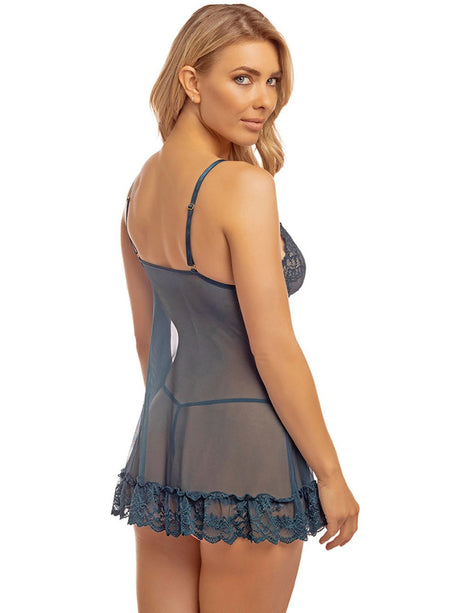
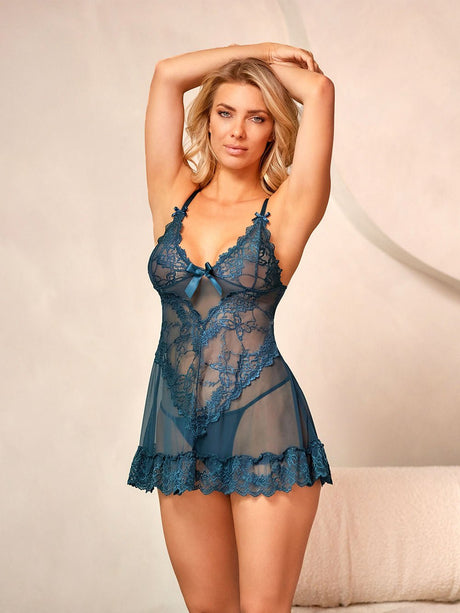
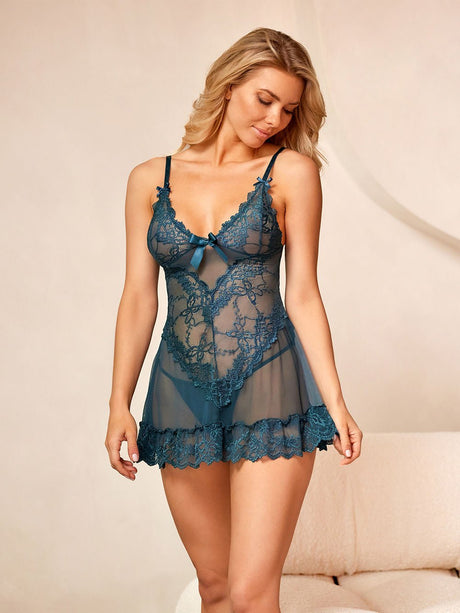
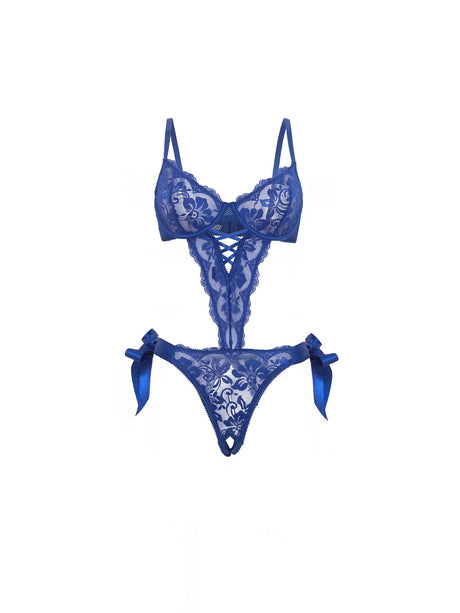
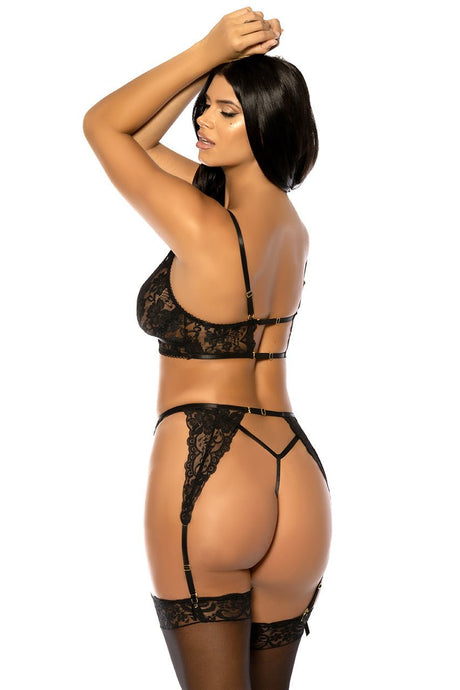
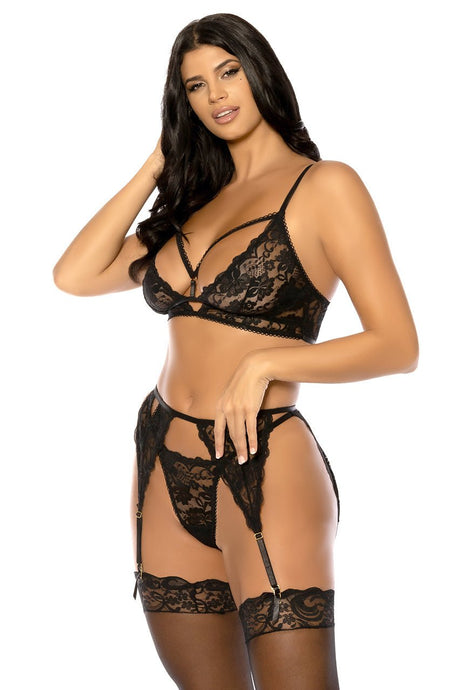
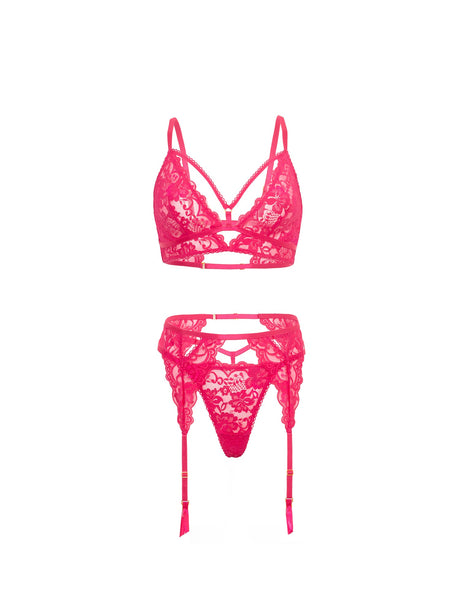
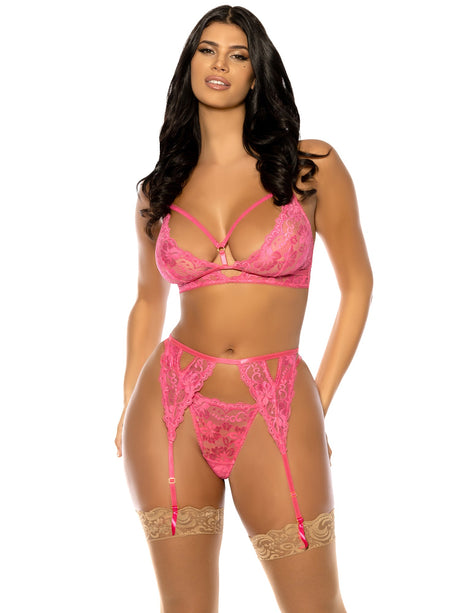
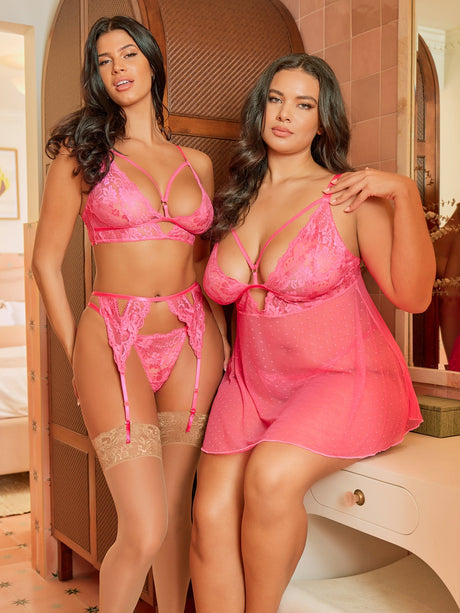
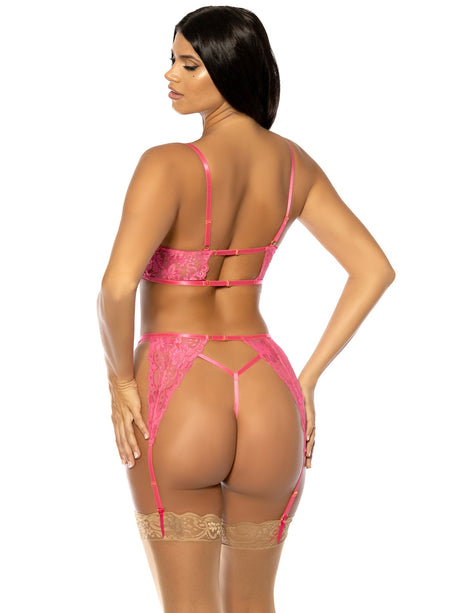
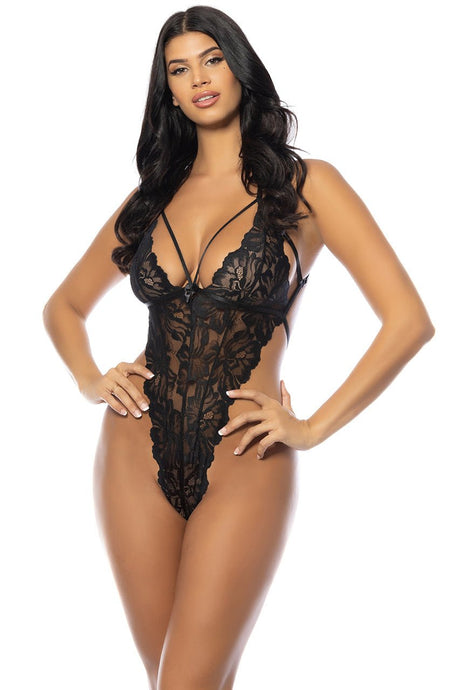
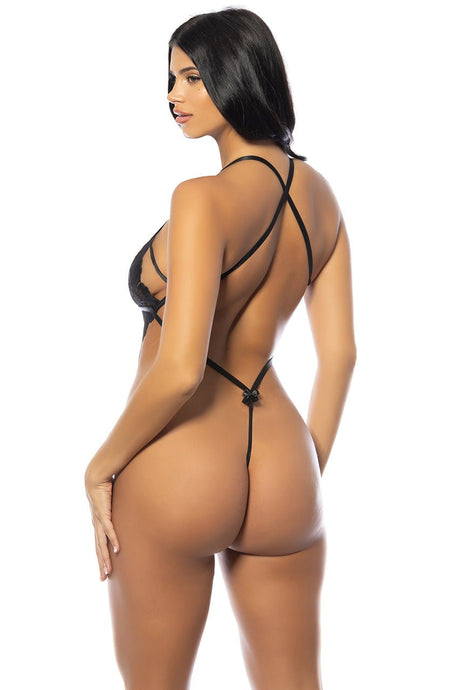
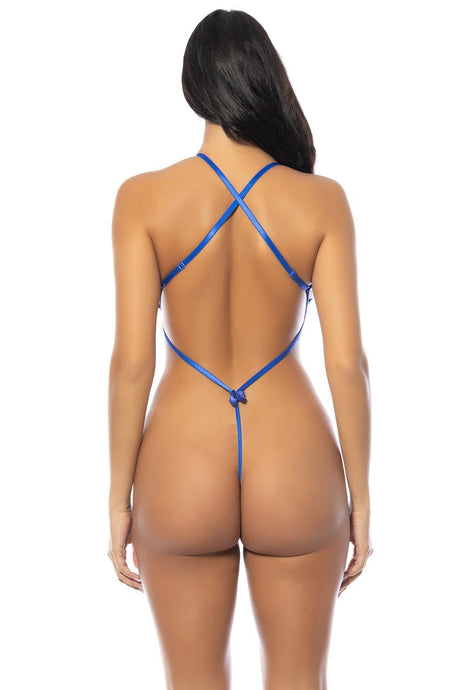
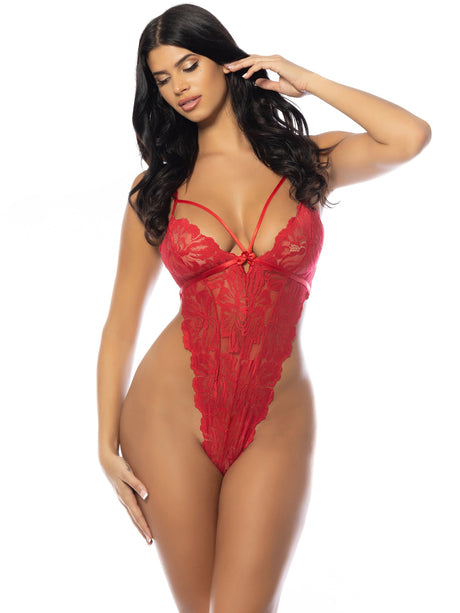
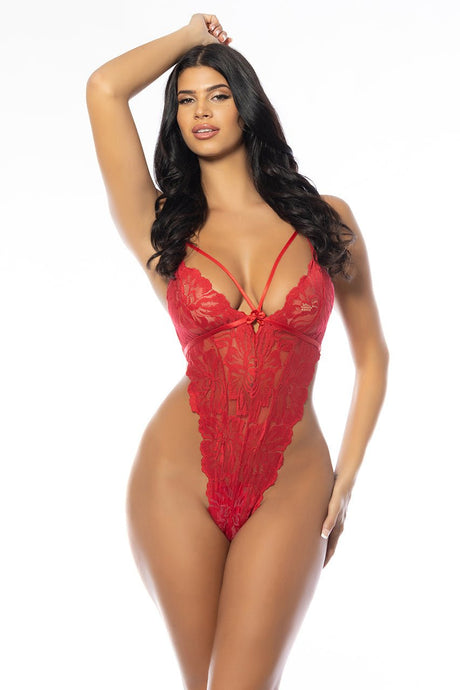
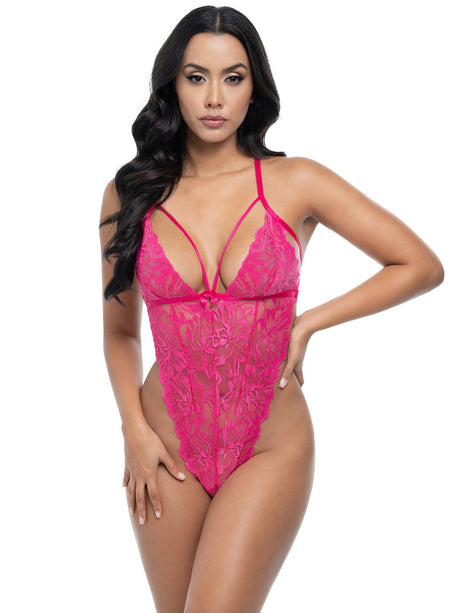
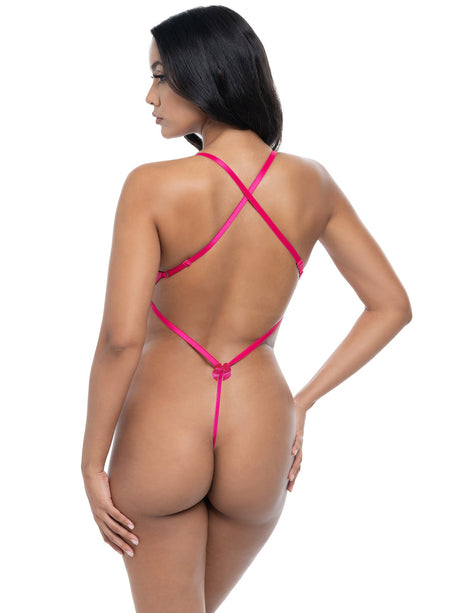
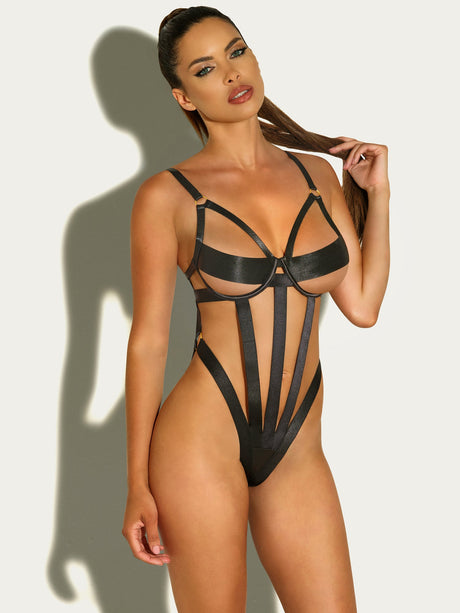
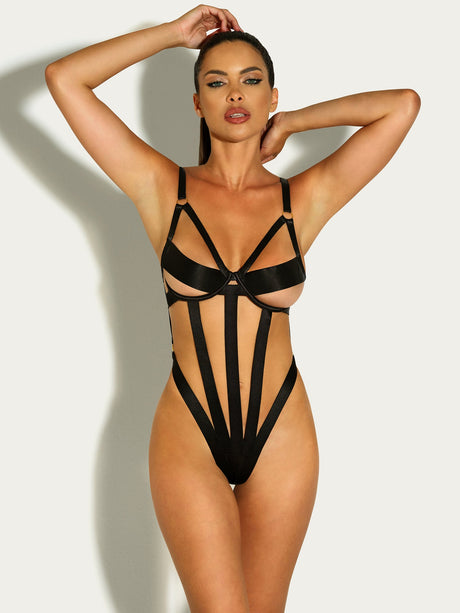
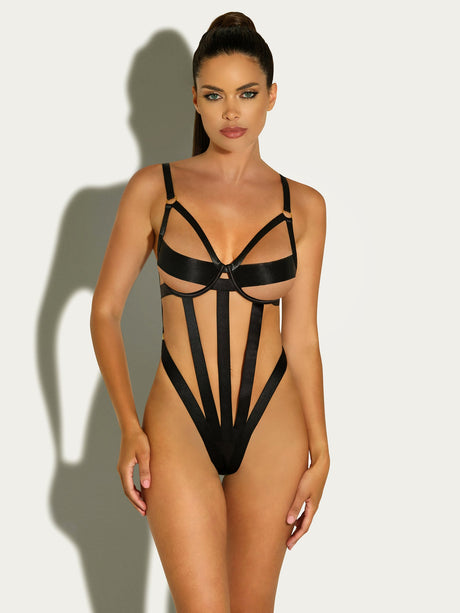
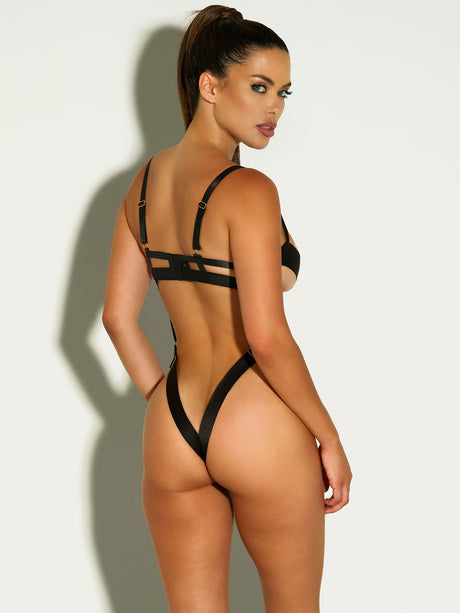
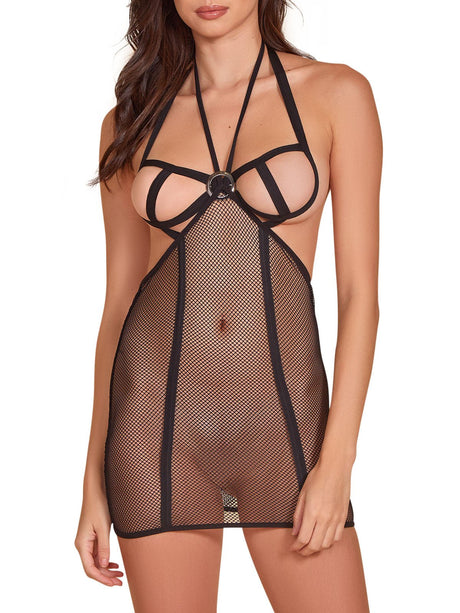
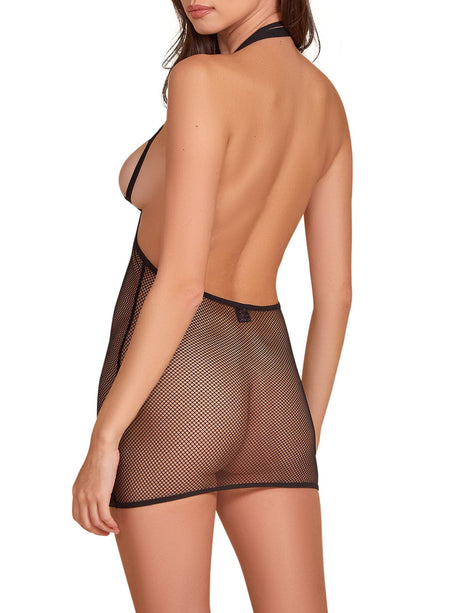
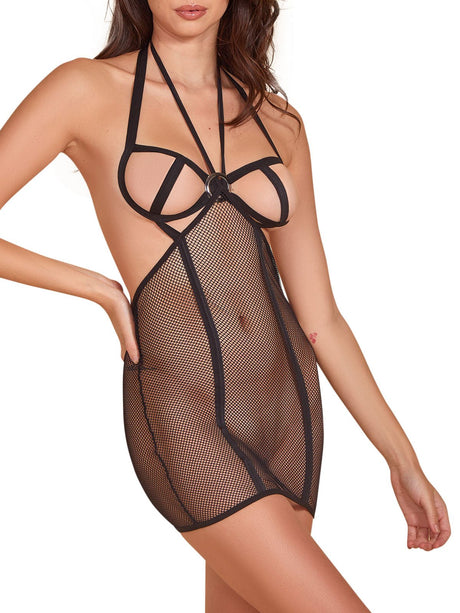
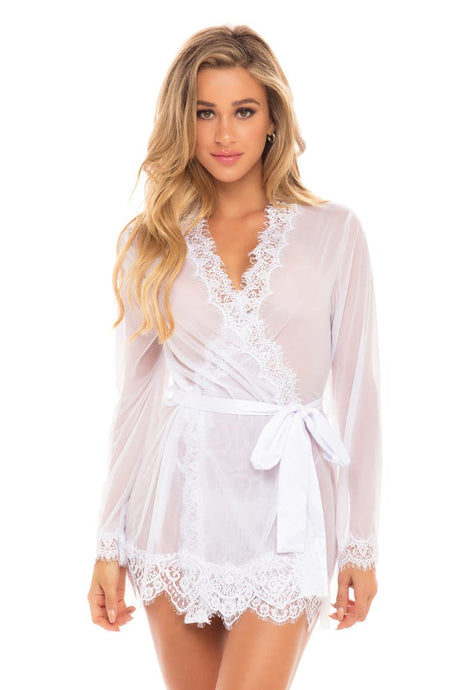
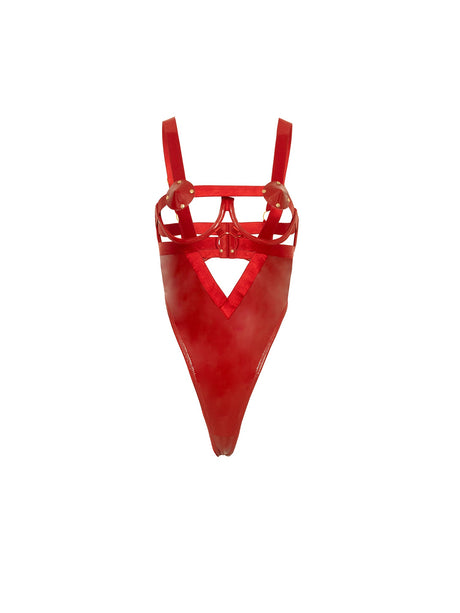
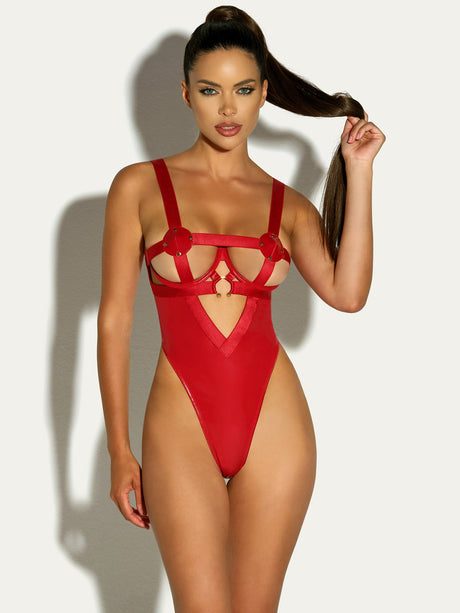
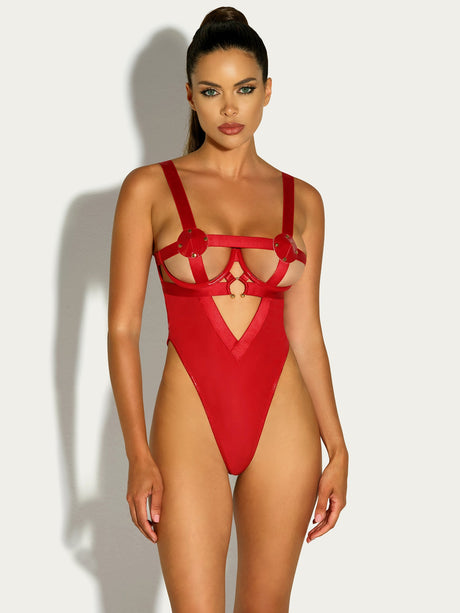
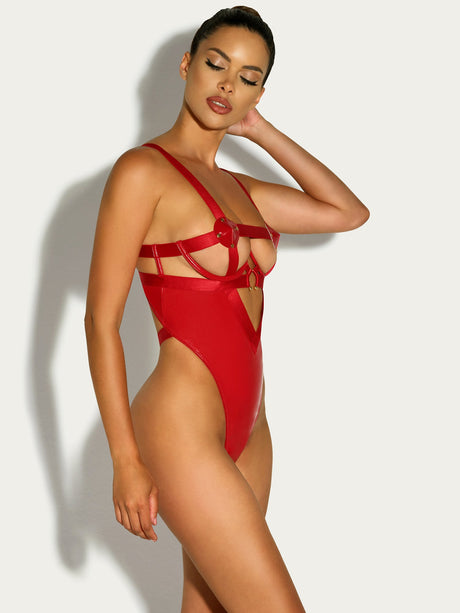
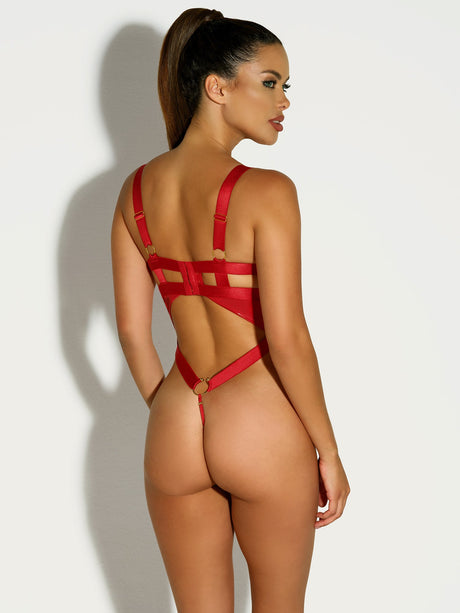
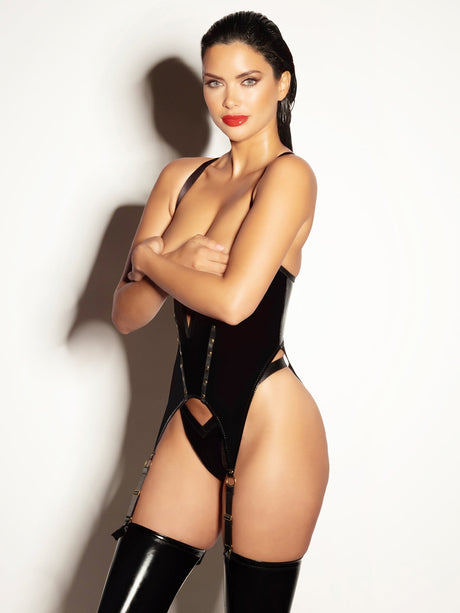
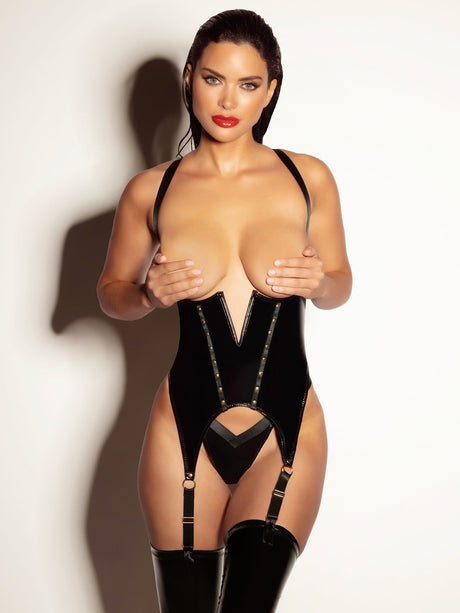
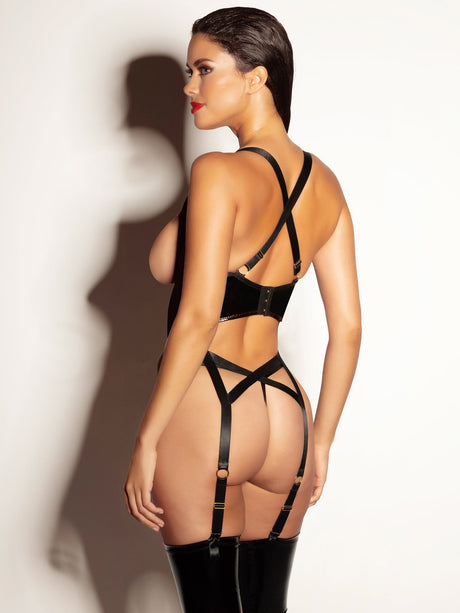
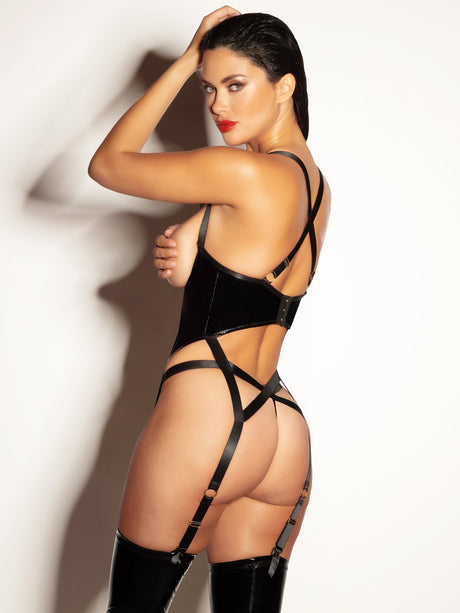
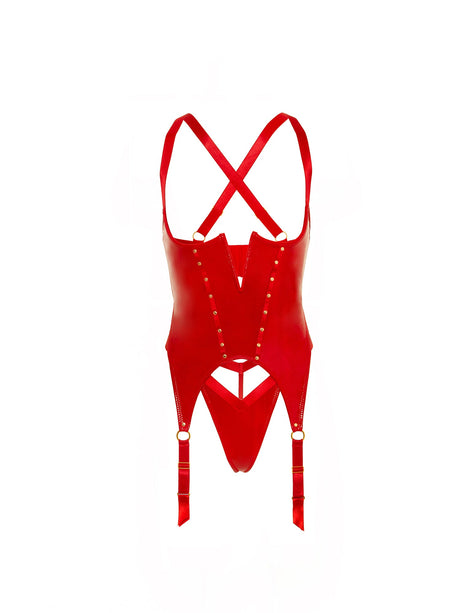
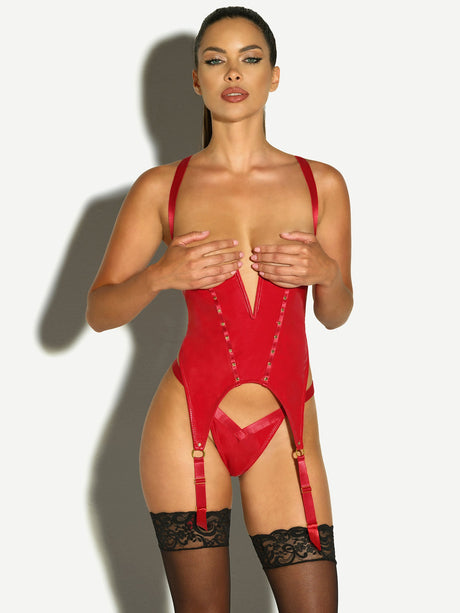
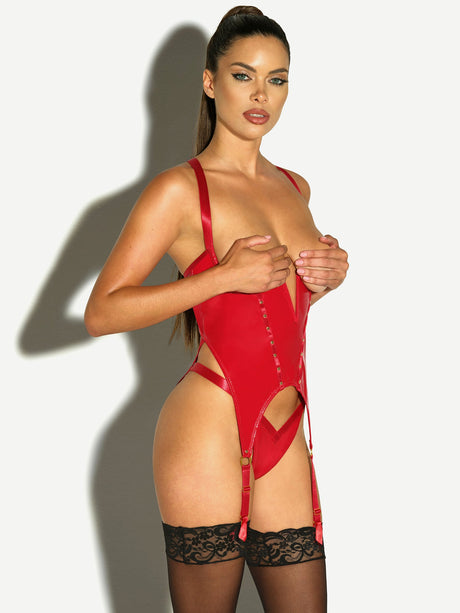
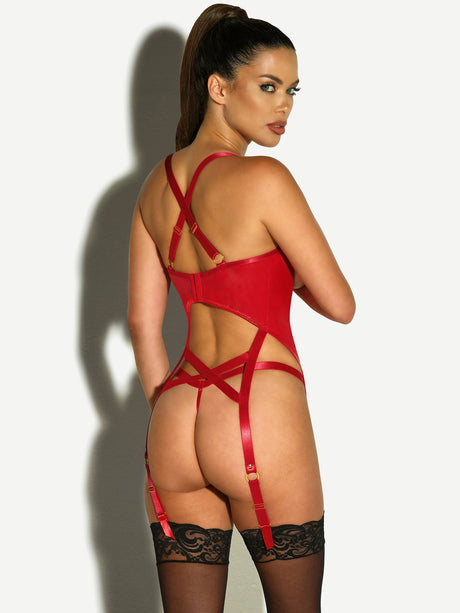
What is body harness lingerie?
Body harness lingerie is intimate apparel built around strap-and-hardware architecture — typically a separate garment worn over or under other lingerie, over outerwear, or as primary lingerie itself. Unlike strappy lingerie (which integrates straps into a bra or bodysuit), a harness is the piece. Five architectures organize the category: chest harness, bra harness, body harness, garter/thigh harness, and combination harness. Harness lingerie has bondage-adjacent heritage but contemporary fashion positioning, crossing readily between bedroom, statement-styling, and outerwear contexts.
This guide treats harness lingerie on its own terms. We'll define the category as architecture-led (not material-led, not silhouette-led), map the five harness architectures (chest, bra, body, garter, combination) and the four wearing contexts each serves (over lingerie, over outerwear, under sheer outerwear, as primary lingerie), surface the hardware vocabulary that shoppers need (O-rings, D-rings, buckles, clasps), and tackle the disambiguation most retail content skips: harness vs strappy vs cage. The closing sections cover materials, pairings, fit and adjustability (different logic than other lingerie), and care.
Shop Body Harness Lingerie
Already know what you want? Browse the full harness collection — chest harnesses, bra harnesses, body harnesses, garter harnesses, and combination pieces across leather, faux leather, and elastic-strap construction.
Shop Harness Lingerie → Browse Cage Bras →- Harness lingerie is architecture-led — strap-and-hardware geometry worn as a separate piece, not strap-detail on a primary garment.
- Five architectures: chest harness, bra harness, body harness, garter/thigh harness, combination harness.
- Four wearing contexts: over lingerie, over outerwear, under sheer outerwear, as primary lingerie. The same piece can serve different contexts.
- Harness vs strappy: strappy = straps integrated into a primary piece; harness = the strap architecture IS the piece.
- Harness vs cage bra: cage bras have cup function; bra harnesses don't. Cage bras = bras with cage construction; bra harnesses = harness architecture in the bust area.
- Hardware matters: O-rings, D-rings, buckles, hooks, and clasps define harness construction. Quality hardware lasts decades; cheap hardware fails within months.
- Strongest outerwear-crossover alongside fishnet mesh — harnesses styled over T-shirts, blazers, and fitted tops are an established contemporary look.
- Start with a chest harness in black — most versatile architecture, most flexible color, easiest entry to harness lingerie.
What "Body Harness Lingerie" Actually Means
Harness lingerie is the architecture-led counterpart to strappy lingerie — they share the strap-heavy visual but differ in what's actually being shopped. Strappy lingerie is a primary piece (bra, panty, bodysuit) with decorative strap construction integrated into the garment. Harness lingerie is the strap-and-hardware architecture itself, typically worn as a separate piece over or under other lingerie.
The cleanest mental model for harness lingerie: it's a styling layer rather than a primary garment. The harness adds architectural structure, visual focal points, and statement coding to whatever lingerie or outerwear sits beneath. The same black leather body harness pairs with a black bodysuit (subtle layered look), over a fitted T-shirt (fashion-forward streetwear), under a sheer mesh top (peeking architectural detail), or worn with panties only (minimal statement piece). One harness, four distinct looks — the modularity is the entire appeal.
This is also why harness shopping logic is different from material-led categories like leather lingerie or mesh lingerie. Material matters (leather vs faux leather vs elastic strap), but architecture matters more — a chest harness in faux leather and a body harness in real leather serve completely different styling purposes. The HauteFlair harness lingerie collection spans all five architectures across leather, faux leather, and elastic constructions.
The Five Harness Architectures
Five architectures organize where the hardware sits on the body. Each has different visual weight, different layering compatibility, and different occasion fit.
The Most Versatile Starter Architecture
Above-bust or between-bust band-style construction. The simplest harness architecture — typically two horizontal bands across the chest connected by vertical center strap, with hardware at strap junctions. Chest harnesses sit above the bust line entirely, leaving cup function to whatever lingerie sits beneath. They layer over bras, bodysuits, T-shirts, and blouses without interfering with the underlying piece. Visual coding is minimal — accent-level rather than statement-level — which makes the chest harness the strongest outerwear-crossover architecture and the most flexible across contexts. Best for: outerwear styling over fitted tops, accent layering over coordinated lingerie, photography styling, anyone new to harness lingerie. Starts at the lowest price point of the five architectures.
The Bust-Area Bridge
Harness construction integrated into bust-area styling. The straps cross or converge around the breasts rather than sitting above them — the architecture is where a bra would normally be, but typically without cup function. Bra harnesses bridge harness and bra categories: some include light cup support (closer to bra function), others are purely architectural (closer to pure harness). Distinguish from cage bras (which have cup function) by checking for cup coverage and underwire — bra harnesses typically have neither. Bra harnesses work best with bra or coverage piece underneath if bust coverage is wanted; some shoppers wear bra harnesses with no underlayer for maximum statement effect. Best for: dedicated bedroom statement, photography, partnered-intimacy contexts where the harness IS the bust styling.
The Signature Full-Torso Architecture
Full-torso multi-strap construction with central hardware junctions. The signature 'body harness' silhouette — straps cross the torso vertically, diagonally, and horizontally, meeting at central rings (typically O-rings or D-rings) that anchor the geometry. Body harnesses are statement-coded by default; the construction is visually prominent and creates strong architectural lines that change how the body reads. Compatibility with underlying pieces depends on harness density: minimal-strap body harnesses layer over most lingerie; dense-strap body harnesses work better with minimal underwear or as primary lingerie with panties only. Best for: dedicated bedroom and partnered-intimacy contexts, statement boudoir photography, bondage-adjacent fashion styling, BDSM-soft contexts. The most-photographed harness architecture.
The Lower-Body Architecture
Hip-band, thigh-strap, and garter-attachment construction. Visually distinct from torso harnesses — the architecture is concentrated on hips, upper thighs, and around the leg. Traditional garter-belt construction overlaps with this category but pure garter harnesses are more architecturally elaborate than functional garter belts. Common variations: hip-band with thigh straps; multi-strap thigh harnesses with side hip junctions; full lower-body cage with hip, thigh, and back-of-leg straps. Garter harnesses pair with stockings (the traditional garter function) or worn without stockings for purely architectural styling. They coordinate naturally with torso harnesses for full-body harness looks. Best for: lower-body emphasis in coordinated harness styling, stocking-and-garter fashion, lower-body statement in boudoir.
The Full-Body Multi-Zone Architecture
Multi-zone construction connecting torso to thighs through continuous strap-and-hardware architecture. Combination harnesses typically combine elements of body harnesses (full torso) with garter harnesses (lower body) in single connected construction — straps run from chest through waist to thighs, with hardware junctions at each transition zone. These are the most architecturally elaborate harness pieces and the most statement-coded. Combination harnesses are statement-only — they don't work as accent pieces or subtle layering because the architecture is too prominent. Best for: dedicated photography sessions, statement bedroom contexts, full-body BDSM-soft styling, runway-coded fashion contexts. The most expensive harness architecture and the most committed shopping decision.
Each of the five architectures appears across multiple materials (leather, faux leather, elastic strap, chain, studded), and each material can produce any of the five architectures. A leather chest harness and an elastic chest harness serve similar styling functions with different aesthetic coding; a leather body harness and an elastic body harness do the same. Architecture determines where the harness sits; material determines what it reads as. Both choices matter independently.
The Four Wearing Contexts
Same harness piece, four distinct contexts. Identifying which context you want before architecture shopping prevents buying a beautiful piece that doesn't work for your intended use.
The Traditional Bedroom Context
Harness worn over a coordinated lingerie piece — bra-and-panty set, bodysuit, or teddy — as architectural styling layer. The most traditional harness context and the easiest to style. The lingerie underneath provides coverage and bra function; the harness adds visual structure and statement coding. Color coordination matters: black harness over black lingerie reads cohesive and dramatic; contrasting colors (gold harness over black lingerie, for example) create statement effect. Works with all five architectures; chest harness and bra harness are easiest beginner pairings; body harness and combination harness add more dramatic styling.
The Fashion-Forward Streetwear Context
Harness worn over a fitted T-shirt, blazer, bodysuit, or fitted top as visible fashion piece. Contemporary streetwear and fashion-forward styling — the harness adds architectural detail without changing the outfit's base. Chest harnesses are the most outerwear-friendly architecture; body harnesses work but require more confident styling commitment; combination harnesses are too statement-heavy for most outerwear contexts. Material affects styling: leather and quality faux leather harnesses read luxe-streetwear; elastic-strap harnesses read athletic-streetwear; chain or studded harnesses read fashion-forward statement. Black hardware works across most outerwear; bright hardware adds visual interest.
The Layered Peeking Context
Harness worn under sheer, mesh, or lace outerwear so the architectural detail peeks through visibly. The most contemporary contexts combine a harness under mesh tops or bodysuits or under sheer lingerie pieces for layered visible-architecture styling. The sheer overlay softens the harness's visual impact while preserving the geometric interest. Works across all architectures; body harness and combination harness create the most dramatic layered effects because the geometry is most visible through sheer overlays. The least common but most fashion-forward harness wearing context.
The Minimal Statement Context
Harness worn with panties only — the harness IS the lingerie. The most minimal context and the most statement-coded; the harness has nowhere to hide and the architecture is the entire visual interest. Best with body harness or combination harness where the construction provides enough visual content to anchor the look alone. Bra harness as primary lingerie works for shoppers comfortable without bust coverage; chest harness as primary lingerie typically reads incomplete because there's not enough construction. Coordinate panty style and color carefully — the panty becomes a major part of the visual composition when no other lingerie is present. Strongest in photography and dedicated boudoir contexts.
The Hardware Vocabulary — Rings, Buckles, and Clasps
Hardware is the defining structural element of harness construction. Five hardware categories cover the vocabulary every harness shopper needs.
For visual coding, hardware finish matters more than hardware shape. Silver-tone hardware reads modern, athletic, contemporary. Gold-tone hardware reads luxe, statement, evening-coded. Black or matte hardware reads understated, bondage-adjacent, integrated. Mixed hardware (silver and gold combined) adds visual interest but reduces versatility — committed shoppers should match hardware finish to the lingerie wardrobe they're building. Black hardware is the most universally versatile across contexts.
Harness vs Strappy vs Cage — The Disambiguation
This is the disambiguation most retail content skips. Three closely related categories — harness, strappy, cage bra — get used interchangeably in product copy but represent distinct shopping decisions.
| Factor | Body Harness | Strappy Lingerie | Cage Bra |
|---|---|---|---|
| What it is | Architecture as the piece | Primary piece with strap details | Bra with cage construction |
| Bra function | No (purely architectural) | Yes (it's still a bra) | Yes (full cup function) |
| Worn alone? | Sometimes (body, combination) | Yes (primary piece) | Yes (primary bra) |
| Worn over other lingerie? | Yes (most common context) | No (it IS the lingerie) | No (it IS the bra) |
| Hardware density | High (rings, buckles, clasps) | Low (some hardware on closures) | Medium (closures + sometimes rings) |
| Outerwear crossover | Strong (designed for layering) | Limited (reads as lingerie) | Limited (it's a bra) |
| Bust coverage | No (straps don't cover) | Yes (cup or coverage panel) | Yes (full cup coverage) |
| BDSM coding | Strong (bondage heritage) | Moderate (varies by piece) | Light (mostly fashion-coded) |
| Adjustability | High (multi-point buckles) | Standard bra adjustability | Standard bra adjustability |
| Best for shopper who wants | Architectural styling layer over other pieces | One-piece statement bra/bodysuit | Functional bra with statement construction |
The clean shopping rule: if you want bra function, you're shopping cage bra or strappy bra. If you want strap details on a primary piece, you're shopping strappy lingerie. If you want architectural styling worn over other lingerie or outerwear, you're shopping body harness. For broader coverage of strap construction, see our strappy lingerie guide; for cage construction with bra function, browse cage bras.
Materials in Harness Construction
Four materials dominate harness construction, each with different visual coding and durability profiles.
The traditional harness material with the strongest bondage-heritage coding. Real leather reads luxe and premium; quality leather harnesses develop attractive patina with wear. Most expensive material category and the most durable (10+ year lifespan with care). Requires conditioning every 3–6 months. Best for: shoppers wanting traditional bondage-coded harness aesthetic, premium investment pieces, harnesses planned for years of regular wear. See our leather lingerie guide for broader leather context.
Quality faux leather (PU leather, vegan leather) visually replicates real leather at lower price point. Modern faux leather construction is significantly more durable than older versions — quality faux leather harnesses last 3–5 years with proper care. Reads similar to real leather but without animal product. Lower-care requirement (no conditioning needed). Best for: vegan shoppers, lower-budget shopping, shoppers who want the leather aesthetic without commitment to long-term care.
Elastic strap construction with metal or plastic hardware. Reads athletic and contemporary rather than bondage-coded. Most comfortable for extended wear because the elastic conforms to the body and adjusts with movement. Lowest price point in the harness category. Best for: daily-wear harness pieces, outerwear-crossover with athletic styling, shoppers prioritizing comfort over premium aesthetic, first-time harness shoppers testing the category.
Studded leather, chain-linked construction, or mixed metal-and-strap harnesses. Strongest fashion-forward statement coding; least universally versatile. Best for dedicated fashion-styled contexts, photography, statement-coded events. Care requirements are highest because of the multiple material types. Best for: dedicated fashion-statement shoppers, performers and photographers, second or third harness investment after the basics.
Harness Pairings — What to Wear Underneath
Harness pairings determine the final styled look more than the harness itself. Four pairing approaches cover most harness wearing.
Harness + Bra-and-Panty Set
The most versatile harness pairing. The set provides bra function and panty coverage; the harness adds architectural styling on top. Black-on-black is the most cohesive pairing; contrasting colors (gold harness over black, red harness over nude) create statement looks. Works with chest harness, bra harness, or body harness. The standard starter pairing for harness lingerie.
Shop Bra-and-Panty Sets →Harness + Bodysuit
Harness layered over a bodysuit creates dramatic full-body styling. The bodysuit provides smooth visual base; the harness adds architectural geometry across that base. Black bodysuit + black harness is the strongest pairing (uniform color allows architecture to dominate). Works particularly well with body harness and combination harness, where the bodysuit base prevents the harness from looking sparse.
Shop Bodysuits →Harness + Teddy
Harness over a teddy creates statement-coded romantic styling — bridges traditional lingerie aesthetic with contemporary architectural detail. The teddy provides coverage and statement silhouette; the harness adds modern architectural counterpoint. Most striking with lace or mesh teddies paired with leather or metal-hardware harnesses for material contrast. Strong choice for boudoir and partnered-intimacy contexts.
Shop Teddies →Harness + Lingerie Set
Multi-piece coordinated lingerie set with harness as the architectural layer. Most expressive harness wearing — the lingerie set provides the foundation; the harness adds statement architecture. Strongest for dedicated photography and statement contexts where layered styling matters. Look for lingerie sets and harness in coordinated color stories.
Shop Lingerie Sets →Find Your Harness Style
Find Your Harness Style
Three quick questions — we'll point you to the right architecture, material, and starting piece for your wearing context and fit.
Caring for Harness Pieces
Care depends on material — leather harnesses, faux leather harnesses, and elastic harnesses follow different routines.
Wipe Clean, Condition, Polish Hardware
After each wear, wipe straps clean with a slightly damp cloth to remove body oils — never submerge leather in water. Every 3–6 months, apply quality leather conditioner (the same product used for leather jackets and bags) to keep leather supple and prevent cracking. Polish metal hardware separately with appropriate metal polish (different products for silver, gold, and brass finishes) to prevent tarnishing. Store flat in a fabric bag or hanging in a closet — never folded, which creates permanent creases. Faux leather harnesses skip the conditioning step but follow the same general care. With proper care, quality leather harnesses last 10+ years and develop attractive patina.
Hand-Wash Cool, Air-Dry
Elastic strap harnesses can be hand-washed in cool water with gentle detergent. Avoid hot water and machine washing — heat damages the elastane content and metal hardware can tangle with other items. Air-dry flat or hanging; never put in the dryer. The metal hardware components benefit from occasional polishing to prevent tarnishing. Elastic strap harnesses typically last 3–5 years with proper care; the elastic eventually loses recovery and the piece needs replacement. Lower-care requirement than leather but shorter lifespan.
Quality hardware lasts decades; cheap hardware fails within months and can damage the harness or skin. Avoid: hardware with visible seams or rough edges (catches on straps and skin); painted hardware (paint chips off, revealing base metal); plastic hardware on supposed-leather harnesses (mismatch indicates overall low quality). Quality indicators: seamless welded ring construction, smooth-finished buckles, secure closure mechanisms that hold under stress. The hardware is the harness's structural foundation — invest in quality hardware specifically.
Fit and Sizing for Harnesses
Harnesses use multi-point adjustability (buckles, hooks, sliders) for fit accommodation rather than stretch-based fit. Quality harnesses adjust at the band, at multiple strap points, and at garter or leg attachments. Cheap harnesses have one buckle or none, limiting fit range. Set adjustments during initial fitting and rarely change afterward.
Petite shoppers need harnesses with strap lengths that fit shorter torsos and smaller frames — straight-size harnesses often have excess strap length that creates loose or sagging architecture on smaller bodies. Look for petite-specific harness sizing or harnesses with full-length adjustability that can be shortened.
Curvy and plus-size shoppers need harnesses with longer strap stock, reinforced hardware (the geometry holds more weight), and proper plus-size grading. Avoid scaled-up straight-size harnesses, which often have proportional issues. Browse plus-size lingerie for specialty options handling these construction requirements.
Harness fit changes based on what's underneath. A chest harness over a fitted T-shirt sits differently than over a bra-and-panty set; a body harness over a bodysuit sits differently than worn alone. Test the harness with the intended underlayer (or no underlayer) during fitting. See our bra sizing guide for foundational sizing if pairing with structured bras.
Common Harness Problems and Fixes
SLIPPING
CREASING
SLIPPAGE
TARNISHING
CHAFING
How to Wear Harness Lingerie
The Statement Bedroom Look
Body harness or bra harness over coordinated lingerie set, bodysuit, or teddy. Black-on-black for maximum sophistication; contrasting colors for statement effect. Leather harnesses read most premium; faux leather and elastic harnesses work for daily-wear bedroom contexts. The harness should sit comfortably during extended wear — set adjustability before partnered intimacy contexts so fit doesn't require attention during wear.
The Architectural Photography Subject
Body harness or combination harness as the architectural focal point in photography. The strong geometric lines photograph dramatically and create visual structure that the camera captures clearly. Pair with minimal lingerie (panties only) for maximum architectural emphasis, or with coordinated lingerie for layered styling. Black harnesses photograph most dramatically; metallic-hardware harnesses catch light beautifully. See our kinky lingerie guide for related photography styling.
The Contemporary Streetwear Application
Chest harness over fitted T-shirt, bra harness over a bodysuit, body harness over a fitted top — fashion-forward styling for streetwear and contemporary fashion contexts. Quality matters significantly here because the harness is visible to the public — leather and quality faux leather read luxe; cheap hardware shows up in fashion photography. Black harnesses with silver or matte black hardware are most universally outerwear-friendly.
The Bondage-Adjacent Without Commitment
Harness lingerie bridges fashion and bondage-coded styling without requiring functional BDSM commitment. Fashion-coded harnesses with decorative-only hardware provide the visual aesthetic without the practical bondage function; functional harnesses with reinforced hardware and attachment points add capability for shoppers who want it. See our BDSM lingerie guide for the broader spectrum context.
Frequently Asked Questions About Body Harness Lingerie
What is body harness lingerie?
What's the difference between harness and strappy lingerie?
How is body harness different from cage bras?
What are the main types of body harnesses?
Are body harnesses considered BDSM?
Can you wear a body harness as outerwear?
What does a harness add to lingerie?
Are body harnesses comfortable for extended wear?
What hardware do harnesses typically use?
How do you put on a body harness?
What about plus-size harness lingerie?
How do you care for a leather harness?
What occasions is harness lingerie best for?
What's a good first body harness for someone new?
This guide is editorial. Body harness lingerie construction quality, hardware durability, sizing, and care needs vary across brands and personal preferences — what matters most is comfort, fit, and confidence. Refer to each brand's size chart and care instructions for the best results. Last reviewed: May 18, 2026.