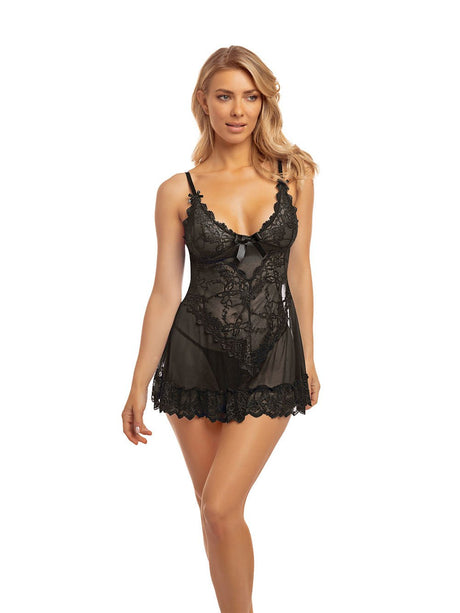
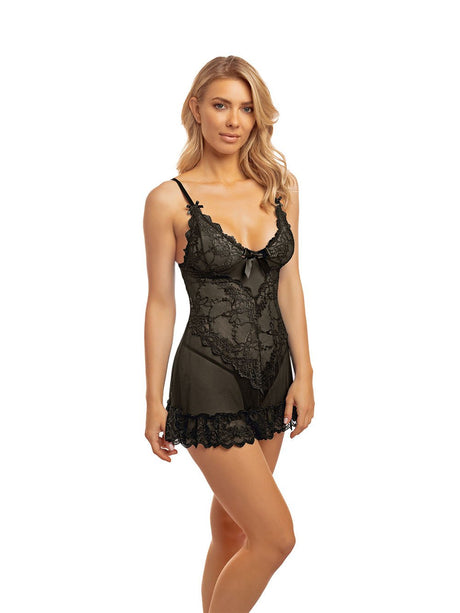
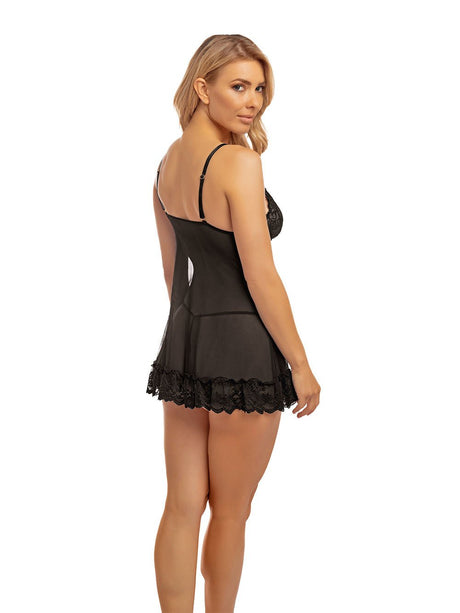
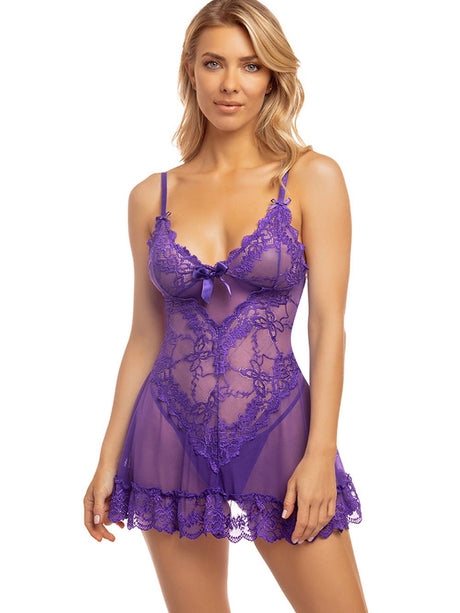
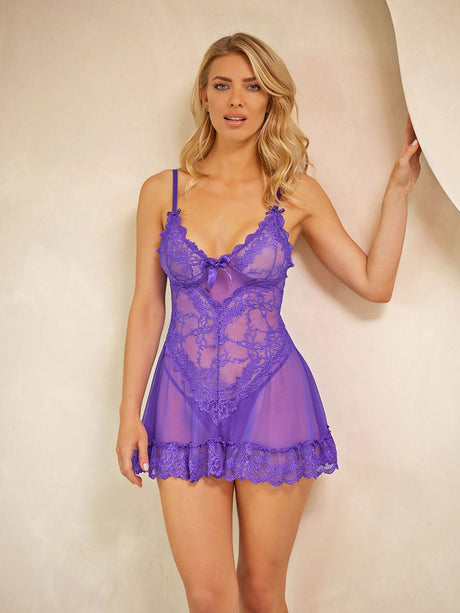
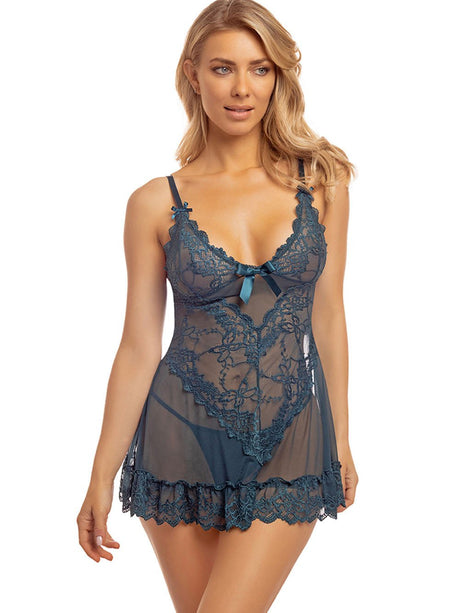
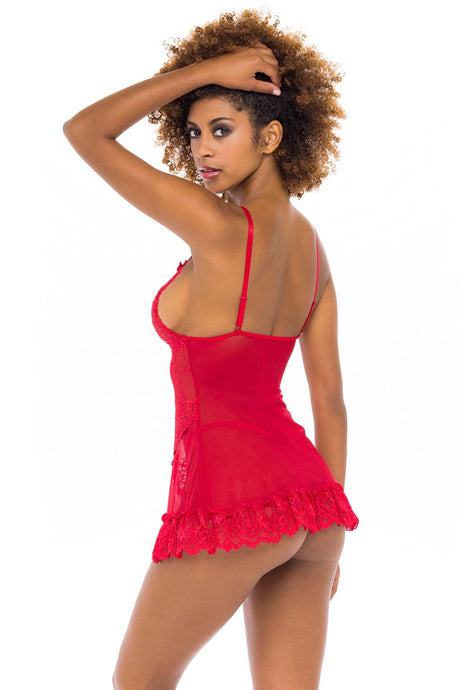
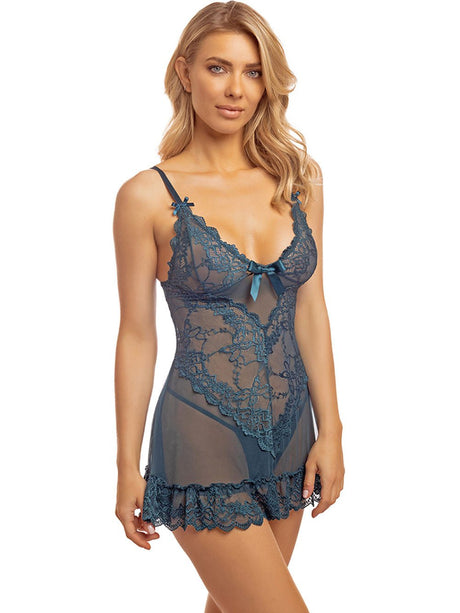
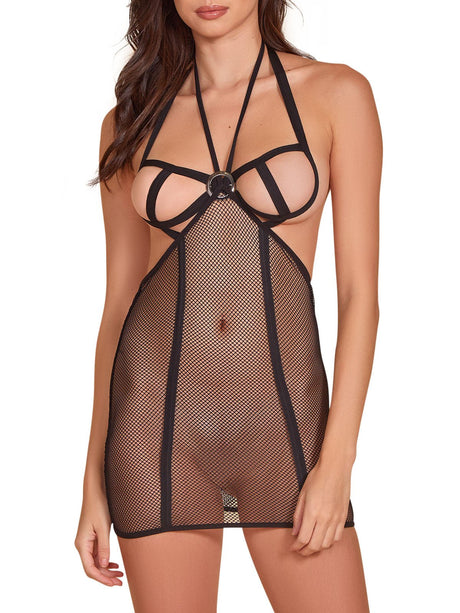
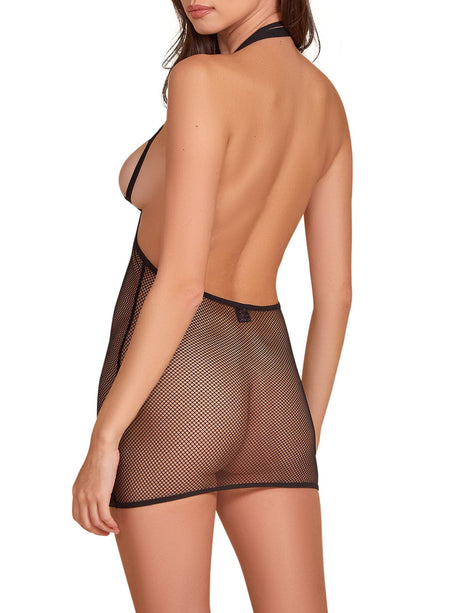
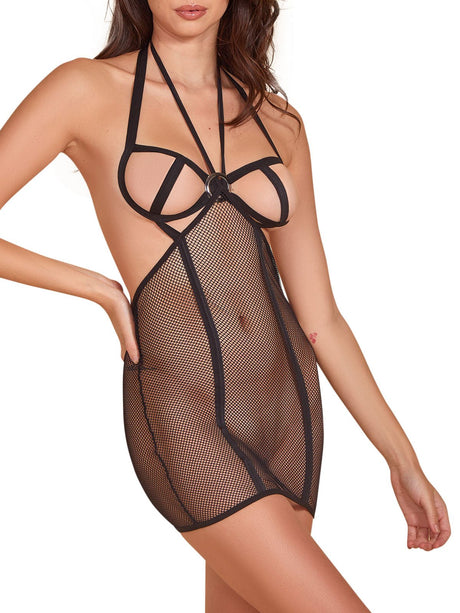
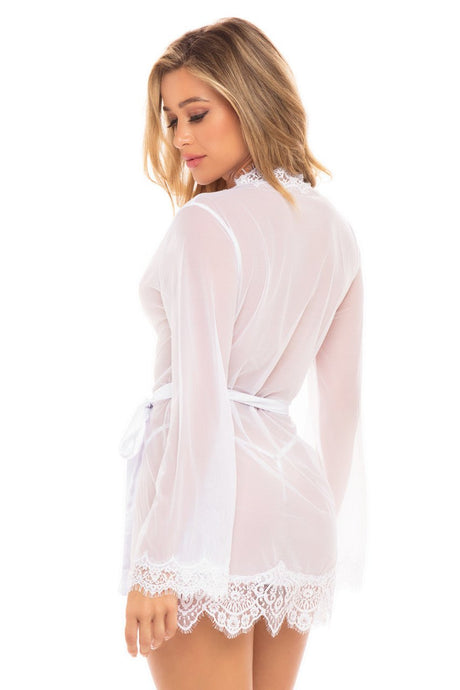
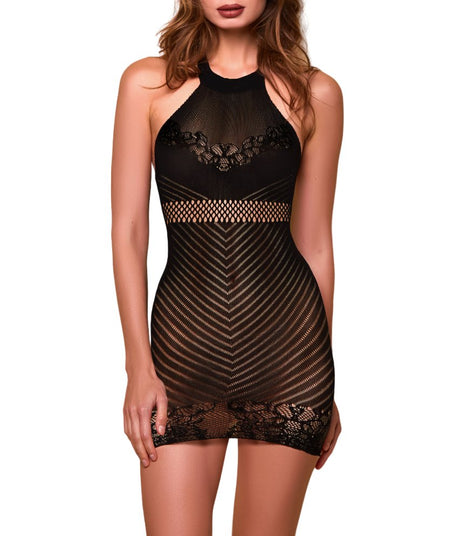
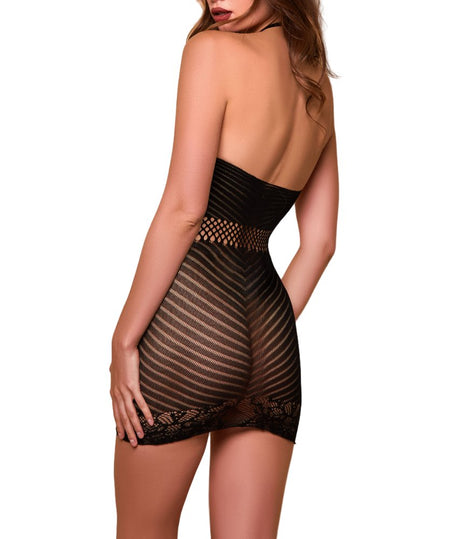
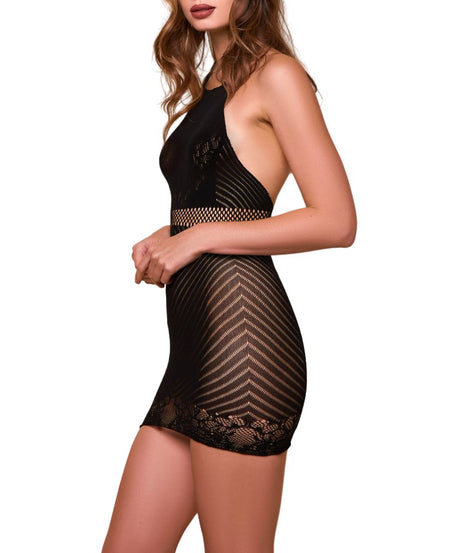
What is a lace dress?
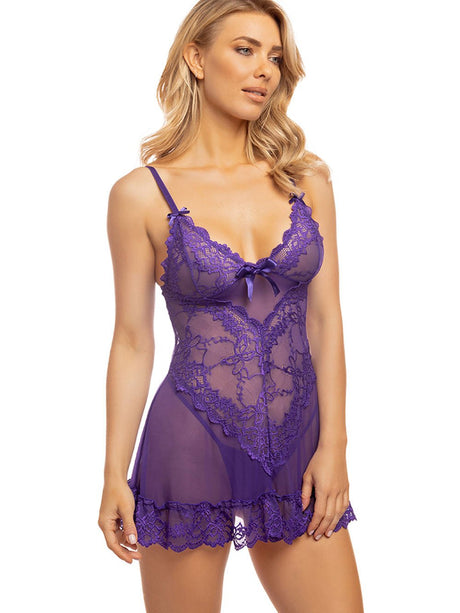
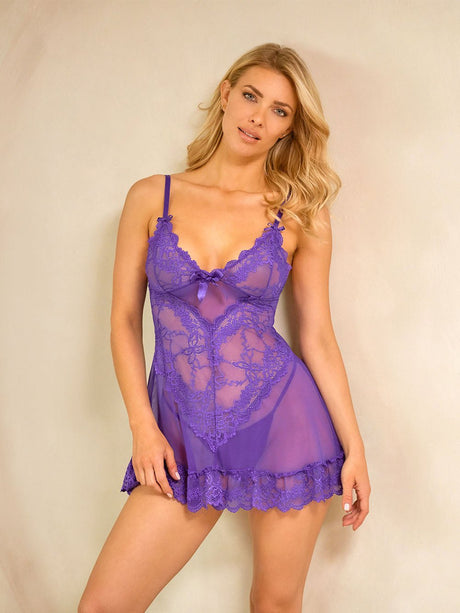
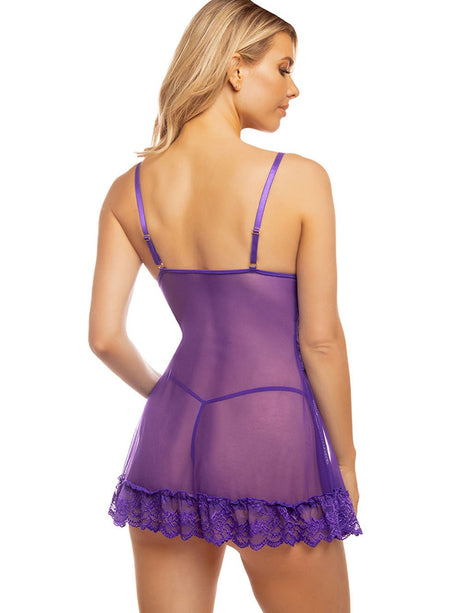
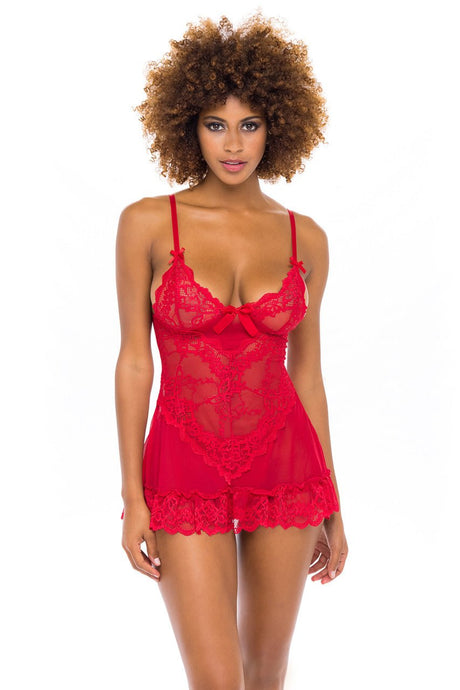
A lace dress is a dress made wholly or partly from lace: an openwork fabric in which a pattern of motifs is held together by a fine net or by small connecting bars.
Lace is decorative by nature, but it also changes how a dress is built and worn. Because lace is open, the lining underneath does as much work as the lace itself. It decides how sheer the dress is, how the color reads and what can be worn beneath it.
Three details separate a lace dress that looks expensive from one that does not: the type of lace, how the lining is handled, and whether the seams and edges follow the pattern. Get those right and a lace dress works for anything from a garden party to black tie.
Lace is one of the oldest luxury fabrics still in everyday use, and one of the easiest to get wrong.
The same pattern can look delicate, bold or cheap depending on the lace, the lining and the way the dress is sewn. Most of the difference is visible before you ever try it on.
- Lace is openwork: motifs held together by a net ground or by small bars.
- The lace type sets the look: Chantilly is fine and soft, Alençon is corded and bridal, guipure is heavy and graphic.
- The lining is the most important decision. Nude, matching, contrast or none each changes the dress.
- Good lace dresses follow the pattern: scalloped edges at the hem and neckline, seams that follow the motifs.
- Most lace has little stretch, so fit through the bust, waist and hips matters.
- Under sheer lace, go nude and smooth, or wear a slip or lining that is meant to be seen.
How Lace Is Made
Every lace has the same basic parts. Knowing them makes product descriptions, and price differences, easier to read.
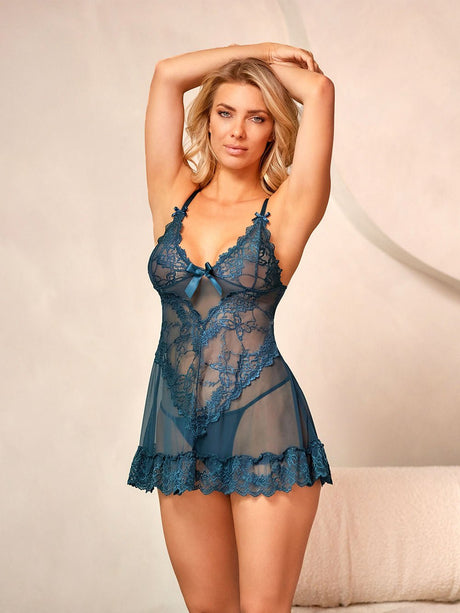
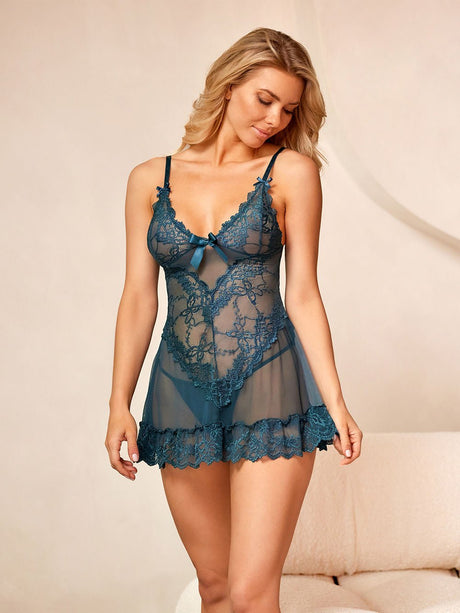
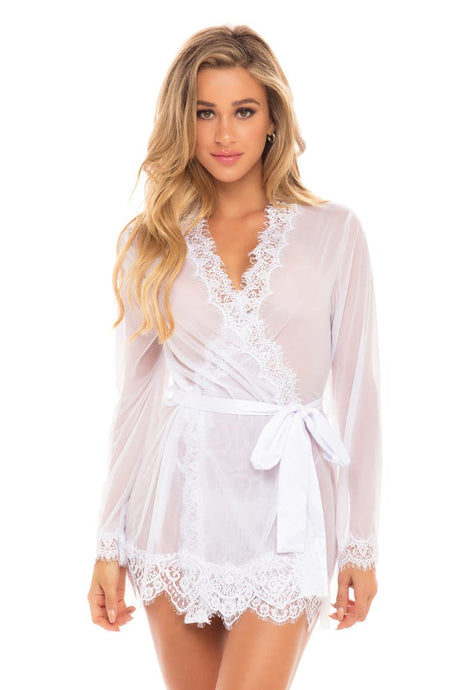
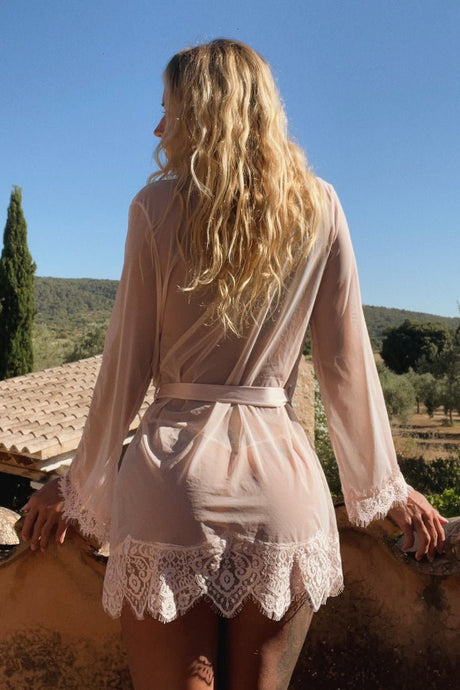
Lace is built from two elements. Motifs are the pattern: flowers, leaves, scrolls or geometric shapes. The ground is what holds the motifs together, usually a fine hexagonal net. Some laces add a cord, a raised thread that outlines the motifs and gives them depth. Many laces are made with a scalloped edge, a finished, shaped border that designers place at the hem, neckline or sleeves so the dress ends in the lace's own edge rather than a cut one.
Historically, lace was made by hand in two ways. Needle lace is built with a needle and thread, stitch by stitch, while bobbin lace is made by twisting and crossing many threads wound on bobbins. Almost all lace in dresses today is made by machine, but the names of historic handmade laces survive as styles: a machine-made Chantilly lace imitates the look of the handmade bobbin lace from Chantilly, France.
Lace, embroidery, eyelet and crochet
Several fabrics look like lace without being lace. Eyelet, also called broderie anglaise, is woven cotton with small embroidered holes; it is sturdier and more casual. Embroidered tulle is a net with a pattern stitched onto it, rather than a pattern formed with the net. Crochet is made with a hook and has a chunkier, looped texture. All three appear in retail listings as lace, so it is worth knowing which one a dress actually uses, because they behave differently in wear and in the wash.
The Main Types of Lace
Seven lace types cover almost every lace dress you will see. Each has a different weight, texture and best use.
| Lace | What it looks like | Weight | Best for |
|---|---|---|---|
| Chantilly | Fine net with delicate outlined florals | Light | Evening, cocktail, sleeves and overlays |
| Alençon | Motifs outlined with a raised cord | Light to medium | Bridal, formal, fitted bodices |
| Guipure | No net; motifs joined by small bars | Heavy | Structured day and cocktail dresses |
| Venise | Raised, sculptural motifs, usually without net | Heavy | Bridal, appliques, statement bodices |
| Eyelash | Loose thread ends along the edges | Light | Soft edges, sleeves, romantic styles |
| Stretch lace | Lace knitted with elastane | Light | Bodycon and fitted dresses |
| Crochet lace | Chunky looped texture | Medium to heavy | Casual, summer, bohemian styles |

Chantilly lace
Named after the French town where the handmade bobbin lace originated, Chantilly is a fine, soft lace with delicate floral motifs outlined in a flat thread on a sheer net. It drapes beautifully and is often used in black, which is its traditional color. Chantilly is the most sheer of the common laces, so the lining decides almost everything about how a Chantilly dress looks.
Alençon lace
Originally a needle lace from Alençon in France, sometimes called the queen of lace. Machine-made Alençon-style lace is recognizable by the raised cord that outlines each motif, giving it relief and a finished look. It is a bridal favorite and works well on fitted bodices, where individual motifs can be cut out and applied along necklines and hems.
Guipure lace
Guipure has no net ground. Its motifs are joined directly to each other, or by small connecting bars, which makes it heavier, more structured and more graphic than net-based laces. It holds a shape well, so it suits sheath and A-line dresses for day and cocktail. Most modern guipure is made as chemical lace: the pattern is embroidered onto a backing that is then dissolved, leaving only the embroidery.
Venise lace
Venise lace is a heavy, raised lace descended from Venetian needle lace. Its motifs are thick and sculptural, and it is often used as appliques on bridal gowns or for statement bodices and collars. Like guipure, it is usually made without a net.
Eyelash lace
Eyelash lace has loose thread ends left along its edges, which look like fine eyelashes. It gives sleeves, hems and necklines a soft, feathered finish and is common on romantic and bohemian dresses. The loose threads can catch, so it needs gentle care.
Stretch lace
Stretch lace is knitted with elastane, which lets it stretch and recover like jersey. It is the lace used in bodycon and very fitted dresses and is more comfortable than rigid lace. The trade is that it usually looks less refined up close than a fine Chantilly or corded lace.
Crochet lace
Crochet lace, whether handmade or machine-made to look handmade, has a chunky, looped texture. It suits summer, vacation and casual dresses. It is heavier than most laces and can stretch if hung.
Leavers and Raschel: Why Two Similar Laces Cost So Differently
Two machine methods make most of the world's lace. Knowing the difference explains a lot of the price gap between lace dresses.
Leavers lace is made on Leavers machines, which twist threads together in a way that closely imitates handmade bobbin lace. The machines are large and slow, and only a small number of manufacturers still run them, with the towns of Calais and Caudry in France the best known. Leavers lace is fine, detailed and soft, and it is used in high-end bridal and eveningwear.
Raschel lace is made on warp knitting machines that work far faster. Raschel lace can look very good, especially at a distance, and it is the lace in most ready-to-wear dresses. Up close it is usually flatter, with less depth in the motifs and a slightly more regular net.
You rarely see the method on a label, but you can judge the result. Fine lace has a soft hand, crisp motifs, a delicate net and depth where corded outlines sit. Lower-grade lace feels stiffer or plasticky, has fuzzy motif edges and a more obvious, uniform net.
A Short History of the Lace Dress
Lace began as a hand craft for the wealthy and became an everyday fabric only when machines learned to make it.
Handmade lace developed in Europe in the sixteenth century, with Italy and Flanders among the early centers. It was extraordinarily slow to make, and for centuries lace collars, cuffs and trims were a sign of wealth and status for men and women alike.
That changed in the early nineteenth century, when inventors in Nottingham developed machines that could make net and then patterned lace, including the machine that became known as the Leavers machine. Lace became affordable to the middle classes, and trims turned into whole garments. Queen Victoria's 1840 wedding dress, trimmed with handmade Honiton lace, helped fix white lace as a bridal tradition.
Lace has stayed closely tied to weddings ever since. Grace Kelly's 1956 wedding dress used antique rose point lace, and the lace wedding dress remains a reference for bridal design. At the same time, lace moved into everyday and evening wear: the black lace cocktail dress, the lace sheath for day events, and more recently the sheer lace dress worn over visible slips and bodysuits.
Lace Fibers and Comfort
Lace can be made from almost any fiber. The fiber decides how it feels against skin, how it breathes and how it washes.
| Fiber | Feel | Breathability | Watch for |
|---|---|---|---|
| Cotton | Soft, matte, natural | High | Can shrink; creases more |
| Nylon | Fine, smooth, slightly lustrous | Moderate | Can feel warm in summer |
| Polyester | Varies from soft to stiff | Low to moderate | Cheaper grades feel scratchy |
| Silk | Very soft, fine luster | High | Price; delicate care |
| Viscose or rayon | Soft with good drape | Moderate to high | Can shrink or lose shape when wet |
| Blends with elastane | Stretchy and smooth | Depends on base fiber | Less refined look up close |
In warm weather, the lining often matters more than the lace. A cotton or viscose lining breathes far better than a polyester one, so a lace dress for a summer wedding is worth checking for both. If lace scratches at the underarm or neckline, look for dresses where the lining extends to cover those edges, or where the edges are finished with a soft binding.
Lace Compared With Other Dress Fabrics
Lace is often chosen over satin, crepe or chiffon for the same occasion. Each fabric does a different job.
| Fabric | Look | Structure | Shows what is underneath? |
|---|---|---|---|
| Lace | Patterned, textured, romantic | Stable unless stretch lace | Depends on the lining |
| Satin | Smooth with a sheen | Fluid, especially bias cut | Shows lines and ridges |
| Crepe | Matte, fine texture | Holds a clean line | Forgiving |
| Chiffon | Sheer, floaty | Very soft, needs lining | Yes, unless lined |
| Velvet | Rich pile, deep color | Heavy drape | Forgiving |
Lace sits between crepe and chiffon: more decorative than crepe, more structured than chiffon, and more forgiving than satin once it is lined. It also combines well with all of them, which is why so many dresses use a lace bodice with a crepe or chiffon skirt.
The Lining: The Decision That Matters Most
Lace is open, so whatever sits beneath it shows. The lining changes the color, the opacity and the whole character of the dress.
Look at where the lining ends. A lining that stops above the hem shows as a line through the lace, which can look intentional on a scalloped hem or awkward on a straight one. Also check that the lining fits: a lining cut too loose will wrinkle behind the lace, and one cut too tight will pull and show strain lines.
Lace Dress Silhouettes
The cut decides the occasion as much as the lace does. The same lace can look formal in a sheath and relaxed in a shift.
| Silhouette | What it is | Best lace | Best for |
|---|---|---|---|
| Sheath | Close through the body, straight skirt | Guipure, corded lace | Office, cocktail, weddings |
| A-line | Fitted bodice, gently flared skirt | Most laces | Day events, weddings, church |
| Fit and flare | Fitted to the waist, fuller skirt | Chantilly, corded lace | Parties, weddings, prom |
| Shift | Straight from the shoulders | Guipure, crochet | Day, vacation, relaxed events |
| Bodycon | Tight and stretchy | Stretch lace | Evening, parties |
| Slip or overlay | Lace over a visible slip | Chantilly, eyelash | Evening, fashion-forward events |
| Illusion | Sheer lace at the neckline, sleeves or back | Chantilly, corded appliques | Formal, bridal, black tie |
| Maxi or gown | Floor length | Corded lace, Chantilly | Black tie, bridal, galas |

An illusion neckline uses sheer net or lace between the bust and the neck or shoulders, sometimes with lace appliques that appear to float on the skin. It gives the look of a strapless or off-the-shoulder dress with the security of a higher neckline. Illusion backs and sleeves work the same way and are common in bridal and formal wear.
Motif Scale and Proportion
The size and placement of the pattern affect how a lace dress looks on the body as much as the cut does.
Small motifs read as texture from a distance and suit petite frames, office dresses and anyone who wants the lace to be subtle. Large motifs read as pattern and make a bolder statement, and they need more careful placement, since a large flower landing over the bust or hip draws the eye there. Vertical arrangements of motifs lengthen the body; horizontal bands of lace widen it.
Many dresses combine lace with plain fabric. Lace panels at the center front with solid side panels create a narrowing effect, while a lace bodice with a plain skirt draws attention upward. A lace overlay across the whole dress on a contrast lining is the boldest version, and a lace trim at the hem or sleeves is the most understated.
Lace Terms Worth Knowing
These terms appear in product descriptions and bridal fittings. Knowing them makes it easier to understand what you are buying.
| Term | What it means |
|---|---|
| Ground or net | The mesh that holds the motifs together |
| Motif | An individual element of the pattern, such as a flower |
| Cord | A raised thread outlining the motifs |
| Scallop | A finished, curved border along the edge of lace |
| Galloon | A lace band with a scalloped edge on both sides |
| Applique | A motif cut from lace and sewn onto another fabric |
| Overlay | A layer of lace over a separate lining or slip |
| Illusion | Sheer net or lace designed to look like bare skin |
How to Judge a Lace Dress
The quality of a lace dress shows in how the lace is placed and joined. Two details matter most: the edges and the seams.

Where the Money Goes in a Lace Dress
Two lace dresses that look similar in a photograph can differ widely in price. Most of the difference is in the lace grade and the labor.
The lace itself is the biggest variable. Fine Leavers lace costs far more per meter than Raschel lace, and silk or cotton lace more than polyester. The labor is the second: matching motifs, sewing lapped seams, placing scalloped edges and hand-applying appliques take much longer than cutting and sewing lace like any other fabric. The lining is the third, since a fully fitted lining in a good fabric adds cost that a thin, loose lining does not.
If you are choosing where to spend, pay for construction on a dress that will be seen up close, such as a wedding guest dress or a dress for a family event, and save on lace dresses for parties and evening events where it will be seen from a distance and in low light. On any budget, the quality checks above tell you whether the price is going into the dress.
Getting the Fit Right
Most lace is stable rather than stretchy, and its lining usually is too. That makes fit more important than on a knit dress.
Sizing and Buying Online
Because lace rarely stretches, the size chart matters more than it does for knits.
Measure your bust, waist and hips and compare them with the brand's size chart rather than your usual size. If you fall between sizes, choose the size that fits your largest measurement, because taking a lace dress in is far easier than letting it out. Read the fiber content: a lace with some elastane will be more forgiving, while cotton or nylon lace over a woven lining will not stretch at all.
Look closely at product photographs. Zoom in on the hem to see whether the scalloped edge is used, on the side seams to see whether motifs match, and at the lining to see how far it extends. If the retailer shows the dress from the back, check how the zip and lace meet.
Petite, tall and plus sizes
For petite frames, large-scale motifs can overwhelm a small frame, and a hem with a deep scallop can land awkwardly if it has to be shortened. Smaller motifs and knee lengths usually work best. For tall frames, check the length, since shortening is easy but a lace hem cannot be let down. For plus sizes, look for lace with some stretch, a fully fitted lining that supports rather than clings, and motif placement that has been adjusted for the size rather than simply scaled up.
Alterations: What a Tailor Can Change
Lace can be altered beautifully, but it takes skill and time, and some changes are harder than they look.
| Change | Usually possible? | How |
|---|---|---|
| Shorten with a scalloped hem | Yes, with skill | The scallop is cut off, the dress shortened and the scallop reapplied by hand |
| Take in the sides | Usually | Seams are taken in, ideally following the motifs |
| Let out | Rarely | Lace seams have little allowance |
| Add a lining or change its length | Yes | Lining can be added, shortened or replaced |
| Shorten sleeves | Usually | Easier if the sleeve edge has no scallop |
| Repair a tear | Often | A matching motif is appliqued over the damage |
Choosing a Color
Color and lining work together in lace, so the same shade can read very differently from one dress to the next.
| Color | How it reads | Best for |
|---|---|---|
| Black | Classic, formal, graphic | Cocktail, evening, black tie |
| White and ivory | Bridal, summery | Bridal, summer day events, not as a wedding guest |
| Blush and nude | Soft, romantic | Weddings, spring events, evening |
| Navy | Polished, easy | Office, church, mother of the bride |
| Dusty blue and sage | Soft, garden-party | Daytime weddings, showers |
| Red and emerald | Bold, festive | Holiday parties, evening events |
White and ivory lace are strongly associated with brides. As a guest, avoid white, ivory and very pale lace unless the couple has asked for it. A pale lace over a nude lining can also read as white in photographs, so check the overall effect rather than the color name.
Lace photographs differently from how it looks in a mirror. Flash and bright sunlight can make a nude lining look lighter and the lace look more sheer, while low evening light flattens fine lace into a single tone. Corded laces and heavier guipure hold their detail better in photographs than fine Chantilly. If the event will be photographed heavily, take a quick picture of the dress with your phone's flash before deciding.
Where to Wear a Lace Dress
Lace suits almost any dress code. The lace type, lining and length decide where a specific dress fits.
| Dress code | Lace dress that fits | Length |
|---|---|---|
| Casual | Crochet or cotton lace shift, eyelet sundress | Mini to maxi |
| Business casual | Guipure or matching-lined lace sheath with sleeves | Knee to midi |
| Cocktail | Black Chantilly or corded lace sheath or fit and flare | Knee to midi |
| Semi-formal | Lace midi in a rich color with a matching lining | Midi |
| Black tie | Corded or Chantilly lace gown, often with illusion details | Floor |
| Wedding guest | Lace midi in a color other than white or ivory | Knee to maxi |
| Religious ceremony | Lined lace with sleeves or a jacket | Knee or below |
For cocktail invitations, our cocktail dress guide explains the dress code. Lace is also one of the classic fabrics for a tea-length dress, especially for weddings and mothers of the couple.
For bridal wear, the choice of lace and what goes underneath are closely linked. Our guide to what to wear under a wedding dress covers the bridal layer in detail, and our wedding guest dress guide covers dress codes and colors for guests. For hem lengths, see mini, midi and maxi lengths and our midi dress guide.
Lace for Brides
Lace is the most common fabric detail in wedding dresses, and bridal lace raises a few questions that everyday lace does not.
Choose the lace for the setting. Fine Chantilly suits a soft, romantic dress and warm weather. Corded Alençon-style lace gives a classic, formal look and photographs with depth. Heavy guipure and Venise lace suit structured, modern gowns and cooler seasons. Consider the weight across the whole dress: lace over a full skirt and long train adds up, and a heavy lace gown can be tiring to wear for many hours.
Many bridal gowns use lace appliques, individual motifs cut from lace and sewn onto tulle, which lets the designer place the pattern exactly where it flatters, along a neckline, down a sheer back or scattered across the skirt. Look at how appliques are finished at the edges; well-made ones are hand-sewn and lie flat.
What goes underneath needs planning early, because bridal lace often includes illusion panels, sheer backs or nude linings. Our guides to bras for a wedding dress by neckline and back style and bridal shapewear cover the options, and the right time to decide is before the first fitting, since the dress will be altered around what you wear.
How to Style a Lace Dress
Lace is already detailed. The rule that works almost every time is to keep everything else simple.

Styling through the seasons
Spring: pastel lace for day events, or ivory where it will not be mistaken for bridal, with nude sandals and a light cardigan or trench.
Summer: cotton, crochet and guipure lace in white and bright colors, with flat sandals or espadrilles. Choose breathable linings.
Fall: black, burgundy and navy lace with sheer or opaque tights, ankle boots and a leather jacket or tailored coat.
Winter: long-sleeve lace in rich colors for holiday parties, with sheer black tights, heeled boots or pumps and a wool coat. Our holiday party dress guide covers festive dress codes, and our velvet dress guide covers pairing lace with velvet.
What to Wear Under a Lace Dress
The lining decides the answer. The more sheer the lace, the more what is underneath becomes part of the look.
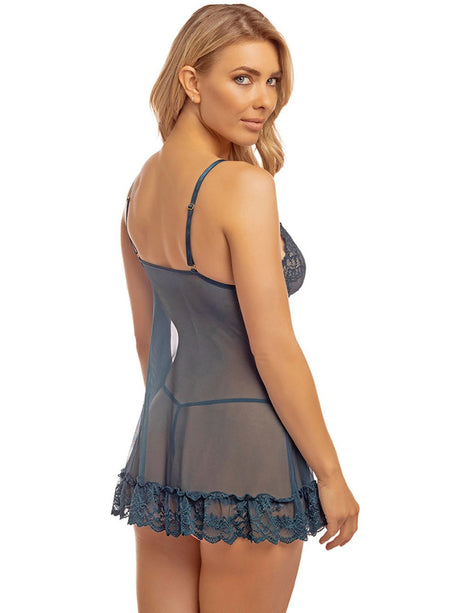
Lace shows texture underneath more than color. A lace bra under a lined lace dress can print as a second pattern, and seams and bows show through fine lace. Smooth, molded and bonded-edge pieces are the safe choice unless the layer is meant to be seen.
Nude, Strapless and Seamless
The layers that stay invisible under lace, and the ones designed to be seen through it.
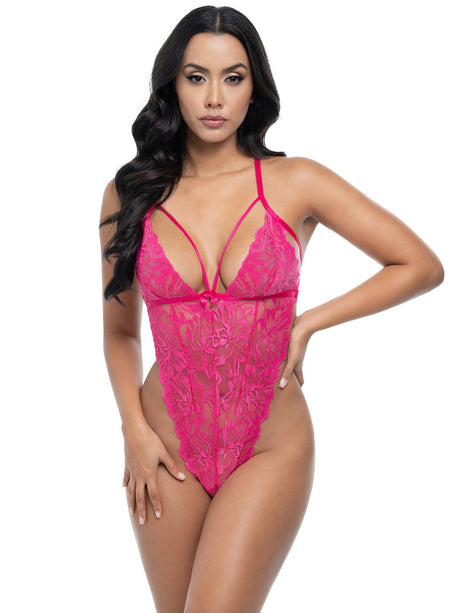
Nude LingerieStrapless BrasBralettesCaring for a Lace Dress
Lace is stronger than it looks, but it snags, stretches and distorts if handled roughly.
Fixing a snag or small tear
Do not cut a pulled thread in lace, since that can open a hole. Instead, gently ease the thread back into place from the inside of the dress with a blunt needle or a pin, working the fabric around it until the tension evens out. For a small tear in the net, a tailor can often darn it with fine matching thread, or cover it with a motif cut from a hidden area such as a seam allowance or the hem. A damaged scalloped edge can be replaced with a matching scallop taken from elsewhere.
Packing a lace dress
Roll lace in acid-free tissue rather than folding it flat, which reduces sharp creases, and pack it near the top of the case so nothing heavy presses on it. Keep it away from zips, buckles and hook fastenings on other clothes. On arrival, hang it in a steamy bathroom for a while to release creases, or steam it lightly from the inside. Avoid pressing corded or raised lace from the right side.
Common Lace Dress Mistakes
Most lace problems come from what goes with it rather than the dress itself.
Lace Dress Buying Checklist
- Lace type: Chantilly, Alençon, guipure, Venise, eyelash, stretch or crochet.
- Quality: soft hand, crisp motifs, delicate net.
- Edges: scalloped edges used at the hem, neckline or sleeves.
- Seams: motifs matched or seams that follow the pattern.
- Lining: color, length and fit, and which areas are sheer.
- Fit: no strain across the bust, waist or hips; room to raise your arms.
- Color: right for the occasion, and not white or ivory as a wedding guest.
- Underneath: smooth, skin-tone layers or a slip planned from the lining.
What This Means for You
A lace dress is defined by three things: the lace, the lining and the construction. The lace type sets the look, from fine Chantilly to heavy guipure. The lining sets the opacity and how the color reads, whether nude, matching, contrast or none. The construction shows quality: scalloped edges at the hem and neckline, and seams that follow the pattern.
Fit matters because most lace does not stretch, so size for your largest measurement and let a tailor take it in. Choose a color for the occasion, keep styling simple so the lace stays the focus, and protect it from anything that can snag.
Underneath, let the lining decide. A lined lace dress needs smooth, seamless layers. Nude linings and illusion panels need skin-tone pieces. Unlined lace needs a slip, a bodysuit or lingerie meant to be seen.
Necklines, Backs and Knits
Lace often comes with a halter neck or an open back. Our guides cover how each one changes the fit and what goes underneath.
Halter DressBackless DressSweater DressFrequently Asked Questions
What is a lace dress?
What are the main types of lace?
What is the difference between Chantilly and Alencon lace?
What is guipure lace?
Can you wear a lace dress to a wedding?
What do you wear under a lace dress?
How do you tell if a lace dress is good quality?
Is a lace dress appropriate for work?
Can a lace dress be shortened?
How do you wash a lace dress?
What is an illusion neckline?
What color lace dress is most versatile?
Why does lace feel scratchy?
What is the difference between lace and eyelet?
Who made the lace wedding dress popular?
How do you stop lace from snagging?
Can you wear a lace dress in winter?
This guide covers lace, dress construction, fit, styling and care and is for general information. Lace quality, linings and sizing vary widely between makers, so check the product details, photographs and care label for any individual dress.