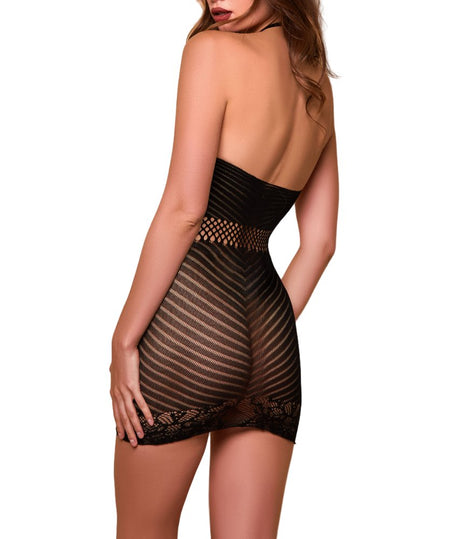
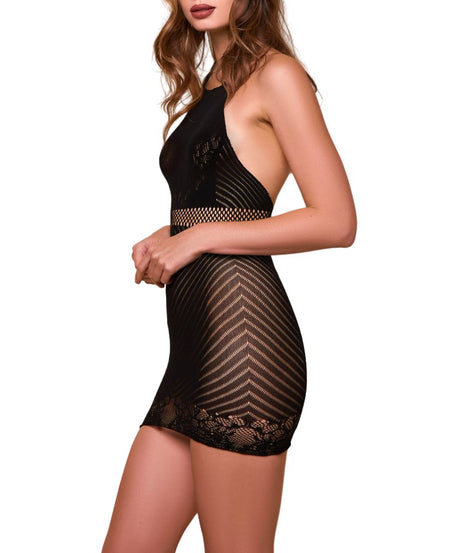
What is a little black dress?
A little black dress is a simple, well-cut black dress, usually at the knee or midi length, that can be dressed up or down for almost any occasion. It is often shortened to LBD.
The word little refers to its simplicity, not its size. A little black dress has no strong trend details, a fabric with little shine and a neckline that works almost anywhere, so the shoes, jewelry and layers decide whether it reads as office, dinner, wedding or evening.
Choosing a good one comes down to five things: the cut, the length, the fabric, the shade of black and the fit. Get those right and a single dress covers more invitations than anything else in a wardrobe.
Almost everyone owns a black dress. Far fewer own one that they reach for without thinking.
The difference is rarely the price. It is the shade of black, the weight of the fabric, the length and a cut plain enough to change with what you put on it.
- A little black dress is defined by versatility, not a single cut or length.
- Knee to midi is the most useful length; it suits work, dinner and most weddings.
- Crepe is the most versatile fabric: matte, crease resistant and deeply black.
- Black has undertones. Blue-black, brown-black and jet look different side by side.
- Accessories decide the occasion: gold, silver, pearls or one bright color.
- Wash cold, inside out and dry away from sun to keep black from fading.
What Makes a Dress a Little Black Dress
Not every black dress is a little black dress. Five traits separate the one you wear for years from the one you wear twice.
A black dress becomes a little black dress when it can move between settings without looking wrong in any of them. That depends less on the designer than on a handful of deliberate choices. The fewer details a dress carries, the more ways you can wear it.
A dress with all five is a foundation. A dress with three or four is still useful, but it will lean toward particular occasions: a satin slip leans to evening, a cotton shift leans to summer daytime. Both can be excellent, and many people own one of each. If you are buying your first, look for all five.

Black Is Not One Color
The detail most people never notice until two pieces of black clothing refuse to match.
Black dyes are mixtures, and almost every black fabric has an undertone. Some lean cool and slightly blue, some lean warm and slightly brown or green, and a few are close to a true neutral jet. Different fibers also take dye differently, so a black wool, a black polyester crepe and a black cotton from the same dye lot can still look different.
The difference is easy to miss in a shop and obvious outdoors. It matters in three situations. When you pair black pieces, a blue-black jacket over a brown-black dress can look accidental. When you choose metals, cool blacks look crisp with silver and warm blacks look rich with gold. When a dress fades, it moves toward charcoal, and a faded black next to a new black looks tired.
Take the dress to a window, or step outside, and hold it next to something you know is a deep neutral black. A good black looks deep and even in daylight without a visible green, purple or gray cast. If you plan to wear it with black shoes, tights or a jacket you already own, hold them together before you buy.

There is an easy way to avoid the problem altogether. When black pieces do not quite match, make the textures clearly different: a matte crepe dress with a leather jacket, or a jersey dress with velvet shoes. A strong difference in texture reads as deliberate, while two flat fabrics in slightly different blacks read as a near miss.
Little Black Dress Silhouettes
The cut decides where the dress goes and how it fits. Eight shapes cover nearly every little black dress.
| Silhouette | What it is | Best for | Consider |
|---|---|---|---|
| Sheath | Close through the body, straight skirt | Work, dinner, cocktail | The classic LBD; needs a vent or slit to walk |
| Shift | Falls straight from the shoulders | Work, travel, day | Easy fit; a belt adds shape |
| Fit and flare | Fitted bodice, fuller skirt | Weddings, parties | Defines the waist; reads a little more festive |
| Wrap | Crosses and ties at the waist | Work, travel, dinner | Adjustable; check it stays closed seated |
| Slip | Bias-cut with thin straps | Evening, layering | Shows what is underneath; layer over a knit by day |
| A-line | Fitted top, gently flared skirt | Almost anything | The most forgiving cut |
| Bodycon | Tight, stretchy, usually short | Parties, nights out | The least versatile; shows every line |
| Shirt dress | Collar, buttons, often belted | Work, weekend | Reads casual to smart casual |
The sheath
The sheath is the dress most people picture when they hear the phrase. It follows the body without clinging, usually ends at the knee, and has a straight skirt with a vent or slit at the back. It is the most adaptable little black dress because its line is so plain: a blazer and pumps make it a work dress, heels and drop earrings make it an evening dress. Look for a lining, darts or princess seams that shape it to the body, and a vent that lets you walk and climb stairs.
The shift and the wrap
A shift drops straight from the shoulders and skims the body. It is comfortable, easy to fit and good for travel and long days, and a slim belt turns it into a shaped dress. A wrap crosses over the body and ties at the waist, so it defines the waist and adjusts to fit, which makes it a good choice between sizes. Check that a wrap stays closed when you sit and lean forward; a faux wrap sewn shut avoids the problem.
Fit and flare and A-line
Both have a fitted top and a wider skirt. The fit and flare has a defined waist seam and a fuller skirt and reads slightly more festive, which suits weddings and parties. The A-line widens gently from the waist or hip and is the most forgiving shape for most figures. Both move well and are easy to dance in.
Slip, bodycon and shirt dress
A black slip dress is bias cut, so it drapes close to the body and moves with it. It is one of the most elegant evening options and layers well over a fine turtleneck or under a blazer by day. A bodycon dress is tight and stretchy, usually short, and suits parties but little else. A black shirt dress has a collar and buttons and reads smart casual, a useful option for weekends and relaxed offices. Our guides to the midi dress and the sweater dress cover these shapes at other lengths and in knits.
Necklines and Sleeves
The neckline decides how widely the dress can travel. Some go everywhere; others suit only evening.
| Neckline | Effect | Works for | Underneath |
|---|---|---|---|
| Bateau or boat | Wide and shallow across the collarbones | Work, ceremonies, dinner | Most bras; straps may show at the edges |
| V-neck | Lengthens the neck and torso | Most events at a modest depth | A plunge bra for deeper Vs |
| Scoop | Soft and open | Almost anything | Most bras |
| Square | Structured, frames the collarbones | Work, weddings, dinner | Check the strap position |
| Sweetheart | Romantic, shaped over the bust | Evening, parties | Often strapless or with thin straps |
| Off the shoulder | Shows the shoulders | Evening, summer events | A strapless bra |
| Halter | Bare shoulders, strap at the neck | Evening, summer | See our halter dress guide |
Sleeves change the season and the formality as much as the neckline does. Cap and short sleeves suit warm weather and offices; three-quarter and long sleeves suit fall, winter, work and ceremonies where covered arms are expected. A long-sleeve little black dress in crepe or a fine knit is one of the most useful versions to own, because it needs no jacket at most events. An open or low back, covered in our backless dress guide, turns a simple front into an evening dress.
Length: From Mini to Maxi
The classic little black dress sits at the knee, but every length has a place. The question is how many places you need it to go.
| Length | Where the hem lands | Formality | Best for |
|---|---|---|---|
| Mini | Well above the knee | Casual to party | Nights out, parties, summer |
| Knee | At or just below the knee | The widest range | Work, dinner, cocktail, most weddings |
| Midi | Between knee and ankle | Polished, often dressier | Work, weddings, daytime events |
| Tea length | Lower calf, above the ankle | Dressy | Weddings, black tie optional |
| Maxi | Ankle or floor | Evening or very casual | Black tie in a gown; summer in jersey |
If you will own one little black dress, knee length or just below covers the most invitations. A midi is the next most versatile and easier for daytime weddings, religious ceremonies and conservative offices. A mini is fun but narrower, and a floor-length black gown is a separate garment for black tie. Our guide to mini, midi and maxi lengths gives the measurements for each, and our tea-length dress guide covers the dressiest length that still shows the ankle.
Fabrics and How Well They Hold Their Black
Fabric decides formality, comfort, how the dress travels and how long it stays truly black.
| Fabric | Finish | Formality | Holds its black | Watch for |
|---|---|---|---|---|
| Crepe | Matte, fine texture | Work to evening | Well | Very little; the safest choice |
| Ponte | Matte, firm knit | Work, travel | Well | Can pill at friction points |
| Jersey | Soft, slight sheen | Casual to dinner | Varies with quality | Thin jersey clings and fades |
| Satin | Glossy | Evening | Well | Shows every line underneath |
| Velvet | Deep pile | Evening, holiday | Very well; the deepest black | Crushes; needs steaming |
| Lace | Openwork pattern | Dinner to evening | Well | Lining color changes the look |
| Cotton and linen | Matte, casual | Day, summer | Poorly; fades fastest | Creases; turns charcoal with washing |

Crepe is the best all-round choice for a first little black dress. Its matte, slightly grainy surface reads polished in daylight and at night, resists creasing, hides minor marks and holds a deep black for years. Ponte is a firm double knit with similar qualities and more comfort, which makes it ideal for work and travel. Good jersey is soft and packable but varies widely; thin, shiny jersey clings and fades quickly.
Dressier fabrics narrow the dress toward evening. Satin is glamorous but shows every line beneath it. Velvet has the deepest black of any common fabric, because the pile absorbs light; our velvet dress guide covers its types and care. Black lace depends on its lining, which our lace dress guide explains. Cotton and linen are the casual summer options and the quickest to fade.
Weight and lining matter as much as fiber. A heavier crepe or ponte hangs cleanly, hides what is underneath and resists creasing, while a thin version of the same fabric clings and shows every line. A lining helps a black dress in three ways: it keeps a lightweight shell opaque, it lets the dress slide over tights instead of riding up, and it helps the shape hold through a long day. When comparing two similar dresses, hold each one up by the shoulders. The one that falls straight and still, without collapsing at the waist, will usually look better and last longer.
How to Choose Your Little Black Dress
Start with where you will wear it most, then work back to the cut, length and fabric.
| If you mostly need it for | Look for | Length | Fabric |
|---|---|---|---|
| Work | Sheath, shift or wrap with sleeves | Knee or midi | Crepe, ponte or wool blend |
| Dinners and dates | Sheath, wrap or slip | Knee or midi | Crepe, satin or jersey |
| Weddings and events | Fit and flare, A-line or sheath | Knee to tea length | Crepe, lace or satin |
| Travel | Wrap or shift | Knee or midi | Ponte or good jersey |
| Parties | Slip, bodycon or fit and flare | Mini to knee | Satin, velvet or sequins |
| All of the above | Sheath or A-line, modest neckline | Knee | Crepe |
If the answer is all of the above, the choice is clear: a knee-length crepe sheath or A-line with a bateau, scoop or square neckline and short or three-quarter sleeves. It is the version that works at the most events, and the one you can add to later with a slip dress for evening or a jersey wrap for travel.
Quality checks before you buy
Fit and proportion
A plain black dress hides nothing about the fit, so the fit does most of the work. The shoulder seam should sit at the edge of your shoulder; the bust should lie smooth without pulling across the buttons or zip; and there should be no horizontal strain lines across the hips when you stand or sit. Sit down in the fitting room and check that the hem stays at a comfortable length. Black reduces the visible shadows that show contour, which is why it is often described as slimming, but it cannot hide a dress that is the wrong size.
For proportion, the same rules apply as with any dress. Defining the waist with a wrap, fit and flare or belt suits most figures. A V or scoop neckline lengthens the neck and torso. A hem at a narrow point of the leg, just below the knee or on the lower calf, looks longer and cleaner than one at the widest part of the calf. If you are petite, a knee-length dress may land lower than expected, so check the stated length.
Petite, tall, curvy and plus sizes
Petite: a knee-length dress can land at mid-calf on a shorter frame, so look at petite ranges or plan to hem it. A defined waist, a V or scoop neckline and a hem just below the knee keep the proportions long. Tall: check the stated length, since standard dresses often end above the knee, and look for tall ranges or midis that land at the knee on you. Curvy: a wrap, fit and flare or a sheath with princess seams follows the waist without pulling at the bust or hips; choose ponte or a heavier crepe that skims rather than clings. Plus sizes: look for a dress graded for the size, with sleeves and armholes cut in proportion and a lining, rather than a smaller pattern scaled up. For a smooth line under fitted black, our guide to plus size shapewear covers the options.
How to Style a Little Black Dress
The dress stays the same; the accessories and layers decide the occasion. Choosing a color story first makes the rest easy.

Dressing up a little black dress takes three changes: heels, a statement earring and a sleek bag or clutch. A satin or velvet wrap, a sharper lip or a sleek hairstyle takes it further. Dressing it down takes the opposite: white sneakers or loafers, a denim or leather jacket and a tote or crossbody bag. A fine turtleneck under a black slip dress, or a crisp white shirt under a sleeveless sheath, makes it suitable for daytime and offices.
Layers
Black works with every layer, which is half its appeal. A tailored blazer makes it a work dress. A trench coat keeps it polished in spring and fall. A leather jacket gives it an edge for evenings out. A long cardigan or a camel coat softens it for daytime. The one rule is proportion: choose a jacket that stops at the waist or a coat that covers the hem, since a coat ending just above the hem cuts the dress awkwardly.
Shoes
A little black dress works with almost any shoe, so let the event decide. Pumps or slingbacks for work and ceremonies; strappy heels or sandals for evening; ankle or knee boots with tights in winter; loafers, ballet flats or clean sneakers for daytime. Nude or skin-tone shoes lengthen the leg in warm weather; black shoes with black tights create one continuous line in cold weather.
Through the seasons
Spring: a crepe or jersey dress with a trench, loafers and silver or pearl jewelry. Summer: a cotton, linen or light jersey dress, sleeveless, with sandals and a woven bag. Fall: a long-sleeve crepe or knit dress with knee boots, opaque tights and a tailored coat. Winter: velvet, wool blend or a heavy knit with opaque or sheer black tights and a long coat. Our holiday party dress guide covers the festive version, with sparkle and velvet.
Black near the face
Black worn right up to the jaw can feel severe on some complexions, especially in harsh daylight, because it reflects no light onto the face. If a high black neckline makes you look tired, open the neckline or add something light near the face: a scoop or V neck that shows skin, a pearl or gold necklace, a white collar under a sleeveless dress, or a lighter scarf or coat. In the evening, softer artificial light makes black near the face easier to wear, which is one reason a black dress so often feels at its best at night. A clear lip color, from a classic red to a soft neutral, also lifts the whole look.
Travel
A packable little black dress is one of the most useful things to bring on a trip. Choose ponte, good jersey or a crease-resistant crepe in a wrap or shift cut. Wear it with sneakers for sightseeing, sandals for lunch and heels for dinner, and roll rather than fold it to reduce creases. One black dress and three pairs of shoes can replace several outfits.
Black at Weddings, Funerals and Work
Black carries meaning, and the meaning changes with the setting. A little forethought keeps it appropriate.
Weddings
Black is widely accepted at evening, formal and city weddings today, and at black tie events a black gown is one of the most elegant choices. It can feel somber at a daytime garden or beach wedding, where lighter colors suit the setting. Some cultures avoid black at weddings altogether, so if you are unsure about the couple's traditions, ask a family member or choose another color.
To keep a black dress festive at a wedding, add color or shine: metallic or colored shoes, a printed or jewel-toned wrap, gold jewelry or a bright clutch. Choose a dressier fabric such as crepe, lace or satin, and a midi or tea length for daytime ceremonies. Our wedding guest dress guide covers every dress code and the colors to avoid.
At some venues, waitstaff and event teams wear black. A plain black dress with flat black shoes and no jewelry can blend in. One accessory with color or shine is enough to avoid it.
Funerals and memorials
In most Western traditions, a little black dress is a natural choice for a funeral, provided it is modest. Choose knee length or longer, covered shoulders or a jacket, and plain, quiet accessories such as pearls or small studs. Avoid satin, sequins and very fitted cuts. Customs vary widely, and in some cultures white or other colors are worn for mourning, so follow the family's lead.
Work
A black dress is one of the easiest things to wear to work, as long as the cut is right. A knee-length or midi sheath, shift or wrap in crepe or ponte, with sleeves or a blazer, suits most offices. Add closed shoes, opaque tights in cold weather and simple jewelry. Avoid slip dresses, deep necklines and short hems unless your workplace is relaxed.
What to Wear Under a Little Black Dress
Black changes the usual rules. Under sheer black, black disappears; under opaque black, the edges matter more than the color.
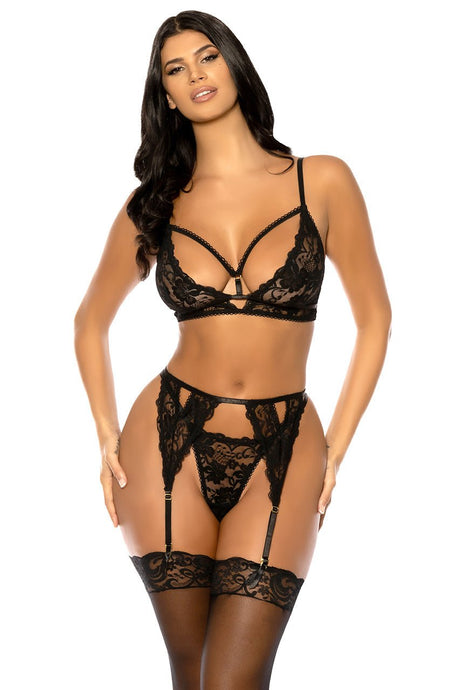
With white and pale dresses, nude underwear disappears because it matches the skin behind the fabric. With sheer black fabric, the dress itself darkens everything beneath it, so black underwear blends with the dress while a nude or white bra shows as a lighter patch. Under fully opaque black, color does not show at all and only the edges matter.
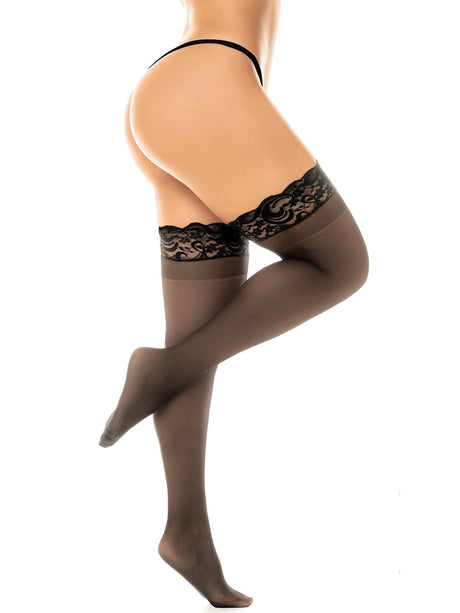
Black Tights, Black Lingerie and Seamless Pieces
The layers that disappear under a little black dress, or show on purpose.
Black TightsBlack LingerieSeamlessKeeping Black Black
Black fades faster than almost any color, and a faded black dress looks tired long before it wears out.
Black fades because the dye loses depth with heat, light, friction and harsh detergents. The three biggest causes are hot water, tumble drying and sunlight, and all three are easy to avoid.

A Short History of the Little Black Dress
Black went from the color of mourning and service to a fashion staple in a few decades.
For much of the nineteenth century, black clothing signaled something specific: mourning, piety or a uniform. Victorian widows were expected to wear black for a year or more, and household staff often wore black livery. In 1884, John Singer Sargent's portrait Madame X, showing Virginie Gautreau in a sleek black evening dress, caused a scandal at the Paris Salon, and it now looks like an early sign of what was coming.
The change came after the First World War, when mourning dress was so widespread that black was everywhere, and designers began to treat it as fashion rather than grief. In 1926, American Vogue published a picture of a short, simple black dress by Gabrielle Chanel and called it Chanel's Ford, comparing it to the Ford Model T: simple, accessible and black. The magazine predicted it would become a sort of uniform for women of taste, and it did.
The little black dress lasted through the Depression because it was economical and elegant, and through the Second World War partly because textiles were rationed. The singer Edith Piaf performed in a plain black dress throughout her career. In 1961, Hubert de Givenchy dressed Audrey Hepburn in a black evening gown for Breakfast at Tiffany's, one of the most famous black dresses in film. In 1994, Diana, Princess of Wales, wore a fitted black dress by Christina Stambolian to an evening at the Serpentine Gallery, a dress often described as a little black dress. Today the term is so familiar that it is usually shortened to LBD.
Vintage black dresses
Vintage black dresses are easy to find and often well made. Look for a metal zip, generous seam allowances that allow alteration, and a lining in good condition. Check the color in daylight, since older dyes can fade to brown or gray at the folds and underarms, and check the fabric for brittleness or moth damage before buying.
Where to Spend and Where to Save
A little black dress is usually worn more often than any other dress, which changes the math.
Divide the price of a dress by the number of times you expect to wear it. A dress worn thirty times costs a third as much per wear as one worn ten times, even at the same price. Because a good little black dress goes to work, dinners, weddings and parties, it tends to earn back a higher price faster than any other dress. Spend most on the version you will wear most, usually a knee-length crepe or ponte dress with sleeves, and save on trend versions such as a sequin mini or a cutout party dress.
When to own a second one. After the everyday version, the most useful additions are a dressier black dress for evening, such as a satin slip, velvet or lace, and a lighter one for summer in cotton, linen or a fine jersey. Three well-chosen black dresses cover almost every season and dress code, and because they share a color, the same shoes, tights, bags and jewelry work with all of them. That shared base is the real economy of black: every accessory you buy for one works with the others.
Common Little Black Dress Mistakes
Most of them are small and easy to avoid.
Little Black Dress Buying Checklist
Run through these before you buy.
- Cut: simple, with no strong trend details.
- Length: knee or midi for the widest range.
- Fabric: crepe, ponte or good jersey for everyday; satin, velvet or lace for evening.
- Color: deep and even in daylight, with shell and lining matching.
- Neckline: one you could wear to work and to a wedding.
- Fit: smooth at the shoulders, bust and hips, sitting and standing.
- Construction: flat seams, an invisible zip and a stitched hem.
- Underneath: smooth edges for opaque fabric; black for sheer.
What This Means for You
A little black dress is a simple black dress cut to go almost anywhere. The ones that last share five traits: a plain cut, a length you can sit in, a matte or low-sheen fabric, a versatile neckline and a good fit. A knee-length crepe sheath or A-line is the safest first choice.
Check the black in daylight, because blacks have undertones and fade with heat and sun. Choose accessories by color story, from gold to pearls to one bright accent, and let shoes and layers decide the occasion.
Underneath, think about edges under opaque black and color under sheer black, where black lingerie blends in and nude does not. Then wash it cold, inside out and away from the dryer, and it will stay black for years.
Cocktail, Wedding Guest and Velvet
Where a little black dress goes next: the cocktail dress code, every wedding dress code, and the deepest black of all.
Cocktail DressWedding GuestVelvet DressFrequently Asked Questions
What is a little black dress?
Why is it called a little black dress?
Who invented the little black dress?
What length should a little black dress be?
What is the best fabric for a little black dress?
Can you wear a black dress to a wedding?
Is a little black dress appropriate for a funeral?
Can you wear a little black dress to work?
How do you dress up a little black dress?
How do you dress down a little black dress?
What shoes go with a little black dress?
What color accessories go with a black dress?
Should you wear black or nude tights with a black dress?
What color underwear should you wear under a black dress?
How do you keep a black dress from fading?
Why do two black fabrics not match?
Does a little black dress suit every body type?
What is the difference between a little black dress and a black cocktail dress?
Can you wear a little black dress in summer?
How much should you spend on a little black dress?
This guide covers dress styles, fabrics, fit, styling and care and is for general information. Fabrics, dyes and sizing vary between makers, so check the product details and care label for any individual dress.