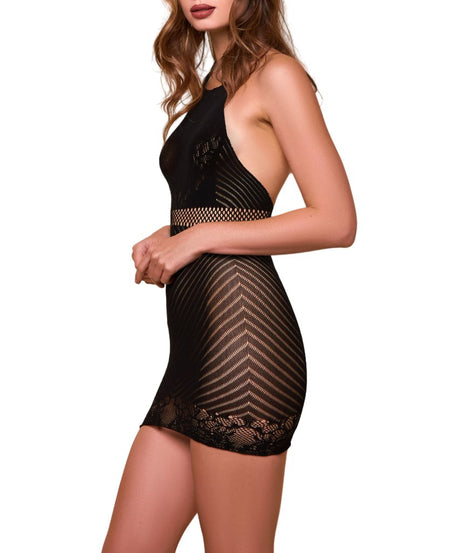
What is a one-shoulder dress?
A one-shoulder dress has a neckline that runs on a diagonal from the top of one shoulder to under the opposite arm, so one shoulder is covered and the other is bare. It is also called an asymmetric or single-shoulder dress.
The covered side can be a strap, a sleeve, a drape, a knot or a ruffle, and each changes how the dress looks and how it stays up. Because all of the weight hangs from one shoulder, the fit under the bare arm matters more than in almost any other dress.
Choosing a good one comes down to the shoulder style, how the bodice holds, the fabric and what goes underneath. Get those right and it is one of the most striking and easiest dresses to wear to a wedding, a party or a formal event.
A one-shoulder dress does something no other neckline does. It replaces the usual horizontal lines across the shoulders and chest with a single diagonal, and the eye follows it.
That diagonal is why it photographs so well and why it suits so many shoulders. It is also why it needs a little more thought: one side carries the dress, and the other has to stay put on its own.
- One shoulder carries the whole dress, so the strap length and the fit under the bare arm decide whether it stays put.
- The covered side can be a strap, sleeve, drape, knot or ruffle; wider and more structured holds better.
- The diagonal neckline narrows broad shoulders; ruffles and puff sleeves add width to narrow ones.
- Fabric and length set the formality: satin or crepe gowns for black tie, jersey or cotton for summer.
- Skip the necklace. Earrings, a cuff and hair swept up or to one side suit the diagonal.
- Underneath: a convertible bra with one strap, a strapless or an adhesive bra.
What Makes a Dress One-Shoulder
The neckline is the definition. Everything else, from length to fabric, can change.
A one-shoulder dress is defined by a single feature: a neckline that runs from one shoulder down to the opposite underarm. One side of the body has a strap, sleeve or drape over the shoulder; the other side is bare from the neck to the arm. The skirt, length and fabric can be anything, which is why the same neckline appears on a jersey beach dress, a crepe cocktail dress and a satin black tie gown.
It helps to know what a one-shoulder dress is not. An off-the-shoulder dress sits below both shoulders with a horizontal neckline. A halter leaves both shoulders bare and hangs from the neck. A strapless dress has nothing over either shoulder. A cold-shoulder dress covers both shoulders at the top but has cut-outs on the upper arms. Each solves the problem of staying up in a different way, which is why they need different fits and different things underneath.

How a One-Shoulder Dress Stays Up
Understanding the asymmetric load explains almost every fit problem, and how to avoid it.
In a dress with two straps, the weight is shared between both shoulders and pulls straight down. In a one-shoulder dress, the whole weight hangs from one point and pulls on a diagonal, from the covered shoulder toward the opposite hip. Left to itself, the bodice wants to slide down on the bare side and twist toward the strap.
This is why the fit under the bare arm matters more than in almost any other dress. A dress can fit perfectly at the bust and waist and still gape or slide if the bare side is even slightly loose. When you try one on, the bare side is the first place to check.
Raise the arm on the bare side above your head, then reach across your body as if hugging someone. If the bare edge lifts away from your body or the neckline slides down, the bodice is too loose on that side. A good fit stays flat against the side of the body through both movements.
One-Shoulder Styles
The covered shoulder can be cut six ways. Each changes the look, the formality and how securely the dress holds.
| Style | What it is | Holds | Best for |
|---|---|---|---|
| Wide strap | A broad band over the shoulder | Very well | Most occasions; fuller busts |
| Thin strap | A narrow strap or spaghetti strap | Lightly | Summer, slip-style and evening dresses |
| One sleeve | A short, long or puff sleeve on one arm | Very well | Cooler weather, formal events |
| Draped | Soft fabric gathered over the shoulder | Well | Evening gowns, Grecian styles |
| Knot or tie | A strap that knots or ties at the shoulder | Moderately | Summer, resort, casual parties |
| Ruffle or flounce | A frill along the neckline or shoulder | Well | Parties, adding width to narrow shoulders |
Strap styles
A wide strap is the classic and most secure version. It spreads the weight across the shoulder, sits comfortably for hours and suits every bust size. A thin strap looks lighter and more delicate, but it concentrates the weight on a narrow line, which can dig in and slip on sloped shoulders. Thin straps work best on light fabrics and smaller busts, or when the bodice itself is structured enough to hold the dress.
Sleeves
A single sleeve anchors the dress to the arm as well as the shoulder, so it is the most secure style of all. A long single sleeve is dramatic and suits fall, winter and formal events; a short or puff sleeve adds playfulness and width. A one-sleeve dress also solves the most common worry about a one-shoulder dress, which is how to keep it up through an evening of dancing.
Drapes, knots and ruffles
A draped shoulder gathers soft fabric over the top of the shoulder and down across the body. It is the style most associated with Grecian and evening gowns, and it suits chiffon, jersey and silk. A knot or tie is relaxed and summery, and a tie lets you adjust the length, which helps the fit. A ruffle or flounce along the neckline adds movement and width, which makes it a good choice for narrow or sloped shoulders.

Bodice, Neckline Angle and Side Coverage
Inside the dress, a few construction details decide how it fits and how much it covers.
The angle of the neckline changes the effect. A shallow angle, where the neckline runs only slightly downward from the shoulder, covers more of the chest and reads modest and elegant. A steep angle shows more of the chest and the bare side, and reads more dramatic. Some one-shoulder dresses add a soft cowl or a sweetheart curve to the diagonal, which softens the line over the bust.
Side coverage is the second detail to check. On the bare side, the bodice should come up high enough under the arm to cover the side of the bust and any bra band. If the edge sits low, a bra band may show, and the side of the bust can be visible when you move.
A well-made one-shoulder dress feels steady before you add anything underneath. If the bodice is unlined, has no boning and no grip along the edge, it will depend entirely on a close fit, which is fine for light jersey and casual dresses but less reliable for an evening of moving and dancing.
Silhouettes and Lengths
The one-shoulder neckline goes on almost every shape and length. The combination decides where you can wear it.
| Silhouette | One-shoulder version | Formality | Best for |
|---|---|---|---|
| Sheath | Fitted through the body, straight skirt | Cocktail to formal | Cocktail parties, weddings, dinners |
| A-line | Fitted bodice, gently flared skirt | Day to formal | Weddings, parties, most figures |
| Fit and flare | Defined waist, fuller skirt | Party to formal | Weddings, dancing |
| Bodycon | Tight and stretchy, usually short | Party | Nights out, birthdays |
| Mermaid or trumpet | Fitted to the knee or thigh, then flared | Formal to black tie | Galas, formal weddings, prom |
| Column gown | Straight and long | Formal to black tie | Black tie, evening events |
| Flowy maxi | Soft, loose and long | Casual to semi-formal | Summer, vacations, beach weddings |
Length shifts the formality as much as fabric does. A mini one-shoulder dress suits parties and summer evenings. A knee-length or midi version covers cocktail parties and most weddings; our midi dress guide explains why the midi is the most adaptable length. A floor-length one-shoulder gown is one of the most elegant choices for black tie. Our guide to mini, midi and maxi lengths gives the measurements for each.
Because the neckline is already a statement, the rest of the dress usually works best simple. A one-shoulder sheath or column with no other details looks sharper than one that also has cut-outs, slits and embellishment. If you want one more feature, a thigh-high slit on a gown or a defined waist on a midi pairs well with the diagonal without competing with it.
Fabrics and How They Hold the Diagonal
The fabric decides the formality, and also how well the neckline keeps its line.
| Fabric | Effect | Formality | Holds the line | Watch for |
|---|---|---|---|---|
| Crepe | Matte, clean edge | Cocktail to formal | Very well | Very little; a safe choice |
| Satin | Glossy, fluid | Evening to black tie | Well with lining | Shows every line underneath |
| Jersey | Soft, stretchy | Casual to dinner | Moderately | Can slip and stretch over a long day |
| Chiffon | Sheer, floaty | Day to formal | Needs a lining | Best in draped styles |
| Scuba or neoprene | Thick, smooth, structured | Party to cocktail | Very well | Warm; holds its own shape |
| Sequins | Sparkle, weight | Party to formal | Well if lined | Heavy; needs a strong strap |
| Linen and cotton | Matte, casual | Day, summer | Moderately | Creases; best in relaxed styles |
Crepe and scuba hold the diagonal neckline best, because the edge stays crisp and the bodice keeps its shape against the body. Satin is the classic choice for evening and black tie; choose a lined satin with some structure in the bodice, since an unlined satin shows every line beneath it. Chiffon and silk suit draped styles, where the fabric falls over the shoulder in soft folds.
Weight matters too. Heavier fabrics, such as sequins, beading and thick satin, put more load on the single shoulder. For those, choose a wide strap, a sleeve or a structured bodice. Light jersey and cotton dresses are comfortable for daytime and summer, but they rely on a snug fit to stay up, so check the bare side carefully. Our velvet dress guide and lace dress guide cover two more fabrics that work well for one-shoulder evening dresses.
Who a One-Shoulder Dress Suits
Almost everyone, once the strap width and bodice are chosen to match your frame and bust.
The diagonal neckline is one of the most forgiving lines in dressing. It draws the eye on a slant across the body, which breaks up width at the shoulders, shows the collarbone and lengthens the neck. That makes it flattering on a wide range of figures, and the details can be tuned to your shape.
If you are curvy through the hips, an A-line or fit and flare one-shoulder dress balances the shoulder line with the skirt. If you want a long, lean look, a column or sheath in a matte fabric keeps the eye moving along the diagonal and down the body. For a smooth line under fitted dresses, our guide to plus size shapewear covers the options.
Fit Checks Before You Buy
Six checks in the fitting room tell you whether a one-shoulder dress will stay put all evening.
Size to the bust and the bare side, not just the waist. If a dress fits your waist but gapes under the bare arm, it will need a tailor. If it fits the bust and bare side but is loose at the waist, taking in the waist is a simpler alteration. When you are between sizes, the snugger size usually holds better, provided you can breathe and sit comfortably.
Try it on with the bra you plan to wear. A convertible bra worn with one strap, a strapless bra and an adhesive bra each change the shape of the bust slightly, and with it how the diagonal neckline sits. Bring the bra to the fitting room, or to the tailor if the dress needs alterations, so the fit is set for the whole outfit rather than for the dress alone.
A strap that is even a little too long is the most common reason a one-shoulder dress slips. Shortening the strap is quick and inexpensive, and it often fixes a dress that seemed not to fit at all.
Where to Wear a One-Shoulder Dress
From summer parties to black tie, the neckline works almost everywhere except the office.
| Occasion | What works | Length | Fabric |
|---|---|---|---|
| Black tie | One-shoulder column or mermaid gown | Floor | Satin, crepe, sequins |
| Formal wedding | One-shoulder gown or dressy midi | Midi to floor | Crepe, chiffon, satin |
| Cocktail party | One-shoulder sheath or fit and flare | Knee to midi | Crepe, satin, velvet |
| Summer wedding | Draped or ruffled midi | Midi to maxi | Chiffon, crepe, linen blends |
| Prom and galas | One-shoulder gown, often with a slit | Floor | Satin, sequins, tulle |
| Vacation and resort | Flowy maxi or knot-shoulder dress | Midi to maxi | Jersey, cotton, linen |
| Nights out | One-shoulder mini or bodycon | Mini | Jersey, scuba, sequins |
Weddings are one of the best places to wear a one-shoulder dress. A midi or gown in a jewel tone, pastel or print suits most cocktail and formal weddings, and one-shoulder bridesmaid dresses are a popular choice for wedding parties because the neckline flatters many different figures. Avoid white and ivory unless you have been asked to wear them. If the ceremony is in a place of worship that expects covered shoulders, bring a wrap. Our wedding guest dress guide covers every dress code.
For cocktail and holiday parties, a one-shoulder sheath or fit and flare in crepe, satin or velvet is an easy way to look dressed up without any extra effort. Our cocktail dress guide explains the dress code, and our holiday party dress guide covers the festive version. For work, most offices expect both shoulders covered, so a one-shoulder dress is better kept for after-work events, or worn with a jacket at a relaxed workplace party.
How to Style a One-Shoulder Dress
The neckline is the statement. Style around it rather than competing with it.

Jewelry
Skip the necklace. A chain or pendant fights the diagonal line and tends to sit awkwardly against the strap. Instead, wear statement or drop earrings to frame the face and bare shoulder, and a cuff, bangle or cocktail ring to balance the look on the arms. Some people wear a single statement earring on the bare side for an asymmetric look; a matched pair is just as good. Keep metals consistent: gold suits warm colors and jewel tones, silver suits cool colors and black.
Hair
Hair up or swept to one side shows the neckline. A low bun, a sleek ponytail or a French twist keeps the shoulder and collarbone visible. If you prefer your hair down, sweep it over the covered shoulder so the bare side stays open. Long hair worn loose on both sides tends to hide the neckline, which is the point of the dress.
Shoes and bags
Choose shoes to suit the event: strappy heeled sandals for evening, block heels or flat sandals for summer and garden events, and pointed pumps for cocktail parties. A small clutch or wristlet works better than a shoulder bag, which can pull on the strap or drag on the bare side. If you do carry a shoulder bag, carry it on the covered side.
Layers and coats
A one-shoulder dress is easy to layer as long as you plan for the neckline. A cropped or tailored jacket worn over the shoulders, a satin or velvet wrap, a shawl or a cape all keep the dress visible when opened. A long coat with a wide neckline works for arrivals in cold weather. Avoid high-neck knits over the top, which hide the neckline entirely.
Through the seasons
Spring and summer: cotton, linen, jersey and chiffon in brights, pastels and prints, with flat or heeled sandals and a woven bag. Fall: crepe and satin in deeper colors, with a single long sleeve or a tailored jacket. Winter: velvet, heavy satin and sequins for holiday parties, with sheer tights and a long coat. A long-sleeve one-shoulder dress is one of the most useful cold-weather party dresses, because it covers one arm and the bodice without needing a jacket.
What to Wear Under a One-Shoulder Dress
The goal is a bra that supports you without a strap showing on the bare side.
A one-shoulder dress hides a strap on one side and shows everything on the other, so an ordinary bra with two straps will show. There are four reliable options, and the right one depends on your bust size, the dress and how long you will wear it.
| Bust and dress | Best choice | Why |
|---|---|---|
| A to C cup, any dress | Strapless, adhesive or built-in cups | Lighter support is enough |
| D cup and up, wide strap | Convertible with one strap | The strap hides under the dress strap |
| D cup and up, thin strap | Long-line strapless | Holds without relying on a strap |
| Low or open back | Adhesive bra | No band to show |
| Sheer or light fabric | Nude or skin-tone strapless | Disappears under the dress |
If you wear a convertible bra with one strap over the covered shoulder, line the bra strap up under the dress strap and fasten it with a small safety pin or a strip of fashion tape. Under a wide strap or a sleeve, a bra strap disappears completely.
Below the waist, choose seamless underwear or a thong under satin, jersey and fitted dresses, where edges show. For a fitted gown, our guide to slips and shapewear explains how to get a smooth line, and our bras for every neckline guide compares the options for other cuts.
Convertible, Strapless and Adhesive Bras
The three bras that work with one bare shoulder, from most to least support.
Convertible BrasStrapless BrasAdhesive BrasFixes and Alterations
Most one-shoulder problems are small and quick to solve, at home or with a tailor.
A waist stay is one of the most useful hidden alterations for any dress that hangs from one point. It is a length of grosgrain ribbon sewn inside at the waist and fastened with a hook. It takes the weight off the strap and keeps the bodice in the right place, which is why many formal gowns have one already.
Care and Storage
The single strap is the weak point. Treat it gently and the dress keeps its shape.
A Short History of the One-Shoulder Dress
The diagonal neckline is far older than the red carpet.
The one-shoulder line goes back to the ancient world. In ancient Greece, the exomis was a simple tunic fastened over one shoulder and left open on the other, worn by laborers and by some figures in Greek art. Draped garments pinned at the shoulder, such as the chiton, are the source of the Grecian look that designers have returned to ever since.
In the twentieth century, couturiers revived classical draping in evening wear. Madame Grès, working in Paris from the 1930s, became known for gowns of finely pleated and draped jersey and silk that recalled Greek statues, and many of them left one shoulder bare. The one-shoulder neckline became a recurring feature of evening and disco fashion in the 1970s, and since then it has been one of the most common necklines in formal wear, bridesmaid dresses and prom gowns.
Today the neckline appears at every level, from jersey beach dresses to couture gowns. What has not changed is the reason it works: a single diagonal line is simple, flattering and instantly noticeable.
One-Shoulder vs Off-the-Shoulder, Halter and Strapless
Four necklines that bare the shoulders, each held up a different way.
| Neckline | What is bare | What holds it | Best bra |
|---|---|---|---|
| One-shoulder | One shoulder | One strap or sleeve, plus a snug bare side | Convertible with one strap |
| Off-the-shoulder | Both shoulders and collarbones | Elastic or a fitted band around the upper arms | Strapless |
| Halter | Both shoulders, often the back | A strap around the neck | Halter or convertible |
| Strapless | Both shoulders and arms | The bodice alone | Strapless or long-line strapless |
Of the four, a one-shoulder dress is usually the easiest to wear for a long evening, because it keeps one real strap. An off-the-shoulder dress depends on a band around the upper arms, which can restrict how high you lift them. A halter puts the weight on the back of the neck, which some people find tiring over several hours. A strapless dress depends entirely on the bodice. If you love bare shoulders but worry about a dress staying up, a one-shoulder cut with a wide strap or a sleeve is the safest place to start.
The four also flatter differently. One-shoulder and halter necklines draw the eye inward, toward the neck and the center of the body, which narrows broad shoulders. Off-the-shoulder and strapless necklines run horizontally across the body, which shows off the shoulders and collarbones and adds visual width, a good choice for narrow shoulders. Our halter dress guide and backless dress guide cover two of these in depth.
Wearing It for Photos and Events
A one-shoulder dress photographs beautifully, with a little planning.
Because the neckline is asymmetric, the side you show the camera changes the picture. Turned so the strap is nearer the camera, the dress looks more covered and structured. Turned so the bare shoulder faces the camera, it looks more open and dramatic, and it shows the collarbone and the line of the neck. Neither is right or wrong; it is worth knowing which you prefer before a wedding or an event with a photographer.
For a long event, think about comfort as well as looks. Check that you can raise your arms to dance, hug and reach without the bare side lifting. Bring a few strips of double-sided fashion tape and a small safety pin in your bag. If you will be sitting at a table for several hours, choose a wide strap rather than a thin one, which spreads the weight and is far less likely to dig into the shoulder by the end of the night. For outdoor events, apply sunscreen evenly to both shoulders the day before, since a strap mark on one side shows clearly with a one-shoulder neckline.
Common One-Shoulder Dress Mistakes
Most are easy to avoid once you know where the dress holds.
One-Shoulder Dress Buying Checklist
Run through these before you buy.
- Strap: sits on top of the shoulder without sliding.
- Bare side: flat against the body through the arm-raise test.
- Shoulder style: wide strap or sleeve for fuller busts and heavy fabrics.
- Bodice: lined, with boning or grip along the edge for evening.
- Fabric: crepe or scuba for a crisp line; satin or chiffon for evening.
- Length: knee or midi for parties and weddings; floor for black tie.
- Underneath: a convertible, strapless or adhesive bra that stays hidden.
- Accessories: earrings and a cuff, no necklace.
What This Means for You
A one-shoulder dress has a diagonal neckline that covers one shoulder and leaves the other bare. Because one shoulder carries all the weight, the strap length and the fit under the bare arm decide whether it stays in place.
Choose a wide strap or sleeve for support, a thin strap or drape for a lighter look, and a ruffle or puff sleeve to add width to narrow shoulders. Crepe and scuba hold the line best; satin and chiffon suit evening. Fabric and length set the formality, from beach dresses to black tie gowns.
Underneath, wear a convertible bra with one strap, a strapless or an adhesive bra. Style it with earrings and a cuff rather than a necklace, wear your hair up or to one side, and store it by its hanging loops rather than the strap.
Halter, Backless and Strapless
The other necklines that leave the shoulders bare, and how each stays up.
Halter DressBackless DressCocktail DressFrequently Asked Questions
What is a one-shoulder dress?
Is a one-shoulder dress formal?
How do you keep a one-shoulder dress from slipping?
What bra do you wear with a one-shoulder dress?
Can you wear a one-shoulder dress with a large bust?
Do one-shoulder dresses suit broad shoulders?
Do one-shoulder dresses suit narrow shoulders?
What jewelry goes with a one-shoulder dress?
Should earrings go on the bare side?
How should you wear your hair with a one-shoulder dress?
Can you wear a one-shoulder dress to a wedding?
Is a one-shoulder dress appropriate for work?
What is the difference between a one-shoulder and an off-the-shoulder dress?
What is the difference between a one-shoulder and a halter dress?
What coat do you wear over a one-shoulder dress?
Which side should the strap be on?
Can you alter a one-shoulder dress?
How do you store a one-shoulder dress?
This guide covers dress styles, fit, styling and care and is for general information. Construction and sizing vary between makers, so check the product details and care label for any individual dress.