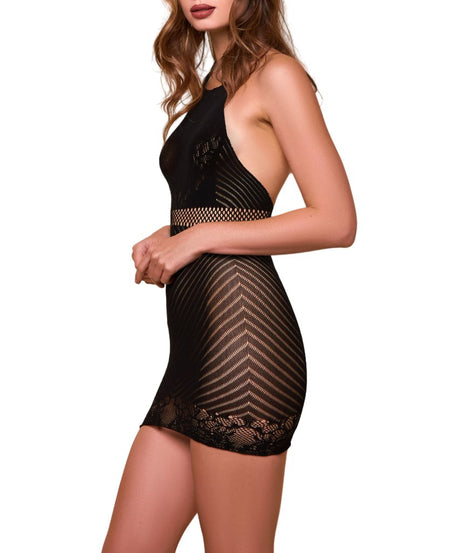
What is a semi-formal dress?
A semi-formal dress is a polished dress, usually knee to midi length, in a dressy fabric such as crepe, satin, chiffon or lace. It is dressier than an everyday day dress but less formal than a black tie evening gown, and it suits weddings, work parties, dinners and celebrations.
The safest semi-formal choices are a sheath, wrap, fit-and-flare or slip dress at or below the knee, an elegant jumpsuit, or dressy separates. Floor-length styles work in the evening if they are simple and flowing; structured ball gowns are too formal.
The finish matters as much as the dress: a bra that suits the neckline, seamless underwear, polished shoes and simple jewelry turn a good dress into a complete semi-formal outfit.
"Semi-formal" is one of the most common dress codes on invitations and one of the least clear. It sounds like it means half dressed up, which is roughly right, but it leaves a wide gap between a nice day dress and an evening gown. Most people land in the right place by aiming for the middle of that gap: a dress you would wear to a wedding, not to the office and not to a gala.
This guide explains what semi-formal means, how it compares with cocktail, formal and business casual, which lengths, fabrics, styles and colors work, how to dress for daytime, evening, weddings and work events, what to wear underneath, and how to finish the outfit with shoes, layers and accessories.
- Semi-formal sits between cocktail and black tie optional on the dress code ladder.
- Knee to midi is the safest length; tea length works too.
- Dressy fabrics such as crepe, satin, chiffon and lace make the difference.
- Lighter colors by day, deeper colors and more shine by night.
- Match the bra to the neckline and choose seamless underwear.
- Skip jeans, sneakers, casual cotton and full ball gowns.
What Does Semi-Formal Mean?
Dressed up, but not black tie.
Semi-formal is a dress code that asks guests to dress up without going all the way to evening gowns and tuxedos. For men it usually means a suit and tie. For women it means a dress, jumpsuit or dressy separates that would look right next to a suit: polished fabric, a considered fit, and shoes and jewelry chosen for the occasion.
The "semi" refers to the step below formal, not to half an effort. A semi-formal outfit should look finished. What it does not need is the length, volume or embellishment of a black tie gown. Think of the dress you would wear to a friend's evening wedding, a company holiday party or a birthday dinner at a good restaurant.
Semi-formal is also flexible. The same dress code covers a 2 p.m. garden wedding and an 8 p.m. hotel party, so the time of day, the venue and the season all shape what works. A host who writes "semi-formal" is telling you the event matters to them and asking you to dress like it does.
If you are unsure, choose a knee-length or midi dress in a solid color and a dressy fabric, with heels or smart flats. That outfit is right for almost every semi-formal event.
The Dress Code Ladder
Seven dress codes, from casual to white tie.
Dress codes run on a rough ladder. White tie is the most formal: floor-length ball gowns, often with gloves, at state dinners and some galas. Black tie calls for floor-length evening gowns. Black tie optional allows either a gown or a very elegant cocktail dress. Then comes semi-formal, closely followed by cocktail, then smart casual and casual.
Semi-formal and cocktail are so close that many hosts and etiquette guides treat them as the same. The small differences are length and timing: cocktail leans toward evening party dresses at or above the knee, while semi-formal includes longer, quieter styles and works at daytime events too. Our cocktail dress guide covers cocktail attire in detail.
Semi-Formal vs Cocktail, Formal and Business Casual
How the neighboring dress codes differ.
| Dress code | Typical length | Fabrics | Example outfit |
|---|---|---|---|
| Business casual | Knee to midi | Cotton, wool, knits | Shirt dress or trousers and a blouse |
| Cocktail | Above knee to midi | Satin, lace, sequins, crepe | A party dress with heels |
| Semi-formal | Knee to midi, tea, simple maxi | Crepe, satin, chiffon, lace | A midi wrap or sheath dress with heels |
| Black tie optional | Midi to floor | Satin, silk, velvet, beading | An elegant cocktail dress or a gown |
| Black tie | Floor length | Silk, satin, velvet, tulle | An evening gown |
Semi-formal vs cocktail: nearly interchangeable. If the invitation says cocktail, you can go a little shorter and more playful; if it says semi-formal, you can go a little longer and more classic. Either way, a knee-length or midi dress in a dressy fabric is correct.
Semi-formal vs formal: "formal" on an invitation usually means black tie or black tie optional, which calls for a floor-length gown or a very dressy cocktail dress. Semi-formal is one clear step down in length, volume and embellishment.
Semi-formal vs business casual: business casual is what you would wear to the office on an ordinary day. Semi-formal is a step up: an evening-appropriate dress, more polished shoes and a little more sparkle in the jewelry.
Daytime vs Evening Semi-Formal
The clock changes the colors and fabrics.
Traditional etiquette treats 6 p.m. as the line between daytime and evening dress. The rule is less strict today, but it is still a useful guide to how dressy and how dark to go.
A daytime semi-formal event, such as a garden wedding, a christening or a graduation lunch, suits a floral or pastel midi in chiffon or crepe with block heels. An evening one, such as a hotel wedding or a holiday party, suits a jewel-tone satin slip dress or a black lace midi with pumps or heeled sandals.
Semi-Formal Dress Lengths
Knee to midi is the safe zone.

If you are choosing one dress to cover the most semi-formal invitations, choose a midi. It looks dressier than a knee-length dress without crossing into gown territory, it works from spring to winter, and it suits nearly every age and setting. Our guide to dress lengths explains each length in more detail.
Fabrics That Read as Semi-Formal
Fabric does more to set the dress code than cut.
Two dresses with the same shape can sit at different dress codes because of the fabric. A cotton jersey wrap dress is casual; the same wrap dress in satin-back crepe is semi-formal. Look for fabrics with a smooth surface, good drape and a little sheen or texture.
Fabrics that usually read as too casual for semi-formal include denim, chambray, plain cotton jersey, t-shirt knits, terry and loose linen. Heavy sequins, beading all over and tulle skirts usually read as more formal than semi-formal, though a little sparkle is fine in the evening.
Semi-Formal Dress Styles
Ten shapes that are always appropriate.

When in doubt, the sheath, wrap and fit-and-flare are the safest. They suit most figures, most venues and most times of day. Our guide to types of dresses shows how each silhouette is cut, and our dress necklines guide covers the neckline options.
Colors and Prints
Color shifts a dress up or down the dress code ladder.
| Setting | Colors that work | Use with care |
|---|---|---|
| Daytime spring and summer | Pastels, soft florals, sage, sky blue, blush | Neon, very dark heavy colors |
| Daytime fall and winter | Rust, camel, olive, plum, navy | Very pale summer pastels |
| Evening, any season | Black, navy, emerald, sapphire, burgundy | Very bright casual prints |
| Weddings | Most colors and florals | White, ivory, cream, anything bridal |
| Work events | Navy, black, jewel tones, small prints | Very loud prints and metallics |
Prints work well at semi-formal events if they look considered: small florals, abstract prints and soft geometrics on a dressy fabric. Very large, high-contrast or novelty prints read as casual. Metallics and sequins are best kept to evening events and holiday parties, and look most elegant in small doses, such as a sequin bodice or a metallic thread in a jacquard.
Black is acceptable at most semi-formal events, including weddings in most places. Navy is a gentler alternative that photographs well in daylight. If you want one dress that works everywhere, a deep jewel tone such as emerald or sapphire is as versatile as black but feels more festive.
Semi-Formal Weddings
The most common semi-formal invitation.
A semi-formal wedding calls for a dress that is celebratory but not competing with the bride. Knee-length, midi and tea-length dresses are ideal; a simple maxi works at an evening reception. Avoid white, ivory and cream, and anything that could read as a bridal look, such as a white lace midi.
Our wedding guest dress guide covers every wedding dress code, from casual to black tie, with more on colors and venues.
Semi-Formal Work Events
Dressier than the office, still professional.
Company dinners, award nights, client events and holiday parties often carry a semi-formal dress code. The goal is to look festive and polished while still looking like yourself at work. A sheath, wrap or fit-and-flare dress at or below the knee in crepe, satin or a fine knit is ideal, with modest necklines and simple jewelry.
Keep the outfit one notch quieter than you would for a wedding or a party with friends: no very short hems, sheer panels, deep plunges or very high slits, and a jacket or wrap in case the room is cool or the event starts straight from the office. Our holiday party dress guide has more ideas for end-of-year events.
Wear a crepe sheath dress with a blazer and low heels for the day, then swap the blazer for a satin wrap, add statement earrings and change into heeled pumps for the evening event.
Other Semi-Formal Occasions
From graduations to the theater.
Rehearsal dinners and engagement parties
A polished midi or knee-length dress in a color that suits the season. As a guest, aim a little below the formality of the wedding itself; as a member of the wedding party, ask what others are wearing.
Graduations
A crepe or cotton-blend dress at the knee or midi length, in a color that will photograph well. Choose comfortable heels or flats for long ceremonies and outdoor walking.
Birthday dinners and anniversaries
A slip dress, a wrap dress or a little black dress with heels. Choose the fabric to suit the restaurant: satin and lace for dinner somewhere dressy, crepe or a fine knit for a more relaxed spot.
Theater, opera and concerts
A midi dress in a rich fabric, with a wrap or jacket for cool auditoriums. Opening nights and galas may call for something dressier; regular performances are usually semi-formal or smart casual.
Christenings and religious celebrations
A modest dress with covered shoulders, at or below the knee, in a soft color. A light cardigan or bolero is useful if the ceremony and the party have different dress expectations.
Funerals and memorials
A simple dark dress in navy, black, charcoal or another muted color, at or below the knee, with minimal jewelry. The aim is respectful and understated.
Dances and school formals
Events called "semi-formal" at schools and colleges usually mean cocktail-style dresses at or above the knee. Check any dress code rules the school sets, and choose shoes you can dance in. Our party dress guide has more ideas.
Semi-Formal Dresses Through the Year
Change the fabric, color and layers with the season.
What to Wear Under a Semi-Formal Dress
The layer nobody sees decides how the dress looks.
Dressy fabrics are less forgiving than everyday ones. Satin shows every line, chiffon can be sheer in sunlight, and crepe clings over seams. Plan the underwear with the dress, and try them together before the event.
Choose the bra by neckline
| Neckline | Best bra | Why |
|---|---|---|
| Crew, square or scoop | T-shirt bra | Smooth molded cups disappear under crepe and satin |
| V-neck or wrap | Plunge bra | A low center gore stays hidden in a deep V |
| Strapless or off-the-shoulder | Strapless bra | A firm band and silicone grip hold without straps |
| One-shoulder or halter | Convertible bra | Straps reroute to one shoulder, a halter or crisscross |
| Open or low back | Adhesive or low-back bra | No band across the back |
| Thin satin or slip dress | Seamless or adhesive bra | No lace or seams to show through |
A strapless bra for a semi-formal event needs a firm band and a silicone grip, because the band does all the work. Many people go down one band size from their everyday bra for a firmer hold. If you are unsure of your size, Brasize.ai can give you a starting point, and our strapless bra guide and bras for every neckline guide explain the options in more detail.
Underwear without lines
Seamless, laser-cut or bonded-edge underwear in a shade close to your skin tone disappears under satin, crepe and knits. A seamless thong or brief is the most reliable choice under fitted styles. Our guide to hiding panty lines covers more fixes.
Slips and shapewear
A half slip or full slip adds opacity under chiffon and lace, helps a dress hang smoothly and stops it clinging to tights. Light smoothing shorts or a shaping slip give a sleeker line under satin and fitted crepe, and smoothing shorts also stop thighs from chafing at long events. Our guide to slips and shapewear explains the differences.
Hosiery
Bare legs are fine at most semi-formal events. In cold weather or at conservative events, sheer tights in a skin tone or black look polished. Avoid opaque athletic-style tights with satin or chiffon; they read as too casual.

Smooth Bras, Seamless Underwear and Shapewear
The pieces that make a dressy fabric hang right.
Strapless BrasSeamless UnderwearShapewearHow a Semi-Formal Dress Should Fit
Dressy fabrics show fit problems more clearly.
Simple alterations make a big difference to a semi-formal dress: taking in the waist, shortening straps, hemming to the right length for your shoes, or adding a hook to keep a wrap closed. A local tailor can usually do these in a week or two, so try the dress on as soon as it arrives.
Shoes for a Semi-Formal Dress
Polished, comfortable and right for the venue.
Avoid sneakers, flip-flops, casual sandals and chunky everyday boots. Bring a pair of foldable flats if you plan to dance in heels for hours.
Accessories
Simple, polished and in proportion.
A semi-formal outfit needs a few considered pieces rather than many. Choose one focal point: statement earrings with a simple neckline, a necklace with a strapless or V-neck dress, or a bold bag with a plain dress. A clutch or small structured bag looks dressier than a large everyday tote.
Jackets, Wraps and Coats
A layer that adds polish instead of hiding the outfit.
Many semi-formal events run from a cool ceremony to a warm reception, so plan a layer. A cropped blazer, a tailored jacket, a silk or cashmere wrap, a fine cardigan or a bolero all keep the outfit polished. In winter, a tailored wool coat looks far better than a puffer or a sports jacket over a dress.
Match the layer to the dress: structured jackets with sheath and slip dresses, soft wraps with chiffon and lace, and a cropped jacket with fit-and-flare dresses so the waist stays visible.
Semi-Formal Dresses for Every Figure
Fit and fabric matter more than rules.
Any shape can wear any semi-formal style. What makes a dress look good is fit, fabric weight and the right support underneath. These are starting points, not rules.
Thicker crepe and lined fabrics smooth more than thin satin. If a fabric clings, a slip or light shapewear fixes it faster than changing the dress.
Budget, Renting and Rewearing
Get more wear from each semi-formal dress.
Because semi-formal events come up several times a year, one well-chosen dress can carry many of them. A solid jewel-tone or black midi in crepe or satin can be restyled with different shoes, jewelry and layers for weddings, work parties and dinners for years.
Renting makes sense for one-off events or when you want a statement dress you would not wear again. Buying secondhand is a good way to find better fabrics for less. If you buy new, spend on fabric and fit rather than trend details, and budget for a simple alteration.
Common Semi-Formal Mistakes
Most come down to fabric, length or the details.
Reading the Invitation
Clues beyond the words "semi-formal."
The dress code line is only part of the message. The start time tells you how dark and dressy to go: a noon ceremony calls for lighter colors and fabrics than an 8 p.m. reception. The venue tells you about shoes and layers: a vineyard, a beach or a lawn needs block heels or wedges, while a hotel ballroom suits heels and a dressier fabric. The invitation itself is a hint too; heavy card stock and formal wording suggest the dressier end of semi-formal, while a casual tone suggests the relaxed end.
If an invitation gives no dress code at all, an evening event at a dressy venue usually means semi-formal or cocktail, and a daytime event at a casual venue usually means smart casual. When you are still unsure, ask the host, check the event website, or ask a friend who is going. Being slightly overdressed at a semi-formal event almost always feels better than being underdressed.
Jumpsuits and Dressy Separates
A dress is not the only answer.
A semi-formal dress code does not require a dress. A wide-leg jumpsuit in crepe, satin or a fluid knit, with heels and statement earrings, is as appropriate as any midi dress and often more comfortable for dancing. Choose a jumpsuit with a clean neckline and a defined waist, and check that the legs are long enough to skim the top of your shoes.
Dressy separates work too: a satin or pleated midi skirt with a silk camisole or fine knit top, or wide tailored trousers with a sequin or satin blouse. Separates are easy to rewear, because each piece can be paired with other things you own. Keep the colors close, or pair a neutral with one rich color, so the outfit looks planned rather than put together at the last minute.
Modest and Covered Semi-Formal Outfits
Polished options with more coverage.
Many semi-formal events, including religious ceremonies and some family celebrations, call for more coverage. A long-sleeve midi or maxi in crepe, chiffon or lace is fully semi-formal and covers the arms and legs. A high or boat neckline, a wrap dress worn over a fitted top, or a sleeveless dress with a tailored jacket all add coverage without making the outfit look plain.
Layering is the easiest fix for a dress you already own: a sheer chiffon or lace bolero, a fine cardigan, or a fitted long-sleeve top in a matching color under a sleeveless dress. Opaque or sheer tights cover the legs, and a scarf or wrap can cover the hair or shoulders where a ceremony asks for it.
Coordinating With a Partner
Look like you arrived together, not like you match.
At a semi-formal event a partner in a suit usually wears a dark suit and a tie. You do not need to match, but the outfits look best when they share a level of formality and one color note. A tie or pocket square that picks up a color in your dress, or shoes and a belt in the same tone as your bag, is enough.
Avoid both dressing in the same bright color unless you are part of the wedding party. If one person is dressed far more formally than the other, the difference shows in photos, so agree on the level before the day.
Preparing the Day Before
Small steps that prevent problems on the day.
Try on the whole outfit, including the bra, underwear, shoes and layer, and walk, sit and reach in it. Check the dress in daylight for sheerness and in a mirror from the back for lines or straps. Steam the dress rather than ironing it, especially satin, chiffon and crepe, which can scorch or shine under a hot iron.
Pack a small kit in your bag: safety pins, double-sided fashion tape for necklines and wrap fronts, blister plasters, a stain wipe and a hair tie. If you are wearing a strapless or adhesive bra, put it on before your skin is warm, without body lotion, so it holds all evening.
Traveling With a Semi-Formal Dress
Arrive with it ready to wear.
For destination weddings and trips, choose fabrics that travel well: crepe, jersey-backed satin, lace and knits resist wrinkles far better than pure silk and linen. Roll knit and crepe dresses in tissue paper, and carry structured or delicate dresses in a garment bag as hand luggage. Hang the dress as soon as you arrive and let the steam from a hot shower release the creases.
Pack the underwear that goes with each dress in the same bag, so the strapless bra or seamless brief is never left at home. One dress in a neutral or jewel tone with two sets of accessories can cover a welcome dinner and the wedding itself.
Staying Comfortable at Long Events
Semi-formal events often run six hours or more.
Weddings and work dinners can last from mid-afternoon to late at night, so comfort matters as much as looks. Choose a dress you can sit in for two hours without it digging in at the waist or riding up, and a fabric that breathes: crepe, chiffon and silk blends stay cooler than heavy polyester satin or sequins on a full lining.
Smoothing shorts prevent thigh chafing on warm evenings. A bra in the right size, with a firm band, stays put through dancing and hugging; one that relies on tight straps will dig in by the end of the night. Block heels, cushioned insoles and a pair of foldable flats keep you on the dance floor longer. Eat before you go if the meal is served late, and carry a small bottle of water in your bag if the venue is hot.
Plus-Size Semi-Formal Dresses
The same rules, with more attention to support and fabric.
Every semi-formal style comes in extended sizes, and the same guidance applies: knee to midi lengths, dressy fabrics and a considered fit. Wrap dresses, fit-and-flare dresses and A-line midis are comfortable and easy to fit, and a sheath in a thick crepe with some stretch looks sharp at work events.
Support underneath makes the biggest difference. A well-fitted bra with a firm band, wider straps and full cups gives a smooth line under crepe and satin, and a strapless longline or a bra with side support holds better than a basic bandeau under off-the-shoulder styles. Light smoothing shorts or a shaping slip help fabrics glide rather than cling, and our guide to plus-size shapewear covers the options.
Semi-Formal Dressing at Any Age
Choose by the event and your comfort, not by rules.
There is no age limit on any semi-formal style. What changes over time is usually what feels comfortable, and the answer is personal. A midi in a rich fabric is the most flexible choice at every age, and sleeves, wraps and jackets give you coverage whenever you want it without making the outfit look plain.
For teens at school semi-formals, shorter cocktail styles are common, within the school rules. For guests in their twenties and thirties, slip dresses, jumpsuits and bolder colors are popular. Many guests later choose sheath and wrap dresses, tailored jackets and quality fabrics that last. Each of these is a habit, not a rule, and any of them can work for anyone who likes it.
The one constant is fit: a dress that fits well in a fabric that hangs well looks right at every age and at every semi-formal event.
Semi-Formal Dress Checklist
Run through these before the event.
- Length: knee, midi or tea length, or a simple maxi in the evening?
- Fabric: crepe, satin, chiffon, lace or another dressy fabric?
- Color: right for the time of day, and not white at a wedding?
- Underneath: a bra for the neckline and seamless underwear?
- Shoes: polished and right for the venue?
- Layer: a jacket or wrap for a cool room?
What This Means for You
Semi-formal means dressed up but not black tie. A knee-length or midi dress in a dressy fabric, in a color that suits the time of day, with polished shoes and simple jewelry, is correct at almost every semi-formal event.
Then plan what goes underneath. A bra that suits the neckline, seamless underwear and a slip or light shapewear under thin or clingy fabrics make a dressy dress look as good as it did on the hanger.
For more ways to dress for an event, see our guides to the cocktail dress, wedding guest dresses and the bodycon dress.
Cocktail, Wedding Guest and Midi Dresses
More ways to dress for an occasion.
Cocktail DressWedding Guest DressesMidi DressFrequently Asked Questions
What does semi-formal mean for a woman?
What is a semi-formal dress?
Is semi-formal the same as cocktail attire?
Can you wear a long dress to a semi-formal event?
How long should a semi-formal dress be?
What is the difference between semi-formal and formal?
Can you wear black to a semi-formal wedding?
What colors are best for a semi-formal event?
Can I wear a jumpsuit to a semi-formal event?
What shoes go with a semi-formal dress?
What should I wear under a semi-formal dress?
Do you need tights for a semi-formal event?
Can you wear a sundress to a semi-formal event?
Is a little black dress semi-formal?
What does semi-formal mean at a work event?
Can I wear a bodycon dress to a semi-formal event?
What is semi-formal for a daytime event?
Can you wear a semi-formal dress more than once?
What is the difference between semi-formal and business casual?
What should I avoid at a semi-formal event?
This guide covers semi-formal dress codes and styling and is for general information. Dress codes vary by host, venue, culture and region, so check the invitation or ask the host if you are unsure.