What are the main types of dresses?
Dresses are described in four ways: by silhouette, by length, by neckline and by occasion. The silhouette, the overall shape a dress makes on the body, is the most useful of the four.
The twelve main silhouettes are the sheath, shift, A-line, fit and flare, empire waist, wrap, slip, bodycon, mermaid, trumpet, ball gown and column. Lengths run from mini to maxi, necklines range from halter to strapless, and occasion types include cocktail dresses, sundresses and shirt dresses.
Knowing the silhouette tells you how a dress will fit, where it will define or skim the body, and where you can wear it. The same silhouette can come in any length, fabric or color, which is why it is the best place to start when choosing a dress.
Two dresses can share a color, a length and a fabric and still look nothing alike on the body. The difference is the silhouette.
This guide maps every common dress type: the twelve core silhouettes, where the waist sits, the casual and formal families, lengths and necklines, and how to choose by figure and occasion. Each section links to a deeper guide where one exists.
- Silhouette is the shape: where a dress fits, where it flares and where the waist sits.
- Twelve silhouettes cover almost every dress, from the sheath to the ball gown.
- The waist seam changes everything: empire, natural, basque or dropped.
- A-line and wrap flatter the widest range of figures.
- Length and fabric set the formality; the silhouette sets the fit.
- What goes underneath depends on the silhouette and neckline.
Four Ways to Classify a Dress
Every dress can be described by its shape, its length, its neckline and its purpose.
| Classified by | What it describes | Examples | Read more |
|---|---|---|---|
| Silhouette | The outline on the body | Sheath, A-line, wrap, mermaid | This guide |
| Length | Where the hem lands | Mini, midi, tea length, maxi | Dress lengths |
| Neckline and back | How the top is cut | Halter, strapless, one-shoulder, backless | Halter, strapless |
| Fabric and occasion | What it is for | Cocktail, sundress, sweater dress | Cocktail, sweater |
Most dress names combine two or more of these. A "black satin midi slip dress" names a color, a fabric, a length and a silhouette. A "one-shoulder mermaid gown" names a neckline and a silhouette. Learning the silhouettes first makes every other description easier to read, because the silhouette tells you how the dress will actually fit.

The Twelve Dress Silhouettes
Each silhouette fits the body differently. Here is what each one is, who it suits and where to wear it.
| Silhouette | Fit | Waist | Best for |
|---|---|---|---|
| Sheath | Close to the body | Defined | Work, cocktail, dinner |
| Shift | Straight, skims the body | None | Work, day, travel |
| A-line | Fitted top, gentle flare | Defined or high | Almost anything |
| Fit and flare | Fitted top, full skirt | Sharply defined | Weddings, parties |
| Empire | Seam under the bust | High | Day, summer, maternity |
| Wrap | Crosses and ties | Defined, adjustable | Work, day, dinner |
| Slip | Bias cut, drapes | Soft | Evening, layering |
| Bodycon | Tight, stretch | Follows the body | Parties, nights out |
| Mermaid | Fitted to the knee, then flares | Defined | Formal, black tie |
| Trumpet | Fitted to mid-thigh, then flares | Defined | Formal, prom |
| Ball gown | Fitted bodice, very full skirt | Defined | Black tie, bridal |
| Column | Long and straight | Little or none | Formal, evening |
Sheath
A sheath follows the body closely from the shoulders to the hem, shaped by darts or princess seams, with a straight skirt that usually ends at or just below the knee. It is the most polished everyday silhouette and the classic shape for a little black dress. It suits work, cocktail parties and dinners, and it works on most figures provided the fit is precise at the bust, waist and hips. Look for a vent or slit at the back so you can walk and climb stairs, and a fabric with some body, such as crepe, ponte or a wool blend, so it skims rather than clings. Underneath, a smooth T-shirt bra and seamless underwear keep the close line clean.
Shift
A shift hangs straight from the shoulders with little or no shaping at the waist. It skims the body rather than following it, which makes it comfortable, easy to fit and forgiving through the midsection. The shift is closely associated with the 1960s and remains a staple for work, travel and warm weather. A slim belt turns it into a shaped dress when you want waist definition. It suits straight and athletic figures especially well, and works for anyone who prefers a relaxed fit.
A-line
An A-line dress is fitted at the top and widens gradually from the waist or bust to the hem, forming the shape of a capital A. It is the most universally flattering silhouette, because it marks the waist and skims the hips and thighs. It works at every length and in almost every fabric, from a cotton day dress to a floor-length chiffon gown. If you are unsure which silhouette to choose, an A-line is the safest starting point. It also forgives small fit issues at the hips, so it is a good choice when buying online.
Fit and flare
A fit and flare has a fitted bodice, a clearly defined waist seam and a fuller skirt that flares out sharply from the waist. It reads more festive and playful than an A-line, and the full skirt moves beautifully when you walk and dance, which makes it a favorite for weddings, parties and holiday events. It creates or emphasizes a waist, which suits hourglass and pear shapes, and balances broader shoulders with volume below. Our wedding guest dress guide shows how it works across dress codes.
Empire waist
An empire dress has its waist seam just under the bust, with the skirt falling loosely from there to the hem. It is light, comfortable and easy through the midsection, which makes it a natural choice for summer, for maternity and for anyone who prefers not to define the natural waist. It suits smaller busts and petite frames, since the high waist lengthens the legs. On a fuller bust, look for a supportive bodice so the seam sits under the bust rather than across it.
Wrap
A wrap dress crosses over the body and ties at the waist, creating a V-neckline and a defined waist. It adjusts to fit, which makes it one of the most forgiving silhouettes between sizes and through changes in shape. It suits almost every figure, works for the office, travel and dinner, and packs well in jersey. Check that it stays closed when you sit and lean forward; a faux wrap, sewn closed, avoids the problem while keeping the look.
Slip
A slip dress is usually cut on the bias, the diagonal grain of the fabric, so it drapes close to the body and moves with it, and it hangs from thin straps. It is one of the most elegant evening shapes in satin or silk, and it layers easily over a fine knit or under a blazer by day. Because it drapes rather than holds, it shows what is underneath, so seamless underwear or a slip are essential. Our slips and shapewear guide covers the options.
Bodycon
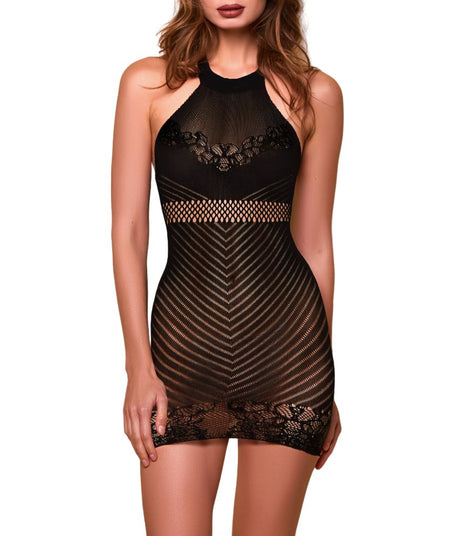
A bodycon dress, short for body-conscious, is made from stretch fabric and fits tightly over the whole body, usually at a short or knee length. It is the least forgiving silhouette and the most party-focused, suiting nights out and celebrations. Thick, firm fabrics such as scuba and bandage knits smooth the body better than thin jersey. Seamless underwear and light shapewear make the line cleaner.
Mermaid
A mermaid dress is fitted from the bust through the hips and thighs to the knee or just below, then flares dramatically to the floor. It is the most curve-revealing formal silhouette and suits hourglass figures and anyone who wants to show their shape. It restricts walking more than other gowns, so practice moving and sitting in it before the event. It is popular for black tie events, galas and wedding dresses.
Trumpet
A trumpet dress is fitted through the body and begins to flare at mid-thigh, so the flare is higher and more gradual than a mermaid. It gives a similar curve-hugging look with more freedom to walk and dance, which makes it a practical alternative for prom, formal weddings and evening events. It suits most figures that suit a mermaid, and it is easier on petite frames.
Ball gown
A ball gown has a fitted bodice and a very full skirt that reaches the floor, often supported by layers of tulle or a petticoat. It is the most formal and dramatic silhouette, worn for black tie events, galas, debutante balls and weddings. The full skirt hides the hips and legs completely and creates a very defined waist. It needs space, structure and a well-fitted bodice, since the skirt is heavy; our strapless dress guide explains how a boned bodice carries the weight.
Column
A column dress is long and straight, falling from the shoulders or the bust to the floor with no flare. It is the minimalist formal silhouette, elegant in crepe, satin or jersey, and it suits tall and slim frames especially well. Because it is straight, it usually has a slit to make walking possible. A column gown with a one-shoulder or halter neckline is a modern black tie option.
Some silhouettes go by other names. A sheath gown is a floor-length sheath, close to a column but with more waist shaping. A peplum dress adds a short flared ruffle at the waist of a sheath. A tiered dress has horizontal layers in the skirt, usually on an A-line or empire base. A bubble or balloon dress gathers the hem inward. These are variations on the core shapes rather than separate silhouettes.
Telling Similar Silhouettes Apart
Several pairs of silhouettes are easy to confuse. The differences decide how each one fits.
Sheath or shift: pinch the side seam at the waist. A sheath is shaped to the waist by darts or seams; a shift falls straight with no waist shaping. The sheath looks more tailored, the shift more relaxed. A-line or fit and flare: look at the waist. A fit and flare has a clear waist seam and the skirt flares sharply from it; an A-line widens gently and may have no seam at all. The fit and flare is more festive, the A-line more versatile.
Mermaid or trumpet: look at where the flare starts. A mermaid flares at or below the knee; a trumpet flares at mid-thigh. The mermaid is more dramatic, the trumpet easier to walk and dance in. Column or sheath gown: a column is straight with little waist shaping, while a sheath gown follows the waist and hips. Slip or sheath: a slip is bias cut and drapes, a sheath is cut straight and holds its own shape. Empire or babydoll: both have a high waist, but a babydoll is short and full while an empire dress can be any length.
When a listing does not name the silhouette, the product photo usually tells you. Look at three places: where the dress is narrowest, where it starts to widen, and how wide the hem is. Those three points identify almost every silhouette in this guide, and they tell you more about the fit than any name in the description.
Two silhouettes in one dress are common too. A wrap bodice on an A-line skirt, a sheath with a peplum, or an empire bodice on a tiered maxi all borrow from more than one shape. Read these by the part that matters most to you: the bodice decides the fit at the bust and waist, and the skirt decides the movement and how it sits over the hips.
Finally, try before you rule anything out. Many people avoid a silhouette for years because of a rule they read once, then find it is the most flattering shape they own. The guidance in this page is a map, not a set of restrictions; the mirror and the way a dress makes you feel are the final test.
Waistlines: Where the Seam Sits
Where a dress marks the waist changes the proportions of the whole body.
| Waistline | Where it sits | Effect | Suits |
|---|---|---|---|
| Empire | Just under the bust | Lengthens the legs; skims the midsection | Petite frames, smaller busts, maternity |
| Natural | At the narrowest point of the waist | Defines the waist; balances top and bottom | Most figures |
| Basque | Dips into a V or U at the front | Lengthens the torso; slims the waist | Short torsos, formal gowns |
| Dropped | At the hip | Lengthens the torso; relaxed, 1920s feel | Long legs, straight figures |
| No waist | No seam, as in a shift | Skims the body | Anyone wanting a relaxed fit |
The waist seam should land where it is designed to land on your body. A natural waist seam that sits above your waist makes a dress look short-waisted; one that sits below makes the torso look long and the legs short. If you are petite or tall, check the bodice length, not just the overall length. A belt can move the visual waist up or down on a dress without a seam.
Waistlines also set the mood. An empire waist feels light and romantic, which is why it appears so often in summer dresses, maternity wear and bridesmaid dresses. A natural waist feels classic and polished, and is the default for cocktail and wedding guest dresses. A basque waist feels formal and structured, and shows up most in ball gowns and bridal gowns. A dropped waist feels relaxed and a little vintage. If you love a silhouette but not its usual waistline, look for a version with a different one, or use a belt to move the visual waist where you want it.
Casual and Everyday Dress Types
Many dresses are named for their style or purpose rather than their silhouette.

Fabric decides whether a dress reads casual or dressy more than the type itself. A shirt dress in silk is a dinner dress; a slip dress in cotton is a summer day dress. Cotton, linen, jersey and denim keep any silhouette casual; crepe, satin, velvet and lace move it toward evening. Our guides to the lace dress and velvet dress cover two dressier fabrics in depth.
Formal and Evening Dress Types
Formal dresses are defined by length, fabric and structure as well as silhouette.

| Dress type | What it is | Dress code |
|---|---|---|
| Cocktail dress | A dressy knee to midi dress | Cocktail, semi-formal |
| Tea-length dress | Hem on the lower calf, often full | Semi-formal to black tie optional |
| Evening gown | Floor-length, any formal silhouette | Formal, black tie |
| Ball gown | Fitted bodice, very full skirt | Black tie, white tie |
| Sheath or column gown | Long and narrow | Formal, black tie |
| Mermaid or trumpet gown | Fitted, flared at the bottom | Formal, black tie, prom |
A cocktail dress is the dressiest short dress, usually knee to midi length in crepe, satin, velvet, lace or sequins; our cocktail dress guide explains the dress code. A tea-length dress ends on the lower calf and suits weddings and dressy daytime events; see our tea-length dress guide. For seasonal events, our holiday party dress guide covers festive fabrics and dress codes.
For black tie, a floor-length gown is expected: a ball gown, column, mermaid, trumpet or A-line gown in a formal fabric. For black tie optional, a floor-length gown, an elegant tea-length dress or a very dressy cocktail dress all work. The more formal the event, the longer the hem and the richer the fabric.
Dress Lengths at a Glance
Length changes the formality and the proportions of any silhouette.
| Length | Where the hem lands | Typical use |
|---|---|---|
| Mini | Mid-thigh | Parties, summer, nights out |
| Above the knee | A few inches above the knee | Casual, cocktail |
| Knee | At or just below the knee | Work, cocktail, most occasions |
| Midi | Between the knee and the ankle | Work, weddings, day events |
| Tea length | Lower calf | Weddings, semi-formal |
| Maxi or floor | Ankle to floor | Casual summer or formal evening |
The most versatile length is knee to midi, which suits work, dinners and most weddings. Our midi dress guide explains why, and our mini, midi and maxi guide gives exact measurements for each length and how to choose by height.
Necklines and Backs
The neckline changes the look of any silhouette, and decides what goes underneath.
| Neckline | What it is | Guide |
|---|---|---|
| Halter | Held from the neck; bare shoulders | Halter dress guide |
| Strapless | No straps; the bodice holds itself up | Strapless dress guide |
| One-shoulder | A diagonal from one shoulder | One-shoulder dress guide |
| Backless | An open or low back | Backless dress guide |
| V-neck | A V at the front; lengthens the neck | Bras for necklines |
| Scoop, square, bateau | Classic everyday necklines | Little black dress guide |
Necklines that leave the shoulders or back bare need a plan underneath: a strapless, convertible, low-back or adhesive bra, or a dress with built-in support. Our bras for every neckline guide matches each neckline to the right bra.
Sleeves and Straps
Sleeves change the season, the formality and the balance of a silhouette.
| Sleeve | What it is | Effect |
|---|---|---|
| Sleeveless and straps | No sleeve; straps from thin to wide | Summer and evening; shows the arms |
| Cap sleeve | A short sleeve that just covers the shoulder | Light coverage; softens the shoulder |
| Short sleeve | Ends above the elbow | Everyday and work |
| Flutter sleeve | A loose, floaty short sleeve | Romantic; skims the upper arm |
| Puff sleeve | Gathered for volume at the shoulder | Adds width at the shoulder; playful |
| Three-quarter sleeve | Ends between elbow and wrist | Work and ceremonies; easy to wear |
| Long sleeve | Full length to the wrist | Fall, winter, formal and religious events |
| Bishop sleeve | Full sleeve gathered at the cuff | Dramatic and romantic |
Sleeves are as much about balance as coverage. A puff or flutter sleeve adds width at the shoulder, which balances wider hips and suits narrow shoulders. A fitted three-quarter or long sleeve keeps a sheath or column sleek. Sleeves also change the season: the same A-line silhouette reads summer with straps and winter with long sleeves in a heavier fabric. For formal events and religious ceremonies that expect covered arms, a long-sleeve dress solves the problem without a jacket.
Fabrics That Suit Each Silhouette
A silhouette only works if the fabric can hold or drape the way it needs to.
| Silhouette | Fabrics that work | Why |
|---|---|---|
| Sheath, column | Crepe, ponte, wool blends, heavy jersey | Enough body to skim rather than cling |
| Shift | Crepe, linen, cotton, tweed | Holds a straight line from the shoulder |
| A-line, fit and flare | Cotton, crepe, taffeta, scuba | Body to hold the flare of the skirt |
| Empire, maxi | Chiffon, jersey, rayon, cotton voile | Drapes softly from a high waist |
| Wrap | Jersey, crepe, silk | Drapes and ties without bulk |
| Slip | Satin, silk, crepe-backed satin | Bias cut needs fluid fabric |
| Bodycon | Scuba, bandage knit, thick jersey | Stretch with enough weight to smooth |
| Mermaid, trumpet | Satin, crepe, stretch lace, sequins | Fitted through the body, fluid at the flare |
| Ball gown | Tulle, taffeta, mikado, satin | Crisp layers hold the volume |
A mismatch between silhouette and fabric is the most common reason a dress looks wrong. A sheath in thin jersey clings and shows every line; a fit and flare in limp rayon collapses instead of flaring; a slip dress in stiff cotton cannot drape. When a dress looks different on you than on the hanger or in photos, the fabric is often why. Hold the dress up by the shoulders: a sheath or shift should hang straight and still, while a slip or wrap should move and drape.
How to Read a Dress Description
Product descriptions use the same words in different ways. Here is what to look for.
Always check three numbers when buying a dress online: the bust, waist and hip measurements on the size chart, and the stated length from shoulder to hem. Compare the length with a dress you already own that fits well, since "midi" can mean anything from just below the knee to the ankle depending on the brand and your height.
Building a Dress Wardrobe
A few silhouettes, chosen well, cover most of the year.
Most people get the most use from three or four dresses in different silhouettes rather than many versions of the same one. A practical starting set is a knee-length or midi sheath or wrap for work and dinners, a casual shirt dress or sundress for weekends, a fit and flare or A-line for weddings and parties, and one long dress, either a casual maxi for summer or a gown for formal events. Add a sweater dress for winter if you live somewhere cold.
Across the seasons, the silhouette can stay while the fabric and sleeve change. A wrap dress in light jersey with short sleeves works in summer; the same shape in a heavier knit with long sleeves and tights works in winter. An A-line in cotton suits spring; in velvet it suits the holidays. Building around a few silhouettes you know fit well is the simplest way to make every new dress work.
Choosing a Dress Type by Occasion
Start from where you are going, then choose the silhouette and length.
| Occasion | Silhouettes that work | Length |
|---|---|---|
| Office | Sheath, shift, wrap, shirt dress | Knee to midi |
| Weekend and errands | Shirt dress, T-shirt dress, sundress | Any |
| Date and dinner | Wrap, slip, sheath, fit and flare | Knee to midi |
| Cocktail party | Sheath, fit and flare, slip | Knee to midi |
| Daytime wedding | A-line, fit and flare, wrap | Midi to tea length |
| Evening or formal wedding | A-line gown, sheath, fit and flare | Midi to floor |
| Black tie | Ball gown, column, mermaid, trumpet | Floor |
| Vacation and beach | Sundress, maxi, empire, slip | Any |
| Night out | Bodycon, slip, mini fit and flare | Mini to knee |
If you want one dress to cover the most occasions, a knee-length or midi sheath, wrap or A-line in crepe goes to work, dinner and most weddings with only a change of shoes and jewelry. Our little black dress guide explains how to build a wardrobe around one versatile dress.
Choosing a Dress Type for Your Figure
Think in terms of what you want to emphasize, not rules about what you cannot wear.
Body-shape advice is a starting point, not a set of limits. The most useful question is what you want a dress to do: define the waist, lengthen the legs, balance the shoulders and hips, or simply feel comfortable. The table below matches common goals to the silhouettes that achieve them.
| If you want to | Try | Why |
|---|---|---|
| Define the waist | Wrap, fit and flare, sheath | They mark the narrowest point |
| Skim the midsection | Empire, A-line, shift | They fall away from the waist |
| Balance wider hips | A-line, fit and flare | Volume below balances the shoulders |
| Balance broader shoulders | A-line, fit and flare, V-neck | The skirt and neckline draw the eye down and in |
| Lengthen the legs | Empire, mini, high slit | A higher waist or hem lengthens the leg line |
| Lengthen the torso | Dropped or basque waist, V-neck | The seam and neckline pull the eye down |
| Show your curves | Bodycon, mermaid, sheath | They follow the body closely |
| Feel relaxed | Shift, shirt dress, slip | They skim rather than hold |
Fit matters more than silhouette. A well-fitted shift will look better than a poorly fitted wrap. Check the shoulders, bust, waist and hips in the mirror, sit down, and move your arms. For a smooth line under fitted styles, our guide to plus size shapewear covers extended sizes.
What to Wear Under Each Dress Type
The silhouette and neckline decide what works underneath.
| Dress type | Bra | Underwear and layers |
|---|---|---|
| Sheath, bodycon | T-shirt bra with smooth cups | Seamless underwear, light shapewear |
| Slip dress | Seamless, or none with built-in cups | Seamless underwear or a slip |
| Wrap, V-neck | Plunge bra | Any smooth underwear |
| Halter, one-shoulder | Convertible bra | Seamless underwear |
| Strapless, off-shoulder | Strapless bra | Seamless underwear |
| Backless | Adhesive bra or a low-back bra | Thong or seamless |
| Sheer or lace | A nude or matching bra | A slip or lining |
| Sweater dress, winter | A smooth T-shirt bra | Tights and hosiery |
Fitted silhouettes show every edge, so seamless underwear and a smooth bra matter most under sheath, bodycon and slip dresses. Open necklines and backs need a strapless, convertible, adhesive or low-back bra; our guides to the strapless bra and low-back bras cover the details. If you need your bra size before you shop, Brasize.ai can help.
Shapewear, Seamless and Strapless
The layers that keep any silhouette smooth, from the sheath to the ball gown.
ShapewearSeamlessStrapless BrasA Short History of Dress Silhouettes
Most of today's silhouettes come from a specific moment in fashion history.
| Silhouette | Associated era | What happened |
|---|---|---|
| Empire | Around 1800 | High-waisted, column-like gowns inspired by classical dress became fashionable in Europe |
| Dropped waist | 1920s | Straight, low-waisted dresses suited a new, freer way of moving and dancing |
| Bias-cut slip | 1930s | Bias cutting let evening gowns drape closely over the body |
| Fit and flare | 1947 onward | Christian Dior's New Look brought back the small waist and full skirt |
| A-line | 1955 | Dior named a collection for the A-line shape |
| Shift | 1960s | Simple, straight dresses became a defining look of the decade |
| Wrap | 1970s | Diane von Furstenberg's jersey wrap dress, launched in 1974, became an icon |
| Bodycon | 1980s to 1990s | Stretch fabrics and bandage dresses made close-fitting styles popular |
Silhouettes come back again and again. The empire waist returned in the 1960s and 1970s, the slip dress in the 1990s, and the full fit and flare skirt in nearly every decade since the 1950s. Knowing where a shape comes from helps explain its mood: an empire dress feels romantic and light, a fit and flare feels feminine and festive, and a shift feels modern and easy.
Dress Terms Glossary
The words that appear in dress descriptions, explained.
Common Mistakes When Choosing a Dress Type
Most come from choosing by trend or label rather than fit.
How to Choose a Dress: A Checklist
Run through these when you shop.
- Occasion: what is the dress code and the setting?
- Silhouette: does it define, skim or follow the body the way you want?
- Waist: does the seam land where it should on you?
- Length: does the hem suit the occasion and your height?
- Neckline: do you have the right bra for it?
- Fabric: does it hold the shape, and does it suit the season?
- Fit: shoulders, bust, waist and hips, standing and sitting.
- Underneath: seamless edges for fitted dresses; the right bra for open necklines.
What This Means for You
Dresses are described by silhouette, length, neckline and occasion. The silhouette, the overall shape on the body, tells you the most about how a dress will fit, and the twelve core silhouettes cover almost every dress you will see.
Choose the silhouette for what you want it to do: define the waist, skim the body or show your shape. Then choose the length and fabric for the occasion, and the neckline for the look you want, with the right layers underneath.
If you want one dress that does the most, start with a knee-length or midi A-line, wrap or sheath in a matte fabric. Then use the guides linked throughout this page to go deeper into each length, neckline and fabric.
Lengths, Necklines and Occasions
Go deeper into the details that change how a dress looks and where you can wear it.
Dress LengthsStrapless DressWedding GuestFrequently Asked Questions
What are the main types of dresses?
What is a dress silhouette?
What is the most flattering type of dress?
What is the difference between a sheath and a shift dress?
What is the difference between A-line and fit and flare?
What is the difference between a mermaid and a trumpet dress?
What is an empire waist dress?
What is a column dress?
What is a bodycon dress?
What type of dress is best for a wedding guest?
What type of dress is best for work?
What type of dress hides a tummy?
What type of dress suits a pear shape?
What type of dress suits an apple shape?
What type of dress suits an hourglass figure?
What is a ball gown?
What is the difference between a slip dress and a sheath?
What are the different dress lengths?
What type of dress is most versatile?
What is a fit and flare dress?
What is a shirt dress?
What is a sundress?
This guide covers dress styles, fit and styling and is for general information. Cuts and sizing vary between makers, so check the product details and size chart for any individual dress.